Teaching a Bernese Mountain Dog to Wait at Doors
Oh, the sheer joy and utter chaos of a Bernese Mountain Dog at a doorway! We've all been there, right? You're just trying to grab the mail, or let a friend in, and suddenly your hundred-pound fluff-monster transforms into a giant, excited torpedo, lunging for the open door as if it's the gateway to an all-you-can-eat bacon buffet. It’s frustrating, and let’s be honest, a bit dangerous for both your dog and anyone in their path. This comprehensive guide will walk you through proven strategies to teach your beloved Berner the invaluable skill of waiting politely at any door, transforming frantic lunges into calm, controlled exits and entries.
Understanding the "Why" Behind Door Dashing in Bernese Mountain Dogs
Before we can tackle the behavior, it helps to understand what drives it. Bernese Mountain Dogs are inherently curious, intelligent, and often very people-oriented. When a door opens, it's not just a doorway; it's a sensory explosion of new smells, sights, and potential adventures. For a dog that thrives on being part of the action, resisting that urge takes a lot of impulse control, which often isn't innate for our big, lovable lugs.
The Instinct to Explore and Patrol
Bernese Mountain Dogs, with their history as farm dogs in the Swiss Alps, have an inherent drive to be aware of their surroundings. They were bred to be vigilant, not necessarily aggressive guardians, but certainly observant members of the household who knew what was happening on their territory. An open door represents a breach in that territory, or an opportunity to expand their patrol route, even if it's just to the mailbox. They want to investigate, to see who's coming, or simply to stretch their legs and sniff out the neighborhood news. This isn't naughtiness; it's just instinct in action, and it needs gentle guidance.
Lack of Early Training and Consistency
Often, door dashing starts innocently. A cute Berner puppy nudges their way out, and it seems harmless. But as that puppy grows into a magnificent hundred-pound dog, that cute nudge becomes a powerful shove. If they haven't been taught otherwise from a young age, they learn that an open door means "go time." The biggest pitfall is a lack of consistency. If sometimes they're allowed to bolt, and other times they're corrected, the message gets muddled. They'll keep trying their luck, hoping for the "go" signal, even if it's just an inch of open door. This is why everyone in the household needs to be on the same page.
Breed-Specific Enthusiasm and Size
Let’s face it, Berners are generally happy-go-lucky dogs, and their enthusiasm can be… significant. A wagging tail can knock over a small lamp, and a full-body wiggle can send you stumbling. When that excitement is directed towards an open door, their sheer size and power become a real factor. It's not just a minor inconvenience; it's a safety concern. Their deep chests and strong legs are built for pulling carts and traversing mountains, not for gentle waiting. We're asking them to override a very strong physical and mental impulse, and that takes patience and the right training approach, tailored to their gentle but powerful nature.
Laying the Foundation: Essential Training Principles
Teaching a Bernese Mountain Dog anything new, especially something that requires impulse control, really comes down to a few key principles. You can't just tell a Berner "no" at the door and expect them to understand why. We need to teach them what to do instead, and make it incredibly rewarding. Remember, these dogs are sensitive, so patience and positive reinforcement are your best friends.
Positive Reinforcement and High-Value Rewards
Bernese Mountain Dogs respond beautifully to positive reinforcement. They want to please you, and they certainly appreciate a tasty incentive! When we talk about high-value rewards, we mean something truly irresistible. Kibble might work for a "sit" in a quiet room, but for conquering the door's allure, you'll need something much more exciting. Think small pieces of cooked chicken, cheese, or even those really good soft training treats you can find on Amazon or from specialty pet brands. The goal is to make waiting at the door more rewarding than bolting through it. Keep these rewards handy, perhaps in a treat pouch, so you're always ready to reinforce good behavior immediately. Consistency in rewarding means your Berner quickly associates the 'wait' command with good things happening. This isn't bribery; it's communication: "This is what I want you to do, and here's a thank you for doing it!" For more on what motivates your fluffy friend, check out What a Bernese Mountain Dog Will Actually Work For.
Short, Consistent Training Sessions
Our Berners are smart, but their attention spans, especially as puppies and adolescents, aren't endless. Long, drawn-out training sessions can lead to frustration for both of you. Aim for short, focused bursts of training – think 5-10 minutes, a few times a day. This keeps it fun and engaging. More importantly, consistency is paramount. Every single person in the household needs to use the same commands and expectations every single time they approach a door with your Berner. If one person lets them bolt, it undoes hours of careful training. This is a family effort, and everyone needs to be on board to avoid confusing your dog. Consider integrating these short, impactful sessions into your daily routine, like before mealtimes or going out for a walk. If you want to know more about how to keep your Berner engaged, read Training Sessions Short Enough for a Bernese Mountain Dog.
The Importance of a Reliable "Sit" or "Down"
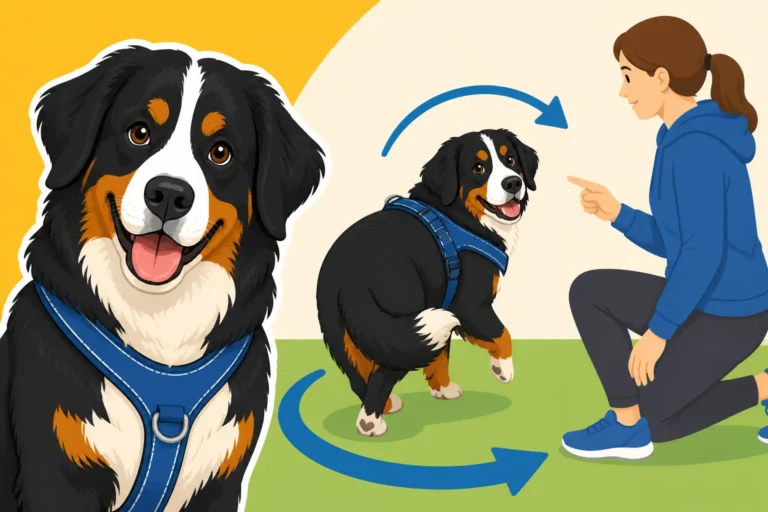
Before you even tackle the door itself, ensure your Bernese Mountain Dog has a rock-solid "sit" or "down" command. This is their default position of polite waiting and control. Practice it everywhere: in the living room, in the kitchen, in the backyard. Make it automatic. If your Berner can't reliably sit and stay in a low-distraction environment, they certainly won't be able to do it with the allure of the great outdoors beckoning. This foundational obedience gives you a command to fall back on when you start introducing the door, acting as an anchor for their excitement. It’s also crucial for other scenarios, like getting into and out of the car safely – an important skill for such a large dog.
Step-by-Step Guide to Teaching "Wait" at the Door
Now that we have our foundation, let's get into the nitty-gritty of teaching that "wait" command. Remember, we're building this behavior slowly, layer by layer, starting with easy wins and gradually increasing the challenge. Think of it like teaching a child to tie their shoes; you don't start with complicated knots, but simple loops first.
Starting Indoors with Low Distractions
Begin with an interior door, one that doesn't lead directly outside and isn't usually a source of extreme excitement for your Berner. A bedroom door or a pantry door works well.
- Leash Up (Initially): Even indoors, it’s a good idea to put your Berner on a leash initially. This gives you a little more control if they decide to lunge. You can hold the leash firmly but gently, ready to prevent them from pushing through.
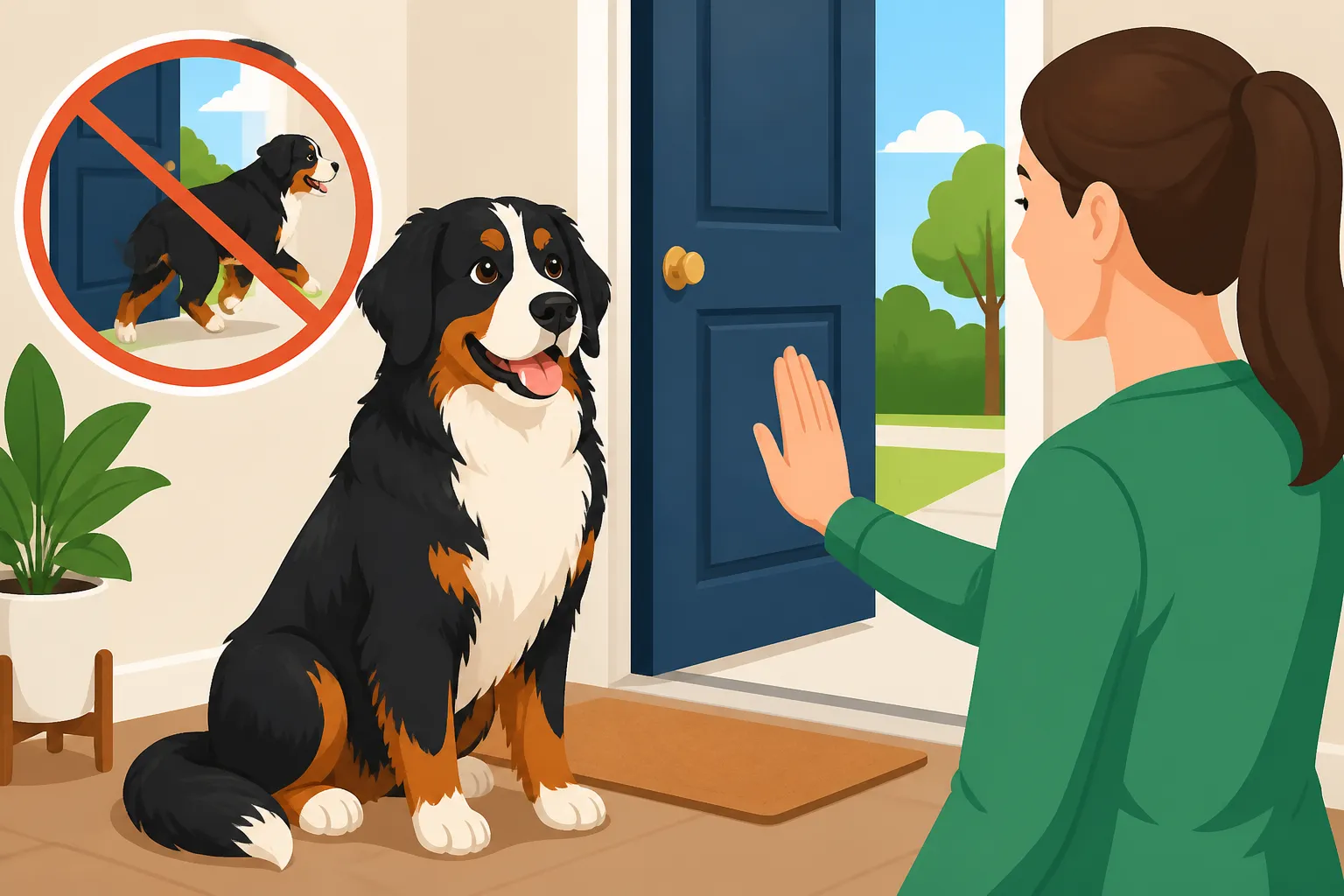
- Ask for a "Sit": Approach the door with your dog. Before you even touch the doorknob, ask your Bernese Mountain Dog to "Sit" (or "Down"). Reward them immediately for sitting, even if it's just for a second. This immediately associates the door approach with calm behavior and rewards.
- Introduce the "Wait" Command: With your dog sitting, put your hand on the doorknob. If your dog remains sitting, say "Wait" and immediately give them a high-value treat. Then, take your hand off the doorknob and release them with an "Okay!" or "Free!" and another reward. Repeat this several times. The goal is for them to learn that "Wait" means to hold their position until released, regardless of what you are doing with the door.
- Open Slightly and Close: Once they're reliably waiting for your hand on the knob, try turning the knob and opening the door just an inch. If they stay, say "Wait," treat, and then close the door. Release them. If they try to push through, immediately close the door, and withhold the treat. Do not let them pass. Reset, ask for a "Sit" again, and repeat. They need to learn that pushing means the door closes, waiting means it might open.
- Gradually Increase Openness: Slowly increase how wide you open the door, always saying "Wait" before opening, rewarding if they hold their position, and closing the door immediately if they move. This might take many, many repetitions over several sessions.
- Release and Reward: Once you can open the door fully and they still hold their "Wait" (even for a second), give your release word ("Okay!", "Free!", "Go!") and let them calmly pass through, followed by a shower of praise and a big reward. This teaches them that the release word is their cue to move.
Progressing to High-Traffic Doors and Gates
Once your Berner has mastered the "wait" command at an interior door, it's time to up the ante. The front door, back door, or garage door are much more exciting because they lead to the outside world, full of tempting smells and sights.
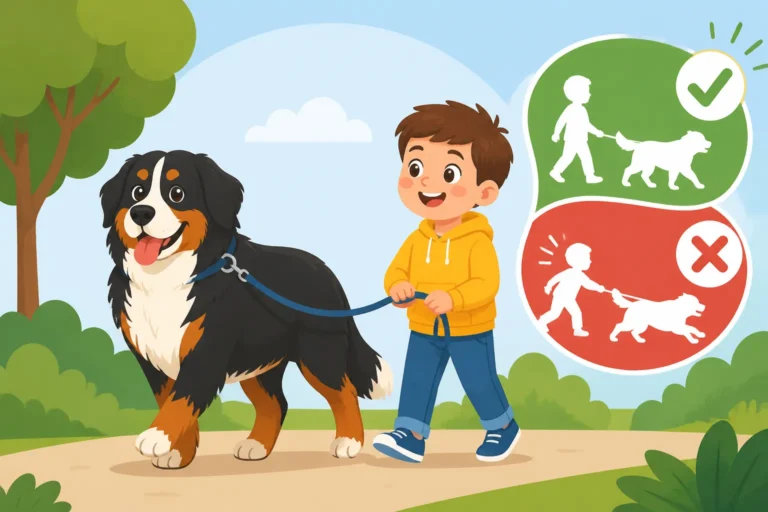
- Back on Leash: Start again with your dog on a leash at these high-traffic doors. The leash is your safety net, allowing you to control their movement without physically manhandling them. This is especially important for Leash Manners on a Hundred Pound Bernese Mountain Dog.
- Repeat Indoor Steps: Go through the same steps: "Sit," "Wait" as you touch the knob, open slightly, close, then gradually open wider. The distractions will be higher, so your Berner might regress a bit. Be patient and don't get discouraged. This is where your high-value treats become absolutely essential.
- Practice with Visual Distractions: If you have a screen door, use it to your advantage. Ask for a "Wait" at the main door, open it to the screen, reward if they hold, and close it again. They see the outside but can't yet access it, building their impulse control.
- Use a Barrier (Optional but Helpful): For truly enthusiastic Berners, a baby gate or a sturdy pet gate can be a game-changer during training. It creates a physical boundary that prevents dashing while you work on the "wait" command at the actual door. This can reduce frustration for both of you. You can find many options for large breeds on Amazon.
Incorporating Leash Manners and Real-World Scenarios
The goal isn't just to have them wait when you're actively training. It's about generalizing the behavior so they do it every time, instinctively. This means practicing in real-life situations.
- The Leash is Not a Release Cue: Many dogs associate the click of the leash with "time to go!" You need to break that association. Practice putting the leash on, walking around the house for a minute, then taking it off, without going outside. This decouples the leash from immediate outdoor access.
- Waiting with the Leash On: Once the leash is on, repeat the door training. Your Berner needs to learn that even with their leash on, they still "Wait" at the door until released. If they pull or whine, the door stays closed. You might need to step away from the door and come back until they are calm before trying again. This is a great way to reinforce Teaching a Bernese Mountain Dog to Settle.
- Practice with Arrivals and Departures: Enlist a family member or friend to help. Have them knock or ring the doorbell. This adds a layer of excitement. Ask your Berner to "Sit" and "Wait" a few feet from the door. Don't open the door until they are calm and holding their position. If they get too excited, walk them away from the door and try again once they've settled.
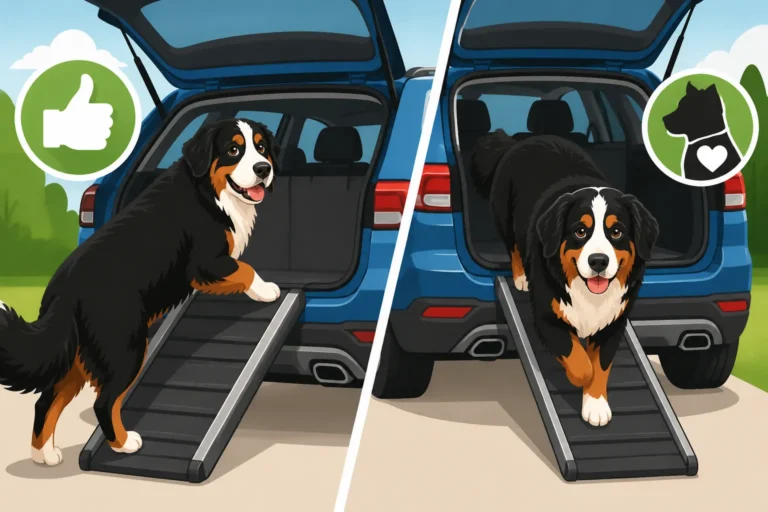
- Vehicles as "Doors": Extend this "wait" command to getting in and out of the car. Many Berners are excited for car rides, and teaching them to wait politely before leaping into the backseat (or cargo area) is a critical safety skill, particularly for a dog of their size. This prevents accidental injuries or escapes. This will also help with Getting a Bernese Mountain Dog Into and Out of a Car.
Common Challenges and Troubleshooting
Let's be real: training a Bernese Mountain Dog, especially when it comes to impulse control, isn't always a straight line. There will be setbacks, moments of frustration, and times when you wonder if they'll ever "get it." This is normal! Our Berners are big, boisterous, and sometimes just a little bit stubborn. The key is knowing how to address these common hurdles with patience and consistency.
When Your Berner Breaks the "Wait"
It's going to happen. You'll have them sitting beautifully, you open the door, say "Wait," and zoom – they're through it. Don't despair, but don't let it slide either.
- Immediate Consequence (Door Closes): The most effective consequence for breaking a "wait" at the door is simply that the door closes. Immediately. No yelling, no long lectures, just a swift closure. This is a natural consequence: if you don't wait, the fun stops (or at least pauses).
- Reset and Re-evaluate: Once the door is closed, take a breath. Reset your dog a few feet away from the door. Ask for a "Sit" or "Down" again. Don't try to open the door until they are calm. If they consistently break at a certain point (e.g., when the door is open more than 6 inches), go back to the previous step where they were successful. You might be moving too fast.
- Higher Value Rewards: If they're breaking the wait, your rewards might not be compelling enough for the level of distraction. Upgrade those treats! Cooked chicken or a special soft chew might be what you need to capture their attention over the lure of the outside.
- Leash as a Tool: If they’re breaking frequently, go back to practicing with the leash on. The leash allows you to physically prevent them from passing the threshold without force, giving you a chance to reset and reward before they even get the chance to fail. It's a management tool while they learn. For sensitive Berners, like The Bernese Mountain Dog That Quits After One Correction, a gentle leash correction (a quick, slight pull-and-release to prevent movement, not a yank) can communicate the boundary without being overly harsh.
Managing Multiple People and Dogs
A common challenge, especially in a busy household, is getting everyone on board. Your Berner might wait perfectly for you, but then a child opens the door, and out they go. Or, if you have multiple dogs, the excitement of one can trigger the others.
- Household Consistency is Non-Negotiable: This is the absolute golden rule. Every single person who interacts with your Berner at a door must use the same commands and expectations. Hold a family meeting if necessary. Explain why this is important (safety, consistency for the dog). If one person lets them out without a "wait," it undermines all your hard work.
- Practice with Family Members: Have different family members practice the "wait" command with your Berner. Start with the easiest person (usually the primary trainer) and gradually introduce others. This helps your dog generalize the behavior, realizing that the "wait" command applies no matter who is holding the leash or the doorknob.
- Separate Training (for multiple dogs): If you have multiple dogs, it's often easiest to train them one at a time initially. Take one dog to the door while the others are securely penned or in another room. Once each dog understands the "wait" command individually, you can slowly start practicing with two dogs, then more, always having enough hands (and treats!) to manage.
- Designated "Door Opener": In multi-dog or busy households, sometimes having one designated person open the door while others manage the dogs can help. This provides structure and clear roles during those potentially chaotic moments.
Dealing with Excitement and Visitors
The doorbell rings, or someone knocks – and suddenly all that calm training goes out the window as your Berner erupts into a flurry of barks, tail wags, and leaning. The Bernese Mountain Dog That Leans on Everyone trait can become quite intense during these exciting moments!
- Pre-Doorbell Practice: Don't wait for the actual doorbell to ring. Record the sound of your doorbell or find a similar sound online. Play it at a very low volume while your Berner is calm. As soon as they hear it, ask for a "Sit" or "Down" a few feet from the door and reward heavily for remaining calm. Gradually increase the volume and proximity to the door.
- "Go to Mat" Command: Teach your Berner a "Go to Mat" or "Place" command. This gives them a specific spot to go to when guests arrive, keeping them safely out of the immediate entry area. Reward lavishly when they go to their mat and stay there.
- Controlled Greetings: When visitors arrive, keep your Berner on a leash initially. Ask them to "Sit" or "Down" a few feet from the door. Only once they are calm should you allow a polite, controlled greeting. If they jump or get too excited, gently guide them away, reset, and try again. Explain to your guests that you're working on manners and ask them to only greet your dog when all four paws are on the floor.
- Use a Gate: If visitors are too exciting, or your Berner struggles to stay calm, a baby gate can be your best friend. Install one a few feet back from the entry door. Your Berner can still see and hear the guests but cannot jump on them or bolt out the door, giving them a chance to observe and calm down before any direct interaction.
Advanced Door Manners and Generalizing the Behavior
Once your Bernese Mountain Dog has a solid "wait" at all the primary doors, it's time to refine the behavior and ensure it applies universally. We want them to understand that "wait" isn't just about that door, but any threshold, and that it's a lifelong expectation.
Extending the Duration of the "Wait"
Initially, we rewarded for even a second of waiting. Now, we want to build up their ability to hold that "wait" for longer periods, even when the door is wide open or you're occupied with something else.
- Gradually Increase Time: Once your Berner is reliably waiting for a second or two while the door is open, slowly start adding more time. Count "one Mississippi, two Mississippi…" in your head. Reward after two seconds, then three, then five. Don't rush this. It's better to get consistent shorter waits than to push too far and have them break.
- Vary Your Actions: Practice the "wait" while you do other things. Open the door, then turn your back for a moment. Walk a few steps away from the open door. Bend down to tie your shoe. The goal is for your Berner to understand "wait" applies even if you're not directly facing them or actively holding the door.
- Practice in Different Environments: If you take your Berner to other places – a friend's house, a training facility, even the vet's office – practice "wait" at their doors too. New environments bring new distractions, and it's essential your Berner generalizes the command to all thresholds, not just the ones at home. What a Bernese Mountain Dog Puppy Should Meet Early emphasizes exposure to different places, which helps with this generalization.
Applying "Wait" to Other Thresholds and Exits
The concept of "wait" isn't just for exterior doors. It applies to any threshold where you want your dog to exercise impulse control and maintain safety.
- Car Doors: As mentioned before, teaching your Bernese Mountain Dog to "wait" before jumping out of the car is crucial. This prevents them from dashing into traffic or unknown areas. Practice this every time you arrive at a destination.
- Crates and Kennels: If your Berner uses a crate, teach them to "wait" politely inside before bursting out when you open the door. This reinforces the idea that an open door doesn't automatically mean immediate exit.
- Gates and Barriers: Any gate, whether it's a baby gate inside your home or a gate leading to a fenced yard, can be treated like a "door." Practice the "wait" command before allowing them to pass through.
- Stairs: While not a traditional "door," stairs can be a dangerous threshold, especially for a large dog like a Bernese Mountain Dog, or a growing puppy. Teaching them to "wait" at the top or bottom of stairs until released can prevent accidents and reinforce overall impulse control. This also ties into the idea of protecting their joints, which is crucial for The Bernese Mountain Dog Whose Back Legs Give Out later in life.
Maintaining Consistency Throughout Their Life
Training isn't a one-and-done deal. Especially with a sensitive and clever breed like the Bernese Mountain Dog, ongoing reinforcement is key to keeping those door manners polished.
- Never Assume "They Know It": Even if your Berner has been perfect at the door for years, a lapse in consistency from you or another family member can quickly unravel the training. Always reinforce, even if it's just a quick "Good wait!" and a pat.
- Random Rewards: You don't need to give a treat every single time once the behavior is solid, but do throw in unexpected high-value rewards periodically. This keeps your dog guessing and motivated, ensuring they never know when that extra-tasty morsel might appear for a good wait. It maintains the value of the behavior.
- Practice Under New Distractions: Introduce new, safe distractions occasionally. Can they "wait" at the door if a friend's dog is visiting? Or if a neighbor is chatting on the porch? These controlled practice sessions reinforce their training in challenging environments.
- Adolescence and Regression: Remember that Bernese Mountain Dogs mature slowly. You might find that your well-trained puppy enters an adolescent phase around 10-18 months where they seem to "forget" everything, including door manners. This is normal. Just go back to basics, be extra consistent, and know that this phase will pass. The Bernese Mountain Dog Adolescent Stage often brings these temporary regressions in training. For any training journey, especially with a breed prone to specific health issues, organizations like BAXTER & Bella offer online training programs that can provide structured guidance and support for owners dealing with various stages of a Berner's development, including those challenging adolescent periods.
| Training Stage | Description | Key Focus | Common Issues |
|---|---|---|---|
| Stage 1: Foundation | Introduce "Sit" and "Wait" at a low-distraction interior door. | Building understanding of commands and basic impulse control. | Dog doesn't sit, short attention span. |
| Stage 2: Gradual Opening | Slowly open the interior door wider, reinforcing "Wait." | Holding position despite increasing visual temptation. | Breaking early, lunging. |
| Stage 3: High-Traffic Doors | Move to exterior doors (front, back, garage), leash on. | Generalizing "Wait" to more exciting environments. | High excitement, barking, whining. |
| Stage 4: Real-World Scenarios | Practice with arrivals, departures, visitors, car doors. | Applying "Wait" under varied distractions and cues. | Jumping on guests, bolting from car. |
| Stage 5: Lifelong Consistency | Ongoing reinforcement, varied durations, new thresholds. | Maintaining reliability, proofing against all distractions. | Regression, testing boundaries. |
Ultimately, teaching your Bernese Mountain Dog to wait patiently at doors is a gift you give to both of you. It's about safety, control, and building a stronger, more respectful relationship with your gentle giant. It takes time, yes, but the peace of mind knowing your Berner won't be bolting into harm's way is truly priceless.
Disclaimer
This article is for general informational purposes only and does not constitute professional advice. Laws, prices and regulations vary by location and change over time. Consult a qualified professional for guidance on your specific situation.