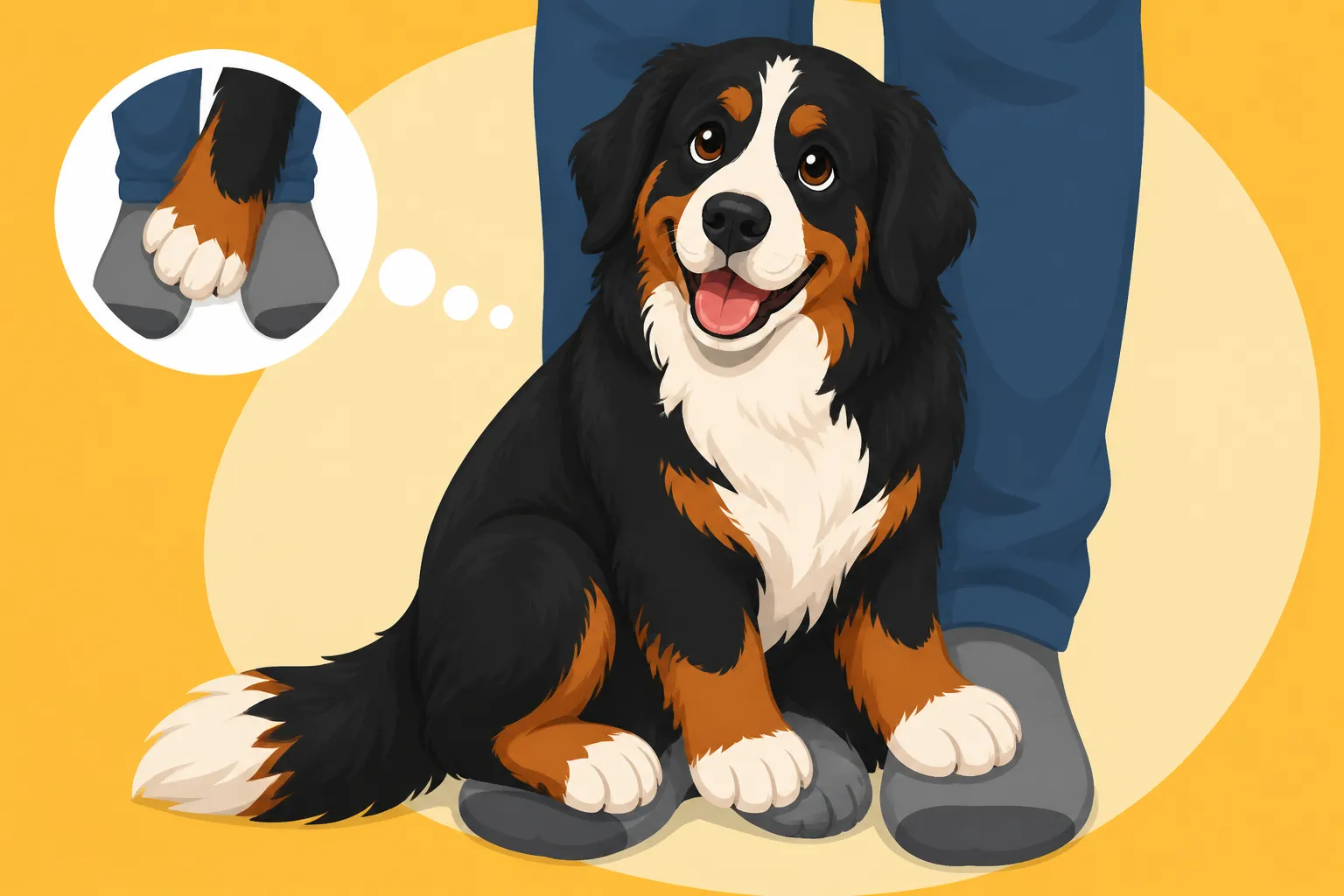
Whether a Bernese Mountain Dog Sits on Your Feet
It’s a scenario many Bernese Mountain Dog owners know well: you’re sitting on the couch, perhaps engrossed in a book or enjoying a cup of coffee, and slowly but surely, you feel a gentle pressure, then a distinct weight settling upon your feet. Your majestic, fluffy companion has decided your personal space is, in fact, communal property, and your feet make the perfect resting spot. This guide will delve into why your Berner loves to sit on your feet, what it means, and how to manage this endearing, yet sometimes inconvenient, habit.
The "Berner Lean" and Foot-Sitting Phenomenon
Anyone who has spent time with a Bernese Mountain Dog knows about the famous "Berner lean." It’s a signature move, where they sidle up to you and slowly, deliberately, put their entire body weight against your legs. The foot-sitting is often an extension of this, a deeper commitment to physical connection. It’s not just a random act; it's steeped in their breed's history and their innate personality.
Why Your Bernese Mountain Dog Gravitates Towards Your Feet
Bernese Mountain Dogs were bred to be companions and working dogs alongside Swiss farmers. This means they were always close to their people, watchful and involved in the daily rhythm of life. That strong bond, that desire to be with you, is deeply ingrained. When they settle on your feet, they are, in essence, trying to get as close as physically possible without actually climbing into your lap (though many Berners would gladly do that too if they thought they could get away with it!). It’s a testament to their affectionate nature. They aren't trying to squish you, even if their impressive weight makes it feel that way sometimes. They're just seeking that deep, comforting connection. It’s also a form of claiming their territory – your territory – but in the sweetest, most innocent way possible. They know you are their person, and your feet are simply the closest available real estate.
The Comfort and Security of Physical Contact
Think about it from your Berner’s perspective. Your feet are warm, they smell like you, and they represent your constant presence. For a dog that thrives on companionship and can sometimes be a bit sensitive, your proximity is a huge comfort. It's their way of feeling safe and secure in their environment. A Bernese Mountain Dog who plants themselves on your feet isn't just seeking warmth; they're creating a little bubble of security. This behavior is particularly common in puppies or recently adopted dogs who are still building confidence, but it often continues into adulthood because it simply feels good to them. It's a mutual exchange of comfort, even if you sometimes lose feeling in your toes! It's their way of staying connected, feeling your heartbeat through the floor, and simply knowing you are there. It's why Why a Bernese Mountain Dog Puts Its Weight on You is such a common query among owners.
Understanding Their Communication
Bernese Mountain Dogs are intelligent and communicative, even if they don't always use barks or obvious cues. Sitting on your feet is a subtle, yet powerful, form of communication. It can mean:
- "I love you and want to be close." This is probably the most common interpretation. It’s a pure expression of affection.
- "I need some reassurance." If your Berner seems a little anxious or there's a new noise outside, they might seek out your feet for comfort.
- "I'm feeling a bit insecure." In a new environment or around new people, they might stick to you like glue, using your feet as their anchor.
- "I'm ready for attention/pets." Sometimes, it's a precursor to nudging your hand for a good head scratch.
- "I'm settling down." After a burst of activity, they might flop down near or on your feet as they transition into rest mode. This ties into the general concept of Teaching a Bernese Mountain Dog to Settle.
It’s rarely a sign of aggression or dominance; rather, it's almost always rooted in their gentle, loyal nature. Observing when and where they do it can give you even more insight into what they're trying to tell you. If it's always when you're watching TV, it's probably just a desire for closeness. If it's only when guests are over, it might be a need for reassurance.
Managing the Behavior: Training and Boundaries
While adorable, a hundred-pound dog on your feet isn't always practical, especially if you need to stand up quickly or if you’re trying to prevent accidental trips and falls. The good news is that you can absolutely manage this behavior without making your Berner feel rejected. It’s all about gentle boundaries and providing alternative, equally comforting options.
Gentle Redirection and Positive Reinforcement
The key to training a Bernese Mountain Dog is never to be harsh or punitive. They are sensitive souls and respond best to positive reinforcement. If your Berner comes to settle on your feet and it's not a good time, gently encourage them to move. Don't push them away roughly. Instead, use a calm voice and a hand signal to guide them to a nearby dog bed or mat. As soon as they move to the designated spot, reward them with praise, a small treat, or a gentle pet.
A common phrase I use is "Off, then 'place'!" or "Off, then 'bed'!". You want to teach them that moving off your feet leads to something equally good, not a loss of attention. Consistency is crucial here. Everyone in the household needs to be on the same page. If one person allows foot-sitting freely and another doesn't, it creates confusion for your dog. For specific commands, you might find valuable resources through online training programs, like those offered by BAXTER & Bella, which emphasize positive, relationship-based methods. These programs often have modules for teaching your dog to go to a mat or a specific spot.
| Command | Action | Reward | Outcome |
|---|---|---|---|
| "Off" | Gentle nudge, guide away from feet | Praise, small treat | Dog moves off feet |
| "Place" / "Bed" | Point to designated mat/bed, lure with treat | Praise, long-lasting chew, pet | Dog goes to and settles on their spot |
| "Stay" | Hand signal, verbal cue | Intermittent praise, treat | Dog remains on their spot for a duration |
By reinforcing the "place" command, you're not rejecting their desire for closeness; you're simply channeling it into a more appropriate and safe location. This helps them understand that they still get to be near you and feel secure, just not on your actual feet. You can learn more about this by researching Teaching a Bernese Mountain Dog to Lie Down or Teaching a Bernese Mountain Dog to Stay on a Mat.
Creating Designated "Cuddle Zones"
Since your Berner craves closeness, provide them with appealing alternatives. Invest in a plush, orthopedic dog bed – or even two or three – placed strategically around the house where you spend time. These could be next to your favorite armchair, under your desk, or at the foot of your bed (if you allow them in the bedroom, which many Berner owners do because of their clingy nature!). Make these spots incredibly inviting. Toss their favorite blanket there, a special chew toy, or even a piece of your old clothing so it smells like you.
When your Bernese Mountain Dog approaches to sit on your feet, redirect them to their designated "cuddle zone" and reward them when they settle there. This teaches them that proximity to you is still encouraged, but in their own comfy space. You might even find some excellent, oversized orthopedic beds suitable for a large breed like a Berner on Amazon. The goal is to provide a soft, appealing spot that becomes their go-to for relaxing near you. This fulfills their need for connection without inadvertently squashing your toes. This strategy is also very helpful if you have A Bernese Mountain Dog Left Alone and want to make sure they have a comforting spot to rest.
Addressing Underlying Needs
Sometimes, the foot-sitting behavior isn't just about affection; it can stem from an underlying need. If your Bernese Mountain Dog seems overly attached, unable to settle anywhere but right on you, it might be worth considering if they're experiencing separation anxiety or general insecurity. Berners are known for being devoted to their families, and some can develop strong attachment behaviors, especially if they are left alone frequently or for long periods. The Bernese Mountain Dog That Cannot Bear Being Left is a common challenge for many owners.
Ensure your Berner gets adequate mental and physical exercise appropriate for their age and health. A tired dog is often a well-behaved dog. Daily walks, puzzle toys, and short training sessions can help burn off excess energy and provide mental stimulation. If you suspect anxiety, speak to your veterinarian or a certified professional dog trainer. They can help you identify triggers and develop a plan to build your dog’s confidence and independence, which might include specific training protocols or even environmental enrichment strategies. Creating a predictable routine can also provide a sense of security that reduces their need to constantly be "on" you.
When Foot-Sitting Becomes a Problem
While we adore our Berners and their affectionate ways, there are times when persistent foot-sitting or leaning crosses the line from endearing habit to a safety concern or an indicator of a deeper issue. It’s important to be realistic about the implications of a very large dog consistently using you as a living footstool.
Safety Concerns for Owners and the Dog
Let's face it: a Bernese Mountain Dog is a large, sturdy breed. Their weight can range anywhere from 70 to over 100 pounds, and that's a lot of mass to suddenly have draped over your feet or blocking your path. For owners, especially those with mobility issues, elderly individuals, or even just parents juggling children, a surprise Berner lean or sudden sit on the feet can lead to accidental trips and falls. Imagine trying to get up quickly to answer the door or tend to a child, only to find your feet pinned beneath a furry, loving weight. This isn't just inconvenient; it can be genuinely dangerous, leading to sprains, broken bones, or worse.
Similarly, while less common, the dog itself could be at risk. If an owner accidentally steps on their Berner's paw because it was unexpectedly underneath them, it could cause injury. Or, if the dog is constantly being displaced or roughly moved because they're in the way, it can create anxiety and damage the bond of trust. The goal is always a harmonious household where both human and canine residents are safe and comfortable. Establishing clear boundaries around personal space, even for a dog as sweet as a Berner, is a part of responsible ownership. This is part of the larger picture of Lifting a Hundred Pounds of Bernese Mountain Dog and managing their large physical presence in a home.
Recognizing Over-Reliance or Anxiety
As mentioned earlier, while foot-sitting is often a sign of affection, an excessive or exclusive reliance on physical contact might signal an underlying anxiety or over-attachment. If your Bernese Mountain Dog absolutely cannot settle unless they are touching you, or if they show signs of distress (whining, pacing, panting) when you move even a few feet away, it’s time to investigate further.
Consider these scenarios:
- Constant Shadowing: Your Berner follows you from room to room, never taking their eyes off you, and immediately tries to lean or sit on your feet the moment you stop.
- Difficulty with Alone Time: They exhibit destructive behavior, excessive barking, or elimination accidents when left alone, even for short periods. This could be a symptom of The Bernese Mountain Dog That Cannot Bear Being Left.
- Over-the-Top Greetings: When you return home, their excitement is prolonged and intense, almost as if they were convinced you'd never come back.
- Inability to Self-Soothe: They don't have a favorite bed or a quiet spot they retreat to; their only comfort seems to be direct physical contact with you.
These behaviors, especially when combined with foot-sitting, suggest that your dog might be struggling with separation anxiety or a general lack of confidence. It’s more than just being a "velcro dog"; it indicates a genuine emotional struggle that needs compassionate attention.
Consulting a Professional Trainer
If you find that gentle redirection, providing alternative beds, and ensuring adequate exercise aren't enough to manage persistent or problematic foot-sitting, or if you suspect deeper anxiety, don’t hesitate to reach out to a certified professional dog trainer or a veterinary behaviorist. They have the expertise to assess your specific situation, understand the nuances of canine behavior, and provide a tailored plan.
A professional trainer can:
- Observe Behavior: They can see patterns you might miss and help determine the root cause of the behavior.
- Develop a Training Plan: They can teach you effective techniques for setting boundaries, building confidence, and managing anxiety, often utilizing positive reinforcement strategies. Programs like BAXTER & Bella’s online puppy school can be a great starting point for foundational training, but for more complex issues, hands-on guidance from a local certified professional might be beneficial.
- Recommend Tools: They might suggest specific types of bedding, calming aids, or even exercises designed to reduce anxiety.
- Refer to a Vet: If the behaviorist suspects a medical component to the anxiety, they can recommend a veterinary consultation.
Remember, seeking professional help isn't a sign of failure; it's a sign of a committed and responsible owner. Your goal is to foster a happy, well-adjusted Bernese Mountain Dog who feels secure and loved, whether they're on your feet or comfortably settled in their own designated spot. After all, Training a Bernese Mountain Dog Without Breaking It means understanding their unique personality and needs.
Your Bernese Mountain Dog's desire to sit on your feet is a beautiful, if sometimes hefty, expression of their love and loyalty. By understanding the reasons behind this charming habit and implementing gentle, consistent training, you can ensure that both you and your magnificent companion can coexist happily, comfortably, and safely, with plenty of appropriate cuddle time for everyone.
Disclaimer
This article is for general informational purposes only and does not constitute professional advice. Laws, prices and regulations vary by location and change over time. Consult a qualified professional for guidance on your specific situation.