How a Bernese Mountain Dog Behaves Around Strange Dogs
Many Bernese Mountain Dog owners find themselves wondering exactly how their beloved gentle giant will react when encountering another dog, especially one they’ve never met before. It’s a common worry, fearing anything from an overly boisterous greeting to an anxious retreat, especially given their impressive size. This comprehensive guide aims to demystify typical Bernese Mountain Dog behaviors around strange dogs, equipping you with insights and practical strategies for ensuring positive, safe interactions every time.
Understanding the Bernese Mountain Dog Temperament Baseline
To truly understand how a Bernese Mountain Dog might interact with an unfamiliar canine, it’s helpful to start by examining the core traits of the breed. They aren't universally dog-park fanatics, nor are they typically aggressive. Their nuanced temperament, shaped by centuries of purpose, dictates a more thoughtful approach to new encounters.
Natural Aloofness Versus Aggression
One of the defining characteristics of a Bernese Mountain Dog is their calm, good-natured demeanor, often accompanied by a degree of natural aloofness. This isn't rudeness; it's a quiet dignity. When your Berner sees a strange dog, they might not immediately bound over with an effusive greeting. Instead, they might pause, observe, and take their time to assess the situation. This reserved nature often means they’re not looking for trouble, but they’re also not typically inclined to be universally "best friends" with every dog they meet. They’re discerning.
It’s crucial for owners to distinguish this inherent aloofness from actual shyness or, even rarer, aggression. An aloof Berner might simply offer a polite sniff and then move on, or they might completely ignore another dog, focusing intently on you or their surroundings. This isn't a sign of unfriendliness, but rather a preference for calm and a lack of overwhelming need to engage. If they seem disinterested, it’s perfectly fine to let them be. Forcing an interaction can lead to stress or a negative association, turning a neutral observation into a reluctant one.
However, if a Berner’s aloofness veers into a stiff body, hard stare, or a low growl that isn't accompanied by play signals, then you're moving into a different territory – one that suggests discomfort or even a defensive posture. True aggression in a Bernese is usually a red flag, often indicating a lack of early socialization, past trauma, or an underlying health issue causing pain. In most cases, their size simply means their warning signals are more pronounced, but they are typically slow to escalate if given space and appropriate leadership.
Breed History and Instincts
Delving into the Bernese Mountain Dog’s heritage offers significant clues about their interactions. Originating from the Swiss Alps, these magnificent dogs were bred as versatile farmhands. Their jobs included droving cattle, guarding farm property, and pulling carts laden with milk or goods to market. This historical role meant they primarily interacted with their human families and the farm animals they knew. They weren't bred to mingle freely with a constant stream of strange dogs in bustling villages or urban environments.
This background instills in them a strong loyalty to their family and a natural protective instinct. While not typically fierce guard dogs, they are watchful and will often assess newcomers, canine or human, with a degree of caution. If they perceive another dog as overly boisterous, threatening, or too forward with their beloved humans, this protective instinct can surface as a deterrent, even if it's simply a large, watchful presence rather than an outright challenge. What a Bernese Mountain Dog Does Instead of Guarding explains more about this inherent trait.
Their sheer size and strength also factor in. A 100-pound dog understands, perhaps instinctively, the impact of their body. They are often careful, preferring a gentle approach. This can make them seem hesitant or particular about their playmates. They might avoid rough-and-tumble games with smaller dogs to prevent accidental injury or show a preference for calmer interactions. Understanding this history helps us appreciate why a Berner might not be the most exuberant socialite at the dog park, instead preferring a more dignified, controlled engagement.
Early Socialization: The Foundation for Positive Interactions
The cornerstone of a well-adjusted Bernese Mountain Dog, especially one who interacts politely with other dogs, is thorough and consistent early socialization. This isn't just about exposing them to other dogs, but to a variety of positive and controlled experiences.
Puppyhood Opportunities
The period from eight to sixteen weeks is a critical window for a Bernese Mountain Dog puppy's development. During this time, their brains are rapidly forming associations, and every new experience is helping to shape their understanding of the world. This is the prime time to introduce them to a wide array of friendly, vaccinated, and well-mannered adult dogs of various breeds, sizes, and energy levels. The key is controlled exposure; a single negative experience during this sensitive period can have a lasting impact.
Structured puppy classes are invaluable for Bernese puppies. These environments, often led by experienced trainers, provide a safe space for puppies to learn appropriate play etiquette, bite inhibition, and canine communication. Your Berner pup can learn to read other dogs’ signals and respond in kind, developing social graces under supervision. They learn how to initiate play politely, how to disengage, and how to respect another dog's boundaries. This controlled group setting is far more beneficial than random, unsupervised encounters at an unregulated dog park.
Beyond formal classes, arrange playdates with trusted friends' or family members' dogs who are known to be gentle and patient. Short, positive interactions, where your puppy feels safe and can learn by example from a calm adult dog, are gold. Always prioritize quality over quantity. Overwhelming a sensitive Berner puppy with too much stimulation or negative interactions can lead to shyness or reactivity later in life. Remember, fostering a confident yet calm demeanor in your young Berner is critical, and Socializing a Reserved Bernese Mountain Dog Puppy requires patience and intentional effort.
Continued Exposure and Learning
Socialization is not a task you complete and check off a list; it’s an ongoing process, particularly for a breed like the Bernese Mountain Dog that matures slowly. They often retain their puppy-like exuberance and mental development well into their second or even third year. This extended adolescence means that continued, positive exposure to various dog-dog interactions is essential to reinforce good manners and maintain their confidence.
After puppy classes, consider continuing with basic or intermediate obedience classes. These settings, while focused on human-dog communication, also provide opportunities for your Berner to be around other dogs in a structured, calm environment. They learn to focus on you despite the distractions of other canines, which is a vital skill for a large, strong dog you need to manage on leash. The online dog training program BAXTER & Bella, for example, offers structured courses that can help you continue this development in a consistent manner.
Regular walks in different environments where you might encounter other dogs at a distance, brief and polite greetings with familiar neighborhood dogs, and even carefully selected doggy daycare experiences (if they have excellent staff-to-dog ratios and strict temperament screening) can all contribute to a well-adjusted adult Bernese. The goal is to build a repertoire of positive associations with other dogs throughout their life, ensuring they remain confident, polite, and comfortable in a variety of social situations.
Common Reactions to Strange Dogs
When your Bernese Mountain Dog meets a new canine, their reaction can range widely depending on their individual personality, socialization history, and the other dog's demeanor. Learning to read their body language is your superpower.
The "Berner Lean" and Greeting Styles
Many Bernese Mountain Dog owners are familiar with the endearing "Berner Lean" – that characteristic way they press their heavy body into your legs, often seeking comfort or affection. While primarily a human-directed behavior, a subtle version of this can appear in dog-dog interactions. Your Berner might lean into you when another dog approaches, not out of fear, but as a way to solicit reassurance, or perhaps even subtly create a barrier between themselves and the unknown dog. It’s a gentle, non-confrontational way of saying, "I'm with my person, please be polite."
When a Bernese does decide to greet another dog, their style is typically polite and measured. You won't often see a full-speed, boisterous charge. Instead, expect a slower, deliberate approach, often initiating with a nose-to-rear sniff to gather information. Their tail might have a relaxed, sweeping wag, or it could be held in a more neutral position, indicating an assessment is underway. Look for a soft gaze, relaxed mouth, and loose body language – these are all signs of a comfortable, polite greeting.
If a strong positive connection is made, your Berner might then offer a play bow – front end down, rear end up, tail wagging – inviting the other dog to a game. This is more common with dogs they already know or playful puppies. With true strangers, the initial interaction is usually more subdued. Always be ready to step in if the other dog is overly intense, rude, or ignores your Berner’s subtle cues for space. Your Berner relies on you to be their advocate. The Bernese Mountain Dog That Leans on Everyone delves deeper into this affectionate behavior, which can be seen even in dog-dog contexts.
Avoidance and Shyness
Despite their friendly reputation, some Bernese Mountain Dogs can exhibit shyness or avoidance around strange dogs. This might stem from insufficient positive socialization during their critical puppy window, a negative past experience, or simply an inherently more sensitive personality. A shy Berner might pull back on the leash, attempt to hide behind your legs, tuck their tail, or avert their gaze. You might also notice subtle stress signals like lip licking, yawning (when not tired), or turning their head away.
It is absolutely vital not to force a shy or fearful Bernese into an interaction. Pushing them past their comfort threshold can be counterproductive, increasing their anxiety and potentially leading to a more reactive or defensive response in the future. Instead, respect their need for space. Gently guide them away from the approaching dog, creating more distance until they appear more relaxed. Your calm reassurance and understanding will build trust and confidence.
Sometimes, what appears to be shyness is simply a lack of interest. Not every dog wants to be best friends with every other dog, and that’s perfectly normal. Your Bernese might simply prefer a calm walk with you over a high-energy romp with an unknown canine. Allowing them to gracefully disengage and move on without pressure is a valid and healthy choice. Learning to Read Fear in a Bernese Mountain Dog That Retreats will provide you with the tools to understand these important non-verbal cues and respond appropriately.
Managing On-Leash Encounters
On-leash encounters present a unique set of challenges, as the leash can inadvertently restrict natural canine communication and flight responses, often exacerbating stress or frustration in a Bernese Mountain Dog.
Leash Reactivity Factors
Leash reactivity is a common behavioral challenge, and it can certainly affect a Bernese Mountain Dog. It's important to clarify that leash reactivity is rarely true aggression; instead, it's often a frustrated response to being restrained. When your large, powerful Berner is on a leash, they can't freely greet, investigate, or create distance from an approaching dog in the way they naturally would. This constraint can lead to an outburst of barking, lunging, or growling, which, while startling, is usually an attempt to make the perceived "threat" (the other dog) go away.
Several factors can contribute to leash reactivity in a Bernese. Their inherent protective instincts can play a role; if they feel the need to "protect" you from an approaching dog, the leash prevents them from doing so in a calm, controlled manner, leading to an exaggerated display. A history of inadequate socialization, past negative experiences (e.g., being rushed by an off-leash dog), or even just feeling overwhelmed by the environment can also be triggers. The sheer size of a Bernese makes these reactions particularly challenging to manage, creating a feeling of being pulled off balance and a sense of powerlessness for the owner.
The tight leash itself can also contribute. A taut leash communicates tension down to the dog, signaling to them that something is amiss. This, combined with their inability to move freely, creates a pressure cooker situation. Your Berner's warning signals, which might be subtle off-leash, become amplified and frantic when they feel trapped by the leash. Understanding these underlying frustrations is key to addressing the behavior effectively. For practical tips, consider our guide on Leash Manners on a Hundred Pound Bernese Mountain Dog.
Training for Calmness
Training for calmness during on-leash encounters is a long-term commitment that focuses on positive reinforcement and gradually changing your Bernese Mountain Dog's emotional response. The goal is to teach your Berner that seeing other dogs, even strange ones, is a neutral or even positive experience, and that looking to you when another dog appears yields rewards.
Start by working at a distance from other dogs where your Berner notices them but doesn't react. This is their "threshold." Every time they see another dog and remain calm, immediately reward them with high-value treats. The moment their eyes flick to the other dog, mark the behavior (with a clicker or a verbal "yes!") and deliver a treat. This "Engage-Disengage" game teaches them that the sight of another dog predicts something good happening from you. As they become more comfortable, you can gradually decrease the distance, always staying below their threshold for reactivity.
Equip yourself with the right tools. A sturdy, well-fitting harness with a front-clip attachment can provide significantly more control over a strong Bernese without causing discomfort to their neck. Many excellent options are available on Amazon. Pair this with a standard 4-6 foot leash – avoid retractable leashes, as they offer minimal control. Consistency is paramount. Practice these exercises daily, keeping sessions short and positive. If your Berner starts to react, you've gone too close; simply increase the distance and try again. Patience and positive reinforcement are key to Training a Bernese Mountain Dog Without Breaking It.
Off-Leash Play and Group Settings
While on-leash encounters have their own complexities, off-leash play offers a chance for dogs to truly communicate and interact freely. However, with a large breed like the Bernese Mountain Dog, it’s vital to ensure these interactions remain safe and appropriate.
Recognizing Good Play
When your Bernese Mountain Dog is off-leash, whether in a fenced yard with a friend's dog or at a carefully chosen dog park, it’s crucial to be a diligent observer of their interactions. Good play is a delightful thing to watch – it’s reciprocal, meaning both dogs are equally engaged and enjoying themselves. Look for loose, fluid body language: bouncy movements, exaggerated play bows (front down, rear up), and tails wagging in a relaxed, sweeping motion. Dogs should be taking turns chasing and being chased, and there should be frequent pauses, allowing them to catch their breath and re-evaluate.
For a Bernese, their play style might be a little slower or more deliberate than some other breeds. They might enjoy a gentle wrestling match, a game of "keep-away," or a bit of synchronized sniffing. Look for soft, relaxed facial expressions, open mouths that aren't baring teeth, and no sustained staring. If your Berner drops to the ground and rolls over, exposing their belly, it’s a strong invitation to play and a sign of trust and comfort. They might even emit soft growls that are clearly part of the game, not a warning.
Any signs of one-sided play (one dog constantly harassing the other), stiff body language, whale eye (where the whites of the eyes are visible), persistent pinning, or attempts by one dog to escape without success, are red flags. Even the most good-natured Berner can accidentally be too rough due to their size, so your vigilance is key to preventing escalation. Our article on Rough Play Between a Bernese Mountain Dog and a Terrier offers further insights into managing size differences in play.
When to Intervene
Knowing precisely when to step into an off-leash interaction is a critical skill for any Bernese Mountain Dog owner. Don't wait for a full-blown scuffle to break out. Early intervention can prevent minor disagreements from escalating and ensure a positive experience for all dogs involved. If you observe any of the red flags mentioned above – stiff bodies, incessant barking, a sustained chase without breaks, one dog trying to hide, or any signs of fear or stress – it's time to calmly and confidently intervene.
A simple, clear verbal cue like "Okay, that's enough!" or "Break!" can sometimes be enough to interrupt the play. If that doesn't work, physically stepping between the dogs (without putting yourself in danger) or gently guiding your Berner away by their harness are effective ways to create a pause. Remove your Berner from the situation for a brief "time-out" until they calm down. This teaches them that overly boisterous or inappropriate play ends the fun, reinforcing the behaviors you want to see.
It’s also important to respect your Berner's cues if they are trying to disengage. If they walk away, lie down, or seek refuge behind you, they are communicating that they've had enough. Allowing them to remove themselves from an interaction they no longer enjoy builds their confidence and teaches them that you respect their boundaries. Furthermore, be realistic about environments; a busy, chaotic dog park is not suitable for every Bernese Mountain Dog. If your Berner thrives in smaller, more controlled group settings, seek those out. It might even be worth considering Whether a Bernese Mountain Dog Suits a Dog Park for your particular dog.
Addressing Specific Behavioral Challenges
Even with the best intentions and early socialization, Bernese Mountain Dogs can sometimes develop specific behavioral challenges around strange dogs. Understanding these issues is the first step toward effective management and resolution.
Fear-Based Reactions
A Bernese Mountain Dog exhibiting fear-based reactions towards strange dogs can be one of the most challenging situations for an owner. Their large size makes their fearful displays – barking, lunging, snapping, or trying to bolt – seem more intimidating, even though they are rooted in insecurity, not aggression. It’s crucial to remember that these behaviors are typically attempts to create distance from something they perceive as a threat, a desperate plea for safety.
Addressing fear requires immense patience, consistent positive reinforcement, and often the expert guidance of a certified professional dog trainer or a veterinary behaviorist. Punishment for fear-based reactions is highly counterproductive; it only intensifies their anxiety and can erode the trust between you and your Berner. Instead, the focus should be on building their confidence through carefully controlled, positive experiences, a process known as counter-conditioning and desensitization.
This means finding their "trigger threshold" – the distance at which they notice another dog but don't react fearfully. At this distance, generously reward any calm attention on you. Gradually, over many weeks and months, you can slowly decrease this distance, always ensuring your Berner remains below their reactive threshold. High-value treats are indispensable here, creating a powerful positive association that seeing other dogs leads to good things. By consistently advocating for their space and reinforcing calm behavior, you can help your fearful Bernese learn to tolerate and eventually feel more comfortable around strange dogs.
Over-Excitement and Rough Play
At the other end of the spectrum, some Bernese Mountain Dogs, particularly those in their exuberant adolescent phase or those lacking consistent impulse control training, can become overly excited or engage in excessively rough play with other dogs. This behavior is rarely malicious, but their sheer size and strength mean that what feels like playful bumping or chasing to a Berner can be overwhelming, intimidating, or even physically risky for smaller or more sensitive dogs.
If your Bernese tends to get over-excited, it’s imperative to intervene before the situation escalates out of control. Use a clear, consistent verbal cue like "Easy" or "Settle," and if they don't respond, calmly but firmly remove them from the play for a brief time-out. This teaches them that overly boisterous or uncontrolled behavior will end the fun. The goal is to interrupt the increasing arousal and allow them to reset before rejoining, if appropriate.
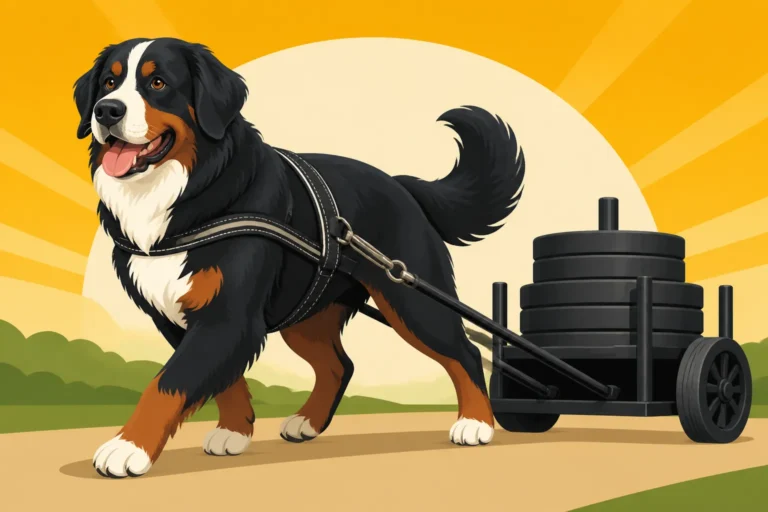
Prevention is also key. Focus on teaching impulse control from a young age through exercises like "wait" at doors, "leave it" with distractions, and consistent loose-leash walking. Structured obedience classes, even advanced ones, can challenge their focus around other dogs, reinforcing good manners. Providing appropriate outlets for their significant energy, such as long, structured walks, Backpacking With a Bernese Mountain Dog, or even engaging in draft work (such as the exercises outlined in What a Draft Test Asks of a Bernese Mountain Dog), can help channel their enthusiasm into productive activities rather than undirected boisterousness.
Essential Tools and Training Aids
Successfully navigating interactions between your Bernese Mountain Dog and strange dogs often depends on having the right equipment and a consistent training approach. These tools are designed to support you in maintaining control and fostering positive experiences.
Harnesses and Leashes for Control
Given the impressive size and strength of a Bernese Mountain Dog, selecting appropriate equipment for walks and training is not just about convenience, it’s about safety for everyone involved. A high-quality, well-fitting harness is almost always preferred over a traditional neck collar for daily walks. A harness distributes pressure evenly across your Berner's chest and shoulders, preventing potential strain on their neck and throat, especially if they are prone to sudden lunges or pulls when encountering another dog. Look for a harness that offers a front-clip attachment point, as this design helps redirect your dog's momentum back towards you, making it much harder for them to pull you off balance. Many reputable pet supply retailers, including a vast selection on Amazon, offer durable options specifically designed for large breeds, ensuring both comfort and effective control.
When choosing a harness, make sure it allows for full range of motion in the shoulders and doesn't rub or chafe in the armpit area. A properly fitted harness will allow two fingers to slide underneath comfortably. Pair your harness with a strong, non-retractable leash. A standard 4-foot or 6-foot length is ideal, as it provides enough slack for comfortable walking without sacrificing control. Retractable leashes are generally not recommended for large, powerful dogs like Berners, as they offer little effective control in an unexpected encounter and can lead to entanglement or injury. Some owners find a double-ended leash, which clips to both the front and back of a harness, to be incredibly effective for maximizing steering and control during challenging encounters. The goal is to feel confident and secure in your ability to guide your dog away from potential conflicts or manage their reactions calmly and safely.
High-Value Treats and Training Systems
When you're actively working on improving your Bernese Mountain Dog's behavior around other dogs, high-value treats become an indispensable part of your training arsenal. These aren't just any treats; they are rewards so incredibly delicious and enticing that your dog will be highly motivated to focus on you, even amidst the distractions of strange dogs. Think soft, pungent, and small pieces of real meat like cooked chicken or cheese, or specialized training treats that are reserved solely for these high-distraction scenarios. The more distracting the environment or the closer the other dog, the higher the value of the treat needs to be to capture and maintain your Berner's attention.
These high-value treats are integral to positive reinforcement techniques. Every time your Bernese Mountain Dog calmly notices another dog and chooses to look at you, offers a polite sniff, or disengages appropriately, they should immediately receive one of these highly coveted rewards. This consistent pairing creates a powerful positive association: "Other dogs appear = amazing treats happen from my human." This process actively works to change their emotional response from apprehension or over-excitement to anticipation of a reward from you.
For continued, structured support in your training journey, consider comprehensive online training platforms or organized courses. Programs like those offered by BAXTER & Bella provide step-by-step guidance on a range of behaviors, including leash manners, managing reactivity, and building solid socialization skills. These resources can be a fantastic complement to your hands-on training, ensuring consistency and providing expert advice. A thoughtful, patient, and reward-based approach, supported by irresistible treats, is the most effective way to foster polite and confident interactions between your Bernese Mountain Dog and other canines.
Summary of Bernese Mountain Dog Interactions
| Behavior Type | Typical Manifestation | Underlying Cause (Often) | Management Strategy (Brief) |
|---|---|---|---|
| Aloof/Reserved | Ignores, takes time to approach, polite sniff | Breed trait, self-contained, not inherently aggressive | Respect space, allow natural assessment, don't force interaction |
| Shy/Fearful | Hiding, pulling away, tucked tail, stress signals | Insufficient socialization, past negative experience | Create distance, build confidence, positive reinforcement, professional help |
| Leash Reactive | Barking, lunging, growling while restrained | Frustration, protective instinct, feeling trapped | Desensitization, "Engage-Disengage", positive reinforcement, front-clip harness |
| Over-Excited/Boisterous | Bumping, excessive play bows, persistent chasing | Youth, lack of impulse control, high energy | Interrupt and redirect, time-outs, teach "settle", structured exercise |
| Appropriate Play | Reciprocal, loose body, play bows, breaks, soft mouths | Good socialization, secure, confident | Supervise, allow interaction, intervene if energy escalates |
| Protective | Body blocking, subtle growl, standing between you and dog | Strong bond with owner, perceived threat | Reinforce human leadership, consistent training, build trust, manage distance |
This table serves as a quick reference, but remember each Bernese is an individual, and their behavior around strange dogs can be influenced by many factors.
Disclaimer
This article is for general informational purposes only and does not constitute professional advice. Laws, prices and regulations vary by location and change over time. Consult a qualified professional for guidance on your specific situation.