Whether an E-Collar Suits a Bernese Mountain Dog
Bringing a Bernese Mountain Dog into your life is a huge joy, but also a massive responsibility, especially when it comes to their training. Many Berner owners find themselves facing a real dilemma: how do you manage a powerful, often stubborn, but incredibly sensitive dog who sometimes seems to have a mind of their own? This guide is here to explore the complexities of training such a magnificent breed, specifically addressing the question of whether an e-collar is a suitable tool for your gentle giant.
Understanding the Bernese Mountain Dog Temperament and Training Challenges
Let's be real, Bernese Mountain Dogs are magnificent, but they're not always the easiest students in the classroom. Their charming, sometimes goofy demeanor can hide a surprising stubbornness, and their sensitivity means traditional, harsh correction methods can backfire spectacularly. This combination makes choosing the right training approach absolutely critical for their well-being and your sanity.
The Berner's Sensitive Soul
Bernese Mountain Dogs are, by nature, quite sensitive creatures. They thrive on positive reinforcement, praise, and a strong, trusting bond with their humans. Unlike some breeds that might shrug off a firm verbal correction or a quick leash pop, a Berner can take it deeply to heart. I've seen many Berners literally shut down, offering no further engagement, if they feel unfairly treated or too harshly corrected. They can be incredibly eager to please, but that eagerness is quickly extinguished by methods that cause fear or discomfort. This means that any training tool or technique needs to be applied with immense care and a deep understanding of their emotional landscape. You're working with a dog that truly wants to connect and cooperate, but can easily withdraw if that trust is broken. The Bernese Mountain Dog That Quits After One Correction is a perfect example of this inherent trait.
It's not just about emotional sensitivity; their physical reactions also tell a story. A Berner might flinch, cower, or even exhibit displacement behaviors like excessive sniffing or licking if they are feeling stressed or uncomfortable during training. These aren't signs of defiance; they are clear indicators that the dog is overwhelmed and the method isn't working for them. Their desire to be close to their family is so strong that disrupting that bond through aversive training can have long-lasting effects on their confidence and willingness to learn. It's about preserving that beautiful, trusting relationship above all else.
Dealing with "Selective Hearing" and Size
Let's face it, a Bernese Mountain Dog can be a big, strong dog, weighing upwards of a hundred pounds or more, and when they decide something is more interesting than your command, it can be a real challenge to redirect them. We affectionately call it "selective hearing." Whether it's the tantalizing smell of a squirrel, the exciting prospect of greeting another dog, or just a sudden urge to investigate something new, their size and natural strength mean that a lapse in attention can quickly turn into a pulling match or a missed recall. Leash Manners on a Hundred Pound Bernese Mountain Dog often becomes a major focal point for owners precisely because of this.
This is where owners often start exploring tools beyond a standard leash and collar. The sheer physical leverage a hundred-pound dog has can make walks stressful and recalls unreliable, especially in distracting environments. It's a very real frustration, and you're not alone if you've felt your arm nearly pulled out of its socket! The key is finding a way to communicate effectively and maintain control without resorting to methods that could damage their sensitive nature. We want them to choose to listen because they understand and trust us, not because they fear a consequence.
What an E-Collar Is and the Controversy Around Its Use
When we talk about "e-collars," it conjures up a lot of different images and opinions. For some, it's a miracle tool that saved their dog's life; for others, it's a symbol of cruel and outdated training. It's important to understand what these devices actually are and why they spark such passionate debate, especially when considering them for a sensitive breed like the Bernese Mountain Dog.
Beyond the "Shock Collar" Misconception
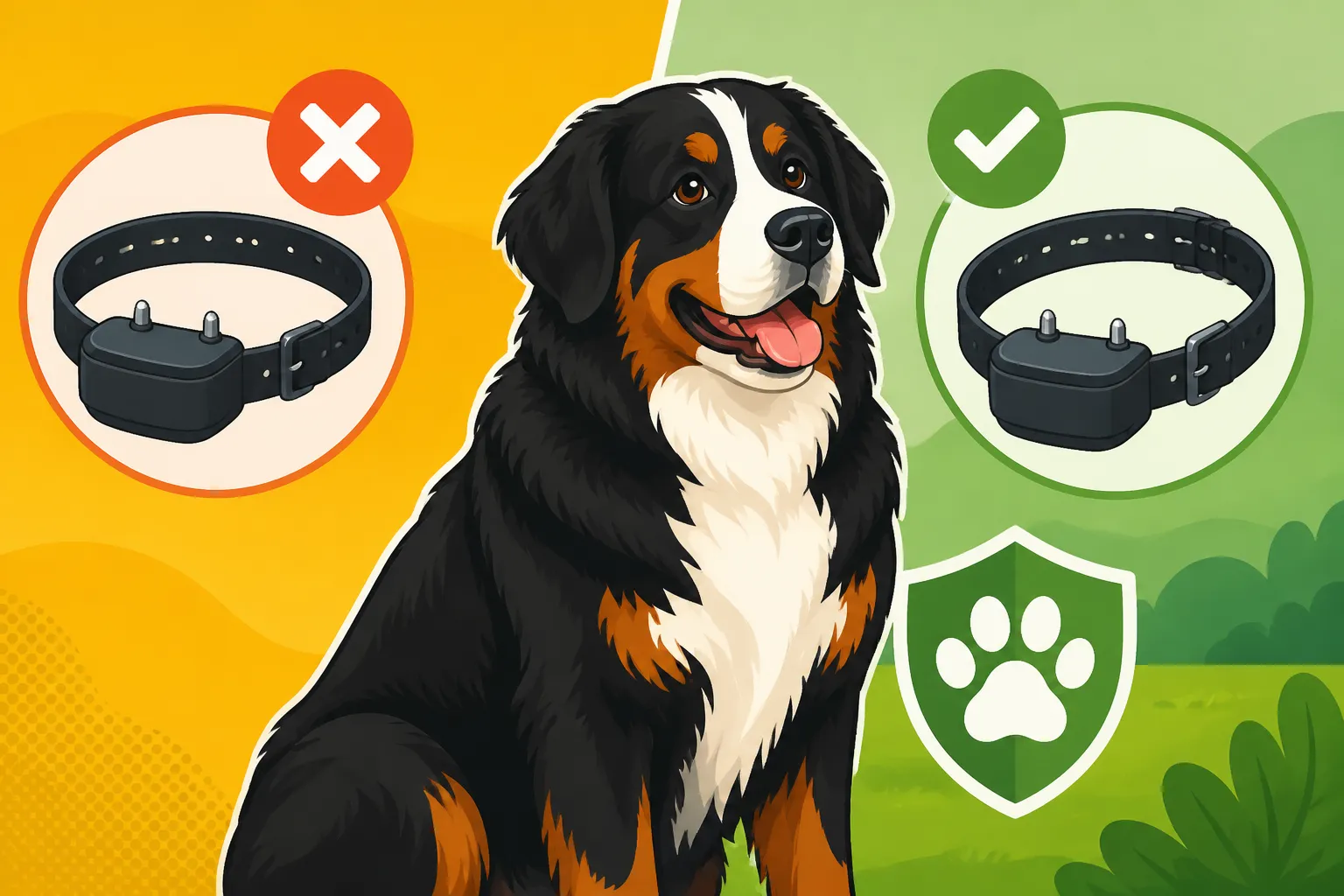
The term "e-collar" itself is a source of much misunderstanding, often associated with the outdated and harsh "shock collar" image. Modern e-collars, however, are far more nuanced. They deliver various forms of stimuli, ranging from mild vibration and audible tones to static stimulation. The static stimulation is often described by proponents as a "tap" or a "muscle contraction," akin to the sensation of a TENS unit or static electricity, rather than a painful electric shock. The intensity is usually highly adjustable, allowing a trainer to start at very low levels.
The intention behind using these collars, for many trainers, is to provide a clear, consistent, and instant communication tool, particularly for off-leash work or breaking intense focus on distractions. The idea is to create a negative association with an undesirable behavior or to reinforce a command at a distance. However, even at low levels, the sensation is aversive – meaning it's something the dog wants to avoid. For a Bernese Mountain Dog, even a mild aversive stimulus can be profoundly impactful due to their inherent sensitivity.
The Debate: Aversive vs. Positive Reinforcement
This brings us to the core of the controversy: the debate between aversive training methods (which include e-collars, prong collars, and harsh leash corrections) and positive reinforcement. Positive reinforcement focuses on rewarding desired behaviors, making the dog more likely to repeat them. Think treats, praise, toys, and games. This approach builds enthusiasm and a strong bond. Many experienced Berner owners and trainers will tell you that What a Bernese Mountain Dog Will Actually Work For is often attention and a tasty snack.
Aversive methods, on the other hand, aim to suppress unwanted behaviors by applying an unpleasant stimulus when the dog performs them. While proponents argue that properly applied e-collars can be effective and humane, critics (including most veterinary behaviorists and positive reinforcement trainers) raise concerns about the potential for fear, anxiety, learned helplessness, and damage to the human-animal bond, especially in sensitive breeds. They worry that the dog learns to avoid the stimulus, rather than truly understanding what is expected of them, and that misapplication can lead to generalized fear or aggression. For a Bernese Mountain Dog, whose confidence is so easily shaken, this risk is particularly relevant. It's a heavy decision to make, weighing efficacy against potential emotional fallout.
The Potential Risks and Rewards for a Berner
Considering an e-collar for a Bernese Mountain Dog isn't a decision to take lightly. It really boils down to weighing the potential benefits against the very real risks, keeping in mind the unique temperament of this wonderful breed. There are stories of success, but also cautionary tales that are important to consider.
The "Quick Fix" Appeal and Its Downside
I totally get the appeal. When you have a large, strong dog that sometimes pulls like a freight train or seems deaf to your calls in a busy park, the idea of a tool that offers immediate, consistent communication across a distance can be incredibly tempting. For some, an e-collar is seen as a way to gain reliable recall off-leash, or to quickly correct undesirable behaviors like chasing wildlife or jumping on guests. The promise of a "quick fix" for long-standing behavioral issues is powerful, especially for busy families or those feeling overwhelmed by their dog's size and strength. In some cases, proponents argue it can even be a safety tool, preventing a Berner from running into traffic or getting into dangerous situations.
However, the downside, especially for a Berner, is significant. The very effectiveness of an e-collar relies on its aversive nature. For a sensitive breed, even low-level static stimulation can be perceived as frightening or confusing, potentially leading to anxiety, fear, and a breakdown of trust. Instead of learning what to do, your Berner might learn to simply avoid the stimulus. They could associate the correction with something else entirely – perhaps the approaching child, another dog, or even you – leading to unexpected behavioral problems down the line. A dog that is constantly trying to avoid an unpleasant sensation might appear "trained" but could internally be experiencing significant stress, which is the last thing any Berner owner wants for their loyal companion.
Behavior Fallout and Damaged Trust
The biggest risk with e-collar use in Bernese Mountain Dogs is the potential for behavioral fallout. Because they are so sensitive, the misapplication or even just the inherent nature of an aversive correction can lead to unforeseen issues. For example, if a Berner receives a static correction while greeting another dog, they might start to associate other dogs with that unpleasant feeling, leading to fear or reactivity. If they get a correction when they are simply startled by a sudden noise, they might become generally anxious and withdrawn. The Bernese Mountain Dog That Cannot Bear Being Left often indicates a dog who thrives on security and routine, and sudden, unpredictable corrections can shatter that sense of safety.
What we want is for our Berners to be confident, happy dogs who trust us implicitly. Aversive methods can erode that trust. Instead of seeing you as their safe haven and guide, they might start to see you as the source of discomfort. This can manifest as avoidance, cowering, or even a complete shutdown in training. It makes building that eager-to-please attitude much harder, and for a breed that lives for companionship, damaging the bond is a heartbreaking consequence. It’s crucial to remember that we’re trying to build a lifelong partnership, not just achieve momentary compliance.
Alternatives to E-Collar Training for Bernese Mountain Dogs
Thankfully, for Bernese Mountain Dogs, there are numerous effective, humane, and positive-reinforcement-based training methods that align perfectly with their sensitive nature. These approaches focus on building a strong bond, clear communication, and motivating your Berner to want to perform the desired behaviors.
Embracing Positive Reinforcement and Lure-Reward Methods
Positive reinforcement is, hands down, the best approach for a Bernese Mountain Dog. This means rewarding the behaviors you want to see with something your dog loves – be it high-value treats, a favorite toy, enthusiastic praise, or a quick game of tug. For a Berner, who often has a healthy appetite, food is usually a fantastic motivator. You use lures (like a treat to guide them into a sit) and then reward them for completing the action. Over time, the lure fades, and the verbal cue becomes enough. This approach builds confidence and makes training a fun, engaging activity for both of you. Many online programs, such as those offered by BAXTER & Bella, are built entirely around these force-free principles, providing structured lessons that help you understand why your dog does what they do and how to teach them new skills effectively.
Consistency is key here. Every time your Berner offers a good behavior, reward it. Did they sit politely when a guest came to the door instead of jumping? Reward! Did they walk nicely on a loose leash for a few steps? Reward! This helps them understand what you expect and makes them eager to try again. When thinking about Whether a Bernese Mountain Dog Is Stubborn, it's often a matter of finding the right motivation and making it clear what's in it for them. This creates a dog who genuinely enjoys learning and working with you, rather than one who is simply avoiding punishment.
Tools and Techniques for Management and Safety
While positive reinforcement is the primary training method, sometimes you need management tools to keep your strong Berner safe and to prevent them from practicing unwanted behaviors while they are still learning. This is especially true for managing their strength on a leash or ensuring reliable recalls in open spaces.
Here are some excellent alternatives:
- Front-Clip Harnesses: These harnesses clip at the chest, redirecting your Berner's forward momentum if they pull. Instead of putting pressure on their throat, it gently turns them to the side, making it much harder for them to pull you down the street. It’s a game-changer for walking a large, powerful dog. Front-Clip Harnesses on a Hundred Pound Bernese Mountain Dog can make walks enjoyable again while you work on loose-leash training with treats.
- Long Lines: For recall practice in a safe, open area, a long line (15-30 feet) allows your Berner to experience off-leash freedom while you maintain a safety connection. You can gently reel them in if they don't respond to your recall cue, then reward them heavily when they come. You can find a wide range of training supplies, from long lines to treat pouches, on platforms like Amazon, making it easy to equip yourself for successful training.
- Head Halters: For some Berners, a head halter (like a Gentle Leader) can provide more control than a harness, guiding their head in the direction you want them to go. It’s similar to how a bridle works on a horse. They take some getting used to, but can be very effective for strong pullers.
- Environmental Management: Sometimes, the best "training" is simply managing the environment. If your Berner can't resist counter-surfing, put tempting items away. If they jump on visitors, keep them on a leash or behind a gate until they can greet calmly. Preventing the problem from happening in the first place reduces the need for corrections and allows you to reward good choices.
| Training Approach | Key Characteristics | Suitability for Bernese Mountain Dogs | Primary Outcome |
|---|---|---|---|
| Positive Reinforcement | Rewards desired behaviors (treats, praise, toys) | Highly suitable; aligns with their sensitive, eager-to-please nature | Builds confidence, strengthens bond, enthusiastic learner |
| Aversive Methods (e.g., E-collars) | Applies unpleasant stimulus to stop unwanted behaviors | Generally not recommended due to sensitivity; high risk of fear/anxiety | Suppression of behavior, potential for emotional fallout |
| Lure-Reward Training | Uses a motivator (like a treat) to guide dog into position | Excellent for teaching new commands and shaping behavior | Clear communication, enjoyable learning experience |
| Management Tools (Harnesses, Long Lines) | Physically prevents unwanted behaviors, ensures safety | Essential for large, strong breeds during the learning phase | Prevents rehearsal of unwanted behaviors, safety |
The Importance of Professional Guidance
No matter which path you choose, consulting with a professional dog trainer is invaluable, especially with a large and sensitive breed like the Bernese Mountain Dog. A qualified, certified positive reinforcement trainer can assess your dog's individual personality, help you troubleshoot specific challenges, and guide you through effective, humane training plans. They can teach you the nuances of timing, motivation, and communication that are so crucial for success.
If you are considering an e-collar, it is absolutely paramount that you work with a trainer who has extensive experience using them on sensitive breeds and who prioritizes humane application. Even then, be aware of the inherent risks. A good trainer will always start with and exhaust positive reinforcement methods before considering anything else, and should be transparent about the potential downsides. They can help you understand Whether a Balanced Trainer Suits a Bernese Mountain Dog and guide you to make an informed decision that truly benefits your dog. Remember, the goal is always a happy, well-adjusted Berner who trusts you completely.
Disclaimer
This article is for general informational purposes only and does not constitute professional advice. Laws, prices and regulations vary by location and change over time. Consult a qualified professional for guidance on your specific situation.