Stopping a Bernese Mountain Dog Putting Paws on People
There's nothing quite like the joyful, wagging greeting of a Bernese Mountain Dog, but when that enthusiasm comes with a hundred pounds of dog launching onto your chest, it can quickly turn from endearing to downright dangerous, especially for kids or older family members. It’s a common frustration, and many Berner owners feel helpless against such a big, loving lump. This guide is here to walk you through practical, empathetic strategies to help your beloved Bernese learn better greeting manners, keeping everyone safe and happy.
Understanding Why Your Bernese Mountain Dog Puts Paws on People
It’s easy to feel like your big, beautiful Berner is just being stubborn or overly boisterous when they jump up, but understanding the root cause of this behavior is the first step toward changing it. Dogs, especially those bred for companionship and working alongside humans like the Bernese Mountain Dog, are often seeking connection and attention in the ways that come most naturally to them.
The Instinct to Greet and Seek Attention
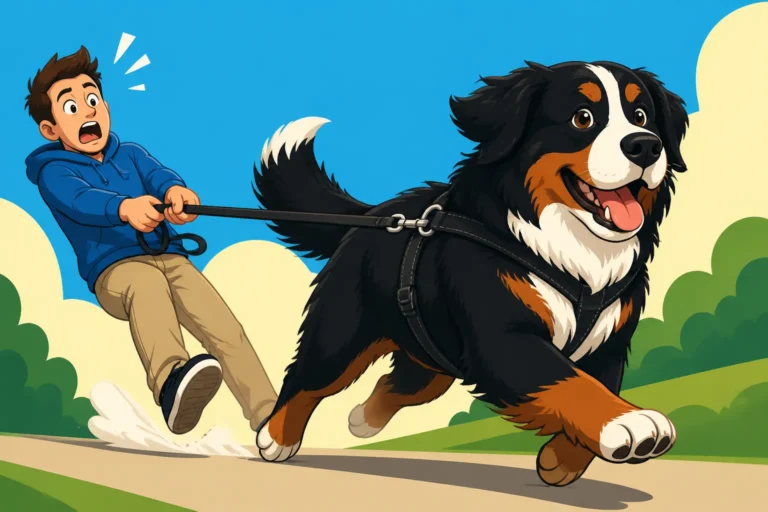
From a puppy's perspective, jumping up is often an attempt to get closer to your face, which is a natural canine greeting. They want to investigate, to lick, or simply to be at your level. For a Bernese Mountain Dog, this instinct doesn't diminish as they grow into an impressive, heavy adult. What was cute and manageable with a fifteen-pound puppy becomes a significant issue with a seventy or hundred-pound adolescent. Their sheer size and strength can make even a well-intentioned greeting feel overwhelming, or even painful, to the person on the receiving end.
Moreover, dogs are social creatures and thrive on interaction. When your Berner jumps up, they are often desperate for your attention, even if that attention is negative. A push, a verbal reprimand, or even just eye contact can inadvertently be perceived as a reward by your dog, encouraging the behavior to continue. They might be thinking, "Aha! I got a reaction! This works!" This can be incredibly frustrating for us humans who are trying to teach them otherwise, as it feels like we're constantly battling their natural exuberance. They just want to be close to their people, and sometimes they haven't quite learned the best way to ask for that interaction.
Accidental Reinforcement and Learning
Many of us, without even realizing it, accidentally teach our Bernese Mountain Dogs that jumping up is a fantastic way to get what they want. Think about it: when your Berner puppy put its tiny paws on you, perhaps you bent down, gave a little pat, or said "aww." This immediate response, however gentle, taught them that paws on people equals attention. As they grew, the behavior often escalated because it continued to be effective.
Consider a scenario: you walk in the door after a long day. Your Bernese, thrilled to see you, launches up. Your natural reaction might be to push them down, say "no jump!", or turn your back. While turning your back is a step in the right direction, many people inadvertently engage verbally or physically. Even a gentle push can feel like play to a big dog. The key is to recognize that any attention – good or bad – can reinforce the behavior. They don't differentiate between "good attention for jumping" and "bad attention for jumping" as clearly as we do. It's just attention. This makes breaking the habit a real challenge because we have to actively rewire both our own and our dog's ingrained responses.
Training Strategies to Prevent Paws on People
Once you understand why your Bernese is jumping, you can implement clear, consistent training strategies. The goal isn't to squash their joyful spirit, but to channel it into more polite and safer greeting behaviors. This takes patience, repetition, and a unified front from everyone who interacts with your dog.
The "Four Paws on the Floor" Rule
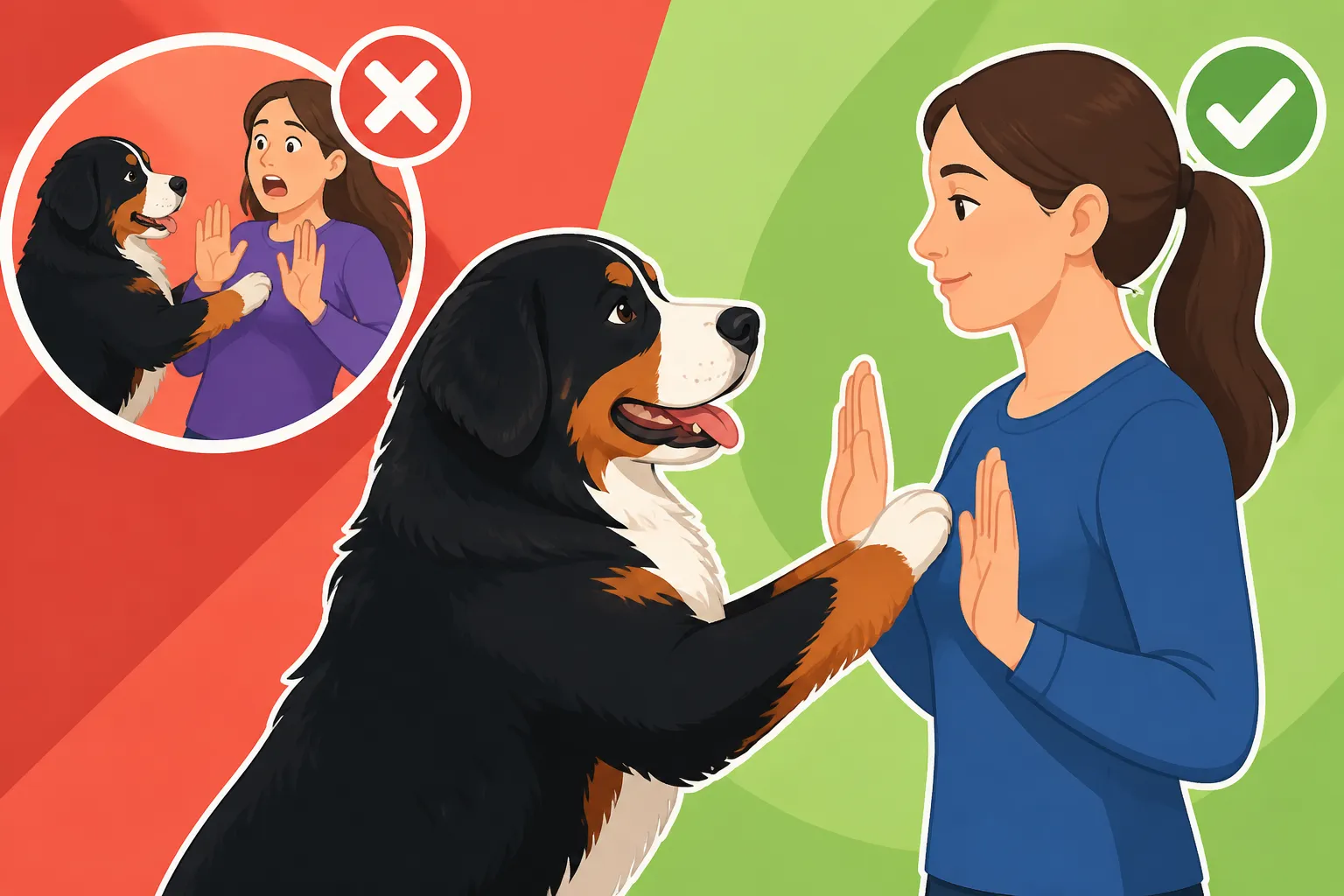
This is the golden rule for tackling jumping: your Bernese Mountain Dog only gets attention when all four paws are firmly planted on the ground. This sounds simple, but it requires diligent consistency from every single person who interacts with your dog. When your Berner approaches and starts to lift their paws, immediately turn your back, cross your arms, and completely ignore them. Make yourself as boring and uninteresting as possible. No eye contact, no talking, no touching.
The moment their paws return to the floor, even for a split second, calmly turn back around, offer a soft verbal praise like "good!" or "yes!", and then provide gentle attention – a head scratch, a calm "hello." If they jump up again, repeat the sequence: turn away instantly. This teaches them, "Paws up? Fun stops. Paws down? Fun starts." It's a powerful way to communicate what you want. This approach, though initially slow, builds a clear understanding. For more general behavior guidance, you might find valuable insights in Training a Bernese Mountain Dog Without Breaking It.
Teaching an Alternative Behavior
Instead of just telling your Bernese what not to do, you need to teach them what to do instead. A reliable "sit" command is your best friend here. When you anticipate a greeting, ask your Berner to "sit." The moment their rear hits the floor, reward them with praise, a high-value treat, or a calm pet. This shifts their focus from jumping for attention to sitting for attention. The more they practice this, the more it becomes their default greeting behavior.
You can also teach a "place" command, where your dog learns to go to a designated bed or mat when people enter the house. This is particularly useful for managing excitement during arrivals. You direct them to their "place," reward them for staying there, and once they are calm, they can be invited over for a proper, four-paws-on-the-floor greeting. Resources like BAXTER & Bella offer structured online training programs that can guide you through teaching these alternative behaviors effectively, often with video tutorials that are incredibly helpful for visual learners. Starting your Berner on joint medication young can also support their physical ability to maintain these desired positions without discomfort, especially as they age, as discussed in Starting a Bernese Mountain Dog on Joint Medication Young.
Consistency and Management in Different Scenarios
The biggest challenge with a large, enthusiastic Bernese Mountain Dog is consistency. It's not enough for you to be consistent; everyone your dog interacts with needs to follow the same rules. This includes family members, friends, and even visitors to your home. Before guests arrive, explain your "four paws on the floor" rule and ask them to help reinforce it. Provide them with treats to reward the correct behavior. Children, especially, need careful supervision and instruction on how to interact with a big dog safely, a topic explored further in A Bernese Mountain Dog Around Children.
Managing greetings outside the home is equally important. When you're out walking, and your Berner gets excited seeing another person or dog, try to intercept the jump before it happens. Ask for a "sit" or "watch me" before they have a chance to launch. If they do jump, calmly move away or turn your back until they settle. Remember, every successful "four paws on the floor" greeting reinforces the desired behavior, and every accidental reinforcement of jumping sets you back a step. This vigilance is crucial for dogs learning Leash Manners on a Hundred Pound Bernese Mountain Dog.
Tools and Techniques to Aid Your Training
Sometimes, a little extra help can go a long way in managing the sheer power and enthusiasm of a Bernese Mountain Dog. There are several tools and techniques that can support your training efforts, making it easier for both you and your dog to succeed.
Harnesses and Leash Control
For a powerful breed like the Bernese Mountain Dog, a good harness can make a significant difference in managing jumping, especially when you're out in public or have guests over. Front-clip harnesses are particularly effective because they redirect your dog's momentum sideways if they try to pull or jump, making it much harder for them to launch themselves forward or upward. Instead of pulling against their chest, a front-clip harness encourages them to turn towards you. This gives you greater control without causing discomfort.
You can find various styles and brands of front-clip harnesses on platforms like Amazon, offering different levels of padding and adjustability to ensure a comfortable fit for your large Berner. Using a sturdy leash in conjunction with this type of harness means you have a reliable way to guide your dog's behavior gently. It’s about leveraging equipment to make the right choice the easier choice for your dog. For more detailed information on controlling a large dog, you might want to read Front-Clip Harnesses on a Hundred Pound Bernese Mountain Dog.
Management Tools for Home and Visitors
Sometimes, the best training tool is prevention. When guests arrive, or during times of high excitement, using physical barriers can manage your Bernese Mountain Dog's behavior effectively. Baby gates or taller pet gates can create a controlled environment, allowing your dog to greet people calmly from a distance before being allowed closer once they demonstrate polite behavior. This removes the opportunity to jump and gives them a chance to self-regulate their excitement.
Crates can also be invaluable. If your Bernese gets overly excited when someone first walks through the door, having them calmly settle in their crate with a chew toy can be a great way to manage the initial rush. Once the excitement has subsided, they can be released for a polite greeting. Designated dog beds or mats, especially with a "place" command, provide a clear boundary and a comfortable spot for them to relax. Teaching a dog to stay on their mat can be a game-changer for managing chaotic situations, offering a safe, predictable spot for your dog to go. This ties into broader discussions about Crate Training an Adult Bernese Mountain Dog.
Positive Reinforcement Aids
Positive reinforcement is the cornerstone of effective dog training, especially for sensitive breeds like the Bernese Mountain Dog who might "quit after one correction," as explored in The Bernese Mountain Dog That Quits After One Correction. High-value treats, those extra-special morsels your dog absolutely loves, are essential for rewarding desired behaviors. Keep them readily accessible in a treat pouch on your person, so you can deliver them immediately when your Berner keeps all four paws on the floor. The timing of the reward is critical for your dog to understand what they are being rewarded for.
Clicker training can also be incredibly effective. A clicker provides a precise marker for the exact moment your dog performs the desired behavior, followed immediately by a treat. This clarity helps your Berner learn much faster. Beyond physical tools, consider online resources. Platforms like BAXTER & Bella provide comprehensive online training programs that are fantastic for step-by-step guidance. They often include video demonstrations and expert support, which can be a huge asset when you’re dealing with the nuances of training a large breed like the Bernese Mountain Dog.
| Strategy | Description | Key Benefit |
|---|---|---|
| Four Paws on the Floor | Ignore jumping by turning away; reward immediately when all paws are on the ground. | Clearly communicates acceptable greeting behavior. |
| Alternative Behavior | Teach and reward "sit" or "place" as a default greeting. | Gives the dog a positive action to perform instead of jumping. |
| Consistency | Ensure all family members and guests follow the same rules; manage environments. | Prevents accidental reinforcement and speeds up learning. |
| Front-Clip Harness | Provides better control on leash by redirecting pulling/jumping momentum. | Offers physical management without force, especially for strong Berners. |
| Gates/Crates | Physical barriers to prevent jumping during high-excitement periods. | Manages opportunities for undesirable behavior; creates safe spaces. |
| High-Value Treats | Use strongly motivating rewards delivered immediately after desired behavior. | Enhances learning and makes training enjoyable for your Bernese. |
Addressing Specific Challenges with a Large Bernese Mountain Dog
While the general principles of training apply to all dogs, the sheer size and strength of a Bernese Mountain Dog present unique considerations when addressing behaviors like jumping. You're not just dealing with an eager pup; you're managing a significant amount of joyful, yet potentially problematic, energy.
The Weight and Size Factor
Let’s be honest, a Bernese Mountain Dog isn't just a "big dog"; they are a powerhouse. A full-grown Berner can easily weigh over 100 pounds, and when they launch themselves with excitement, it's enough to knock an adult off their feet, injure a child, or even cause an elderly person to fall. This isn't just about manners; it's about safety. The consequences of unchecked jumping are far greater with a Bernese than with a smaller breed. This reality can lead to increased stress for owners, who might feel constantly on guard, which isn't fair to either the dog or the human.
Because of their size, early intervention is absolutely key. Waiting until your Berner is six months old and already perfected the flying tackle technique makes the retraining process much more difficult. It's vital to instill polite greeting habits from puppyhood, even if their puppy jumps are still "cute." Thinking about how to manage their physical presence is a constant consideration, including how they interact with others, as detailed in Teaching Strangers How to Greet a Bernese Mountain Dog.
Consistency with Guests and Public Outings
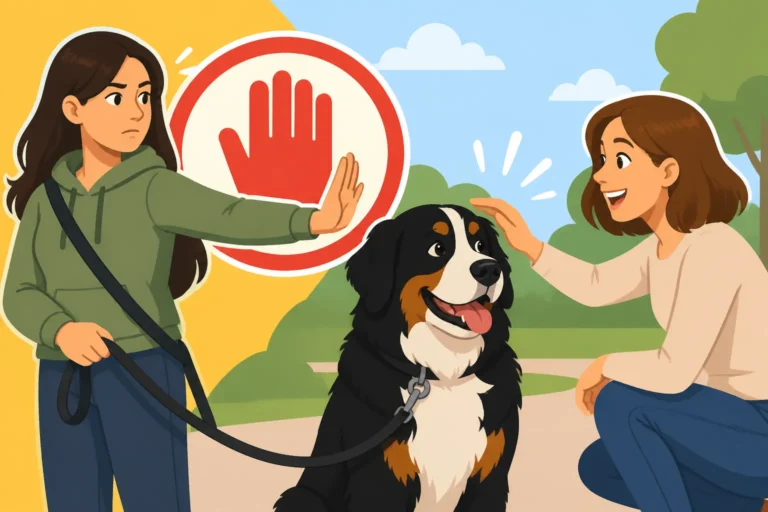
Maintaining consistency around guests is one of the trickiest parts of stopping a Bernese Mountain Dog from putting paws on people. Everyone loves a Berner, and many people, upon seeing that gorgeous, fluffy face, can’t resist bending down to greet them, inadvertently encouraging the jump. You need to be your dog's advocate and educator for your guests. Before anyone steps through the door, kindly explain your training rules. Ask them to ignore the dog until all four paws are on the floor, or to simply engage only when the dog is calmly sitting.
When you're out and about, the temptation for your Bernese to greet every passing stranger can be immense. This is where your leash and harness become crucial. Anticipate potential jumping situations. If you see someone approaching who looks likely to engage your dog, preemptively ask your Berner for a "sit" or "stay." Keep their focus on you with a high-value treat and praise for calm behavior. Remember that managing their excitement around other people and dogs is a constant effort, as also discussed in What a Bernese Mountain Dog Behaves Around Strange Dogs. Every public outing is a training opportunity, reinforcing good habits even amidst distractions.
When to Seek Professional Help
Despite your best efforts, some behaviors are deeply ingrained, or you might simply feel overwhelmed by the challenge of training a large, powerful dog. If you've been consistent with your training strategies and aren't seeing improvement, or if the jumping behavior is escalating or coupled with other issues like nipping or excessive excitement, it's time to consider professional help. A certified professional dog trainer, especially one who specializes in positive reinforcement and large breeds, can offer invaluable guidance.
They can assess your specific situation, identify any subtle cues you might be missing, and tailor a training plan that works for you and your Bernese Mountain Dog. Sometimes, an objective third party can spot things that we, as owners, are too close to see. They can also teach you advanced handling techniques and provide new perspectives. Don't view seeking professional help as a failure; view it as an investment in your dog's future and your household's peace of mind. A good trainer can make all the difference, and understanding what to look for in a trainer is important, as covered in Whether a Balanced Trainer Suits a Bernese Mountain Dog.
Disclaimer
This article is for general informational purposes only and does not constitute professional advice. Laws, prices and regulations vary by location and change over time. Consult a qualified professional for guidance on your specific situation.