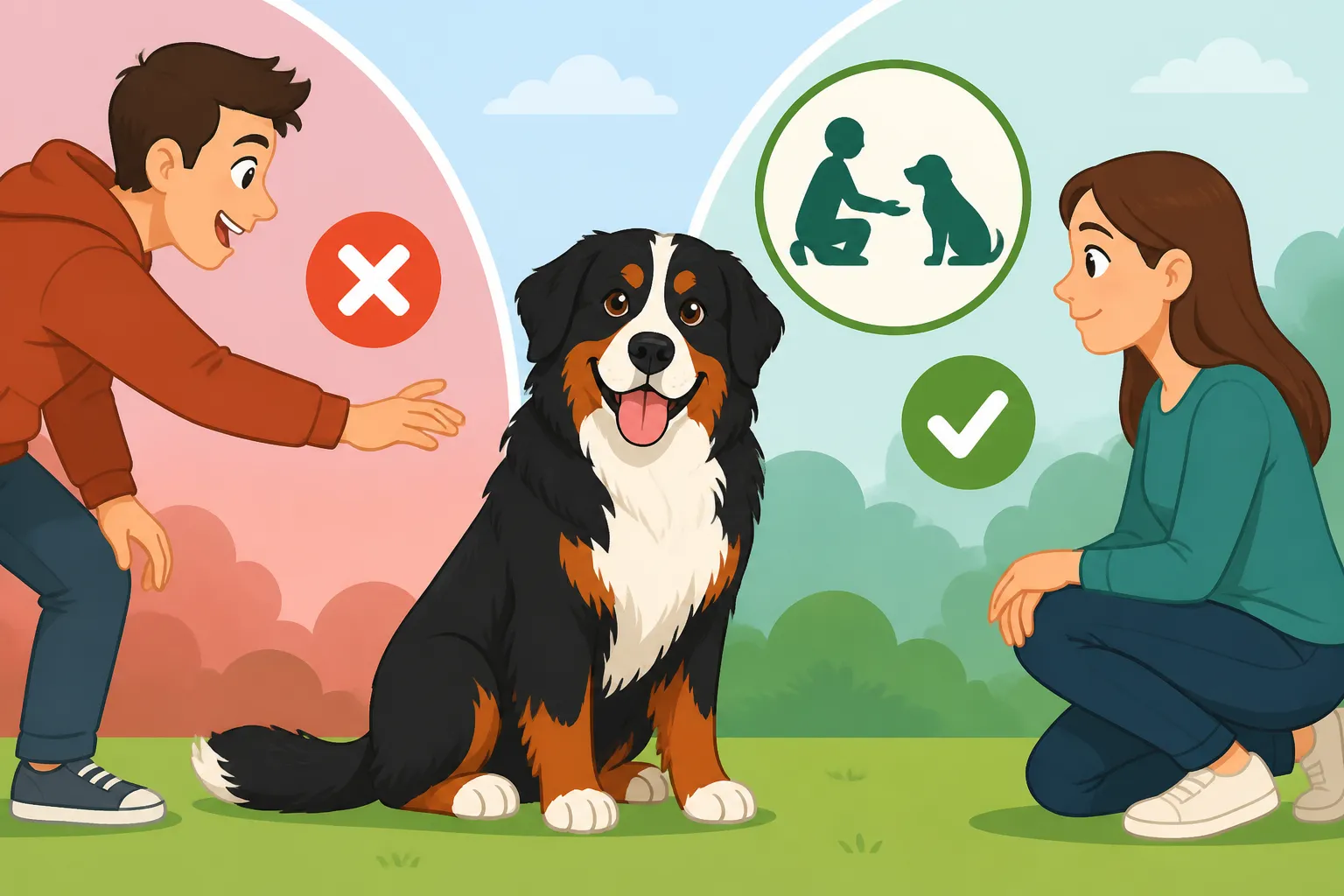
Teaching Strangers How to Greet a Bernese Mountain Dog
There's nothing quite like walking your magnificent Bernese Mountain Dog and seeing the sheer joy and admiration they inspire in strangers. People are naturally drawn to their stunning coats, gentle eyes, and impressive size. But let's be honest, that instant magnetic pull can also create some awkward, and sometimes even unsafe, situations. Not every Berner is a social butterfly, and even the friendliest ones deserve to be greeted respectfully. This guide is all about empowering you, the Berner parent, to confidently navigate these encounters, ensuring both your dog and the people they meet have positive experiences.
Understanding Your Bernese Mountain Dog's Unique Greeting Style
Before we can teach others how to greet our Berners, we need to truly understand how our dogs communicate and what their natural tendencies are. Bernese Mountain Dogs are often called "gentle giants," and while many live up to that moniker, it doesn't mean they're always eager to be petted by every stranger. Their sheer size alone can sometimes be intimidating, even if their intentions are the sweetest.
The Gentle Giant Misconception
It's a common scene: you're walking your beautiful Bernese Mountain Dog, and suddenly, someone rushes over, arms outstretched, exclaiming about how gorgeous and friendly your dog must be. They see the fluffy coat, the wagging tail, and immediately assume a free-for-all petting session is in order. This is the "gentle giant" misconception at play. While many Berners are indeed good-natured and enjoy attention, not all of them appreciate a sudden, uninvited approach. Some might be naturally reserved, especially with strangers, a trait described in A Bernese Mountain Dog That Is Aloof With Strangers. Others might be shy or simply prefer to take their time getting to know someone. Their large size can make a seemingly innocent interaction feel overwhelming if not approached correctly, both for your dog and for the person. It's crucial for us to advocate for our dogs and manage these expectations, ensuring that strangers understand that "gentle" doesn't always equate to "instantly accessible."
Reading Your Berner's Cues
Your Bernese Mountain Dog is constantly communicating, even if it’s not in words. Learning to read their body language is your superpower in these stranger-greeting scenarios. A loose, wagging tail that sweeps from side to side, combined with relaxed ears and soft eyes, usually signals an eager and friendly dog. However, a stiff, high tail wag, combined with a tense body or direct stare, can indicate unease or even a challenge. Licking lips, yawning when not tired, or turning their head away can all be subtle signs that your Berner is feeling uncomfortable or stressed, even if they aren't growling or barking. If you see them trying to move away or "hide" behind you, that's a clear signal they're not interested in interaction right then. Pay attention to these nuanced signals. They tell you when your dog is saying "yes, please!" or "no thank you," which then informs how you instruct the stranger.
The "Berner Lean" and Other Quirks
Ah, the famous "Berner Lean"! If you own a Bernese Mountain Dog, you know exactly what I'm talking about. Your dog will sidle up to you, often with their full weight, and just lean into you. It's an endearing trait that many Berner owners adore, a sign of their affection and desire for closeness, as we discuss in The Bernese Mountain Dog That Leans on Everyone. However, when a Bernese Mountain Dog leans on a stranger, it can be misinterpreted. The stranger might see it as an extra-friendly hug, while for your Berner, it might be a way to seek comfort, stability, or even a subtle test of the person's reaction. Other quirks might include a tendency to mouth gently when excited, or to "herd" people by nudging them. Understanding these breed-specific behaviors allows you to explain them to curious strangers, providing context and preventing misunderstandings. It's all part of managing the interaction and setting boundaries.
Equipping Yourself for Successful Encounters
Being prepared is half the battle when it comes to managing how strangers interact with your Bernese Mountain Dog. It’s not just about what your dog does, but how you manage the situation with confidence and clear communication.
Proactive Management with Leash and Tools
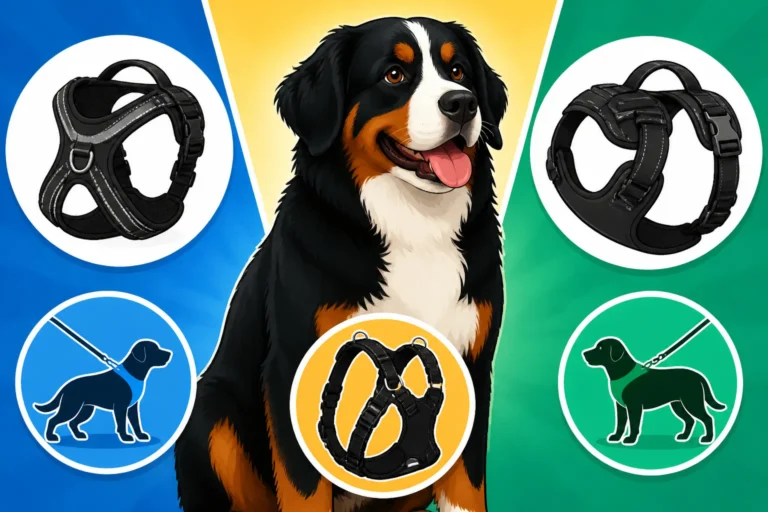
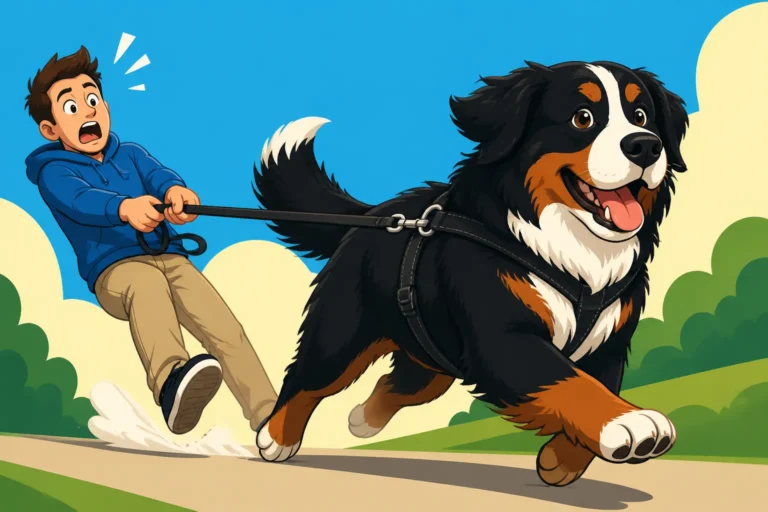
When you're out and about with your hundred-pound Bernese Mountain Dog, a sturdy leash and a reliable harness are not just accessories; they are essential safety tools. Imagine a sudden lunge from excitement or fear – you need to be able to hold your ground. A strong, comfortable leash that gives you a good grip, often six feet long, is ideal. For harnesses, many Berner owners find front-clip harnesses particularly helpful. These harnesses, widely available on platforms like Amazon, clip at the dog's chest, which helps redirect their forward momentum if they pull, rather than allowing them to drag you along. We've talked about these in Front-Clip Harnesses on a Hundred Pound Bernese Mountain Dog. Tools like these aren't just for training; they're for everyday control, giving you the confidence to manage your dog even when unexpected greetings occur. Having the right gear allows you to maintain control without resorting to harsh corrections, which can be counterproductive for a sensitive breed like the Bernese Mountain Dog, as explored in The Bernese Mountain Dog That Quits After One Correction.
Verbal Cues and Distraction Techniques
Your voice is a powerful tool in training and managing your Bernese Mountain Dog. Teaching specific verbal cues can make a huge difference in greeting scenarios. A solid "leave it" or "wait" command can keep your dog focused on you when a stranger approaches too quickly. A "touch" or "say hi" cue can be used to direct your dog to interact politely, maybe by gently sniffing a person's outstretched hand rather than jumping up.
High-value treats are your best friend here! Keep a pouch of irresistible goodies (again, Amazon has a fantastic selection of training treats) at the ready. If a situation feels overwhelming, or you simply want to ensure a calm pass, you can use these treats to create a positive distraction. Guide your dog into a "sit" or "watch me" with a treat, reinforcing calm behavior around strangers. This helps your Berner associate new people with good things, rather than just unexpected attention. This kind of positive reinforcement is key to building good manners.
Creating a Buffer Zone
Sometimes, the best way to manage a greeting is to prevent it altogether, or at least control the initial approach. Creating a "buffer zone" around your Bernese Mountain Dog is crucial, especially if they are shy, in training, or simply not in the mood for interaction. This might involve simply moving to the other side of the sidewalk when you see someone approaching, giving your dog more space. If someone is heading directly towards you, you can politely step in front of your dog, using your body as a barrier, and hold up a hand in a "stop" gesture. Changing direction entirely or crossing the street are also perfectly valid strategies. Don't feel obligated to allow every interaction; you are your dog's advocate. This proactive management helps instill good Leash Manners on a Hundred Pound Bernese Mountain Dog and teaches your dog that you're in control of their environment, reducing their need to react.
Here’s a quick overview of how owner and stranger actions can impact a greeting:
| Owner Action | Stranger Action | Potential Outcome for Berner | Recommended Action for Owner |
|---|---|---|---|
| Dog is on a short leash, owner engaged | Stranger rushes, no eye contact with owner | Berner feels crowded, reacts defensively | Step in front of dog, give "wait" cue, verbally ask stranger to stop and ask permission. |
| Dog is on long leash, owner distracted | Stranger approaches cautiously, asks permission | Calm, positive interaction | Guide dog to "sit," praise calm behavior, allow gentle interaction. |
| Dog is showing stress signals | Stranger reaches over dog's head | Berner retreats or snaps | Immediately block stranger, state "My dog needs space," redirect dog away. Reading Fear in a Bernese Mountain Dog That Retreats |
| Dog is excited, pulling forward | Stranger encourages jumping up | Berner learns jumping is acceptable | Keep leash short, use "off" or "four on the floor" cue, step on leash, disengage from stranger if they don't comply. |
| Dog ignores stranger, focuses on owner | Stranger ignores dog, walks past | Dog remains calm, rewarded with treat | Continue walking, verbally praise and reward dog for focus. |
Guiding Strangers on Appropriate Interaction
This is where you become the primary educator. Most people mean well, but they simply don't know how to properly greet a large dog. Your calm, clear instructions can turn a potentially awkward encounter into a positive one for everyone.
The Golden Rule: Always Ask First
This is the absolute cornerstone of responsible pet ownership and respectful interaction. You need to confidently and clearly communicate this to anyone who expresses interest in your Bernese Mountain Dog. When someone approaches, instead of letting them just dive in, you can politely but firmly say, "Please ask before petting him." Or, if you prefer to control the whole interaction, "She's beautiful, isn't she? We're actually in training right now, so we're practicing ignoring people." If you do allow interaction, make sure it’s on your terms. This simple act of asking gives you control and respects your dog's boundaries. It teaches strangers that dogs are not public property, and their consent (through their owner) is paramount. This rule is especially important for A Bernese Mountain Dog Around Children, as kids, while often well-meaning, tend to be very direct in their approaches.
How to Approach and Interact Safely
Once permission is granted, you can then guide the stranger on how to approach and interact. Most people don't realize that a direct, head-on approach or direct eye contact can be seen as confrontational by many dogs. Instead, suggest they:
- Approach Calmly and Indirectly: Advise them to walk up at an angle, avoiding a straight-on march.
- Avoid Direct Eye Contact: Suggest soft, glancing eye contact rather than a prolonged stare.
- Offer a Hand for Sniffing: Tell them to extend a loosely fisted hand down towards your dog's nose, allowing your Berner to initiate contact and sniff them. This gives your dog control over the initial interaction.
- Pet Appropriately: Once your dog seems comfortable, instruct them to pet the chest, shoulder, or side of the neck – areas that are less vulnerable than the top of the head. Suggest short, gentle strokes rather than overwhelming pats.
- Respect Your Dog's Space: Emphasize that if your dog turns away or shows signs of discomfort, the interaction should stop immediately. "He's telling you he's had enough," is a great phrase to use.
You can even model these actions yourself, showing the person how to crouch slightly (if you deem it safe for your dog), offer a hand, and pet gently. Consistency in your guidance helps your dog learn that you've got their back.
What to Avoid
Just as important as telling people what to do, is telling them what not to do. Many common human behaviors are perceived as threatening or overwhelming by dogs. Educate strangers to avoid:
- Bending Directly Over the Dog: This can feel very intimidating to a dog, especially a large one like a Berner. It's perceived as looming.
- Hugging or Kissing: While well-intentioned, these are primate behaviors that most dogs don't understand and often tolerate rather than enjoy. Many dogs feel trapped or uncomfortable when hugged.
- Sudden Movements or Loud Noises: These can startle even the calmest Bernese Mountain Dog.
- Getting in the Dog's Face: Staring directly, putting faces close to the dog's, or trying to pet the muzzle can be perceived as invasive.
- Patting the Head: This is a very common mistake. A hand coming down on top of a dog's head can be perceived as threatening. It’s much better to scratch under the chin or on the chest.
By giving clear, concise instructions, you're not only protecting your dog but also educating the public, one polite greeting at a time. It's a small step that can make a huge difference in ensuring safe and happy interactions for your beloved Berner.
Tailoring Greetings to Your Berner's Personality and Age
Every Bernese Mountain Dog is an individual. What works for one might not work for another. Tailoring your approach to your dog's specific personality and stage of life is key to fostering positive experiences.
Socializing the Reserved Puppy
Bernese Mountain Dog puppies are undeniably adorable, and everyone wants to cuddle them. While early socialization is crucial, it needs to be controlled and positive. For a reserved Berner puppy, too many overwhelming interactions can actually do more harm than good, leading to a shy adult. Instead of a free-for-all, focus on quality over quantity. Seek out specific, calm individuals who understand how to interact gently. Enroll in a well-regarded puppy class; programs like BAXTER & Bella offer excellent online resources for positive puppy socialization, which can be a great supplement to in-person classes. Remember, a reserved puppy needs to learn that strangers can be a source of calm, positive reinforcement, not just startling approaches. Socializing a Reserved Bernese Mountain Dog Puppy emphasizes this balanced approach. Limit interactions to a few positive ones per outing, rewarding your puppy with high-value treats for calm curiosity rather than forced engagement.
Managing the Overly Exuberant Greeter
Then there are the Berners who love people a little too much. These are the ones who want to jump up and offer enthusiastic (and sometimes muddy) kisses. While their intentions are pure, a hundred-pound dog jumping up is not acceptable, especially around children or elderly individuals. For these overly exuberant greeters, the focus needs to be on teaching impulse control.
Practice having your dog "sit" or "stay" when people approach, rewarding them heavily for keeping all four paws on the floor. If they jump, immediately turn your back and ignore them, or even step away. Only re-engage when they are calm. You can kindly ask approaching strangers to also ignore your dog until he or she is sitting politely. Consistency is key here. Every person who allows your dog to jump, even once, sets back your training. This is a big topic, and we've delved into Stopping a Bernese Mountain Dog Jumping Up in more detail before. It's about teaching your dog that calm behavior gets attention, not boisterous greetings.
Special Needs of Older or Fearful Berners
As Bernese Mountain Dogs age, they often develop joint issues like arthritis, a common concern discussed in Arthritis in a Bernese Mountain Dog by Six. What was once a comfortable lean or quick greeting might become painful. An older Berner might be less tolerant of sudden movements or being bumped. They might not see or hear as well, making unexpected approaches more startling. For these dogs, it's even more important to create a wide buffer zone and be explicit with strangers. "Please don't touch him, he's an old man with sore joints," is a perfectly acceptable statement.
Similarly, a fearful Bernese Mountain Dog requires extreme caution and a protective owner. These dogs are not aloof; they are genuinely afraid, and a forced interaction could lead to a bite out of fear. You can learn more about recognizing these signals in Reading Fear in a Bernese Mountain Dog That Retreats. For a fearful Berner, the goal is often not to interact with strangers, but to build their confidence by calmly observing people from a distance. Politely turning down strangers who want to pet them, even if it feels awkward, is your duty. You might say, "She's a rescue and very shy, we're working on building her confidence, so we can't do greetings right now." Never force a fearful dog into an interaction.
Remember, you are your Bernese Mountain Dog's advocate. You know them best. By understanding their individual needs, communicating clearly with strangers, and using appropriate tools and training, you can ensure that every interaction is safe, positive, and respectful for your cherished companion.
Disclaimer
This article is for general informational purposes only and does not constitute professional advice. Laws, prices and regulations vary by location and change over time. Consult a qualified professional for guidance on your specific situation.