Sports a Bernese Mountain Dog Can Do
It’s easy to look at your big, beautiful Bernese Mountain Dog and think their ideal sport is, well, napping on the couch. But underneath that fluffy, calm exterior lies a dog that often craves mental and physical engagement beyond just daily walks. Many Berner owners feel a pang of guilt or frustration, wondering how to channel their dog's energy and instincts in a fun, safe, and enriching way. This comprehensive guide will explore various dog sports and activities that Bernese Mountain Dogs can excel at, helping you find the perfect outlet for your beloved companion.
The Gentle Giant's Hidden Drive: Why Sports Matter for Berners
Bernese Mountain Dogs were originally bred for farm work in the Swiss Alps, which involved herding, guarding, and pulling carts. These aren't just pretty faces; they possess a deep-seated desire to have a job, to be useful, and to spend time actively engaged with their human companions. When these instincts aren't met, a Berner might become bored, leading to less desirable behaviors around the house, or simply appearing sluggish and unmotivated. Finding the right sport can tap into these natural drives, providing vital physical exercise and mental stimulation that contributes to a longer, happier, and healthier life. It's not just about winning ribbons; it's about strengthening your bond and seeing your Berner truly thrive.
Tapping into Natural Instincts
Think about what your Berner's ancestors did all day. They were moving, observing, problem-solving, and working alongside their human partners. This heritage means that many Berners, even if they seem like laid-back couch potatoes, respond incredibly well to activities that mimic these historical roles. For example, a strong pulling instinct can be beautifully channeled into drafting rather than struggling on a leash. Their keen sense of smell, used for tracking livestock or finding lost items on a farm, makes them surprisingly adept at scent work. Ignoring these inherent drives is like having a powerful engine and never taking it out of the garage – it simply doesn't reach its full potential.
It’s also crucial for their well-being. A dog that is mentally stimulated is often a more content dog. Just like humans, dogs can get into a rut, and a new challenge can reignite their spark. For a breed prone to certain health challenges, maintaining an appropriate activity level can also support joint health and a healthy weight, which can have a huge impact as they age. Whether a Lean Bernese Mountain Dog Lives Longer is a question many owners consider, and appropriate exercise is key.
Beyond the Daily Walk: Mental & Physical Benefits
A walk around the block is wonderful, but it often doesn't provide the kind of comprehensive workout, both mental and physical, that a Bernese Mountain Dog truly benefits from. Many sports demand not just physical exertion but also intricate problem-solving, focus, and cooperation. This dual engagement helps prevent boredom and can reduce anxiety, leading to a calmer dog at home. Imagine the satisfaction your Berner gets from figuring out a scent puzzle or navigating a complex obedience course!
Furthermore, regular, structured activity is a cornerstone of managing common health issues that Berners face. Controlled exercise helps maintain strong muscles to support their large frames, which is vital given their predisposition to conditions like hip and elbow dysplasia. It helps manage weight, reducing stress on joints. It also aids in cardiovascular health and overall vitality. The specific physical demands of each sport should always be considered in light of your individual Berner's age, health, and conformation.
Drafting and Carting: The Berner's True Calling
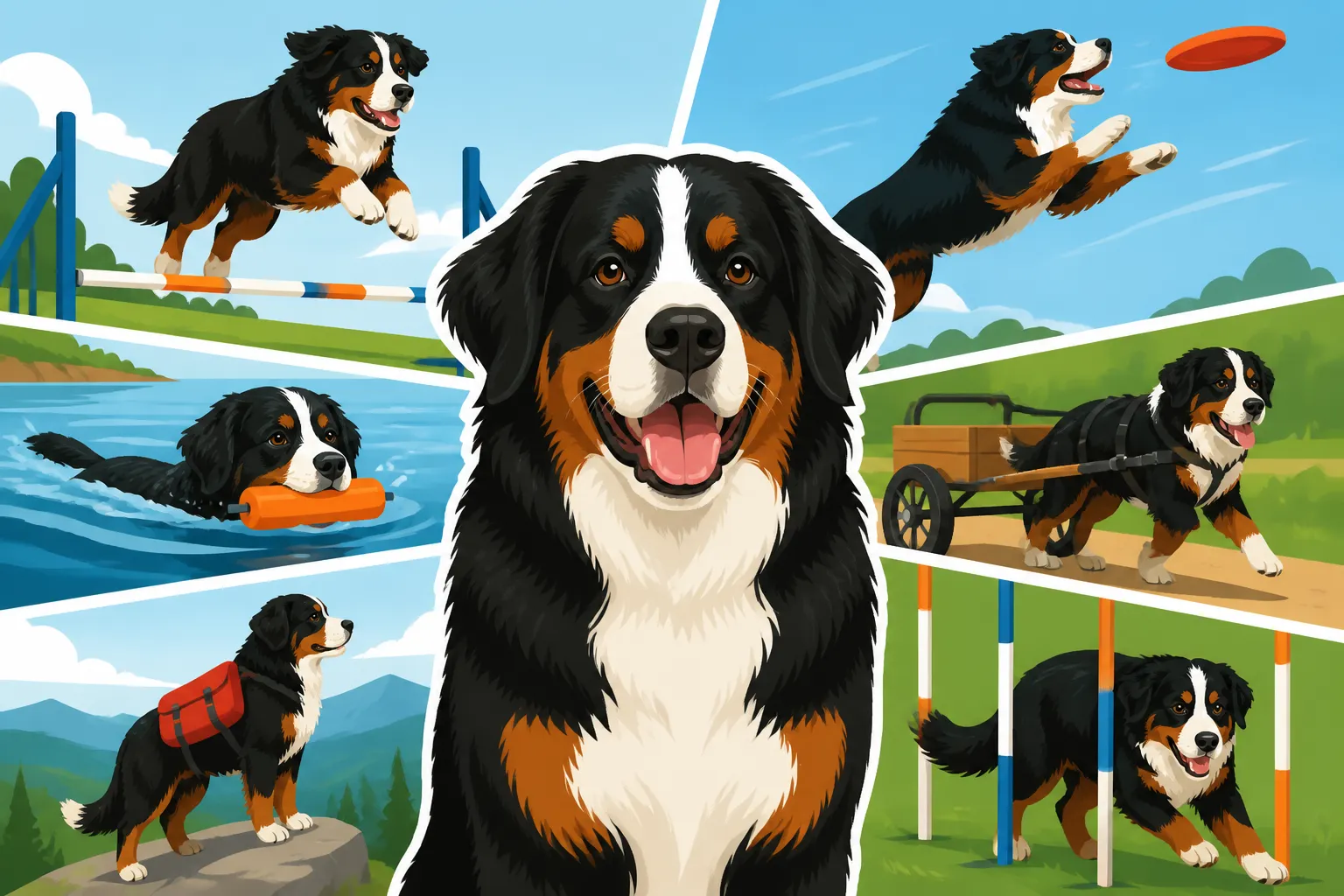
If there's one activity that truly speaks to the soul of a Bernese Mountain Dog, it's drafting, also known as carting. This sport allows them to fulfill their historical role of pulling carts, a job they were specifically bred for in the Swiss Alps. Watching a Berner confidently pull a cart with purpose is a sight to behold, and it's incredibly rewarding for both dog and owner.
Harnessing Ancient Instincts
Bernese Mountain Dogs historically pulled milk carts, produce, and supplies to market. This isn't just a quaint historical fact; it’s a deeply ingrained instinct. Many Berners take to drafting with an almost uncanny ease, as if they remember doing it in a past life. The solid, powerful build of a Bernese Mountain Dog is perfectly suited for this work, allowing them to pull substantial weight safely and efficiently. It’s a job where their strength and calm demeanor truly shine. When you begin Teaching a Bernese Mountain Dog to Pull a Cart, you'll often find they pick it up quickly because it resonates with their genetic blueprint.
The initial training focuses on getting them comfortable with the harness, the sound of the cart, and then gradually introducing the sensation of pulling. It's a progressive process that builds confidence and strength. Owners often start with light objects, like a small log or a tire, before moving on to an actual cart. The satisfaction they get from having a "job" is palpable, and it solidifies the partnership between handler and dog.
Training for the Trail and Competition
Getting started with drafting involves specialized equipment. You'll need a well-fitted draft harness that distributes weight evenly across their chest and shoulders, avoiding pressure on their throat or spine. Carts come in various designs, from simple two-wheeled carts for practice to more elaborate four-wheeled wagons for competitions or carrying heavier loads. You can find a good selection of quality draft harnesses and starter carts on platforms like Amazon. Initial training usually focuses on basic obedience commands like "walk," "stop," "go," and "haw" (left) and "gee" (right), which are crucial for maneuvering the cart safely.
Once your Berner is comfortable with the harness and pulling light loads, you can begin to introduce them to the shafts and the cart itself. This should always be a positive experience, with plenty of praise and treats. Many local Bernese Mountain Dog clubs offer drafting workshops and events, providing invaluable hands-on guidance from experienced handlers. When your dog is proficient, you can even enter draft tests, which evaluate a team's ability to navigate courses, perform specific maneuvers, and sometimes even haul weighted loads. The Twenty Pound Load a Novice Berner Carts is a common starting point for competition.
Obedience and Rally: Building a Foundation of Teamwork
While drafting speaks to their physical strength, obedience and rally sports focus on the Bernese Mountain Dog's intelligence and desire to please. These activities are fantastic for building a strong communication foundation and enhancing the bond between you and your Berner, making everyday life more harmonious, too.
Understanding the Berner Learning Style
Berners are generally intelligent, but they are also known for having a sensitive nature and a tendency to "shut down" if training is too harsh or repetitive. They don't respond well to heavy-handed corrections and excel with positive reinforcement, patience, and clear, consistent instruction. They might not be as lightning-fast as a Border Collie, but their thoughtful approach often leads to a deep understanding of commands. This means that Training Sessions Short Enough for a Bernese Mountain Dog are key to keeping them engaged and preventing them from getting bored or frustrated.
They might appear "stubborn" sometimes, but it's often more about thinking things through or simply not seeing the point. Making training fun and rewarding is paramount. Using high-value treats and enthusiastic praise will keep your Berner motivated. Online resources, such as those offered by BAXTER & Bella, can be incredibly helpful for learning positive reinforcement techniques and structuring engaging training sessions from the comfort of your home.
The Delights of Rally and Traditional Obedience
Traditional obedience focuses on precision and execution of commands like sit, stay, come, heel, and down, often performed off-leash in a ring. Rally obedience, on the other hand, is a bit more dynamic and forgiving. In rally, handler and dog navigate a course with numbered stations, each indicating a specific exercise to perform (e.g., "sit-stay," "spiral left," "send over jump"). It's less about strict precision and more about teamwork and communication, making it a wonderful entry point for many Berner teams.
These sports offer incredible benefits beyond potential ribbons. They sharpen your Berner's listening skills, improve their focus in distracting environments, and provide a fantastic mental workout. The skills learned are directly applicable to daily life, making your Berner a more polite and responsive companion at home and in public. Even if you never compete, working towards these goals together is a powerful bonding experience.
Tracking and Scent Work: Unleashing the Nose
Bernese Mountain Dogs possess an excellent sense of smell, a trait that was invaluable on the farm for locating lost animals or people. Modern scent sports like tracking and nose work tap into this natural ability, providing an engaging mental challenge that can be incredibly fulfilling for a Berner.
The Power of the Berner Nose
While not renowned as scent hounds, Berners definitely have the olfactory prowess to excel in tracking and nose work. Their calm and methodical nature often serves them well in these sports, allowing them to systematically follow a scent trail or meticulously search for hidden odors. It's a quiet, focused activity that builds confidence and provides immense mental stimulation. Many Berners, once they understand the game, become absolutely engrossed in the task, demonstrating incredible persistence.
Starting scent work or tracking often involves simple games at home, such as hiding treats and encouraging your dog to find them. This helps them understand the concept of using their nose on command. Progressing to more formal tracking, where they follow a human scent trail across various terrains, can be a bit more involved, but the principles remain the same: make it fun, rewarding, and build on success.
From Hidden Treats to Official Trails
Nose work, sometimes called "scent detection," involves teaching your dog to find specific target odors (like birch, anise, or clove) hidden in different environments, mimicking the work of detection dogs. This can be done in containers, interiors, exteriors, or vehicles. It’s incredibly adaptable and can be practiced anywhere, from your living room to a local park. You can purchase starter kits for nose work online, including essential oils and scent vessels.
Tracking takes this a step further, where your dog follows a human scent trail laid across a field or natural landscape. This involves specialized tracking harnesses and long lines. Both sports require patience and trust in your dog's abilities. They are low-impact physically, making them suitable for Berners of varying ages and physical conditions, provided they are sound enough to walk and investigate. They offer a unique way to connect with your Berner, observing them in their element, fully engaged in a task only their incredible nose can accomplish.
Therapy Work and Canine Good Citizen: Sharing the Love
Beyond competitive sports, many Bernese Mountain Dogs shine as therapy dogs, bringing comfort and joy to people in hospitals, nursing homes, and schools. Their gentle disposition, calm demeanor, and affectionate nature make them ideal candidates for this incredibly rewarding service. Achieving Canine Good Citizen (CGC) status is often a prerequisite and a fantastic stepping stone.
The Berner Temperament: A Perfect Match
The breed standard describes the Bernese Mountain Dog as "good-natured," "self-confident," and "friendly." These are precisely the qualities needed in a therapy dog. A Berner’s imposing yet approachable size and soft coat often draw people in, making them excellent icebreakers. They possess a natural empathy and a calm presence that can be incredibly soothing to individuals who are vulnerable, stressed, or lonely. The Temperament Test a Therapy Bernese Mountain Dog Passes typically assesses their reactions to loud noises, strange equipment, interactions with strangers, and their ability to remain calm in various situations.
It's important to remember that while many Berners have the right temperament, training is still essential. A therapy dog must be impeccably behaved, respond reliably to commands, and be comfortable with a wide range of sights, sounds, and interactions. Socialization from a young age is key to fostering this confidence and adaptability.
From Good Citizen to Compassionate Companion
The Canine Good Citizen (CGC) program, offered by the American Kennel Club (AKC), is a certification program designed to reward dogs who have good manners at home and in the community. It involves a 10-step test that demonstrates a dog's ability to respond to basic commands, walk politely on a leash, react calmly to distractions, and be handled by a stranger. This is an excellent foundation for any dog, and particularly for one aspiring to therapy work. You can find detailed training protocols and guidance for the CGC test through various online training programs or local dog clubs.
Once a Berner has achieved their CGC and demonstrated a consistently calm and friendly disposition, they can pursue therapy dog certification through organizations that specialize in connecting therapy animals with facilities in need. This typically involves further evaluations to ensure the dog is comfortable with hospital equipment, loud noises, and different types of people, including those with disabilities. The profound impact a gentle Berner can have on someone's day is immeasurable, transforming what might not be considered a "sport" into an incredible act of service.
Hiking and Backpacking: Embracing the Outdoors
For many Bernese Mountain Dog owners, the sheer joy of sharing the great outdoors with their magnificent companion is sport enough. Hiking and backpacking tap into their heritage as mountain dogs, providing fantastic exercise, breathtaking scenery, and quality bonding time.
Built for the Mountains, Made for the Trail
Bernese Mountain Dogs, with their sturdy build, strong legs, and love for cooler weather, are natural hiking partners. They possess a good endurance for sustained activity, though not the breakneck speed of some sporting breeds. Their powerful frame allows them to navigate uneven terrain with confidence, and their double coat provides insulation in cooler climates. However, it's crucial to remember their heat sensitivity. The Temperature a Bernese Mountain Dog Stops Coping can be surprisingly low, so always plan hikes for cooler parts of the day or year, and ensure access to plenty of water.
Introducing your Berner to hiking should be a gradual process, especially for puppies whose joints are still developing. The Five Minute Rule and a Bernese Mountain Dog Puppy is crucial; allow only five minutes of structured exercise per month of age. As they mature, build up mileage and difficulty slowly. Pay close attention to their comfort on different surfaces and be mindful of their pads on hot pavement or rocky trails.
Equipment and Safety for Adventurous Paws
When hitting the trails, proper equipment is essential. A well-fitting harness (not just a collar) provides better control and comfort, especially if your Berner needs a little guidance on steep sections. A hands-free leash that attaches to your waist can be a game-changer when navigating tricky terrain or if you're carrying a pack. For longer trips, a dog backpack allows your Berner to carry some of their own gear, like water bottles or collapsible bowls, further embodying their working heritage. You can find a wide range of dog hiking gear on Amazon.
Safety should always be a priority. Carry a first-aid kit for both humans and dogs, ensure your Berner is up-to-date on vaccinations and parasite prevention (flea, tick, and worm doses for a hundred-pound Bernese Mountain Dog are significant), and know the signs of overheating. Always check trail regulations regarding dogs and keep your Berner leashed where required. Being prepared ensures a safe and enjoyable adventure for both of you.
A Snapshot of Bernese Mountain Dog Sports
To help visualize the different options, here's a brief comparison of some sports and activities that Bernese Mountain Dogs can enjoy:
| Sport/Activity | Berner Strengths | Berner Challenges | Typical Equipment Needs |
|---|---|---|---|
| Drafting/Carting | Natural pulling instinct, strong build, calm demeanor | Requires specialized harness & cart, training patience | Draft harness, cart, long lines, training aids |
| Obedience/Rally | Intelligent, eager to please, strong bond with owner | Can be sensitive to harsh methods, may appear "stubborn" | Leash, collar/harness, treats, clicker, rally signs |
| Tracking/Nose Work | Excellent sense of smell, methodical, focused | Can be slow-paced for high-energy owners | Tracking harness, long line, scent articles, target odors |
| Therapy Work | Gentle, affectionate, calm, approachable size | Requires impeccable manners, extensive socialization | Vest/bandana, CGC certification, therapy organization registration |
| Hiking/Backpacking | Sturdy build, endurance, loves companionship, cold tolerance | Heat sensitivity, joint concerns with extreme impact | Hiking harness, hands-free leash, dog backpack, water bottles |
Remember, this table is a general guide. Every Bernese Mountain Dog is an individual, and their suitability for a particular sport will depend on their unique personality, physical condition, and your commitment as an owner.
Considerations for Your Berner's Athletic Career
Before diving headfirst into any sport, it's essential to consider a few key factors specific to the Bernese Mountain Dog. Their size, rate of growth, and genetic predispositions mean that a thoughtful approach to exercise and training is vital for their long-term health and well-being.
Age and Physical Development
One of the most critical aspects of exercising a Bernese Mountain Dog is understanding their growth plates and joint development. Berners are a giant breed and don't finish growing until they are typically 18-24 months old, sometimes even older when it comes to filling out. During this time, high-impact activities, excessive running, or repetitive jumping can cause irreversible damage to their developing joints. The Age a Bernese Mountain Dog Should Be X-Rayed for hip and elbow clearances usually happens after 24 months for good reason.
For puppies, short, supervised play sessions on soft surfaces are ideal. Focus on mental enrichment and gentle obedience training rather than intense physical exertion. As they mature, you can gradually increase the duration and intensity of exercise, but always listen to your dog. Look for signs of fatigue, lameness, or discomfort. Even after full maturity, moderation is key. Berners are not typically built for intense, high-speed, or high-impact sports like agility, though some individuals may participate with careful conditioning and veterinary oversight.
Health Screenings and Veterinary Oversight
Given the breed's propensity for certain health issues, particularly joint diseases and some cancers, a thorough health check with your veterinarian is non-negotiable before starting any new, demanding activity. Regular check-ups, even for healthy-looking dogs, are vital. Your vet can assess your Berner's overall condition, check for any underlying orthopedic issues, and advise on appropriate activity levels. For any competitive sport, official health clearances (like those from OFA for hips, elbows, and cardiac) are often required or highly recommended, especially if you plan to breed. The Bernese Mountain Dog Health Panel lists important screenings.
If your Berner has any existing health concerns, your vet can help tailor activities to their needs, perhaps recommending swimming or hydrotherapy as a low-impact option for joint support, for example. Being proactive about their health means they can enjoy activities safely for longer.
Temperament and Individual Personality
While Berners generally share common breed traits, each dog is an individual. Some Berners are more outgoing and thrive in busy environments, while others are more reserved and prefer quieter activities. Pay attention to your dog's reactions. Does a busy dog park make them anxious, or do they love the commotion? Do they show keen interest in sniffing out treats, or are they more engaged when you're actively working on a command together?
A "good-natured" Berner might still be a bit reserved with strangers, which is something to consider for therapy work or dog sports that involve many unknown people. Socializing a Reserved Bernese Mountain Dog Puppy is crucial in their early development to help them confidently navigate the world. Choosing an activity that genuinely suits your Berner's unique personality and energy level will lead to a more enthusiastic and successful partnership. The goal is to find joy and enrichment, not to force them into something they don't enjoy.
The Journey of Discovery
Embarking on a journey into dog sports with your Bernese Mountain Dog is an incredibly enriching experience. It's a chance to deepen your understanding of your dog, to celebrate their unique abilities, and to build a bond that goes beyond mere companionship. Whether you find yourselves carting through a parade, tracking a scent in the woods, or simply bringing smiles to faces in a nursing home, the journey itself is the greatest reward. Remember to start slow, be patient, and always prioritize your Berner's health and happiness. The right sport isn't just an activity; it's a lifestyle that truly brings out the best in these magnificent gentle giants.
Disclaimer
This article is for general informational purposes only and does not constitute professional advice. Laws, prices and regulations vary by location and change over time. Consult a qualified professional for guidance on your specific situation.