Whether Agility Jumps Suit a Bernese Mountain Dog’s Frame
It's completely understandable to look at your beautiful, intelligent Bernese Mountain Dog and dream of them soaring over agility jumps. They are so eager to please, and their minds are often just as active as their impressive bodies. However, the reality for our beloved Berners is that their magnificent size and sturdy build, while charming, present some very real physical considerations when it comes to high-impact activities like competitive agility. This guide will walk you through the factors to consider, helping you make the best, most realistic choices for your gentle giant's long-term health and happiness.
The Bernese Mountain Dog's Unique Physical Attributes and Agility Challenges
When we talk about a Bernese Mountain Dog, we're talking about a substantial animal. They are majestic, powerful, and built for endurance in mountainous terrain, not necessarily for quick bursts of speed and soaring leaps. Their very design, while beautiful, is the primary reason why we need to pause and carefully assess whether agility jumps truly suit their frame.
Understanding Their Sturdy, Heavy Frame
Bernese Mountain Dogs are, by breed standard, large, sturdy dogs. Males can weigh well over 100 pounds, and even females are typically in the 70-95 pound range. This isn't just weight in fat; it's significant bone and muscle mass. Imagine the force exerted on joints when a dog of this size lands after a jump. It’s considerably more impactful than for a Border Collie or even a Golden Retriever. Their frame is built for pulling carts, herding livestock, and enduring long walks in deep snow—activities that emphasize strength and stamina over explosive movements and high jumps.
Their deep chest and powerful, slightly rectangular body mean their center of gravity is different from lighter, more athletic breeds. This impacts their ability to turn quickly, adjust mid-air, or maintain balance during rapid changes in direction. While they are often surprisingly graceful for their size, their skeletal structure simply isn't engineered for repeated, high-velocity impacts. This is especially important considering how prone Bernese Mountain Dogs can be to issues like Joint Disease in a Hundred Pound Bernese Mountain Dog.
The Critical Role of Growth Plate Closure
One of the most crucial considerations, especially for younger Berners, is the timing of their growth plate closure. Bernese Mountain Dogs, like many large and giant breeds, mature much slower than smaller dogs. Their growth plates, which are areas of soft, developing cartilage at the ends of long bones, don't typically close until they are between 18 and 24 months old, sometimes even later. Prior to this closure, any excessive impact, repetitive stress, or extreme activity can cause irreversible damage to these delicate plates, leading to malformations, lameness, and chronic pain down the line.
Pushing a young Bernese Mountain Dog into jumping, weaving, or tight turns before their skeleton is fully mature is a significant risk. Even low jumps can be problematic. This is why many reputable trainers and veterinarians strongly advise against any intense agility work, or even long, strenuous walks, for Berners under two years of age. It's about protecting their developing body to give them the best chance at a healthy life. Think about it in human terms: you wouldn't send a growing teenager out to perform Olympic-level gymnastics if their bones weren't fully fused. The same logic applies, even more critically, to our fast-growing, heavy Berner puppies. The Five Minute Rule and a Bernese Mountain Dog Puppy gives a good general guideline for early exercise.
Inherent Predispositions to Joint and Skeletal Issues
Sadly, Bernese Mountain Dogs are predisposed to several significant joint and skeletal conditions that make high-impact activities particularly risky. Hip and elbow dysplasia are unfortunately common in the breed. These are genetic conditions where the joints don't form correctly, leading to instability, pain, and early-onset arthritis. Even with careful breeding and health clearances, these issues can still manifest.
Another concern is osteochondritis dissecans (OCD), a condition affecting cartilage and bone development in the joints, often the shoulders. The heavy frame and rapid growth of a Berner can exacerbate these underlying issues. Asking a dog with a genetic predisposition to such conditions to perform repetitive jumps, sharp turns, and fast contacts on various surfaces is essentially asking for trouble. It can accelerate the onset of symptoms, worsen existing conditions, and severely impact their quality of life. Owners really need to understand Hips That Fail Under a Bernese Mountain Dog's Weight before considering high-impact sports.
Deconstructing the Demands of Agility on a Large Breed Body
Agility is a fantastic sport, demanding incredible athleticism, coordination, and mental focus. But for a Bernese Mountain Dog, each element of an agility course presents a unique set of physical challenges that are amplified by their size and weight. It's not just about getting over a jump; it's about the entire sequence of movements.
The Mechanics of Jumping and Landing
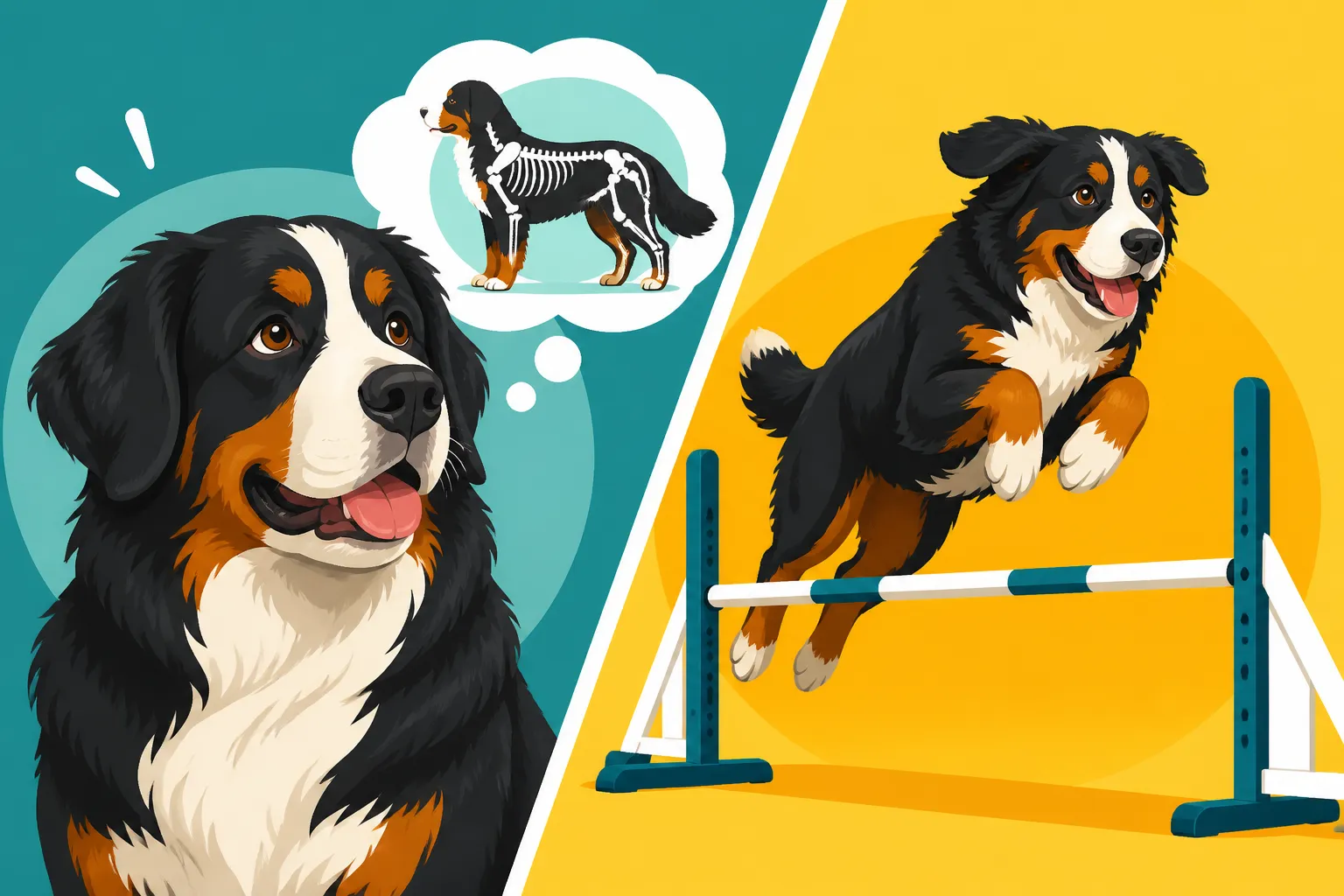
Let's break down a simple jump. A Bernese Mountain Dog needs to accelerate, launch their heavy body over a bar, and then land cleanly. This involves powerful propulsion from the hindquarters and absorption of impact by the forelimbs and spine. For a dog that might clear 100 pounds, the forces involved in landing are immense. The repetitive shock can take a toll on:
- Shoulders: The forelegs bear a significant portion of the landing impact. Over time, this can lead to shoulder strains, sprains, and exacerbate conditions like OCD or general arthritis.
- Elbows: Similarly, the elbows are crucial shock absorbers and are often affected by dysplasia in the breed. Repeated stress can cause micro-trauma and accelerate degenerative changes.
- Spine: The entire spine experiences compression and torque during jumps, especially if the dog twists in the air or lands awkwardly. This can strain ligaments, muscles, and intervertebral discs.
- Wrists and Pasterns: These smaller joints in the lower leg are also subject to significant stress, as they help cushion the landing.
Unlike lighter breeds that can almost float over obstacles, a Berner has to genuinely hurl themselves, and then absorb a much heavier landing. This constant impact, even on well-maintained surfaces, is a stark contrast to their natural gait, which is a powerful, long-striding trot designed for covering ground efficiently, not for jumping.
Navigating Tight Turns and Obstacles
Agility isn't just about straight lines and jumps. It involves a complex sequence of obstacles requiring tight turns, quick accelerations, sudden stops, and precise foot placement.
- Weave Poles: These are particularly demanding. A dog must weave through a series of poles at speed, requiring incredible spinal flexibility, core strength, and quick paw placement. For a long, heavy-bodied dog like a Berner, this twisting motion can put immense strain on their spine and hindquarters. The risk of muscle strains, ligament tears, or even disc issues is elevated.
- Tunnels and Dog Walks: While seemingly less impactful than jumps, tunnels can still involve awkward twists if a dog tries to turn inside, and the dog walk requires confident, balanced movement at height, often followed by a quick descent on a ramp, placing stress on joints.
- A-frames and See-saws: These involve climbing and descending steep inclines, placing considerable load on the hips, knees, and hocks, especially during the downward motion. The jarring motion of a see-saw can also be quite uncomfortable for a heavy dog.
The breed's natural disposition tends to be more thoughtful and less frantic than typical agility stars. While they can certainly learn, the sheer physical demands of these maneuvers are often counter to their anatomical design.
The Cumulative Effect of Repetitive Stress
Perhaps the most insidious aspect of agility for a Bernese Mountain Dog is the cumulative effect of repetitive stress. A single jump might not cause harm, but hundreds of jumps, weaves, and tight turns over weeks, months, and years of training and competition can lead to chronic issues. It's like a tiny crack in a foundation that grows wider over time.
Even if a Berner seems to enjoy the sport and performs well in their youth, the long-term consequences can be severe. Accelerated arthritis, chronic pain, and mobility limitations can manifest prematurely, significantly impacting their comfort and quality of life as they age. We already know that Why a Bernese Mountain Dog Lives Only Seven or Eight Years and Arthritis in a Bernese Mountain Dog by Six are concerns, and high-impact sports can only contribute negatively to these predispositions.
This isn't to say a Berner can never do any agility, but it underscores the need for extreme caution, modification, and a deep understanding of the risks.
Making Informed Decisions: Prioritizing Health and Responsible Training
If you're still considering agility for your Bernese Mountain Dog, or any high-impact sport, an informed and responsible approach is paramount. This means putting their long-term health and well-being far ahead of any competitive aspirations.
Essential Health Clearances and Veterinary Consultations
Before you even think about signing up for an agility class, your Bernese Mountain Dog needs a comprehensive health work-up. This isn't just a regular vet check; it needs to be specifically geared towards evaluating their suitability for high-impact activity.
- OFA and PennHIP Clearances: This is non-negotiable. Your dog should have up-to-date hip and elbow clearances from the Orthopedic Foundation for Animals (OFA) or PennHIP. These certifications assess the quality of your dog's hip and elbow joints. For an adult dog, the OFA results should be "Good" or "Excellent" for hips, and "Normal" for elbows. Even then, "normal" doesn't mean bulletproof; it just means they don't currently show signs of significant dysplasia. You can learn more about this by checking out OFA Clearances a Bernese Mountain Dog Should Have.
- Spinal Health Assessment: Discuss spinal health with your veterinarian. Some vets may recommend baseline X-rays to check for any existing abnormalities that could be exacerbated by agility.
- Cardiac Screening: While less directly related to impact, a healthy heart is essential for any athletic endeavor. A cardiac exam, potentially with an echocardiogram, can rule out underlying heart conditions.
- General Physical Exam: Your vet should perform a thorough physical, checking for any signs of lameness, pain on palpation, or stiffness that might not be immediately obvious in daily life. Discuss your agility aspirations openly with them and heed their advice. They know your dog's history and the breed's predispositions.
Remember, a "clear" health panel means they meet the minimum health standards for breeding, which is different from being structurally ideal for agility.
Tailoring Training Methods and Equipment
If you do decide to proceed, the approach to training must be entirely different for a Bernese Mountain Dog compared to a typical agility breed.
- Age-Appropriate Training: Absolutely no jumping or weaving at full height/speed until your Berner is at least two years old, and ideally older. Focus on foundational skills: body awareness, impulse control, strong stays, recalls, and targeting. These skills are invaluable for any activity and can be taught without joint stress. Training a Bernese Mountain Dog Without Breaking It is key.
- Low and Slow: When you do introduce obstacles, keep jumps at their absolute lowest setting, or even just use jump bars on the ground as "cavaletti" to teach foot placement. Avoid full-height jumps, especially consecutive ones. Use walk-through contact obstacles rather than fast, flying contacts.
- Appropriate Equipment: Ensure all equipment is sturdy and stable enough for a large, heavy dog. Wobbly tunnels or flimsy contact equipment are dangerous. Consider a good quality, supportive harness if doing any light pulling or foundation work, ensuring it distributes weight evenly. For general training and comfortable walks, many Bernese owners find a front-clip harness from brands like Amazon offers better control and reduces strain on the neck.
- Short Sessions, Frequent Breaks: Berners are not built for long, intense training sessions. Keep sessions short, fun, and interspersed with plenty of rest. Their attention span and physical endurance will both benefit from this approach.
Building a Strong Foundation for Any Activity
Regardless of whether agility is ultimately pursued, focusing on core strength, proprioception (body awareness), and overall fitness is crucial for a Bernese Mountain Dog's joint health and longevity.
- Controlled Exercise: Moderate, consistent exercise is far better than sporadic, intense bursts. Long, leash-walks on varied, forgiving terrain (grass, dirt trails) are excellent. Swimming is a fantastic low-impact exercise that builds muscle without stressing joints.
- Core Strength Exercises: Simple exercises like balancing on an unstable surface (a wobble board or an inflatable disc) for short periods, doing controlled "bows," or walking over ground poles can build essential core strength and body awareness, which are vital for joint stability. BAXTER & Bella, an online dog training program, often includes positive reinforcement exercises that are perfect for building a solid foundation in a gentle, fun way, suitable for large breeds.
- Maintain a Lean Body Condition: Excess weight puts enormous strain on joints, exacerbating any existing or potential issues. Keep your Berner at a healthy, lean weight where you can easily feel their ribs but not see them. This topic is covered well in Whether a Bernese Mountain Dog's Weight Shortens Its Life.
- Joint Supplements: Discuss with your vet whether starting a joint supplement containing glucosamine, chondroitin, and omega-3 fatty acids might be beneficial, even before signs of arthritis appear. Many Bernese owners opt to start these proactively. More information can be found in Starting a Bernese Mountain Dog on Joint Medication Young.
Adapting Agility and Exploring Other Engaging Activities
So, does this mean your Bernese Mountain Dog can never enjoy anything remotely resembling agility? Not necessarily! It means being smart, creative, and always prioritizing their comfort and long-term health. There are many ways to adapt activities or explore entirely different avenues that are much more suitable for their frame.
Modifications for a Bernese Mountain Dog in Agility
If your heart is set on some form of agility, here's how you can modify it to be safer for your Berner:
- Lower Jump Heights or Cavaletti Work: Instead of standard agility jumps, use jump bars set at floor level or just a few inches high. This teaches your dog to pick up their feet and stride over obstacles without the impact of landing from height. You can also use "spread" jumps (two low bars spread apart) which encourage a longer, flatter jump rather than a high, arcing one.
- Focus on Groundwork: Prioritize tunnels, ground weaves (poles laid flat on the ground), and basic contact obstacles like the A-frame and dog walk kept at low settings. Emphasize controlled entries and exits from obstacles rather than speed.
- No Competitive Agility: For most Bernese Mountain Dogs, competitive agility is simply too much. The speed, height requirements, and repetitive nature of trials are likely to cause long-term damage. Focus purely on recreational fun in your backyard or at a local club that offers low-impact classes.
- Dog Parkour: This is an excellent alternative that teaches body awareness, balance, and confidence by interacting with environmental obstacles (climbing stairs, balancing on a log, going under a bench). It's done at the dog's pace and involves minimal, if any, jumping.
Low-Impact Sports and Brain Games
Many activities are wonderfully suited to the Bernese Mountain Dog's natural strengths and temperament, offering mental and physical enrichment without the high impact.
- Drafting/Carting: This is what they were bred for! Bernese Mountain Dogs excel at pulling carts, whether for fun, competition, or even helping out around the yard. It builds strength, confidence, and fulfills their working heritage. Check out Teaching a Bernese Mountain Dog to Pull a Cart.
- Obedience and Rally Obedience: These sports focus on precision, teamwork, and mental engagement. They involve walking, staying, sitting, and coming when called, all low-impact activities that showcase your Berner's intelligence and desire to please.
- Tracking and Scent Work: Berners have excellent noses! Scent work, nose work, and tracking are fantastic for mental stimulation, building confidence, and are entirely low-impact. Dogs absolutely love using their natural instincts to find hidden treats or people.
- Therapy Dog Work: Many Bernese Mountain Dogs have the gentle, calm temperament that makes them exceptional therapy dogs. Visiting hospitals, nursing homes, or schools allows them to share their love and bring comfort, which is incredibly rewarding for both dog and owner. Therapy Work With a Bernese Mountain Dog delves into this.
- Canine Freestyle/Heelwork to Music: If you love a challenge and want to show off your Berner's smarts and connection with you, canine freestyle involves performing a routine of obedience behaviors and tricks set to music. It's creative, low-impact, and a huge mental workout.
- Long, Leisurely Hikes: Embrace their heritage as mountain dogs! Long walks on varied terrain (but avoid extremely steep or rocky paths that could strain joints) are excellent for their physical and mental health. Just remember to always carry plenty of water and be mindful of heat, as Heat and the Bernese Mountain Dog's Black Coat can be a real concern.
| Activity Category | Suitability for Bernese Mountain Dogs | Key Benefits | Considerations |
|---|---|---|---|
| Traditional Agility | Low (with significant modification) | Mental stimulation, bond building | High risk of joint injury, not suited for competition |
| Drafting/Carting | High | Fulfills breed purpose, builds strength | Requires specialized harness/cart, proper training |
| Obedience/Rally | High | Mental engagement, precision, teamwork | Requires consistent training, can be slower paced |
| Tracking/Scent Work | High | Excellent mental stimulation, uses natural instincts | Can be time-consuming to train |
| Therapy Dog Work | High | Community service, deep bond, gentle interaction | Requires specific temperament and training |
| Canine Parkour | High | Body awareness, confidence, low impact | Creative problem-solving, can be done anywhere |
| Swimming | High | Full-body exercise, low impact | Access to safe water, supervision required |
The True Goal: Fun and Connection
Ultimately, the goal of any activity with your Bernese Mountain Dog should be to enhance their life, strengthen your bond, and provide appropriate physical and mental enrichment, not to push them into roles that don't suit their unique physical makeup. Their joy is paramount. If you see your Berner struggling, showing reluctance, or experiencing any lameness after an activity, it's time to stop and re-evaluate.
Many Bernese Mountain Dog owners find immense satisfaction in simply enjoying their dog's companionship, engaging in gentle play, going for nature walks, or cuddling on the couch. Their love and loyalty are their greatest gifts, and fostering that relationship through suitable activities is the most important thing you can do for your magnificent Berner.
Disclaimer
This article is for general informational purposes only and does not constitute professional advice. Laws, prices and regulations vary by location and change over time. Consult a qualified professional for guidance on your specific situation.