A Bernese Mountain Dog That Will Not Come When Called
It's incredibly frustrating when you call your beloved Bernese Mountain Dog, and they look at you, maybe wag their tail, and then go right back to whatever fascinating sniff or squirrel-watching they were engaged in. This isn't just annoying; a broken recall can be genuinely dangerous, putting your big, beautiful Berner at risk. This comprehensive guide will walk you through why your Bernese might be ignoring you, and provide actionable steps to build a reliable, life-saving "come" command.
Understanding the Bernese Mountain Dog's Recall Challenges
Before we dive into training techniques, it’s helpful to understand the unique characteristics of a Bernese Mountain Dog that can contribute to a hesitant recall. These aren't just big, fluffy teddy bears; they're working dogs with a specific temperament that influences how they respond to commands.
The Berner's Independent Streak
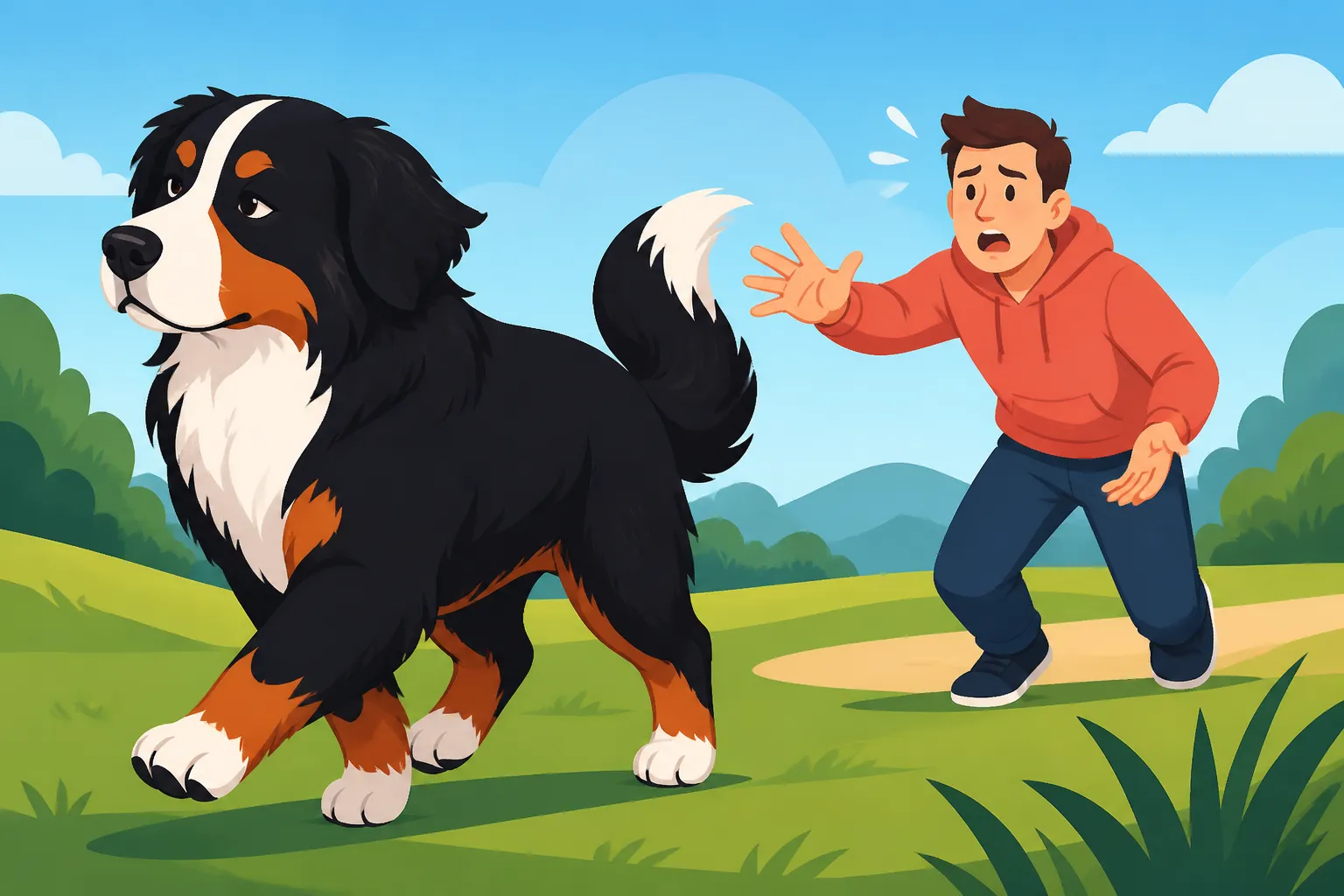
Bernese Mountain Dogs were originally bred for farm work in the Swiss Alps, which often involved tasks requiring a degree of independent decision-making. They weren't typically "off-leash" herding dogs like some collies, constantly looking to their handler for direction. Instead, they might have been tasked with guarding livestock or pulling carts, often working alongside people but not necessarily glued to their side. This history has instilled in many Berners a calm, confident, and sometimes independent nature. When something catches their attention – a scent, a sight, another dog – that innate independence can kick in, making them prioritize their own investigation over your call. It's not defiance, not usually anyway, but rather a strong sense of self-interest in the moment.
This independence often means they aren't as inherently "biddable" or desperate to please as some other breeds. While they are loyal and loving, they also have their own ideas about what's important. This isn't to say they can't be trained to come reliably, but it does mean your approach needs to be incredibly motivating and consistent. You’re not just teaching a command; you're often competing with deeply ingrained instincts and a strong desire to explore. Understanding this aspect of their personality is the first step in effective recall training, preventing you from getting frustrated when they don't respond like a Border Collie might. It's about working with their nature, not against it. You can explore more about their innate learning style in Whether a Bernese Mountain Dog Learns Slowly.
Distractions and Overwhelm
Another major factor impacting a Bernese Mountain Dog's recall is their environment and the level of distraction present. A Berner who comes perfectly in your quiet backyard might act completely deaf at the park. This isn't a lapse in understanding the command; it's a lapse in their ability to focus on you amidst a flood of competing stimuli. Their keen senses pick up on so much: the distant chatter of children, the scent of a rabbit trail from hours ago, the sight of a dog playing in the distance. For a Bernese, who can be quite sensitive despite their size, these distractions can be genuinely overwhelming, making it nearly impossible for them to process your command and respond.
Think about it from their perspective: they’re trying to enjoy a rich sensory world, and suddenly you’re asking them to disengage from all of that and rush back to you, often for what they perceive as no immediate reward. It’s a big ask! Over time, if they frequently ignore your calls in distracting environments without consequence, they learn that "come" is optional, especially when something more interesting is happening. This is why building recall needs to be a gradual process, systematically introducing distractions rather than throwing your Berner into the deep end and hoping for the best. Without a solid foundation, every ignored command chips away at the reliability of their recall, making it even harder to rebuild later.
Building a Foundation for Reliable Recall
A strong recall isn't something that happens overnight, especially with a breed as thoughtful as a Bernese Mountain Dog. It requires patience, consistency, and a deep understanding of what truly motivates your specific dog. We start simple, building success upon success, ensuring your Berner always associates coming to you with positive outcomes.
Starting Indoors: The "Come" Command Basics
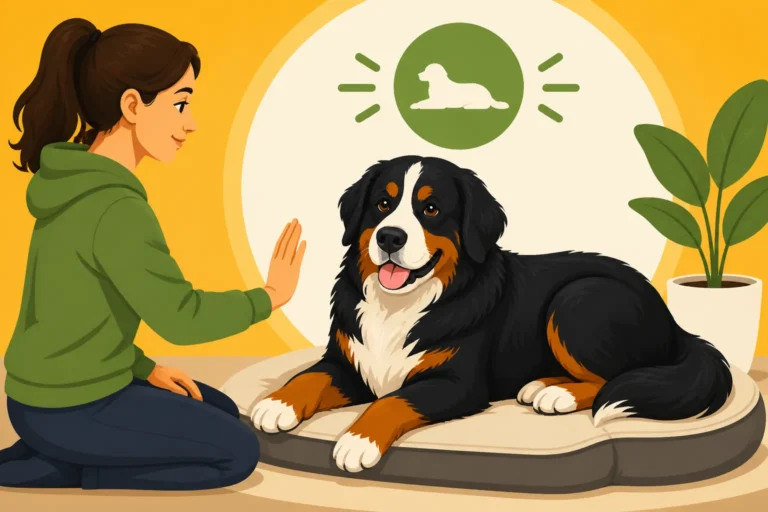
The journey to a bombproof recall begins in the simplest environment possible: inside your home, free from the overwhelming distractions of the outside world. This is where your Berner first learns what "come" means, without having to compete with squirrels or interesting smells. Start in a quiet room, with just you and your dog. Get down to their level, clap your hands softly, use an excited, happy tone, and say "Come!" or "Here!" as your chosen cue. As they take even a single step toward you, immediately reward them. This initial reward should be incredibly high-value – think small pieces of cooked chicken, cheese, or their absolute favorite treat.
The goal here is to create an immediate, joyous association. When your Berner comes, it's like hitting the jackpot. Don't wait for them to reach you before rewarding; reward the effort of turning towards you and moving in your direction. Practice this multiple times a day in short bursts. Two minutes, five times a day, is far more effective than one long, tedious session. Move to different rooms, practice with a family member calling them back and forth. Make it a game! This stage is crucial because it cements the positive meaning of the word "come" in their minds before they ever have to consider it in a challenging environment. Remember, Training Sessions Short Enough for a Bernese Mountain Dog are key to keeping them engaged and preventing them from getting bored or frustrated.
High-Value Rewards are Key
Let's be real: a dry kibble tossed casually isn't going to cut it when your Bernese Mountain Dog is contemplating a fascinating new scent or the possibility of meeting another dog. For a reliable recall, you need to pull out the big guns. High-value rewards are crucial because they communicate to your Berner, loud and clear, that coming to you is the absolute best decision they could make at that moment. What constitutes "high-value" will vary for every dog, but for many Berners, it means soft, smelly, irresistible treats. Think tiny pieces of hot dogs, cheese, boiled chicken, or commercially available soft training treats.
These rewards aren't just food; they're immediate, tangible proof that listening to you pays off handsomely. It's not about bribery; it's about motivation and making the desired behavior highly reinforcing. Keep these special treats only for recall training, never for routine obedience. This keeps them novel and exciting. If your Berner isn't food-motivated, consider a favorite squeaky toy or a quick, enthusiastic game of tug as their reward. The key is to find what your individual Berner considers worth dropping everything for. Without this potent motivation, you're fighting an uphill battle against their natural curiosity and independence. For more ideas on what truly gets your Berner's attention, check out What a Bernese Mountain Dog Will Actually Work For.
Introducing a Release Cue
Once your Bernese is consistently coming to you indoors for high-value treats, it's time to add a crucial element: the release cue. This might seem counterintuitive when you're trying to get them to come, but it's essential for building trust and preventing your Berner from associating "come" with the immediate end of their fun. The release cue tells them, "Okay, you've done what I asked, and now you're free to go back to playing/exploring."
Here’s how it works: after your Berner comes to you and gets their high-value reward, instead of immediately grabbing them or putting them on a leash, give them a clear release word like "Free!" or "Go play!" and let them go back to what they were doing. This teaches them that coming to you doesn't always mean the fun stops. Sometimes, coming means a reward and then they get to return to their activity, which builds a much more positive association with the command. This is especially important as you move to outdoor training where you don't always need to leash them right away. It reinforces that coming is a good thing, not a trap. You want them to want to come back, knowing they'll be released if appropriate.
Progressing to Outdoor Recall and Real-World Scenarios
Transitioning recall training from the quiet confines of your home to the bustling outdoors is where many owners hit a wall. It requires careful planning, incremental increases in distraction, and the smart use of training tools to set your Bernese Mountain Dog up for success.
Gradually Increasing Distractions
The secret to a reliable outdoor recall is a slow, steady progression. Don't go from your living room straight to a busy dog park. That's a recipe for failure and frustration for both you and your Berner. Start in a low-distraction outdoor area, like your fenced yard or a very quiet, empty park during off-peak hours. Practice your "come" command here, using the same enthusiastic tone and high-value rewards you used indoors. Once your Berner is consistently successful in this environment, gradually introduce minor distractions.
This might mean practicing when a distant jogger passes, or when a quiet car drives by. Slowly, and I mean slowly, build up to more challenging scenarios: a slightly busier park, near a walking trail with other people (but no dogs initially), or even just within sight of a very calm, leashed dog. The key is to never ask your Berner to perform recall if you suspect they might fail. Each successful recall builds confidence and reinforces the behavior. If you notice them struggling, dial back the distractions. This methodical approach ensures your Bernese learns to generalize the "come" command to various environments without feeling overwhelmed. It's a journey, not a sprint, and patience will pay dividends in the long run.
Using a Long Line Safely and Effectively
A long line (a lightweight leash, 15 to 30 feet in length) is an indispensable tool for outdoor recall training with a Bernese Mountain Dog. It allows you to give your Berner the illusion of freedom while still maintaining control, acting as a crucial safety net and a gentle reminder. Before you even think about letting your Berner off-leash in an unfenced area, practice extensively on the long line. This is where you can truly bridge the gap between indoor reliability and real-world responsiveness. You can find excellent quality long lines on platforms like Amazon, made from various materials, but a lightweight, flat nylon line is often a good starting point for a Berner.
When using a long line, let your Berner wander to the end of it. When they're distracted but not completely fixated, give your "come" cue enthusiastically. If they hesitate, gently reel in the line while continuing to call them, making it impossible for them to ignore you fully. As soon as they start moving towards you, release the tension and praise lavishly, rewarding them generously when they arrive. This teaches them that coming to you is inevitable and rewarding, without the risk of them running off. Always ensure the long line is attached to a harness, not just a collar, to prevent neck injury if they hit the end of the line. Also, be mindful of where you're practicing to avoid tangling them or yourself around obstacles. Over time, as their recall improves, you can gradually move to shorter long lines, or even a drag line (a short leash that drags on the ground) before going completely off-leash.
Dealing with the "Deaf Ear" Phenomenon
Ah, the infamous "Berner deaf ear." We've all been there: you call, they look, they ponder, and then they decide whatever critter or crumb they found is far more interesting. This isn't usually malicious; it's often a combination of their independent nature, high distractibility, and sometimes, a learned behavior that your "come" command is optional. When your Bernese pretends not to hear you, it's a critical moment for your training. Ignoring them or simply letting them get away with it reinforces the idea that your command doesn't carry weight.
Instead, immediately but calmly go to your dog. When you reach them, give the "come" command again, and gently guide them back to the spot where you initially called them from, rewarding them as if they had come on their own. This removes the reward of continued exploration and shows them that "come" will happen, one way or another. Another strategy is to change your environment or reduce distractions. If they are consistently ignoring you in a certain park, it's too much for them. Go back to a less stimulating area. It's better to prevent the "deaf ear" by setting them up for success than to try and correct it after it's happened. Consistent, successful practice builds muscle memory and a strong positive association. For tips on managing their attention span, consider How Long a Bernese Mountain Dog Will Concentrate.
Common Recall Pitfalls and How to Avoid Them
Even with the best intentions, owners often inadvertently make mistakes that undermine their Bernese Mountain Dog's recall. Recognizing and actively avoiding these common pitfalls is just as important as implementing good training techniques.
The "Come Means Fun Is Over" Trap
This is arguably the most common and damaging mistake owners make: only calling their Bernese Mountain Dog when it's time to go home, time for an unpleasant vet visit, or time to end a fun interaction. Imagine if every time someone called your name, it meant you had to stop whatever you were enjoying and do something you didn't want to do. You'd quickly learn to ignore that name! Your Berner thinks similarly. If "come" consistently predicts the end of play, being put on a leash, or being confined, they will learn to avoid it. They associate your call with the cessation of all things enjoyable, rather than with a positive experience.
To avoid this trap, call your Berner to you frequently throughout playtime, reward them handsomely, and then immediately release them back to play with your chosen release cue. Do this many, many times for every single time you actually need to leash them up and leave. This way, "come" becomes a neutral or even positive experience, not a signal of impending doom. They learn that coming to you often leads to more fun, or at least a high-value treat, and doesn't always mean the party is over. This builds trust and eagerness to respond, rather than suspicion and avoidance. Remember that a Bernese can sometimes be sensitive to perceived unfairness, so ensuring a positive association is key. You might also find insights in The Bernese Mountain Dog That Sulks After a Telling Off on managing their reactions to perceived corrections or negative experiences.
Consistency is Non-Negotiable
With a large, intelligent, and sometimes stubborn breed like the Bernese Mountain Dog, consistency is the absolute bedrock of effective training. If some family members enforce recall while others don't, or if you sometimes reward a slow response and other times get frustrated, your Berner will quickly become confused and decide that "come" is a suggestion, not a command. Every single person who interacts with your Berner needs to be on the same page regarding the recall command, the rewards used, and the expectations.
This means using the same verbal cue ("Come!" or "Here!"), the same level of enthusiasm, and the same high-value rewards every single time. It also means never calling your dog if you are not prepared to follow through, whether that means going to get them or reeling in a long line. Inconsistency teaches your Berner that they can gamble on whether they need to obey, and a smart dog will quickly learn to take those odds. It's far better to have fewer, perfectly executed training sessions than many inconsistent ones. If you have a family, hold a quick meeting to establish clear rules for recall training. This unified front ensures your Bernese receives clear, unambiguous signals, building a strong and reliable response over time. Tools like the BAXTER & Bella online puppy school or similar comprehensive training programs can provide structured guidance to ensure everyone in the household is using consistent methods.
Overcoming Specific Challenges
Sometimes, a Bernese Mountain Dog's recall issues stem from deeper behavioral tendencies. For instance, if your Berner has a high prey drive, the sight of a squirrel or a rabbit might override everything else. In these cases, consistent long-line work is paramount. Practice your recall when they start to notice prey, before they become fully fixated. Reward them heavily for breaking their focus to come to you. For a Berner with lower confidence or a tendency to be reserved with strangers, recall might be impacted by fear or anxiety in new environments. Socialization from a young age is crucial for these dogs; reading Socializing a Reserved Bernese Mountain Dog Puppy can provide guidance.
If your Berner gets overly excited or overstimulated in certain environments, such as a dog park, their ability to listen will plummet. It might be that the dog park is simply too much for them, and you need to find less chaotic outlets for exercise and socialization. Even the most well-trained dog can have an "off" day, so don't get discouraged by a single failed recall. Reassess the situation, reduce distractions, and go back to basics. A powerful, happy recall is a gift of freedom you give your dog, but it's one that must be earned and maintained through consistent, positive, and understanding training.
| Recall Training Stage | Environment Focus | Key Actions | Tools & Rewards | Goal |
|---|---|---|---|---|
| Foundation | Quiet, indoor, no distractions | Practice "come" 5-10x daily in short bursts. Add release cue. | High-value treats (chicken, cheese), enthusiastic praise | Instant, joyful response to cue. |
| Low Distraction | Fenced yard, quiet park | Introduce minor, controlled distractions (e.g., distant jogger). | High-value treats, 15-30 ft long line, treat pouch | Consistent response with minimal distractions. |
| Moderate Distraction | Slightly busier park, walking trails | Practice on long line near other people/calm dogs. Increase distance. | Varied high-value treats, long line, verbal praise | Reliable recall despite some external stimuli. |
| High Distraction | Busy park, off-leash areas (safe) | Practice with a long line before full off-leash. Interrupt fixation. | Exceptional high-value treats, emergency recall only | Response to cue even when highly engaged with environment. |
| Maintenance | All environments | Continual practice, unexpected "pop quizzes," random rewards. | Varied rewards (food, toys, praise), surprise calls | Lifelong reliable recall, perceived as a game. |
Building a reliable recall for your Bernese Mountain Dog is one of the most important things you can do for their safety and your peace of mind. It’s a journey that demands patience, understanding, and consistent effort. Remember to celebrate every small victory and always keep it positive. Your Berner wants to please you, but they also have a rich, interesting world to explore. By making "come" the most rewarding choice, you’ll ensure they always choose you.
Disclaimer
This article is for general informational purposes only and does not constitute professional advice. Laws, prices and regulations vary by location and change over time. Consult a qualified professional for guidance on your specific situation.