Whether a Bernese Mountain Dog Drools on Command
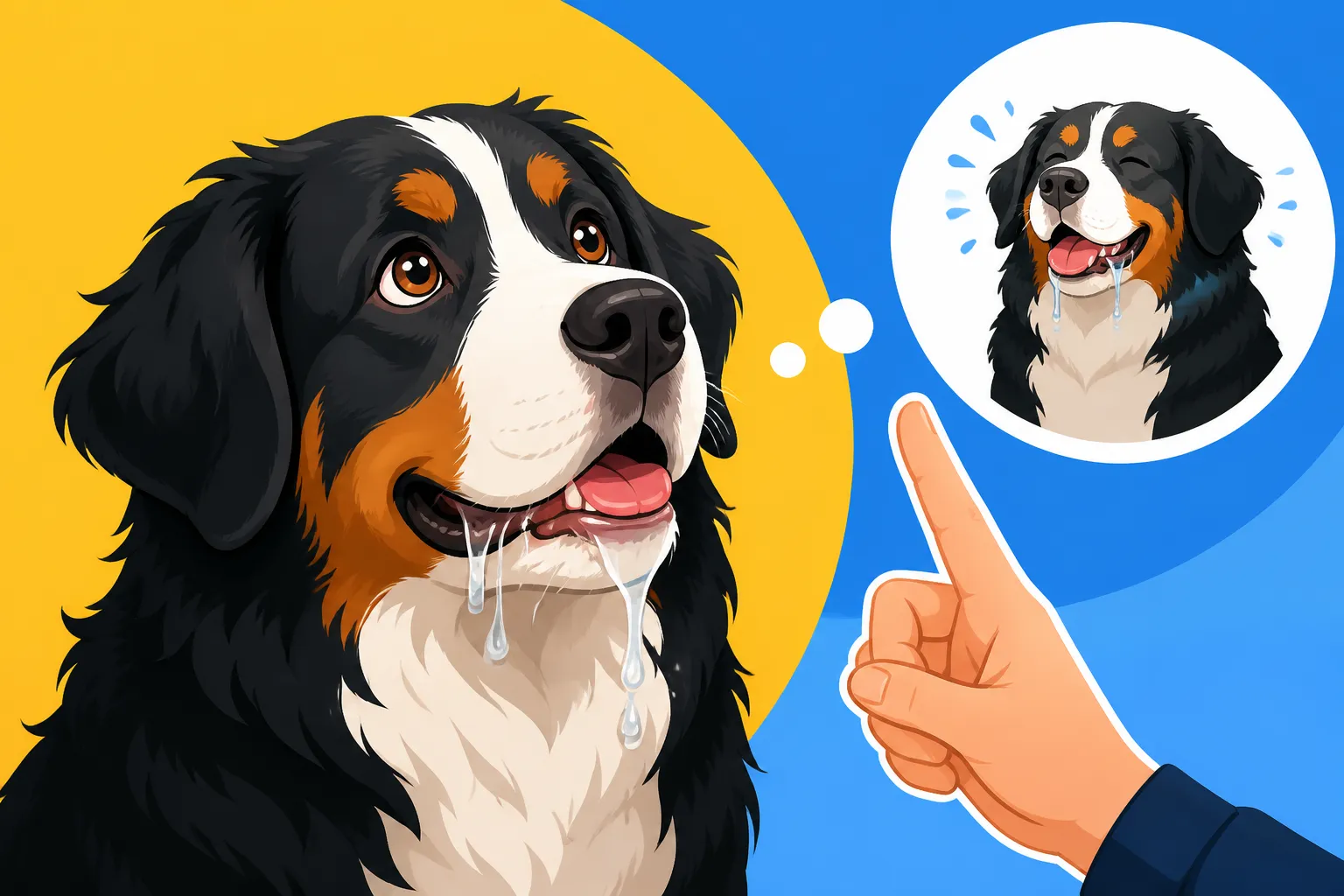
As much as we adore our big, fluffy Bernese Mountain Dogs, there's one thing almost every Berner parent comes to terms with early on: the drool. It's often endearing, sometimes a little gross, and almost always present. Many of us, in a moment of exasperated affection, might wonder if we could just train them to control it, maybe even to drool "on command" – a neat trick to show off, or at least a way to predict the inevitable slobbery shake. This guide dives deep into the realities of Berner drooling, why it happens, and what you can actually do to manage it, sans magic commands.
The Drool Factor: Understanding Why Bernese Mountain Dogs Drool (And When)
Let's face it, Bernese Mountain Dogs are not known for their tidy mouths. While they might not be in the same league as a Mastiff or Saint Bernard when it comes to sheer volume, they certainly contribute their fair share of glistening trails and damp patches around the house. Understanding why they drool is the first step toward accepting and managing it, rather than wishing for a "no drool" command.
More Than Just Food: Common Triggers for Berner Drool
The most obvious trigger for any dog's drool, including our beloved Berners, is the anticipation of food. You know the drill: the moment the kibble bag rustles, or you start prepping their dinner, a little river begins to flow. This isn't just a cute quirk; it's a physiological response designed to aid digestion. Saliva contains enzymes that begin breaking down food even before it reaches the stomach, and its presence lubricates the food, making it easier to swallow. For a large breed like the Bernese Mountain Dog, who often eats substantial meals, this preparatory lubrication is quite efficient.
However, food is far from the only culprit. Excitement plays a huge role. Imagine your Berner greeting you after a long day – the wagging tail, the happy vocalizations, and, yes, often a bit of extra drool. This excitement can be tied to walks, car rides (especially if they love car rides!), or even just a favorite toy coming out. Stress or anxiety can also trigger excessive drooling. A trip to the vet, a loud thunderstorm, or even being left alone if they suffer from separation anxiety can turn a mildly drooly Berner into a veritable waterfall. Some Berners might also drool more when experiencing nausea, perhaps from car sickness or an upset stomach, so always keep an eye out for other accompanying symptoms.
The Anatomy of a Berner's Mouth: Why They're Built to Drip
Beyond the triggers, the physical structure of a Bernese Mountain Dog's mouth plays a significant role in their drooling tendencies. Berners possess large, somewhat pendulous lips and jowls that are characteristic of their breed type. These features, while contributing to their charming, soulful expression, are not tightly sealed around their mouths. This loose lip structure means that saliva, once produced, doesn't stay contained as easily as it might in a breed with tighter, more compact lips.
Think of it this way: their mouths are like slightly leaky buckets. When saliva production increases due to excitement, hunger, or even just during panting, there isn't a tight seal to hold it all in. Gravity and movement take over, leading to those familiar drips and trails. It's not a sign of poor health (unless suddenly excessive, which we’ll discuss later), but rather a natural consequence of their magnificent, expressive facial structure. This is just part of living with a Berner. You learn to live with it, and honestly, it just adds to their unique character. Just be prepared to always have a drool towel handy, or perhaps consider a stylish bandana that doubles as an absorbent bib! For more on living with this charming mess, check out Drool and What a Bernese Mountain Dog Leaves Behind.
The Myth of "Drooling on Command" and Canine Physiology
Wouldn't it be wonderful if we could simply say "drool!" and have our Bernese Mountain Dog obligingly produce a stream, or better yet, "no drool!" and have them magically dry up? Unfortunately, the reality of canine physiology doesn't quite work that way. The idea of a dog drooling on command, in the same way they might sit or stay, misunderstands the fundamental difference between voluntary and involuntary actions.
Involuntary Reflexes vs. Learned Behaviors in Dogs
When we talk about training a dog, we are generally teaching them learned behaviors. Commands like "sit," "stay," "come," or "paw" are actions that a dog consciously chooses to perform in response to a specific cue. They learn through repetition and positive reinforcement that performing these actions leads to a desirable outcome, like a treat or praise. This is the realm of operant conditioning, where the dog operates on its environment to achieve a reward.
Drooling, however, falls primarily into the category of an involuntary physiological reflex. It's like our own blinking, breathing, or stomach rumbling – we don't consciously decide to do it, our bodies just do. Yes, dogs can be classically conditioned to drool, famously demonstrated by Pavlov's experiments where dogs learned to associate a bell with food, leading to salivation. But even in this case, the drooling isn't "on command" in the sense of a conscious decision. It's a response to a learned stimulus, a conditioned reflex, not an act of will. The dog isn't thinking, "I will now produce saliva." Instead, its body reacts to the anticipation. So, while you might accidentally create a "drool trigger" by always saying a certain phrase right before mealtime, it's not the same as teaching them to drool on demand with conscious control. Don't worry if your Berner seems to learn slowly in some areas; they truly aren't built for this kind of command. You can find more about their learning style in Whether a Bernese Mountain Dog Learns Slowly.
Why You Can't "Teach" Your Berner to Drool on Cue
The simple truth is that dogs, including our intelligent Bernese Mountain Dogs, do not have conscious control over their salivary glands. You can’t tell a dog to "make more saliva" just as you can't tell them to "make your heart beat faster" or "digest your food now." These are autonomous bodily functions governed by their nervous system, largely outside their voluntary control.
Trying to "train" a Berner to drool on command would be a futile exercise. You could try to associate a verbal cue with a strong drool trigger, like holding a highly palatable treat and saying "drool" just as they start to slobber. Over time, they might associate the word with the feeling of drooling anticipation, but they wouldn't be actively choosing to drool. The moment that underlying trigger (the treat, the excitement) isn't strong enough, the drool won't come. It would be an inconsistent and unreliable "trick" at best, and frankly, a waste of your valuable training time when you could be working on more practical behaviors. Instead of trying to control their internal plumbing, focus your training efforts on things that actually make a difference in your daily life with your big pal, like leash manners or recall, as discussed in Training a Bernese Mountain Dog Without Breaking It.
Practical Strategies for Managing a Drooly Bernese Mountain Dog
While we can't train our Bernese Mountain Dogs to drool on command, we absolutely can employ practical strategies to manage the drool that is an inevitable part of their charm. Living with a Berner means embracing a little mess, but it doesn't mean succumbing to slobbery chaos.
Proactive Measures: Minimizing Mess and Maximizing Cleanliness
The key to living happily with a drooly Berner is to be proactive. First and foremost, invest in a good supply of dedicated "drool rags." These can be old towels, microfibre cloths, or even specific pet-branded towels you can find on Amazon. Keep them strategically placed around your home: near the food bowls, by the door, and on your couch (if your Berner is allowed on furniture, which, let's be honest, most are!). Many Berner owners also find that attaching a simple bandana around their dog's neck acts as a stylish and absorbent bib, catching those drips before they reach the floor or your pant leg.
Another proactive step is to protect your floors and furniture. Washable rugs or mats placed under water bowls and in high-traffic drool zones can be a lifesaver. For furniture, washable slipcovers are a must. Regular cleaning of hard surfaces with a pet-safe cleaner will also help keep things hygienic and prevent any lingering odors. Remember, a Berner's coat is designed for keeping them warm, but it can also trap moisture and lead to smells if not cared for, so regular wiping is part of the routine.
Training for Cooperation: Handling and "Wipe Your Face" Cues
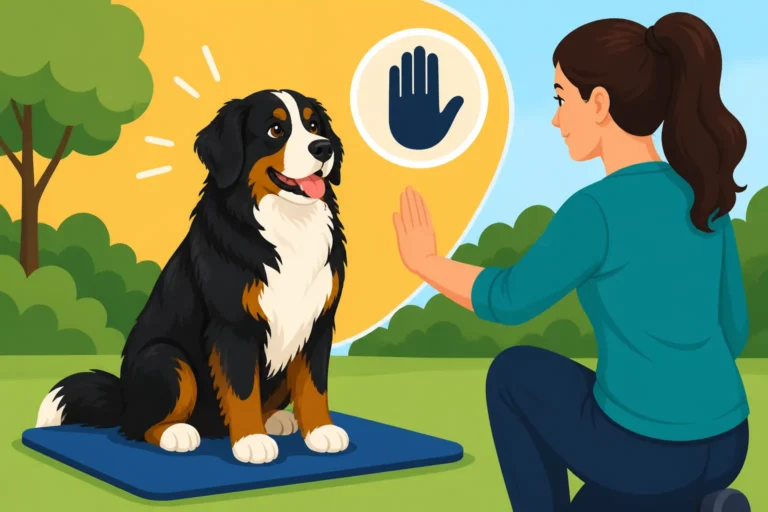
While you can't command drool, you can certainly train your Berner to cooperate with cleaning. This is where positive reinforcement comes in. Start by teaching a "wipe" or "clean face" cue. Gently touch your Berner's muzzle with a soft cloth and immediately offer a high-value treat and praise. Do this in short, frequent sessions, gradually increasing the duration and thoroughness of the wipe. The goal is for your dog to associate the sensation of being wiped with something positive.
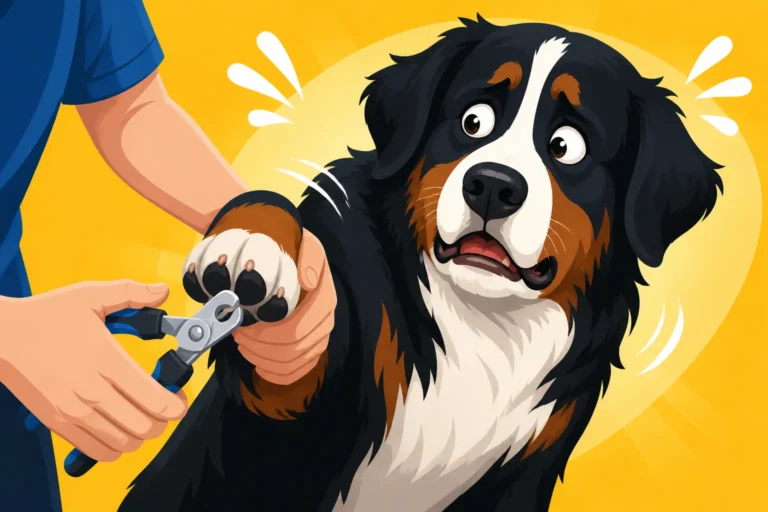
This kind of cooperative care training is invaluable, especially for a large dog. It not only helps with drool management but also makes other grooming tasks like ear cleaning or wiping their eyes much easier. Imagine being able to grab a drool rag and gently wipe your Berner's face without a struggle, simply because they've learned to accept and even enjoy the interaction! For more on getting your Berner comfortable with being handled, explore resources like The Weekly Handling a Bernese Mountain Dog Should Accept and Teaching a Bernese Mountain Dog to Stand for Grooming. Online training platforms like BAXTER & Bella often offer courses on cooperative care that can be incredibly helpful for large breed owners dealing with all sorts of grooming and handling needs.
Water Bowl Wisdom: Reducing the "Splash Zone"
A significant source of drool and general wetness often comes right after your Bernese Mountain Dog has had a drink. They plunge their big muzzles into the water, lap enthusiastically, and then lift their heads, leaving a trail of drips and splashes across your floor. This "splash zone" can quickly become an annoyance.
There are a few strategies to combat this. First, consider the type of water bowl. Heavy ceramic bowls are good because they are hard to tip over, but some designs incorporate splash guards or narrower openings that can help contain the enthusiastic drinking. Another option is a slow-feeder water bowl, designed to limit how much water a dog can gulp at once, which can reduce the amount of water carried out of the bowl. Placing the water bowl on a dedicated mat – ideally one with raised edges – can contain any overflow. Perhaps the most effective method, especially after a particularly vigorous drinking session, is to be ready with a quick wipe. As soon as your Berner finishes drinking, gently wipe their muzzle and jowls with a towel. This small routine can drastically cut down on puddles. More on how to manage the post-drink mess can be found in Whether a Bernese Mountain Dog Slings Water Everywhere.
When Drooling Signals More: Health Considerations
While drooling is a normal and expected trait for a Bernese Mountain Dog, it's crucial to distinguish between typical Berner slobber and drooling that might indicate an underlying health issue. A sudden, drastic increase in drooling, or drooling accompanied by other symptoms, should always prompt a call to your veterinarian.
Normal Drool vs. Excessive or Unusual Drooling
Normal Bernese Mountain Dog drooling usually occurs in predictable patterns: before meals, during intense excitement or play, after drinking, or occasionally during a car ride if they are prone to motion sickness. It's often clear, thin saliva. You’ll become accustomed to your dog’s baseline level of drool.
However, keep an eye out for changes that might signal a problem. Excessive drooling, also known as ptyalism or hypersalivation, is when your dog is drooling much more than usual, constantly, and often for no apparent reason. This isn't just a slightly wetter chin; it's a noticeable, persistent flow. Unusual drooling might also involve changes in the saliva itself – perhaps it's thicker, discolored, or has an unusual odor. If your Berner suddenly starts drooling profusely and seems otherwise unwell, it's time to investigate. Always remember that for large breeds like Berners, a sudden change in any behavior or bodily function warrants attention. Regular vet check-ups, as outlined in Seeing the Vet Twice a Year With a Berner, are essential for catching these things early.
Potential Medical Reasons for Increased Drooling
There are numerous medical conditions that can cause a dog to drool excessively. One of the most common culprits is dental disease. A cracked tooth, severe gum disease, an abscess, or even tartar buildup can cause irritation and pain, leading to increased saliva production. Berners are not immune to oral health issues, and it's a good reminder to get their teeth checked regularly, especially as they get older. You can learn more about this in Gum Disease in an Older Bernese Mountain Dog.
Other potential causes include:
- Nausea or Gastrointestinal Upset: Just like humans, dogs can drool when they feel sick to their stomach. This might be accompanied by vomiting, diarrhea, or a loss of appetite.
- Foreign Object: Something stuck in your dog's mouth, throat, or esophagus (like a piece of bone, a stick, or a toy fragment) can cause intense discomfort and lead to frantic pawing at the face and excessive drooling.
- Heatstroke: This is an extremely serious concern for Bernese Mountain Dogs due to their thick double coat and generally lower tolerance for heat. Excessive drooling, often thick and foamy, is a classic sign of overheating, along with heavy panting, lethargy, and a staggered gait. If you suspect heatstroke, immediate action is vital. How a Bernese Mountain Dog Behaves Before Heat Stroke offers more critical information on this emergency.
- Toxins or Irritants: If your Berner has ingested something poisonous (certain plants, chemicals, medications not meant for them), excessive drooling can be a symptom. Even licking something irritating, like a bee sting on the tongue, can cause a sudden surge of saliva.
- Anxiety or Fear: While we mentioned excitement, extreme stress can also manifest as drooling. If your dog is in an unfamiliar, frightening situation, the drool might flow.
- Neurological Issues: In rare cases, conditions affecting the brain or nerves that control salivation can lead to abnormal drooling.
The bottom line is that while a little Berner drool is just part of the package, new, excessive, or otherwise abnormal drooling should never be ignored. Your veterinarian is the best resource to determine the cause and appropriate treatment.
So, while the dream of a Bernese Mountain Dog drooling on command remains firmly in the realm of fantasy, the reality of living with these wonderful, sometimes slobbery companions is rich and rewarding. Embrace the drool, equip yourself with plenty of clean rags, and understand that it's just one more delightful facet of their big, loving personalities.
Disclaimer
This article is for general informational purposes only and does not constitute professional advice. Laws, prices and regulations vary by location and change over time. Consult a qualified professional for guidance on your specific situation.