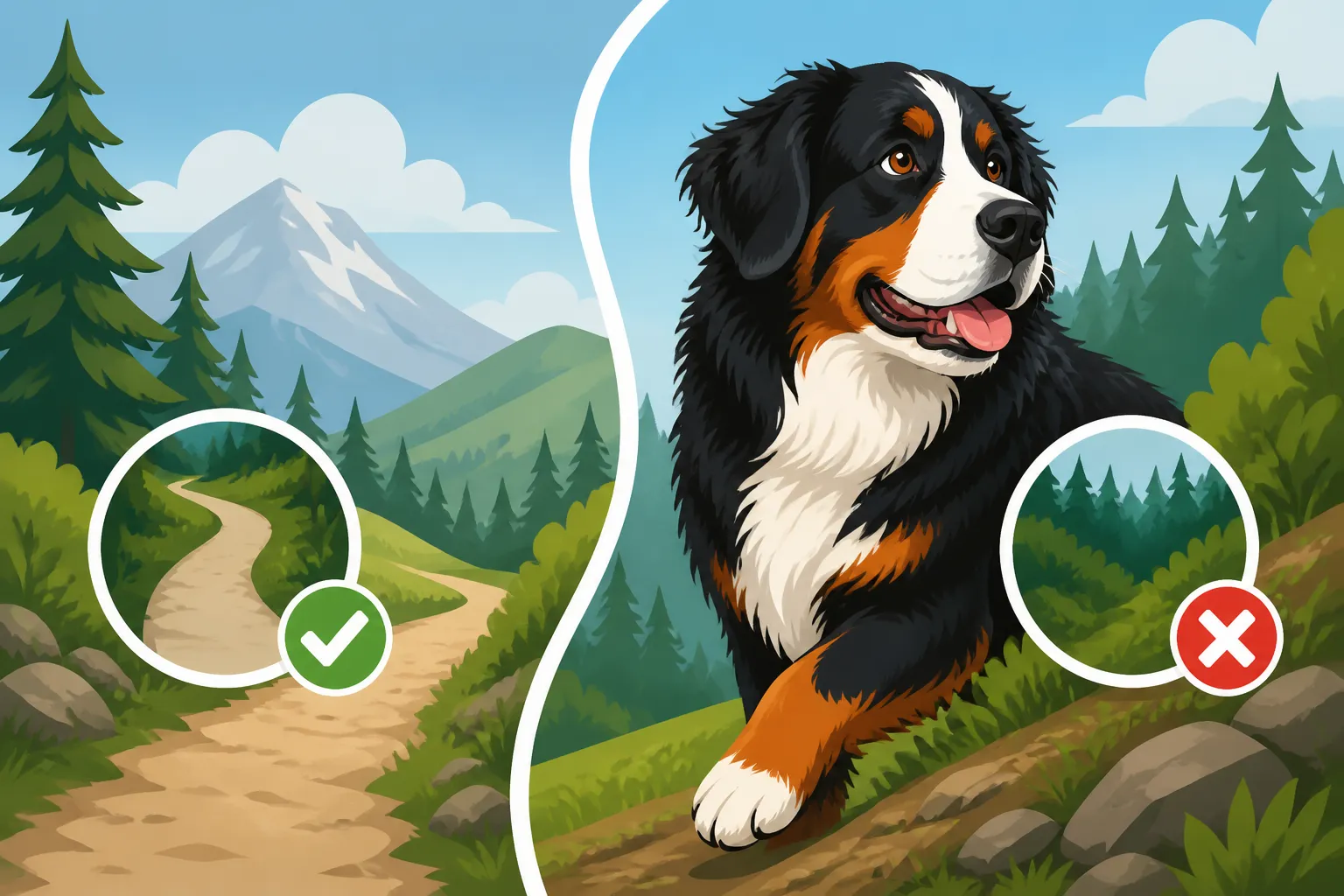
Whether a Bernese Mountain Dog Wanders Off a Trail
One of the biggest joys of sharing your life with a Bernese Mountain Dog is experiencing the great outdoors together. Imagining those majestic, tricolored coats against a scenic backdrop is pure bliss. But then the worry creeps in: what if my beautiful Berner, with all their size and strength, decides to explore a little too far off the trail? The thought of them disappearing into the woods, especially if they catch a scent or spot something interesting, can be genuinely terrifying. This guide is here to help you understand the Bernese Mountain Dog's natural tendencies when hiking and to equip you with the knowledge and strategies to ensure your trail adventures are safe and enjoyable, keeping your beloved companion right by your side.
Understanding the Bernese Mountain Dog's Trail Mentality
Bernese Mountain Dogs are, by nature, generally devoted companions. They often want to be near their people, earning them the endearing nickname "Velcro dogs." However, the trail environment presents a unique set of distractions and opportunities for a dog to follow their instincts. It's crucial to understand these inherent traits to anticipate their behavior.
The Independent Streak vs. the Desire to Please
While many Berners are famously eager to please their owners, they also possess a certain independence that harks back to their working dog origins. They weren't bred as retrievers or high-drive hunting dogs, but rather as farm dogs tasked with driving cattle and pulling carts. This background instilled in them a capability to work somewhat independently, making decisions on their own without constant direct oversight.
On a trail, this can manifest as a Berner who might decide a particular smell is too intriguing to ignore, or that a rustling in the bushes warrants investigation, even if it means momentarily tuning out your calls. They aren't trying to be disobedient; they're simply following their instincts. For a breed that often sticks close at home, the vastness and novelty of a trail can awaken a different side of their personality. It’s a delicate balance: they love you, but sometimes a good squirrel chase or a fascinating new scent momentarily overrides that desire to remain glued to your hip.
What Captures a Berner's Attention Outdoors
Outdoors, a Bernese Mountain Dog's senses are on overdrive. Their powerful noses, while not as specialized as a bloodhound's, are still incredibly effective at picking up a myriad of scents that we humans can't even perceive. A deer that crossed the path an hour ago, a rabbit that darted into a thicket, or even the lingering smell of another dog can be an irresistible siren call.
Beyond scents, their social nature can also be a strong pull. Other hikers, children, or especially other dogs can be huge distractions. A Berner might decide to greet everyone they see, often with a friendly but overwhelming lean or a curious sniff. The sheer novelty of the environment itself – new sights, sounds, and textures underfoot – can also lead them to explore just beyond your immediate vicinity. Imagine a fluffy Berner spotting a particularly inviting patch of snow or a cool, muddy puddle; sometimes, the call of canine adventure is just too strong to resist!
The "Softness" of the Breed and Recall
Bernese Mountain Dogs are known for their sensitive, "soft" temperaments. This means they generally respond best to positive reinforcement and gentle guidance rather than harsh corrections. If your Berner associates coming back to you with being scolded or an unpleasant experience, they are far less likely to do it readily, especially when faced with tempting distractions.
Building a strong, joyful recall is paramount. It needs to be the most positive, rewarding action your dog can take. If you’ve ever had to chase your Berner because they took off after a deer, you know the frustration. In that moment, shouting or getting angry can actually make the problem worse, making them hesitant to return when they finally decide they're done exploring. We want our Berners to think, "Oh, awesome! Mom/Dad called! I get a super treat!" rather than, "Uh oh, I'm in trouble, maybe I'll just keep sniffing this interesting thing over here." This "softness" means your approach to training, especially recall, needs to be consistently kind, engaging, and highly rewarding.
Assessing Your Bernese Mountain Dog's Recall Reliability
Before you even think about letting your Bernese Mountain Dog off-leash on a trail, it's absolutely vital to honestly assess their recall reliability. This isn't about wishing for the best; it's about knowing with certainty that your dog will come back to you, no matter the distraction.
Puppy Foundations for a Rock-Solid Recall
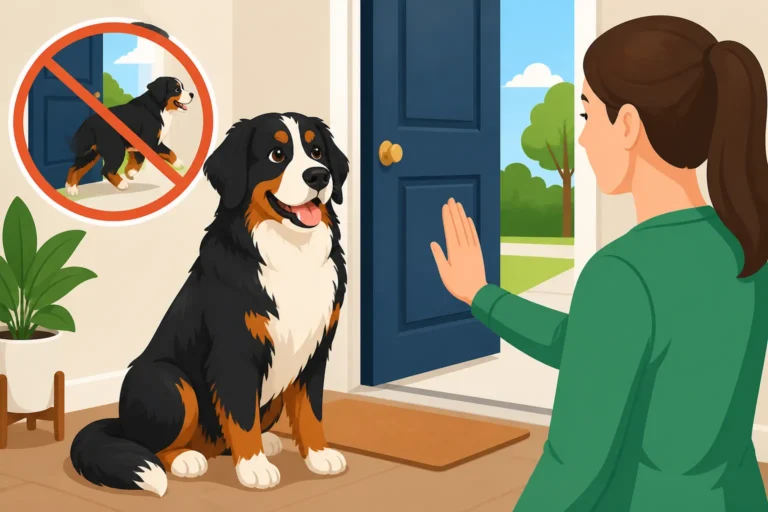
The journey to a reliable recall begins the moment you bring your Bernese Mountain Dog puppy home. Don't wait until they're older and already developing independent habits. Start early, make it fun, and be consistent. Begin in a distraction-free environment, like your living room or a fenced yard. Use a happy, inviting tone, say their name, and then "come!" or "here!" When they respond, reward them enthusiastically with a high-value treat, a favorite toy, or even a short game of tug. The goal is to build a positive association so strong that "come!" becomes the best word in their vocabulary.
Vary your location and gradually introduce mild distractions. A crucial part of this is understanding that Berners, while smart, can sometimes take a little longer to process information or simply choose to ignore a cue if they're not highly motivated. Training Sessions Short Enough for a Bernese Mountain Dog are key here; keep them brief and positive to maintain engagement. As they grow, their increasing size means that a broken recall becomes a serious safety issue, not just an inconvenience. Many owners find value in enrolling in a Training Class Prices for a Bernese Mountain Dog Puppy for expert guidance during these formative months.
The Adolescent Challenge: The "Teenage" Berner's Independence
Ah, the teenage phase! Just like human teenagers, adolescent Bernese Mountain Dogs (roughly between 6 months and 2-3 years) can test boundaries and seem to forget everything they once knew. This is often the period when owners face the most significant challenges with recall. What was once a perfect "come" might suddenly turn into a casual stroll in the opposite direction, or a complete deaf ear to your increasingly desperate calls.
During this stage, the independent streak of the Bernese Mountain Dog can truly shine – or frustrate! Their hormones are surging, their confidence is growing, and the world is suddenly full of even more exciting things to investigate. It's not uncommon for a Berner in their The Bernese Mountain Dog Adolescent Stage to seem like they've regressed in their training. This is not the time to give up; it's the time to double down on consistent, positive reinforcement training, especially for recall. Use a long line even in seemingly safe areas to reinforce the habit of checking in with you, without giving them the opportunity to make "bad" choices. Patience and persistence are your best friends during this period.
Factors That Influence Recall on the Trail
Even with excellent training, several factors can influence your Bernese Mountain Dog's recall reliability on a trail:
- Environment Novelty: A brand new trail with unfamiliar sights and smells is far more distracting than a familiar neighborhood park.
- Level of Distraction: The presence of other dogs, wildlife (squirrels, deer, rabbits), or even large groups of people can make even the most obedient Berner hesitate.
- Your Dog's Energy Levels: A dog that is over-stimulated or has pent-up energy might be harder to recall than one that has already had some calm exercise.
- Your Relationship: The strength of your bond and how much your dog values interacting with you plays a huge role. If coming back to you is always the most rewarding option, they're more likely to do it.
- Weather Conditions: Strong winds can carry scents further, making dogs more apt to follow them. Rain can wash away familiar scents, making them rely more on visual cues.
- Time of Day: Early mornings or late evenings might mean more wildlife activity, leading to greater temptations.
It's crucial to consider these variables and tailor your expectations and training approach accordingly. Don't set your Berner up for failure by expecting perfect recall in a highly distracting environment if they haven't been proofed in similar situations.
Strategies to Keep Your Bernese Mountain Dog Close on Trails
Keeping your Bernese Mountain Dog safely by your side on trails requires a combination of thoughtful preparation, consistent training, and sometimes, the right equipment. It's about proactive management and building a relationship where your Berner wants to stay close.
Leash Training and Equipment
For most Bernese Mountain Dogs, especially those whose recall isn't 100% foolproof in every scenario, a leash or a long line is your safest bet on the trail. Even in areas where off-leash is permitted, if you have any doubt, keep them leashed. A 10-foot or 20-foot long line, available on platforms like Amazon, gives your Berner a sense of freedom to explore scents and wander a bit, while still keeping them safely connected to you. This is also an excellent training tool for practicing recall in more challenging environments.
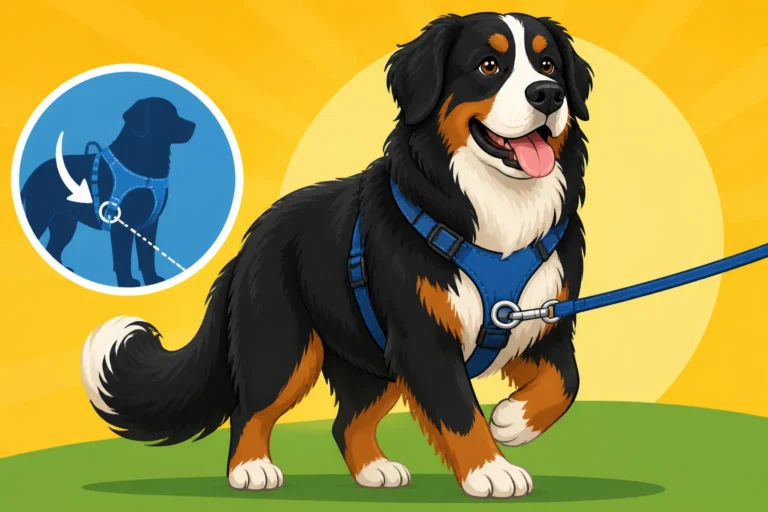
When it comes to equipment, consider a sturdy harness over a collar for trail walking. A harness distributes pressure across their chest and shoulders, which is more comfortable for a large, strong dog like a Berner and reduces strain on their neck. Front-Clip Harnesses on a Hundred Pound Bernese Mountain Dog are particularly effective as they redirect your dog towards you if they pull, giving you more control without discomfort. Make sure whatever you choose is durable and fits well – a Bernese Mountain Dog can easily snap cheaper clips or wriggle out of ill-fitting gear.
It's also essential that your Berner is comfortable and well-trained on their leash. A dog that is constantly pulling can make any trail experience stressful, both for you and for them. Leash Manners on a Hundred Pound Bernese Mountain Dog are not just about politeness; they're about safety and enjoyment for both of you.
Consistent, High-Value Recall Training
Recall training isn't a "one-and-done" deal; it's an ongoing process, especially for a large breed that can sometimes have a mind of its own. You need to make coming back to you the absolute best thing that can happen on the trail.
Here's how to elevate your recall game:
- Vary Your Rewards: Don't always use the same treat. Sometimes it's a piece of boiled chicken, sometimes it's a favorite squeaky toy, sometimes it's an enthusiastic game of chase. Keep them guessing and excited!
- Practice in Diverse Environments: Start with low-distraction areas and gradually work your way up. Practice in your yard, then a quiet park, then a busier park, and finally, on a trail with mild distractions. Each success builds confidence.
- Surprise Recalls: Don't just call them when you need them to come. Call them periodically throughout your walk, reward them, and then immediately release them to continue exploring. This teaches them that coming to you doesn't always mean the fun ends, making them more willing to respond.
- "Emergency" Recall Word: Consider having a separate, unique recall word or sound that you only use for true emergencies. This word should never be "wasted" on casual calls and should always be followed by the absolute highest value reward possible.
Remember that Berners can sometimes be perceived as Whether a Bernese Mountain Dog Is Stubborn when they don't immediately comply, but often it's a matter of distraction or a lack of sufficient motivation. Make yourself more interesting and rewarding than the distraction. Many online programs, like those offered by BAXTER & Bella, provide comprehensive positive reinforcement training guidance that can be adapted for trail situations, helping you fine-tune your recall strategies.
Managing Distractions and Environment
Part of being a responsible Bernese Mountain Dog owner on the trail is managing the environment and minimizing potential distractions.
- Choose Appropriate Trails: For dogs still perfecting their recall, start with less-trafficked trails where you're less likely to encounter other dogs or people. Avoid areas known for heavy wildlife populations if your Berner has a strong prey drive.
- Time Your Walks: Consider walking during off-peak hours when trails are quieter.
- Be Proactive: Scan the trail ahead. If you see another dog, a group of people, or potential wildlife, call your Berner to you before they notice the distraction. Reward them, and then either put them on a short leash or move to the side of the trail until the distraction passes.
- "Look at Me" Command: Teach your Berner a "look at me" or "focus" command that gets their attention even in distracting environments. This can be a vital bridge to a recall when they're tempted to wander.
Ultimately, you are your Bernese Mountain Dog's advocate and protector on the trail. It's your responsibility to set them up for success, which often means anticipating challenges and managing the environment.
When to Use a Long Line vs. Off-Leash
The decision to allow your Bernese Mountain Dog off-leash on a trail is a serious one, with significant implications for their safety and the safety of others.
When to Use a Long Line:
- Any doubt about recall: If you are not 100% confident your Berner will come back every single time, in every single situation, use a long line. It allows them freedom to sniff and explore while you maintain control.
- New environments: When exploring a new trail, even with a dog that has a generally good recall, a long line provides a safety net against unexpected distractions.
- High-distraction areas: Busy trails, areas with known wildlife, or places with frequent off-leash dogs are ideal for long line use.
- Adolescent dogs: As mentioned, the teenage phase is prime time for practicing recall on a long line.
- Before releasing onto a long line: Always check that the trail is clear of hazards like broken glass, sharp objects, or poisonous plants within the long line's radius.
When to Consider Off-Leash (with extreme caution):
- Fenced, private areas: An actual fenced dog park or private property is the only truly "safe" off-leash environment.
- Isolated trails with exceptional recall: Only consider this if your Bernese Mountain Dog has a proven, rock-solid recall in all environments, and the trail is deserted, remote, and you have excellent visibility.
- After extensive proofing: Your dog should have successfully demonstrated perfect recall in progressively more distracting and open environments before even contemplating off-leash on a public trail.
- Local regulations allow it: Always check local leash laws. Many parks and trails have strict leash requirements for good reason.
Remember, a Bernese Mountain Dog is a large, powerful dog. If they take off, they can cover ground quickly, and their size can be intimidating to other people or dogs, even if your Berner is friendly. The risk of injury, getting lost, or causing an incident is significantly higher with an unreliable recall. For the vast majority of Bernese Mountain Dog owners, especially on public trails, a long line offers the best balance of freedom and safety. Teaching your Berner to A Bernese Mountain Dog That Will Not Come When Called is a critical skill, but preventing the need for an emergency recall is even better.
Here's a quick comparison of popular trail tools for Berners:
| Tool/Method | Pros | Cons | Best Use Case |
|---|---|---|---|
| Standard Leash | Max control, required in many areas, good for urban | Limits exploration, less freedom, can be pulled by strong Berner | Crowded trails, urban walks, initial training |
| Long Line | Freedom to explore, safe recall practice, moderate control | Can tangle, requires more attention from owner, not for very dense woods | Moderate-distraction trails, recall proofing, giving more freedom |
| Front-Clip Harness | Reduces pulling, redirects focus, comfortable | Can tangle if not fitted well, may not suit all dogs | Strong pullers, Berners who need help with Leash Manners on a Hundred Pound Bernese Mountain Dog |
| GPS Tracker | Peace of mind, aids in finding lost dog | Doesn't prevent wandering, adds to gear, battery life a concern | Extra safety measure for any off-leash activity (even long line) |
| Off-Leash | Ultimate freedom, great exercise | Highest risk of getting lost, injury, or causing incident; unreliable recall is dangerous | Only for fenced, private areas or extremely reliable dogs in isolated settings |
Real-World Scenarios and Safety Concerns
No matter how well-trained your Bernese Mountain Dog is, the trail can throw unexpected curveballs. Being prepared for real-world scenarios is key to safety.
Encountering Wildlife and Other Dogs
One of the most common reasons a Bernese Mountain Dog might wander off a trail is the sudden appearance of wildlife. A deer bounding across the path, a flock of birds taking flight, or even a small squirrel can trigger a chase instinct. While Berners generally aren't known for a strong prey drive like some hunting breeds, the novelty and excitement can be enough to send them off. If your Berner is off-leash and bolts, your chances of getting them back quickly in dense woods are slim. This is where a long line or a solid "leave it" command combined with a strong recall is invaluable.
Similarly, encountering other dogs can be a distraction. Even if your Berner is friendly, not all dogs are, and an uncontrolled greeting can lead to altercations. Having your Berner on a leash or long line allows you to manage these interactions gracefully, moving them to the side, or giving them space if the other dog seems unsure. Socializing a Reserved Bernese Mountain Dog Puppy is important for developing appropriate responses, but even well-socialized dogs need management in unpredictable environments.
Lost Dog Prevention
No one ever wants to imagine their Bernese Mountain Dog getting lost on a trail, but it's a real possibility if they wander too far. Beyond having a reliable recall, several measures can greatly increase your chances of a reunion:
- Current ID Tags: Ensure your Berner wears a collar with up-to-date ID tags containing your phone number. Make it legible.
- Microchip: A microchip is a permanent form of identification. Make sure your contact information associated with the chip is current.
- GPS Tracker: For added peace of mind, especially if you venture into more remote areas or if your dog has an iffy recall, a GPS tracker collar can be a lifesaver. These devices allow you to track your dog's real-time location using your smartphone.
- Familiarity with the Area: Stick to familiar trails, especially when first working on recall or if your dog is prone to wandering.
Knowing that you've taken these preventive steps can ease some of the anxiety associated with allowing your Berner a bit more freedom, even on a long line.
The Unpredictable Nature of Trails
Trails, by their very definition, are natural and often unmanicured environments. This means they come with inherent unpredictability. You might encounter steep drops, slippery rocks, unseen water bodies, or even unexpected human activity. A Bernese Mountain Dog, while generally sure-footed, can still misstep or get into trouble if they are exploring too far ahead or out of sight.
Consider the terrain: a heavily wooded area makes it much harder to keep visual track of your Berner than an open meadow. Water features can be inviting, but currents, depths, or unseen obstacles can pose risks. Even seemingly harmless flora can be dangerous if ingested. This unpredictability reinforces the importance of control, whether that's through an impeccable recall or a physical tether like a long line. It's about ensuring that your majestic Berner can enjoy the wildness of nature without falling victim to its less forgiving aspects. When considering Whether a Bernese Mountain Dog Is Worth the Money, remember that proactive safety measures are part of that investment in their well-being.
Disclaimer
This article is for general informational purposes only and does not constitute professional advice. Laws, prices and regulations vary by location and change over time. Consult a qualified professional for guidance on your specific situation.