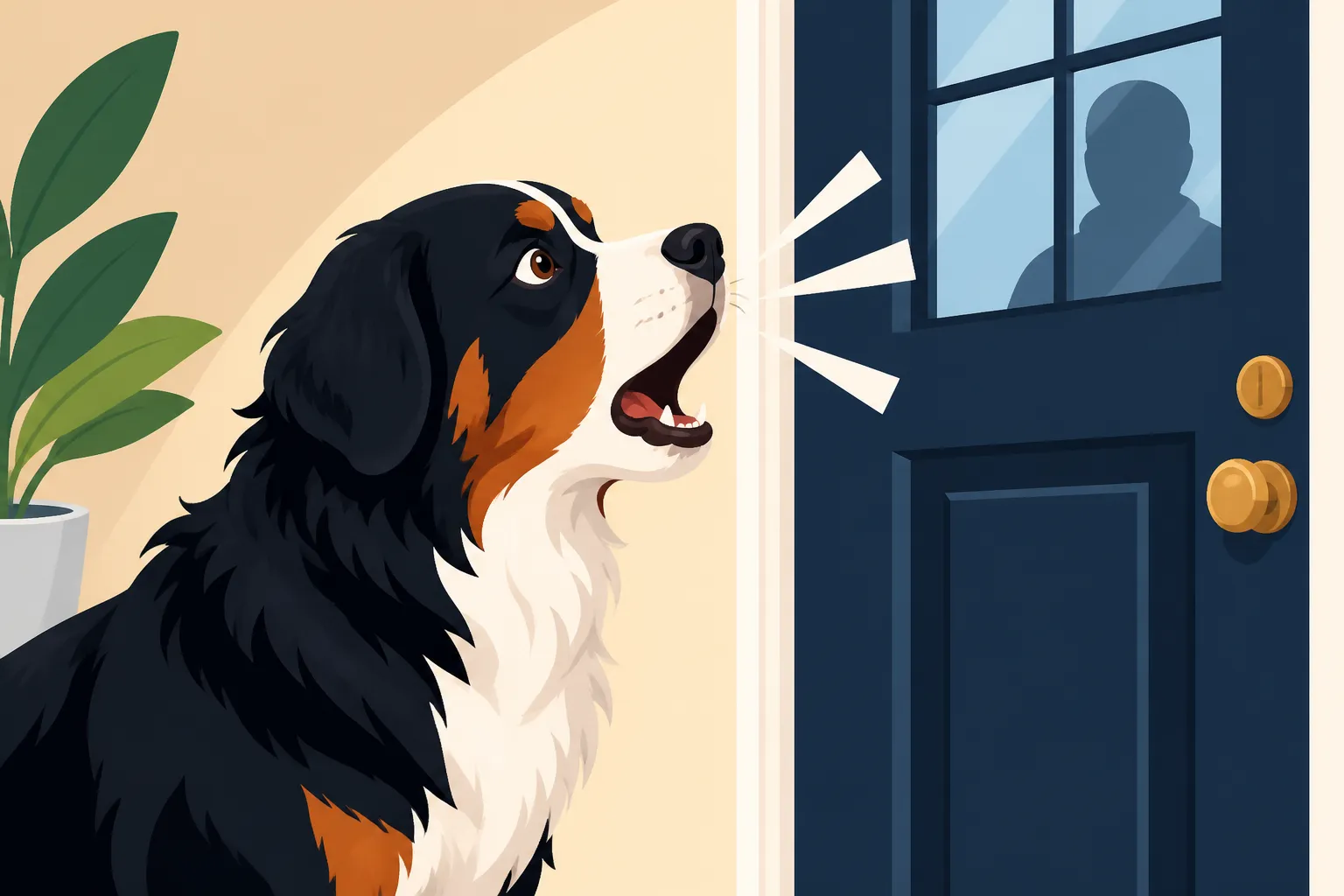
Barking at the Door From a Bernese Mountain Dog
It’s a scenario many of us Bernese Mountain Dog owners know all too well: the doorbell rings, or a knock echoes through the house, and suddenly your serene, gentle giant transforms into a barking sentinel. That deep, booming "WOOF!" can be startling, especially when your Berner is typically so good-natured. It’s not just annoying; it can be embarrassing when guests arrive, or frustrating when you’re trying to enjoy a quiet moment. This guide will help you understand why your beloved Bernese reacts this way to the door and, more importantly, equip you with the strategies to manage and reduce this often overwhelming behavior.
Understanding Why Your Bernese Mountain Dog Barks at the Door
First off, let’s get one thing straight: your Bernese Mountain Dog isn’t barking at the door just to annoy you. There’s always a reason, rooted deep in their instincts or learned from their environment. These magnificent dogs were originally bred for tasks like herding cattle and guarding farmsteads in the Swiss Alps, which means they come with a natural predisposition to be alert and to let you know when something is amiss.
The Natural Instinct to Alert
Think about their historical role. Bernese Mountain Dogs were protectors. They weren't guard dogs in the aggressive sense, but rather "alarm dogs." Their job was to alert their farmer to anything unusual – a stranger approaching the property, an animal straying, or perhaps the mail carrier (though I'm sure mail delivery looked a lot different in the Swiss Alps centuries ago!). That deep bark was meant to signal, "Hey, something's happening!" and perhaps to deter potential threats with their imposing size and vocalizations.
Today, even though your Berner lives a pampered life indoors, that instinct is still very much alive. When someone approaches your door, your dog perceives it as an event, an intrusion, or a change in their territory. They're simply doing what comes naturally, trying to tell you, their human, that someone is there. It’s their way of communicating and fulfilling that ancient role, even if the "threat" is just the friendly neighborhood delivery driver.
Excitement and Overstimulation
Sometimes, it’s not about guarding at all; it’s pure, unadulterated excitement. Bernese Mountain Dogs, especially as puppies and adolescents, can be exuberant bundles of joy. When the doorbell rings, or a family member comes home, it often signals something wonderful: attention, cuddles, a walk, or even just a treat. This anticipation can build up, leading to a vocal outburst.
Imagine being a Berner: you hear a sound, perhaps a car pulling up, then footsteps, and then the doorbell. Each of these cues builds anticipation. Their heart rate goes up, their tail might start thumping, and that excitement often manifests as barking. It's a combination of "Yay, a person!" and "Please, please, let me greet them!" This kind of barking is often accompanied by body language that screams enthusiasm: a wagging tail, a bouncy posture, and sometimes even a little whine in between barks. It’s a very different energy than a fear-based or territorial bark, but it can be just as loud and disruptive. Why a Bernese Mountain Dog Stays a Puppy Until Three discusses how their extended adolescence can play into these behaviors.
Anxiety and Territorial Behavior
On the flip side, door barking can sometimes stem from anxiety or a strong territorial drive. Some Berners, despite their gentle nature, can be quite sensitive or reserved, particularly around strangers. A Bernese Mountain Dog That Is Aloof With Strangers touches on this aspect of their temperament. The approach of an unknown person to their perceived territory – your home – can trigger a stress response. They might feel the need to "warn off" the intruder, or they might be genuinely worried about who is on the other side.
This isn't always outright aggression. It can be a deep-seated uncertainty that manifests as barking. They might feel vulnerable, especially if they can't see or identify the person. If your Berner also tends to bark excessively at noises outside, or if they seem generally uneasy with new people entering your space, anxiety could be a significant factor. It’s worth noting that if your dog exhibits fearful body language, like a tucked tail, pinned ears, or retreating after barking, it’s definitely more about anxiety than just excitement.
Identifying the Triggers for Door-Related Barking
To effectively address your Berner's door barking, you first need to become a detective. What exactly sets them off? Is it always the doorbell? The sound of a car? Footsteps on the porch? Pinpointing the specific triggers will allow you to be more proactive in your training and management strategies.
Visual and Auditory Cues
Our Bernese Mountain Dogs have incredible senses. While we might only hear the doorbell, they’re picking up on a whole symphony of cues leading up to it.
- Auditory Cues: Do they bark when they hear a car pull into the driveway? The crunch of gravel? Footsteps on the path? The click of the mail slot? The subtle rattle of a package being placed on the porch? Some dogs even react to the sound of specific vehicles, like the mail truck or a neighbor’s car. It’s not always just the doorbell itself. Take note of when the barking actually starts. Does it begin as soon as they hear the car, or only once the person is right at the door? Understanding this timing is crucial because it tells you when you need to interrupt or redirect them.
- Visual Cues: For Berners who are often looking out windows, the sight of someone approaching can be a huge trigger. Perhaps they bark when they see someone on the sidewalk far down the street, or only when a person steps onto your property. If they have a direct line of sight to the door or porch from their favorite napping spot, that visual stimulus can be just as potent as an auditory one. Sometimes, simply blocking their view of the door or front window can significantly reduce reactive barking.
Keeping a small journal for a few days can be incredibly insightful. Jot down: "Time, Trigger (e.g., mailman's truck, doorbell, neighbor walking by), Berner's reaction (e.g., 5 barks, lunged at window, tail wagging)." This data will help you see patterns you might have missed.
The Routine of Arrivals and Departures
Dogs are creatures of habit, and they quickly learn routines. If every time the doorbell rings, a new person appears, and chaos ensues (even if it's happy chaos!), they learn to anticipate that sequence of events.
- Guest Arrivals: For many Berners, guests mean attention, excitement, and a break from the usual routine. If your Berner consistently gets extra pets, treats, or playtime when someone new enters, they learn that door activity is a predictor of good things. While this isn't inherently bad, it can escalate into frantic barking if they don't have an appropriate way to channel that energy. They might be trying to "summon" the good times, so to speak.
- Family Departures/Arrivals: This is a different beast entirely. If your Bernese Mountain Dog suffers from separation distress, the sound of you leaving or arriving can trigger anxiety. When you're heading out, they might bark in protest or distress. When you come home, it's often a burst of excited greeting barks because they've been alone. The Bernese Mountain Dog That Cannot Bear Being Left covers this in more detail, but the door is often the focal point of these anxieties. It's the gateway to your presence or absence.
How Your Reaction Influences Barking
Here's the tough love part: we, as owners, often inadvertently reinforce the barking. It's not our fault; it's a natural human reaction.
- Yelling or Scolding: When your Berner barks, your first instinct might be to yell, "Quiet!" or "No!" What your dog hears, however, isn't necessarily a reprimand. They hear you barking with them. They think, "Oh, my human is joining in! This must be important!" It can actually intensify the behavior because they believe you're part of their "alert system."
- Rushing to the Door: If you immediately rush to the door every time they bark, you're reinforcing that their barking successfully brought you to the source of the "issue." They've learned, "If I bark, my human goes to the door."
- Giving Attention (Even Negative): Any attention, even a push away or a stern look, can be seen as a reward by a dog craving interaction. They think, "Aha! I barked, and now I have my human's focus!"
It's a tricky cycle to break, but recognizing your own role in the dynamic is the first step toward change.
Practical Strategies to Manage Door Barking
Now for the actionable stuff! Managing door barking often involves a two-pronged approach: management (preventing the behavior from happening in the first place) and training (teaching your Berner a more appropriate response). Consistency is key, especially with a breed as sensitive and intelligent as the Bernese.
Management: Preventing the Behavior
Management is about making it harder for your Berner to practice the unwanted behavior. Every time they bark at the door, that behavior is reinforced, making it harder to extinguish.
- Block the View: If visual cues are a trigger, block access to windows and doors that offer a view. You can use frosted window film, blinds, curtains, or even strategically placed furniture. Crates can also be helpful; a comfy, cozy crate away from the front door might become their safe haven when someone approaches. You might find a well-placed baby gate, like those you can find on Amazon, incredibly useful for creating a physical barrier.
- Sound Masking: For auditory triggers, try turning on some background noise. A radio, TV, or even a white noise machine can help muffle outside sounds. Some Berners respond well to classical music or specially designed calming dog music playing softly. This reduces the clarity of those triggering sounds, giving them less to react to.
- Doorbell Desensitization: This is a bit more involved but highly effective. Record your doorbell sound or a knock. Play it at a very low volume while your dog is calm. As soon as you play it, immediately give them a high-value treat. Repeat this many, many times. Gradually increase the volume, always pairing the sound with a treat. The goal is to change their emotional response from "intruder!" to "treat time!" This makes the sound a predictor of good things, not something to react to.
- "Go to Your Place" Command: Teach your Berner to go to a designated "place" (like a dog bed or mat) when the doorbell rings. Start by practicing this command without the doorbell. Reward heavily for staying on their place. Once they understand "place," start practicing it with very low-volume doorbell sounds, gradually increasing the distractions. Teaching a Bernese Mountain Dog to Settle is a great resource for this kind of foundational training.
Training: Teaching an Alternative Behavior
Management reduces opportunities for barking, but training teaches your Berner what you do want them to do instead.
- "Quiet" Command: This is often taught by letting your dog bark 2-3 times, then holding a high-value treat to their nose. The moment they stop barking to sniff the treat, say "Quiet!" and give them the treat. Repeat. The timing is crucial. The idea is to reward the absence of barking. Gradually, you’ll extend the duration of "quiet" before rewarding. This might take many, many repetitions, as Berners can sometimes be quite persistent once they've found their voice.
- Redirecting to a Toy or Chews: When you anticipate a trigger (e.g., you see the mail truck approaching), grab a favorite toy or a long-lasting chew. As soon as your Berner notices the trigger, immediately redirect their attention to the toy/chew. Reward them for engaging with it instead of the door. Puzzle toys filled with treats can be especially engaging and can keep their minds occupied during a potentially triggering event.
- "Wait" at the Door: For situations where the barking is driven by excitement, teach them to "wait" politely when someone comes to the door. This means they stay a short distance away, ideally in a sit or down, until released. Practice this with a helper. Have the helper approach the door, but don't let them in until your Berner is calm. Reward quiet, calm behavior with verbal praise and maybe a small treat. Only when they are settled should the guest enter. This helps them learn that calm behavior gets them what they want – greeting the guest – while barking gets them nothing. Teaching a Bernese Mountain Dog to Stay Put is an excellent foundation for this.
- Controlled Greetings: When guests arrive, make sure greetings are calm. Ask your guests to ignore your Berner until they are quiet and settled. No eye contact, no talking, no petting until all four paws are on the floor and they are no longer barking. This teaches your Berner that calm behavior earns attention, not frantic barking.
Here’s a simple table illustrating a training progression:
| Training Step | Action for Owner | Desired Berner Response | Reward |
|---|---|---|---|
| Step 1: Low Volume Doorbell | Play doorbell recording at lowest audible volume. | Brief ear flick, no barking. | High-value treat, "Good quiet!" |
| Step 2: Place Command | Ask Berner to "Place" on their bed (no doorbell). | Goes to bed, lies down. | Treat, praise. |
| Step 3: Moderate Volume + Place | Play doorbell at moderate volume, immediately cue "Place." | Goes to bed, stays on bed quietly. | Treat on bed, praise. |
| Step 4: Doorbell + Distraction | Play doorbell, immediately give engaging chew/toy. | Focuses on chew/toy, no barking. | High-value chew/toy, "Good job!" |
| Step 5: Practice with Helper | Helper knocks/rings. Cue "Place" or "Quiet." | Remains quiet, calm, on place. | Guest enters only when calm, then treat. |
Consistency and Patience
Bernese Mountain Dogs are intelligent and eager to please, but they are also quite sensitive and can be, let’s say, opinionated. They don't respond well to harsh corrections, so positive reinforcement is always your best bet. Training a Bernese Mountain Dog Without Breaking It emphasizes gentle methods.
Patience is your superpower here. Changing deeply ingrained behaviors takes time, especially if the barking has been a long-standing habit. Don't expect overnight miracles. There will be setbacks. Your Berner will have days where they seem to have forgotten everything you taught them. That's okay! Just calmly and consistently go back to your training plan.
Involving the whole family is critical. Everyone needs to be on the same page and respond consistently to the barking, or your Berner will get mixed signals. If one person allows barking and another scolds, it's confusing and counterproductive.
Consider tools that can help. For instance, some folks find that a well-designed online training program, like BAXTER & Bella's, offers structured guidance that helps keep everyone consistent and moving forward with positive reinforcement techniques. These programs often break down complex behaviors into manageable steps, which is ideal for a long-term goal like reducing door barking.
When to Seek Professional Help
While many door-barking issues can be managed with consistent home training, there are times when it’s truly beneficial – and sometimes essential – to call in the experts. Don't ever feel ashamed or like you've failed if you need professional guidance; it simply means you're committed to doing what's best for your Bernese.
Recognizing Escalating Behavior
How do you know if your Berner's door barking is more than just a nuisance? Look for signs of escalation or behaviors that suggest a deeper problem:
- Aggression: Is the barking accompanied by growling, lunging, snapping, or attempts to bite? Does your Berner show teeth, stiffen their body, or raise their hackles? This is a serious concern and needs immediate professional intervention.
- Fear or Panic: Does your Berner become uncontrollably frantic, trembling, panting excessively, or attempting to hide after barking? These could be signs of severe anxiety or fear, not just overexcitement.
- Inability to be Redirected: Have you tried various management and training techniques consistently for several weeks, and your Bernese simply cannot be distracted or calmed down once they start barking? This suggests the emotional arousal is too high for them to respond to your cues.
- Injury Risk: Is your Berner putting themselves or others at risk by crashing into doors, jumping on guests, or becoming a tripping hazard? Their sheer size means even well-intentioned exuberance can be dangerous.
- Impact on Quality of Life: Is the barking significantly stressing you, your family, or your neighbors? Is your Berner constantly stressed or on edge due to outside stimuli? If the behavior is negatively impacting everyone's quality of life, it's time for help.
Working with a Certified Professional Dog Trainer
If you notice any of these escalating behaviors, or if you simply feel overwhelmed and stuck, a certified professional dog trainer (CPDT) can be an invaluable resource. They can observe your Berner in your home environment, identify subtle triggers you might have missed, and develop a personalized training plan.
A good trainer will use positive, force-free methods that align with a Bernese Mountain Dog's sensitive nature. They'll teach you how to communicate effectively with your dog and help build your confidence in handling challenging situations. They might suggest advanced techniques like "look at that" (LAT) exercises, where you reward your Berner for simply looking at a trigger without reacting, gradually changing their emotional association. For a breed that often seeks to please, finding a training approach that respects their temperament, as discussed in What a Bernese Mountain Dog Will Actually Work For, is vital.
Don't hesitate to interview a few trainers to find one whose philosophy aligns with yours and who has experience with large, potentially reactive breeds like Bernese Mountain Dogs.
Veterinary Consultation for Underlying Issues
In some cases, persistent or escalating barking can be a symptom of an underlying medical condition. Pain, discomfort, or cognitive dysfunction (especially in older Berners) can manifest as increased vocalization or reactivity.
It's always a good idea to consult your veterinarian to rule out any health issues. They can perform a thorough physical examination, and if necessary, recommend blood tests or other diagnostics. For instance, a Berner experiencing chronic joint pain might be more irritable and reactive to visitors, as the sudden movements or excitement could exacerbate their discomfort. Arthritis in a Bernese Mountain Dog by Six notes how early joint issues can begin.
Additionally, your vet can discuss whether anti-anxiety medications or supplements might be appropriate in conjunction with behavior modification, particularly if the anxiety component is significant. This isn't a "magic bullet" but can sometimes help lower your dog's overall stress level enough for the training to be more effective.
Ultimately, addressing door barking in your Bernese Mountain Dog requires a blend of understanding, management, and patient training. By taking a proactive approach and seeking professional help when needed, you can help your gentle giant learn to greet the world outside your door with more calm and less clamor.
Disclaimer
This article is for general informational purposes only and does not constitute professional advice. Laws, prices and regulations vary by location and change over time. Consult a qualified professional for guidance on your specific situation.