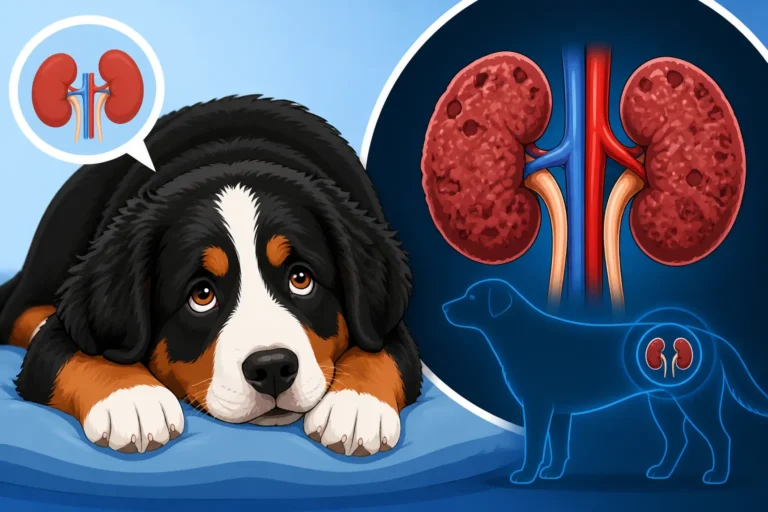
Whether Histiocytic Sarcoma Shows on an X-Ray
When your beloved Bernese Mountain Dog starts showing subtle signs of discomfort, a lingering limp, or just an inexplicable dip in energy, your mind immediately goes to the worst-case scenarios. The fear is palpable, especially with this wonderful breed known for its tragically short lifespan and propensity for certain health challenges. One of the most terrifying possibilities is Histiocytic Sarcoma, an aggressive and often insidious cancer. Naturally, the first step many vets suggest is an X-ray to try and pinpoint the problem. But does this common diagnostic tool actually reveal the presence of such a complex and devastating disease? This comprehensive guide will explore the role of X-rays in detecting Histiocytic Sarcoma and what to expect on this difficult diagnostic journey.
The Frustration of an Unseen Enemy: Why Early Detection Matters
It's a heartbreaking reality that Bernese Mountain Dogs are highly predisposed to Histiocytic Sarcoma, a truly aggressive and often widespread form of cancer. Unlike some more localized tumors that might form a distinct, easily palpable lump, Histiocytic Sarcoma can be incredibly sneaky, affecting a wide range of tissues and organs. This makes early detection an incredibly challenging, yet vital, endeavor. Owners often feel a deep frustration when their gut tells them something is wrong, but initial tests don't immediately provide a clear answer. This breed’s already short life expectancy, often around the seven to eight year mark, means every moment counts when a serious illness is suspected.
The insidious nature of this cancer means it can spread rapidly throughout the body before a visible mass forms or significant symptoms manifest. We often hear stories of Berners who seemed fine one week and then suddenly declined, a testament to how quickly this disease can progress. The desire to catch it early is universal among Berner parents, driven by the knowledge that early intervention, while not a cure, can sometimes offer more options and more precious time. This is why when that first concerning symptom appears, often something vague like a slight change in gait, an immediate, thorough investigation feels absolutely imperative.
The Elusive Nature of Histiocytic Sarcoma
Histiocytic Sarcoma often doesn't present itself as a neat, well-defined tumor that screams "cancer" on initial imaging. Instead, it can infiltrate tissues in a diffuse manner, affecting organs like the spleen, liver, lungs, lymph nodes, or even the bone marrow. When it occurs in a limb, it might not be a solid lump but rather an infiltration of the surrounding soft tissue or bone. This diffuse growth pattern means that it can be very difficult for standard diagnostic tools, like X-rays, to pick up subtle changes, especially in the early stages. It's like trying to find a shadow in a dimly lit room; you know something is there, but you can't quite make it out.
Consider a case where a Bernese Mountain Dog develops a limp. Your vet might suspect something like joint disease or a soft tissue injury, which are common in a large, active breed. An X-ray of the limb might show nothing conclusive, or perhaps some non-specific inflammation. Yet, the Histiocytic Sarcoma could be quietly spreading through the bone marrow or surrounding muscle, not yet causing the kind of dramatic structural change that an X-ray is designed to highlight. This is precisely the scenario that can leave both owners and vets scratching their heads, knowing something isn't right but lacking the definitive evidence.
Initial Signs and Symptoms That Prompt X-Rays
When a Bernese Mountain Dog starts to feel unwell due to Histiocytic Sarcoma, the initial signs are often frustratingly non-specific and can mimic many other less severe conditions. Owners might notice their normally exuberant Berner becoming a bit more lethargic, perhaps taking longer to get up or showing less interest in walks. A persistent, unexplained limp, especially in a front leg, is a very common first symptom, leading many owners to suspect joint issues, which are also prevalent in the breed. You might even hear about The First Signs of Histiocytic Sarcoma in a Bernese Mountain Dog being quite subtle.
Beyond lameness, other common indicators can include a decreased appetite, weight loss despite no change in diet, coughing, or even unexplained swelling in a limb. Because these symptoms are so vague, an X-ray often becomes one of the first diagnostic tools employed. For instance, if your Berner has a cough, a chest X-ray will be ordered to rule out pneumonia or other respiratory issues. If there's a limp, X-rays of the affected joint and bone are standard procedure. The hope is always that the X-ray will either definitively rule out something serious or, conversely, provide a clear picture of what's going on, even if it's bad news. This initial imaging is a crucial step in the diagnostic puzzle, even if it doesn't always deliver the final answer.
X-Rays: A Crucial First Step, But Not the Whole Picture
X-rays are undeniably a foundational diagnostic tool in veterinary medicine, offering a quick, relatively inexpensive, and non-invasive way to visualize bones and large soft tissue structures. When a Bernese Mountain Dog is suspected of having an ailment, especially a musculoskeletal one or a problem in the chest or abdomen, an X-ray is almost always among the first tests your vet will recommend. However, it’s vital to understand what X-rays are good at showing and, more importantly, what their limitations are when we're talking about a sneaky cancer like Histiocytic Sarcoma. For this particular type of cancer, an X-ray is usually a screening tool, guiding further investigation rather than providing a definitive diagnosis.
Many owners, understandably, hope for a clear answer from that initial X-ray. It's a natural expectation when facing such anxiety. But with Histiocytic Sarcoma, the picture is often muddier, leading to more questions than answers. This is a tough pill to swallow when you're desperate for clarity and a path forward for your beloved companion. Understanding these nuances can help manage expectations and prepare you for the often multi-stage diagnostic journey ahead.
What an X-Ray Can Reveal About Suspected Sarcoma
While X-rays may not be the definitive answer for all forms of Histiocytic Sarcoma, they are invaluable for detecting certain kinds of changes, particularly those affecting bone. If Histiocytic Sarcoma has taken an aggressive form within the bone (known as osseous Histiocytic Sarcoma), an X-ray can absolutely show significant signs. You might see areas of bone destruction, often described as "lytic lesions," where the cancerous cells are breaking down the bone tissue. These can appear as patchy, irregular areas of decreased bone density. In some cases, there might also be signs of new, abnormal bone growth, or periosteal reaction, which is the body's attempt to wall off or respond to the invasion.
For instance, if your Berner has a severe, persistent limp and X-rays reveal an aggressive, moth-eaten appearance on a long bone like the humerus or femur, this would be highly suspicious for a bone tumor. While an X-ray can't tell you it's definitively Histiocytic Sarcoma versus, say, osteosarcoma (another devastating bone cancer that affects large breeds), it certainly flags it as a serious problem requiring immediate further investigation. Similarly, if the cancer has formed a large, discrete mass in the chest (in the lungs or mediastinum) or abdomen (on the spleen or liver), a plain X-ray could potentially reveal the presence of such a mass, even if its exact nature isn't clear. This is often the point where a vet might advise Whether a Limping Bernese Mountain Dog Should Be Scanned further.
The Limitations for Histiocytic Sarcoma
Now, here’s where the frustration often sets in: for many presentations of Histiocytic Sarcoma, especially in its earlier stages or when it affects diffuse soft tissues, X-rays often come up empty, or only show very subtle, non-specific changes. An X-ray is essentially a two-dimensional image that's great for bone density and large, contrasting masses. It's not nearly as sensitive for detecting subtle changes in soft tissue density or small, infiltrative lesions. Imagine trying to see a faint stain on a tablecloth from across the room – it's just not detailed enough.
For example, if the Histiocytic Sarcoma is primarily affecting the lymph nodes or spreading diffusely through the spleen or liver without forming a distinct, large tumor, an X-ray might appear normal. If the cancer is in the soft tissues around a joint, an X-ray might only show mild swelling or effusion, which could easily be mistaken for arthritis or a sprain. This can lead to delays in diagnosis and treatment, which is particularly concerning given how rapidly this cancer can progress in Berners. This is a critical distinction, especially when comparing Bone Cancer Against Histiocytic Sarcoma in a Berner; while bone cancer often has clear X-ray signs, Histiocytic Sarcoma can be much more subtle. When you're facing potentially extensive and expensive follow-up diagnostics, having robust pet insurance like Healthy Paws can truly be a lifesaver, allowing you to pursue every avenue without immediate financial distress.
| Feature | X-Ray | CT Scan / MRI |
|---|---|---|
| Primary Use | Bone structure, large organ silhouette | Soft tissue detail, 3D anatomical visualization |
| Histiocytic Sarcoma Detection | Detects aggressive bone lesions, large masses in chest/abdomen | Detects subtle soft tissue infiltration, smaller lesions in organs, brain, bone marrow |
| Sensitivity for Early Disease | Low for diffuse/soft tissue lesions, moderate for aggressive bone | High for both bone and soft tissue involvement |
| Detail Provided | 2D image, limited soft tissue contrast | Detailed 3D images, excellent soft tissue contrast |
| Radiation Exposure | Low | Higher for CT (multiple images), none for MRI |
| Cost | Relatively low | Significantly higher |
| Anesthesia Required | Usually not for simple X-rays, sometimes for specific views | Always required for optimal imaging |
Beyond X-Rays: The Advanced Imaging Needed for Confirmation
When an X-ray doesn't give a clear answer, or if the findings are suspicious but not definitive, the diagnostic journey for Histiocytic Sarcoma in a Bernese Mountain Dog often needs to move to more advanced imaging techniques. This can be a financially and emotionally taxing step, but it's often absolutely necessary to get the clarity needed to make informed decisions about your dog's care. These advanced modalities provide a level of detail that X-rays simply cannot match, giving veterinarians a much clearer picture of what might be happening internally.
It’s at this stage that the full weight of the diagnosis process can really hit. You've already been through the initial stress of symptoms and X-rays, and now you’re looking at more complex, often specialized procedures. This is where pet insurance, like Healthy Paws, can prove invaluable, helping to cushion the financial blow of these advanced tests, allowing you to focus on your dog's well-being rather than stressing about the mounting bills. It’s about getting the answers you need, even when those answers are hard to hear.
The Power of MRI and CT Scans
For diagnosing Histiocytic Sarcoma, especially when it's located in soft tissues, joints, the brain, or diffusely within organs, Magnetic Resonance Imaging (MRI) and Computed Tomography (CT) scans are far superior to plain X-rays. These technologies create highly detailed cross-sectional images, essentially allowing the vet to "slice" through your dog's body digitally and view structures in three dimensions. This level of detail is crucial for visualizing the subtle infiltration and smaller lesions characteristic of Histiocytic Sarcoma, which might explain What Histiocytic Sarcoma Does Inside a Bernese Mountain Dog.
A CT scan uses X-rays from multiple angles to create detailed images, providing excellent bone detail and good visualization of soft tissues in the chest and abdomen. It's often preferred for assessing lung involvement or complex bone lesions that weren't clear on plain X-rays. An MRI, on the other hand, uses strong magnetic fields and radio waves to generate images, excelling in soft tissue contrast. This makes it particularly useful for evaluating the brain, spinal cord, muscles, and joints, where early infiltrative Histiocytic Sarcoma might otherwise go unnoticed. Both procedures typically require general anesthesia to ensure the dog remains perfectly still for the duration of the scan, adding another layer of consideration for owners.
The Role of Biopsy for Confirmation
While advanced imaging like CT and MRI can provide strong evidence of Histiocytic Sarcoma and help pinpoint its location, they are generally not definitive on their own. The only way to truly confirm a diagnosis of Histiocytic Sarcoma is through a biopsy. This involves taking a tissue sample from the suspicious area and having it examined by a veterinary pathologist under a microscope. The pathologist can then identify the characteristic abnormal histiocytic cells and determine the type of sarcoma. This definitive diagnosis is critical not only for confirming the cancer but also for guiding treatment protocols, as different cancers respond to different therapies. This is often the most anxiety-inducing step, as it provides the undeniable truth.
The method of biopsy will depend on the suspected location of the cancer. For superficial masses or enlarged lymph nodes, a fine-needle aspirate (FNA) or an excisional biopsy might be performed. For deeper-seated lesions in organs or bone, a more invasive surgical biopsy or a tru-cut biopsy (using a larger needle) may be necessary. Bone marrow aspirates or biopsies are also common if systemic disease is suspected. It's important to discuss the risks and benefits of each biopsy procedure with your veterinarian, as well as the expertise of the veterinary pathologist who will be reading the slides. Understanding The Biopsy That Confirms a Bernese Mountain Dog's Diagnosis is paramount, as this is the point of no return for definitive identification.
Navigating the Diagnostic Journey and Beyond
Receiving a diagnosis of Histiocytic Sarcoma in your Bernese Mountain Dog is undeniably one of the most devastating pieces of news an owner can hear. This aggressive cancer, coupled with the already shorter lifespan of the breed, makes the diagnostic and treatment journey incredibly difficult. It's a path filled with uncertainty, emotional turmoil, and significant financial considerations. But you are not alone in this; countless Berner families have walked this road, and understanding what lies ahead can help you make the best decisions for your beloved companion.
The sheer volume of information, the jargon, and the emotional weight can feel overwhelming. It's important to remember that every Bernese Mountain Dog, and every case of Histiocytic Sarcoma, is unique. What might be an option for one dog may not be suitable for another, depending on the stage of the disease, the dog's overall health, and the owner's resources. This is a time for deep empathy, careful consideration, and leaning on your veterinary team for guidance.
Preparing for the Unknown
The journey from initial symptoms to a confirmed diagnosis of Histiocytic Sarcoma can be a long and stressful one. You're preparing for the unknown, and that's incredibly tough. Financially, the costs associated with advanced diagnostics (CT/MRI, specialized biopsies) and subsequent treatment can be substantial, easily reaching into the tens of thousands of dollars. This is where a good pet insurance policy, like those offered by Healthy Paws, becomes an invaluable asset. Having the peace of mind that a significant portion of these oncology bills might be covered allows you to make medical decisions based on what’s best for your dog, rather than being solely driven by cost. It empowers you to explore every diagnostic and treatment avenue without immediate financial dread, understanding What Oncology Bills Reach for a Bernese Mountain Dog.
Emotionally, it's a rollercoaster. You'll likely experience fear, hope, frustration, and sadness, sometimes all within the same hour. It’s okay to feel overwhelmed and to seek support from your family, friends, or even online communities dedicated to Bernese Mountain Dogs. Many experienced Berner owners have navigated similar challenges and can offer comfort and practical advice. Open and honest communication with your veterinarian is crucial. Don't hesitate to ask questions, even if they seem silly. Understanding the pros and cons of each diagnostic step, the potential for false negatives, and the next steps if an X-ray is inconclusive will help you feel more in control during a very uncertain time.
Understanding the Prognosis and Treatment Options
Once a diagnosis of Histiocytic Sarcoma is confirmed, your veterinary team, ideally including a veterinary oncologist, will discuss the prognosis and available treatment options. Unfortunately, Histiocytic Sarcoma is known for its aggressive nature and poor prognosis, even with treatment. The median survival time often ranges from a few months to just over a year, depending on the specific type, location, and stage of the cancer. This grim reality is why many owners wrestle with decisions about Deciding When to Stop Treating a Bernese Mountain Dog.
Treatment typically involves a multi-modal approach, which might include surgery (if the tumor is localized and resectable), chemotherapy, and sometimes radiation therapy. For instance, if the cancer is primarily affecting a limb, amputation might be considered in combination with chemotherapy to extend life and improve comfort. However, due to the highly metastatic nature of Histiocytic Sarcoma, simply removing a primary tumor is often not enough, as microscopic disease may already be present elsewhere in the body. Chemotherapy, which aims to target rapidly dividing cancer cells throughout the body, is a common component of treatment plans for Berners with this disease. Discussing options for Treating Cancer in a Bernese Mountain Dog with a specialist is paramount, as new protocols and supportive care options are continually evolving. The goal is always to provide the best possible quality of life for your beloved Berner for as long as possible, balancing aggressive treatment with comfort and dignity.
Disclaimer
The information provided in this guide is for informational purposes only and does not constitute veterinary medical advice. Always consult with a qualified veterinarian or veterinary specialist for any health concerns or before making any decisions about your pet's medical care.