Getting a Bernese Mountain Dog Puppy Clean Indoors
Bringing home a Bernese Mountain Dog puppy is an absolute joy, but let's be real: that joy can quickly turn into frustration when your beautiful new family member starts treating your living room like their personal outdoor space. House training a big, fluffy bundle of energy like a Berner puppy presents unique challenges, from their physical size and rapid growth to their sometimes stubborn, sometimes sensitive personalities. This guide is here to walk you through proven strategies to get your Bernese Mountain Dog puppy reliably clean indoors, helping you navigate the inevitable accidents and build a strong, trusting relationship along the way.
Understanding the Bernese Mountain Dog Puppy Mindset
Before we dive into the nuts and bolts of house training, it's crucial to understand the unique qualities of a Bernese Mountain Dog puppy. They aren't just any puppy; they come with their own set of instincts, a particular learning style, and a size that makes every little "oops" feel a lot bigger. Appreciating their nature will help you tailor your approach and maintain patience when things inevitably go sideways.
The 'Little Bear' Mentality
Bernese Mountain Dogs are often described as gentle giants, and even as puppies, they carry that big-dog presence. They're often confident, playful, and incredibly devoted, but they can also be quite sensitive. This means that harsh corrections or loud scolding during house training can actually set you back, making a shy Berner even more reluctant to "go" in front of you, or a confident one simply shut down. Imagine trying to explain complex bathroom etiquette to a toddler who only understands Swiss German – that's sometimes how it feels! Instead, focus on positive reinforcement, clear communication, and making the right choices easy for them. They want to please you, but they need to understand how.
The Learning Curve and Maturation Rate
While many smaller breeds seem to grasp house training concepts relatively quickly, Bernese Mountain Dogs mature at a slower pace, both physically and mentally. What seems like a straightforward concept to us might take longer to sink in for a big-boned Berner puppy. Their bladders aren't as strong as an adult dog's, and their brains are still developing the impulse control needed to "hold it" for extended periods. Expect house training to be a marathon, not a sprint. Some Bernese puppies might take closer to a year to be truly rock-solid reliable indoors, especially if their growth spurts are causing discomfort or distraction. This slower maturation means you need to commit to a consistent routine for longer than you might with a Chihuahua, for example. Patience truly is a virtue here.
Communication Styles of a Berner Puppy
Bernese Mountain Dogs are generally not overly vocal, but they do have their ways of communicating their needs. A quiet whine, pacing by the door, or even a sudden stop in play to sniff the floor could all be signals that your puppy needs to go out. Because they're not always barking or scratching at the door, it's up to us, their human companions, to become expert interpreters of their subtle cues. This requires close observation, especially in the early days. Don't assume they'll make it obvious. Sometimes, the only sign is a quick glance at you before they squat. Learn Whether a Bernese Mountain Dog Signals Before Going Out to understand these subtle cues better. Pay attention to changes in their body language, their routines, and their general demeanor. The more you watch, the better you'll become at anticipating their needs and preventing accidents before they happen.
The Foundation: Crate Training for Success
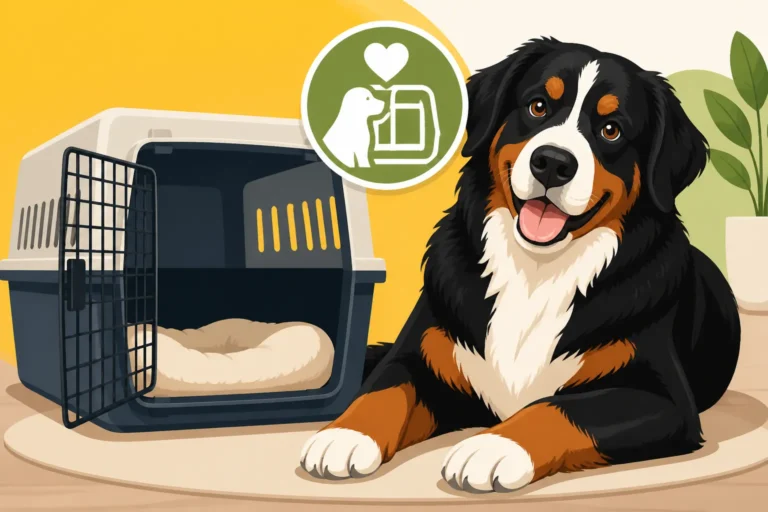
Crate training is one of the most effective tools in house training a Bernese Mountain Dog puppy. It taps into their natural denning instinct, providing a safe, comfortable space that they inherently don't want to soil. For a breed that grows to be so large, a properly introduced crate can be a lifesaver, not just for house training, but for managing their behavior, ensuring their safety, and providing a quiet retreat.
Choosing the Right Crate Size
This is a big one, literally! For a Bernese Mountain Dog puppy, you'll need a large crate, often one that comes with a divider. The key is to provide enough space for them to stand up, turn around, and lie down comfortably, but not so much space that they can use one end as a bathroom and the other as a bedroom. As your puppy grows, you'll gradually move the divider to expand their living area. Investing in a sturdy, large crate from a retailer like Amazon from the start will save you money and hassle in the long run. Look for one that will comfortably fit them as an adult, which means one of the largest sizes available, often marked for "Giant Breeds."
Making the Crate a Safe Haven
The crate should never be used as a punishment. It needs to be a positive, secure place for your puppy. Introduce it gradually with treats, toys, and soft bedding. Feed meals inside the crate, and occasionally toss in a high-value chew toy that they only get when they're in their crate. This helps them associate the crate with good things. Cover the crate with a blanket to create a den-like atmosphere, which many Bernese puppies instinctively appreciate. Consistency is key. Every time they go into the crate, it should be a calm, positive experience. For more on this, you might find tips in Crate Training an Adult Bernese Mountain Dog helpful, even if your dog is still a puppy. A happy crate-trained Berner is a less stressed owner when it comes to house training.
Crate Schedule and Nighttime Routine
A consistent crate schedule is paramount for house training. Puppies generally need to relieve themselves immediately after waking up, after eating or drinking, after playing, and before bedtime. For a young Bernese puppy (say, 8-12 weeks), expect to take them out every 1-2 hours during the day, extending to 3-4 hours as they get older, and possibly 5-6 hours overnight as they mature.
Here's a sample routine, but remember to adjust it to your puppy's specific needs:
| Time | Activity | Reason |
|---|---|---|
| 6:00 AM | Wake up, immediate potty break | Bladder is full after sleeping |
| 6:15 AM | Breakfast, play time | Post-potty hunger, energy burn |
| 6:45 AM | Potty break | After eating and playing |
| 7:00 AM | Crate time (for naps/alone time) | Rest, prevent accidents, build independence |
| 8:30 AM | Wake up, immediate potty break | After nap |
| 8:45 AM | Supervised play, training | Socialization, mental stimulation |
| 9:45 AM | Potty break | Before extended indoor play/crate time |
| 10:00 AM | Crate time | Structured breaks, owner chores |
| 12:00 PM | Wake up, immediate potty break | After nap |
| 12:15 PM | Lunch, play time | Post-potty hunger, energy burn |
| 12:45 PM | Potty break | After eating and playing |
| 1:00 PM | Crate time | Afternoon rest |
| 3:00 PM | Wake up, immediate potty break | After nap |
| 3:15 PM | Supervised play, training | Socialization, mental stimulation |
| 4:15 PM | Potty break | Before extended indoor play/crate time |
| 5:00 PM | Dinner | |
| 5:30 PM | Potty break | After eating |
| 6:00 PM | Family time, gentle play | Bonding |
| 8:00 PM | Last big potty break | Empty bladder before settling down |
| 8:30 PM | Crate for the night | Sleep, secure den |
| ~2:00 AM | Optional Middle-of-night potty break (for very young puppies) | Prevent accidents, especially if crying (see A Bernese Mountain Dog Puppy That Cries at Night) |
This schedule ensures frequent opportunities for success and helps your puppy develop predictable habits.
Establishing a Predictable Potty Schedule
Consistency and predictability are the cornerstones of house training a Bernese Mountain Dog puppy. They thrive on routine, and the more you stick to a schedule, the faster they'll understand what's expected of them. This is where you become their personal potty guide, always a step ahead!
The "Potty Clock" for Bernese Puppies
Think of your puppy as having an internal "potty clock." This clock is influenced by their age, how recently they've eaten or drank, and how much they've been playing. As a general rule of thumb, a puppy can hold their bladder for roughly one hour per month of age, plus one hour. So, a 3-month-old Bernese puppy can likely hold it for about 3+1 = 4 hours. However, this is an absolute maximum and doesn't account for activity. For a big puppy that's been running around, that time shrinks dramatically.
Your job is to get them outside before their clock runs out. That means taking them out every hour or two when they're awake, and definitely after every significant event (waking, eating, drinking, playing). Always take them to the same designated potty spot outside. The familiar scents will encourage them to go. This consistent repetition builds muscle memory and a strong association between the outdoor spot and relieving themselves.
Recognizing and Responding to Potty Signals
As mentioned, Bernese puppies can be subtle. Learn to read your puppy's pre-potty cues. These can include:
- Sniffing the ground intensely: They're searching for a spot.
- Pacing or circling: Often done before settling into a squat.
- Whining or barking (sometimes): Though less common for Berners, some do vocalize.
- Suddenly stopping play: A common sign they've got to go now.
- Heading towards a specific door: If you've been consistent, they might associate the door with going out.
- Restlessness: Just generally seeming uncomfortable or unable to settle.
The moment you see any of these signs, calmly and quickly pick up your puppy (if small enough) or leash them and hustle them outside to their designated spot. Avoid dramatic reactions or scolding if you see them starting to squat indoors; simply interrupt them with a quick "Ah-ah!" and immediately take them out. Your goal is to associate going outside with relief, not to make them fearful of relieving themselves in your presence.
Rewarding Outdoor Success
This is the most critical part of positive reinforcement house training! Every single time your Bernese puppy goes potty outside in their designated spot, celebrate it like they just won the lottery. Use enthusiastic praise ("Good potty! Yes!"), give them a high-value treat, and perhaps a quick, happy play session. The timing is crucial: the reward must happen immediately after they finish going. This instant gratification helps them connect the act of peeing/pooping outside with a positive outcome.
Avoid going straight back inside after they've gone, especially if they're still very young. Let them have a few minutes of sniffing or gentle play. This makes the outdoor experience more rewarding than just a quick dash to the bathroom and back inside. If you're struggling to find suitable treats or training aids, remember that places like Amazon offer a wide variety of options, including training treats. For comprehensive training advice, online programs like BAXTER & Bella can offer structured guidance that includes positive reinforcement techniques for house training.
Handling Accidents and Setbacks
Let's face it: accidents will happen. No matter how diligent you are, a Bernese Mountain Dog puppy, with their still-developing bladder control and sometimes overwhelming enthusiasm for life, will have mishaps. How you handle these moments is just as important as your proactive training. Reacting correctly can solidify your training; reacting poorly can create fear and anxiety, making the process much longer.
Cleaning Up Effectively to Prevent Repeat Offenses
When an accident happens indoors, the first thing to do is clean it up thoroughly, not just for hygiene but to eliminate any lingering odors that might attract your puppy back to the same spot. Dogs are drawn to the scent of previous eliminations. Use an enzymatic cleaner specifically designed for pet stains. These cleaners break down the uric acid crystals in urine, which regular soap and water won't fully eliminate. If the scent remains, even if undetectable to your human nose, your Bernese puppy's keen sense of smell will pick it up, marking that spot as a potential future bathroom. You can find excellent enzymatic cleaners on Amazon. Blot up as much as you can with paper towels first, then generously apply the cleaner, letting it soak as per the product instructions before blotting dry. For soft furnishings or carpets, consider a spot cleaner or professional cleaning if the problem persists. Remember, preventing repeat offenses is half the battle.
Avoiding Punishment and Building Trust
This point cannot be stressed enough: never punish your Bernese Mountain Dog puppy for an indoor accident, especially if you find it after the fact. Rubbing their nose in it, yelling, or physically scolding them will not teach them to go outside. Instead, it teaches them to fear you, to hide their eliminations from you, or to become anxious about going potty at all. They might learn to sneak off to another room to pee, or even become afraid to go when you're watching them outside.
If you catch them in the act, a swift, neutral interruption is all that's needed – a quick clap, a gentle "outside!", and immediately rush them out. If they finish outside, reward them lavishly. If they don't, just bring them back in and try again in 10-15 minutes, supervising closely. The key is to associate going potty outside with rewards, and never to associate going potty with punishment. Your Bernese Mountain Dog puppy's trust is far more valuable than a clean floor for five minutes. Building that trust is essential for all aspects of their training, including Training a Bernese Mountain Dog Without Breaking It.
When to Seek Professional Guidance
Sometimes, despite your best efforts, house training can feel like an uphill battle. If your Bernese Mountain Dog puppy is consistently having accidents, or if you feel overwhelmed, don't hesitate to seek professional help. This could be a certified professional dog trainer, a veterinary behaviorist, or even a good online puppy program like BAXTER & Bella, which provides structured lessons and access to trainers.
Persistent house training issues might indicate an underlying medical condition, such as a urinary tract infection (UTI) or other physical issues, especially if the puppy was previously making good progress and suddenly starts having accidents. A quick vet visit can rule out these concerns. Additionally, some puppies might have anxiety issues that manifest as house soiling, requiring a more specialized approach. Don't feel like a failure if you need to call in the cavalry. Every puppy is an individual, and a massive breed like a Bernese Mountain Dog often benefits from expert guidance tailored to their specific needs and temperament. Think of it as investing in a lifetime of indoor cleanliness and a happy dog-owner relationship. You might also consider puppy classes, which often cover house training and provide invaluable socialization for your Berner. Training Class Prices for a Bernese Mountain Dog Puppy can give you an idea of costs involved.
Advanced Tips for Indoor Cleanliness
Once your Bernese Mountain Dog puppy has the basics down, you can introduce some additional strategies to reinforce their good habits and ensure long-term indoor cleanliness. These tips go beyond the basic potty schedule and delve into managing their environment and behavior more holistically.
Managing Water Intake
While it's crucial for your Bernese puppy to have access to fresh water throughout the day, especially for a breed prone to overheating, you can manage when they drink it to better predict potty breaks. Avoid giving large quantities of water right before bedtime or extended crate time. Pick up the water bowl about two hours before their final potty break and bedtime. This allows them to empty their bladder before settling in for the night, significantly reducing the chances of a middle-of-the-night accident or A Bernese Mountain Dog Puppy That Cries at Night because they need to go out.
During the day, offer water freely, but be mindful of heavy drinking after vigorous play or immediately after a meal, as these are prime times for a subsequent potty trip. Taking them out 15-20 minutes after a big drink is a smart move. Remember, a well-hydrated dog is a healthy dog, so this is about smart management, not restriction.
Leash Training Indoors
This might sound a little strange, but using a lightweight leash indoors, especially during the crucial early weeks of house training, can be incredibly helpful. Attach the leash to your puppy and either hold the end or tether it to you as you move around the house. This keeps your Bernese puppy within sight and prevents them from wandering off into another room where they might have an unsupervised accident. If you can't actively supervise them, they should be in their crate.
The indoor leash also allows you to quickly usher them outside the moment you see any potty signals. It's a gentle way to maintain control and prevent "sneaky" accidents, helping them to internalize the rule: "potty happens outside, and always under supervision." This is part of the "umbilical cord" method, and it's highly effective for keeping those opportunities for success high. It also teaches them good leash manners from an early age, which is a bonus for a big dog like a Berner who will eventually weigh a hundred pounds.
The Importance of Mental Stimulation
A bored Bernese Mountain Dog puppy is often a mischievous puppy, and sometimes that mischief can manifest as accidents or destructive behaviors. Mental stimulation is just as important as physical exercise for a Berner. Puzzle toys, KONGs stuffed with treats (you can find these on Amazon), and short, engaging training sessions can help tire them out mentally and keep their brains working positively. A puppy that is mentally engaged is less likely to wander off and have an accident out of sheer boredom or lack of supervision.
Consider incorporating short training bursts throughout the day, focusing on basic commands like sit, stay, and come. Programs like BAXTER & Bella can offer a wealth of ideas for enriching your puppy's day. These activities not only strengthen your bond but also provide an outlet for their intelligence, reducing the likelihood of them seeking "entertainment" by destroying your belongings or having inappropriate potty breaks. After all, a Berner puppy with a lot of energy might turn to chewing anything within reach, so understanding The Chew Damage a Bernese Mountain Dog Puppy Does can help you prepare and prevent.
House training a Bernese Mountain Dog puppy requires dedication, consistency, and a whole lot of patience, but the reward of a reliably clean and happy companion is absolutely worth it. Stick with these strategies, celebrate every success, and remember that even big puppies eventually get the hang of it! How Long House Training Takes a Bernese Mountain Dog can sometimes feel like forever, but you'll get there.
Disclaimer
This article is for general informational purposes only and does not constitute professional advice. Laws, prices and regulations vary by location and change over time. Consult a qualified professional for guidance on your specific situation.