Harnesses That Lift a Bernese Mountain Dog
It's a heartbreaking moment when your magnificent Bernese Mountain Dog, once a picture of robust strength, starts to struggle with everyday movements. Whether it's an aging Berner with arthritic hips, a dog recovering from an injury, or one facing progressive conditions, seeing them lose their independence is tough. This guide is here to help you navigate the world of lifting harnesses, offering practical advice to support your beloved companion and make their life, and yours, a little easier.
Why a Lifting Harness Becomes Essential for Your Berner
There comes a time in many Bernese Mountain Dogs' lives when their sheer size, combined with common breed-specific health challenges, makes moving around difficult. These are large, heavy dogs, and gravity can become their biggest foe when their mobility starts to decline. A lifting harness isn't just a convenience; it often becomes an absolute necessity for their comfort, safety, and continued quality of life.
Supporting Mobility Issues in Older Berners
As our beloved Berners age, just like us, their joints can start to protest. Arthritis is incredibly common, and for a dog carrying over a hundred pounds, every step can become a painful effort. Imagine the stress on hips and elbows that have been working hard for six, seven, or even eight years. When they struggle to stand up from a comfy bed, or when their back legs give out occasionally, it's a clear sign they need assistance.
A lifting harness can provide that crucial support, taking some of the strain off their weakening limbs. It allows you to help them get up, navigate a few steps outside for a potty break, or even just reposition themselves more comfortably on their orthopedic bed. This support can extend their period of comfortable mobility significantly, allowing them to remain part of the family's daily rhythm for longer. We want those golden years to be as comfortable and dignified as possible.
Assisting During Injury Recovery or Post-Surgery
An injury or surgery can strike at any age, bringing sudden and often profound mobility challenges. Whether it's a cruciate ligament tear, a fracture, or a spinal issue, your Bernese Mountain Dog will likely need strict rest and restricted movement during recovery. Getting a large, heavy dog like a Berner to and from the vet, or even just outside, without putting undue strain on their healing body is a monumental task without the right tools.
A lifting harness provides a safe and controlled way to move them, preventing further injury to delicate surgical sites or healing bones. It allows you to bear their weight, guiding them gently rather than forcing them to use a compromised limb. This kind of hands-on assistance is invaluable for successful rehabilitation and getting them back on their paws, even if it's a slow journey. It's about providing stability when they are most vulnerable.
Managing Progressive Conditions
Some Bernese Mountain Dogs unfortunately face progressive neurological conditions, such as The Bernese Mountain Dog Whose Back Legs Give Out due to degenerative myelopathy, or severe forms of Hips That Fail Under a Bernese Mountain Dog's Weight. These conditions gradually worsen over time, making it increasingly difficult for your dog to coordinate their movements or bear weight on their hindquarters. The emotional toll this takes on an owner is immense, watching their active companion slowly lose function.
A lifting harness becomes a vital tool in managing these conditions, allowing you to provide support as their strength wanes. It empowers you to help them stand, walk, and maintain some level of independence, even if it's with significant assistance. This isn't about a cure, but about maximizing comfort and dignity through every stage of the disease, ensuring they can still enjoy walks, albeit shorter and more supported ones, for as long as possible.
Different Types of Lifting Harnesses for Bernese Mountain Dogs
When your Bernese Mountain Dog needs help getting around, you'll quickly realize there isn't just one type of lifting harness. The market offers various designs, each tailored to different needs and levels of support. Understanding these differences is key to choosing the most effective and comfortable solution for your gentle giant.
Full-Body Support Harnesses
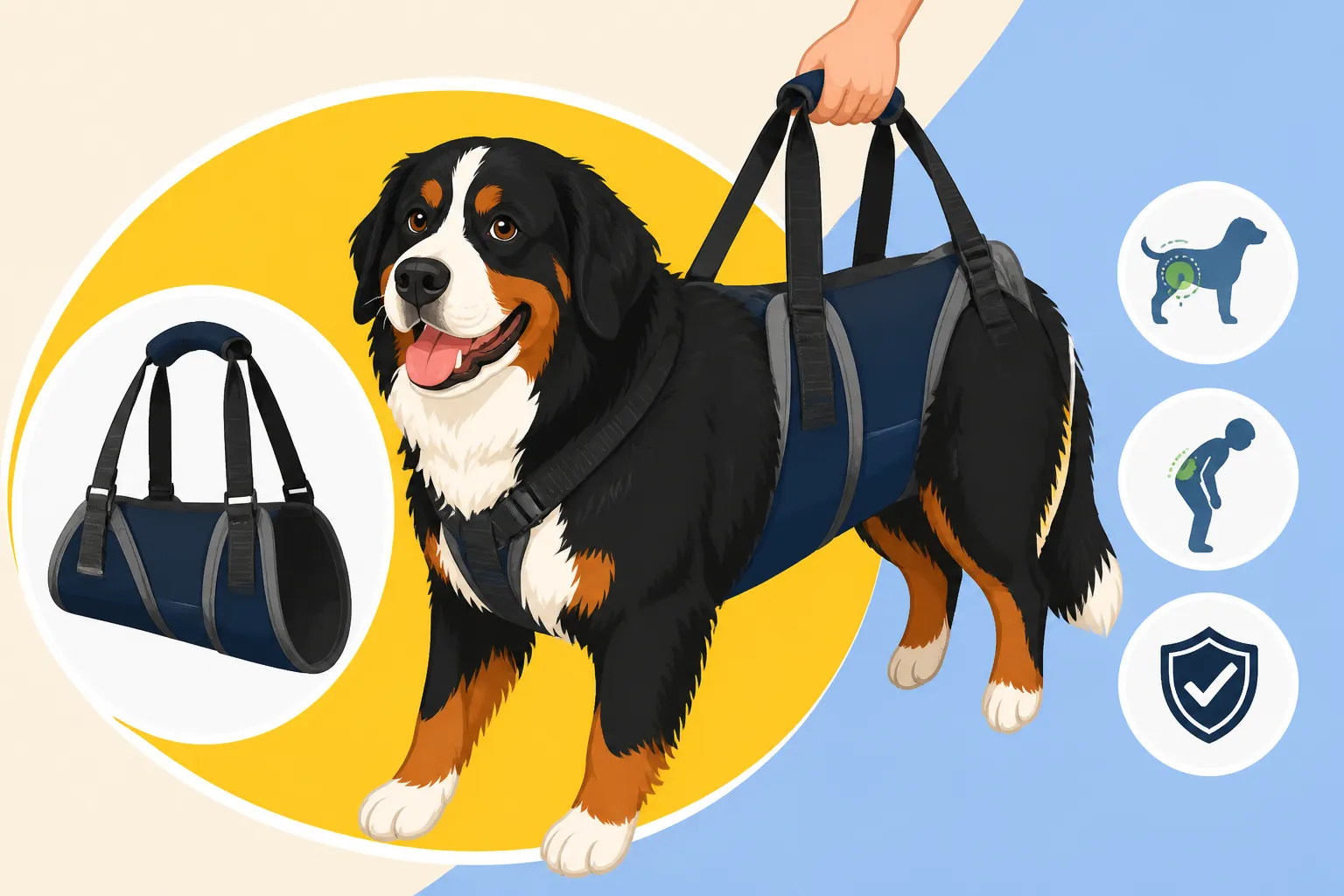
Full-body support harnesses are designed to distribute your dog's weight across their entire torso, offering comprehensive support for both the front and hind ends. Think of them as a wearable support system that wraps around their chest, abdomen, and sometimes even their shoulders and hips, with handles strategically placed over their center of gravity. These are often the go-to for Berners with generalized weakness, severe arthritis in multiple joints, or those recovering from major orthopedic surgery.
These harnesses are particularly helpful if your Berner struggles with all four limbs, or if their core strength is diminished. They allow you to lift and stabilize them more evenly, preventing undue strain on any single part of their body. While they can be a bit more cumbersome to put on and take off due to their extensive coverage, the level of support they offer can be life-changing for dogs with significant mobility challenges. They provide a sense of security for both you and your dog.
Rear-End Support Harnesses
Often, a Bernese Mountain Dog's mobility issues begin or are most pronounced in their hindquarters. This is especially true for conditions like hip dysplasia or degenerative myelopathy, where the back legs weaken first. Rear-end support harnesses, sometimes called slings, are specifically designed to assist with lifting and stabilizing the back half of your dog. They typically consist of a wide, padded strap that goes under the abdomen, just in front of the hind legs, with handles for you to hold.
These slings are excellent for helping your Berner stand up, climb stairs, or get into and out of a car when their front legs are still relatively strong. They are generally easier to put on and remove than full-body harnesses, making them a practical choice for frequent use, such as for potty breaks. Many brands offer durable and comfortable rear-end slings, and you can often find a good selection on sites like Chewy, which makes it easy to compare options. They give you leverage exactly where it's needed most without restricting the front of their body.
Front-End Support Harnesses
While less common for Berners, who often suffer from hindquarter issues, front-end support harnesses are available for dogs needing assistance with their forelegs. These harnesses typically wrap around the chest and shoulders, providing a handle over the dog's back, allowing you to support their front end. You might consider one if your Berner has significant elbow dysplasia, shoulder injuries, or forelimb weakness.
It’s crucial to assess your dog’s specific needs before choosing. If you're dealing with The Front-End Lameness a Bernese Mountain Dog Develops, a front-end harness could offer targeted relief. However, remember that due to their deep chests, finding a perfectly fitting front-end harness for a Bernese Mountain Dog can sometimes be a bit of a challenge. Always prioritize comfort and ensure it doesn't chafe or restrict their breathing.
Choosing the Right Harness for Your Bernese Mountain Dog's Needs
Selecting the perfect lifting harness for your Bernese Mountain Dog involves more than just picking the first one you see. Given their substantial size and unique health predispositions, careful consideration of material, fit, ease of use, and overall comfort is paramount. The right harness will not only provide effective assistance but will also ensure your Berner remains as comfortable and stress-free as possible during those challenging times.
Material and Durability
For a large breed like the Bernese Mountain Dog, the material of the harness is critical. You need something that can withstand the strain of lifting a significant amount of weight, day in and day out. Look for harnesses made from durable, heavy-duty fabrics like strong nylon or neoprene. These materials are not only robust but also often water-resistant and easy to clean, which is a big plus when dealing with a dog that might have accidents or track mud.
Padding is also incredibly important. Thin straps or abrasive fabrics can cause chafing, especially in sensitive areas like the armpits or groin, leading to discomfort and even skin irritation for your Berner. Soft, breathable padding, often fleece-lined or made from memory foam, will prevent pressure points and ensure your dog remains comfortable even with prolonged wear. Companies that specialize in large breed accessories often prioritize these features.
Proper Fit and Sizing
A well-fitting harness is absolutely non-negotiable. An ill-fitting harness can be ineffective, uncomfortable, and even dangerous, potentially shifting or causing your dog to slip out. Always measure your Bernese Mountain Dog accurately before purchasing. Key measurements typically include chest girth, length of the back, and sometimes neck circumference. Don't assume sizes – a "large" or "extra-large" from one brand might differ significantly from another.
Look for harnesses that offer adjustability to customize the fit. Straps around the chest, waist, and sometimes the neck should be able to tighten or loosen without bunching up or digging in. The harness should fit snugly but allow for a full range of motion, and importantly, it should not obstruct their ability to urinate or defecate. When in doubt, checking reviews from other Bernese Mountain Dog owners can provide valuable insights into specific brands' sizing.
Ease of Use for Owners and Comfort for the Dog
Let's be realistic: you'll likely be using this harness multiple times a day, especially if your Berner needs help getting up for potty breaks. Therefore, ease of use for you, the handler, is just as important as comfort for your dog. Look for designs that are easy to put on and take off, preferably with quick-release buckles or minimal strapping. Trying to wrestle a hundred-pound dog into a complicated harness when they're already in pain or uncomfortable is a battle you don't need.
Handles should be sturdy, well-padded, and positioned ergonomically for your grip, especially important for owners who might have their own back or joint issues. Adjustable handles can be a godsend. For your Berner, ensure the harness material is breathable, especially if they have a thick double coat, to prevent overheating or skin issues. A harness that allows them to move naturally once lifted, without awkward restriction, will make the experience much less stressful for them.
| Harness Type | Best For | Pros | Cons |
|---|---|---|---|
| Full-Body | Generalized weakness, severe arthritis, post-major surgery | Comprehensive support, even weight distribution, security | Can be cumbersome to put on/take off, may restrict some movement if ill-fitting |
| Rear-End Sling | Hip dysplasia, degenerative myelopathy, hind-end weakness | Easy to put on/off, targeted support, less restrictive for front end | Offers no front-end support, may not be suitable for full body weakness |
| Front-End | Elbow dysplasia, shoulder injuries, forelimb weakness | Targeted front-end support, can be combined with a rear sling for full coverage | Not commonly needed for Berners' typical issues, fit can be tricky for deep chests |
| Rehabilitation | Specific injury recovery, physical therapy sessions | Often highly adjustable, specific features for targeted therapy, usually vet-recommended | Can be expensive, may require professional fitting, not for everyday use |
How to Properly Use a Lifting Harness
Once you've chosen the right lifting harness for your Bernese Mountain Dog, knowing how to use it correctly is vital. Improper use can lead to discomfort for your dog, or even injury for both of you. This isn't just about putting it on; it's about technique, patience, and creating a positive experience around this necessary aid. Remember, your Berner is relying on you for support and gentle handling.
Introducing the Harness Gently
Even the most good-natured Bernese Mountain Dog can be wary of something new, especially if they're already feeling sore or vulnerable. Introduce the harness gradually and positively. Let your Berner sniff it, lay it near their bed, and associate it with treats and praise. Don't force it. The first few times you put it on, keep it brief – just long enough for them to wear it for a minute or two, then take it off and reward them generously.
Practice putting it on and taking it off in a calm environment, offering their favorite treats. You want them to view the harness not as a scary restriction, but as a tool that helps them feel better and move more easily. This gentle introduction can make all the difference in their acceptance and cooperation, turning a potentially stressful situation into a manageable routine. Patience truly is a virtue here.
Correct Lifting Techniques
When it comes to actually lifting, technique is everything, particularly with a large dog like a Bernese Mountain Dog. Never yank or hoist your dog suddenly. Instead, get down to their level, position the handles, and lift smoothly and evenly, using your legs, not your back. Maintain a steady, level lift, ensuring your dog feels secure and balanced. The goal is to provide enough assistance for them to move without putting their full weight on compromised limbs, not to carry them entirely (unless absolutely necessary and with a full-body harness).
If you are using a rear-end sling, lift just enough to take pressure off their hindquarters, allowing them to use their front legs to propel themselves forward. For full-body harnesses, ensure your grip is firm but gentle, and coordinate your movements with theirs. If your Berner is very heavy, consider enlisting a second person for a more controlled and safer lift, especially on stairs or uneven terrain. Sites like Chewy often have video tutorials on proper lifting techniques for various harnesses.
Gradual Adaptation and Consistency
Consistency is key to helping your Bernese Mountain Dog adapt to their new mobility aid. Use the harness every time they need assistance, whether it's standing up, going for a short supervised walk, or getting into the car. The more consistently you use it, the more quickly they will become accustomed to it and understand that it's there to help them.
Start with short durations and gradually increase the time they spend in the harness, always monitoring for signs of discomfort or chafing. After use, inspect their skin, especially in areas where the harness sits, to ensure no irritation is developing. Regular grooming, especially around the harness contact points, can help prevent matting and skin issues, ensuring their coat remains healthy. This routine helps both of you develop confidence in using the harness effectively.
Beyond the Harness: Supporting Your Berner's Mobility
While a lifting harness is an invaluable tool, it's just one piece of the puzzle when caring for a Bernese Mountain Dog with mobility challenges. A holistic approach that includes veterinary care, environmental modifications, and appropriate supplements can significantly improve their quality of life and help you manage their needs more effectively. Think of it as building a supportive ecosystem around your beloved Berner.
Veterinary Care and Rehabilitation
First and foremost, regular consultations with your veterinarian are crucial. They can diagnose the underlying cause of your Berner's mobility issues, whether it's Arthritis in a Bernese Mountain Dog by Six, hip dysplasia, or something else entirely. Your vet can recommend pain management strategies, anti-inflammatory medications, and potentially refer you to a veterinary rehabilitation specialist. Physical therapy, hydrotherapy, or even acupuncture can play a significant role in maintaining muscle mass, improving range of motion, and reducing pain.
Discuss with your vet how often your Berner should be seen, especially if they're older or have a progressive condition. They might recommend Screening an Older Bernese Mountain Dog regularly to keep tabs on their overall health. Remember, early intervention and ongoing management are key to keeping your Bernese Mountain Dog as comfortable and mobile as possible. Companies like Healthy Paws, a pet insurance provider, can offer peace of mind when it comes to covering the costs associated with these treatments.
Environmental Modifications
Your home environment can make a huge difference for a dog with limited mobility. Slick floors are notorious for exacerbating issues in dogs with weak legs. Lay down rugs, carpet runners, or non-slip mats in high-traffic areas to provide better traction. Ramps can be incredibly helpful for accessing elevated spaces like beds, couches, or even getting into and out of the car, saving both your back and your dog's joints.
Ensure your Berner has easy access to their food and water bowls, perhaps raised slightly to prevent them from having to bend down too far. Orthopedic dog beds are a must-have, providing superior support for aching joints compared to standard beds. Make sure pathways are clear of clutter, giving them ample room to navigate. Simple changes can dramatically improve their comfort and reduce their risk of falls. You can find many of these supportive items from online retailers like Chewy.
Nutritional Support and Weight Management
Maintaining a healthy weight is paramount for a Bernese Mountain Dog with mobility issues. Every extra pound puts additional strain on already compromised joints, increasing pain and accelerating degeneration. Work with your vet to determine the ideal weight for your Berner and adjust their diet accordingly. Sometimes, even a slight reduction in weight can lead to a noticeable improvement in mobility and comfort.
Consider a diet formulated for joint health, often containing glucosamine, chondroitin, and omega-3 fatty acids. While not a cure, these supplements can help support joint cartilage and reduce inflammation. Some specialized dog food brands, like Ollie, focus on fresh, whole ingredients that can be tailored to your dog's specific needs, including weight management and joint support. Always discuss any dietary changes or supplements with your veterinarian to ensure they are appropriate for your dog's specific condition. Joint Supplements in a Bernese Mountain Dog's Bowl can be a valuable addition to their regimen.
Disclaimer
This article is for general informational purposes only and does not constitute professional advice. Laws, prices and regulations vary by location and change over time. Consult a qualified professional for guidance on your specific situation.