Whether a Preventive Gastropexy Saves a Bernese Mountain Dog Money
One of the most terrifying things a Bernese Mountain Dog owner can face is bloat, a sudden and life-threatening condition that can rack up astronomical emergency veterinary bills in a blink. This guide will dive deep into whether a preventive gastropexy, a surgical procedure designed to permanently fix the stomach in place and avert the worst consequences of bloat, can actually save you money in the long run and offer true peace of mind.
Understanding Bloat and Its Emergency Costs
Gastric Dilatation-Volvulus (GDV), commonly known as bloat, is a nightmare scenario for any deep-chested breed owner, and Bernese Mountain Dogs are, unfortunately, particularly susceptible. It's a condition where the stomach fills with gas, food, or fluid, and then twists on itself, cutting off blood supply and trapping the contents. The speed at which this can progress from mild discomfort to a full-blown life-or-death emergency is truly frightening, and recognizing the signs and reacting quickly is paramount. We've talked extensively about The Half-Hour That Decides a Bloated Bernese Mountain Dog because time is absolutely critical.
When bloat strikes, it’s not just scary; it's incredibly expensive. There’s no waiting it out or hoping it gets better. Your Berner needs immediate veterinary attention, often in an emergency clinic. The costs start piling up from the moment you walk through the door, beginning with emergency exams, X-rays to confirm the diagnosis, and immediate attempts to decompress the stomach.
The Immediate Financial Strain of Emergency Treatment
Should your Bernese Mountain Dog present with bloat, the veterinary team will immediately work to stabilize them. This often involves intravenous fluids, pain medication, and efforts to relieve the pressure in the stomach, which can sometimes be done with a tube passed down the esophagus or even a trocar inserted through the side. However, if the stomach has already twisted, surgery is the only option. This is not a simple surgery; it's a complex, high-stakes procedure where the surgeon must untwist the stomach and then perform a gastropexy to tack it to the abdominal wall, preventing future twisting.
The bills for emergency bloat treatment can quickly escalate into many thousands of dollars. We're talking about overnight intensive care, multiple diagnostic tests, specialized medications, and a surgical team on standby. This isn't just a basic spay or neuter; it's an emergency, often performed in the middle of the night, with a team focused solely on saving your dog's life. Many owners find themselves facing a "night bill," an astronomical sum presented at the most stressful moment. The Night Bill When a Bernese Mountain Dog Bloats can be truly shocking, leaving owners scrambling to find funds.
Recovery and Potential Complications
Even if the surgery is successful and your Berner survives the initial crisis—and sadly, not all do, as discussed in Whether a Bernese Mountain Dog Survives Bloat Surgery—the recovery period isn't cheap or without risk. Post-operative care can include extended stays in the hospital for monitoring, pain management, and prevention of further complications like cardiac arrhythmias, peritonitis, or even sepsis. These complications can require additional tests, medications, and sometimes even more surgery, further driving up the cost.
Then there’s the emotional toll. The stress, the worry, the sleepless nights spent at the vet's office are immeasurable. While we can’t put a price tag on that, it’s a very real factor in the overall "cost" of bloat. The financial burden can be crushing, especially if you don't have pet insurance or an emergency fund set aside.
Proactive Protection: The Cost of Preventive Gastropexy
Given the devastating nature and high cost of emergency bloat, many Bernese Mountain Dog owners choose to be proactive and opt for a preventive gastropexy. This elective procedure involves surgically attaching the stomach to the abdominal wall before an emergency occurs. It doesn't prevent the stomach from dilating (filling with gas), but it critically prevents it from twisting, which is the life-threatening part of GDV.
The Upfront Investment for Peace of Mind
The cost of a preventive gastropexy is, of course, an upfront investment. It's an elective surgery, meaning it's planned in advance, often at the same time as another routine procedure like spaying or neutering. This timing is strategic because the dog is already under anesthesia, which can reduce the overall cost compared to a standalone procedure. We have a dedicated article on What a Gastropexy Costs for a Bernese Mountain Dog that goes into more detail, but generally, it's a significant but manageable expense, certainly less than an emergency bloat surgery.
The specific cost will depend on several factors: your geographic location, the veterinary clinic you choose (a specialist surgical center versus a general practice), and whether it's combined with another surgery. You'll need to factor in the surgical fee, anesthesia, pre-surgical bloodwork, pain medication, and post-operative checks. It's wise to get a detailed estimate from your veterinarian well in advance so you can budget appropriately.
Traditional vs. Laparoscopic Gastropexy
There are typically two main approaches to performing a gastropexy:
- Traditional (Open) Gastropexy: This involves a larger incision in the abdomen, similar to a standard spay surgery. It's a very effective method, allowing the surgeon direct visualization and manipulation of the stomach. The recovery time might be slightly longer due to the larger incision.
- Laparoscopic Gastropexy: This is a minimally invasive technique, using small incisions and a camera to guide the surgeon. It often results in less pain, a faster recovery, and a smaller scar. However, it usually comes with a higher price tag because it requires specialized equipment and training. Not all veterinary clinics offer laparoscopic options, so you might need to seek out a specialty clinic.
When weighing the financial benefits, consider the long-term comfort and reduced stress for both you and your Bernese. While the upfront cost is real, the alternative—facing a bloat emergency—is not only financially draining but also emotionally harrowing.
Long-Term Financial Implications: Savings vs. Risks
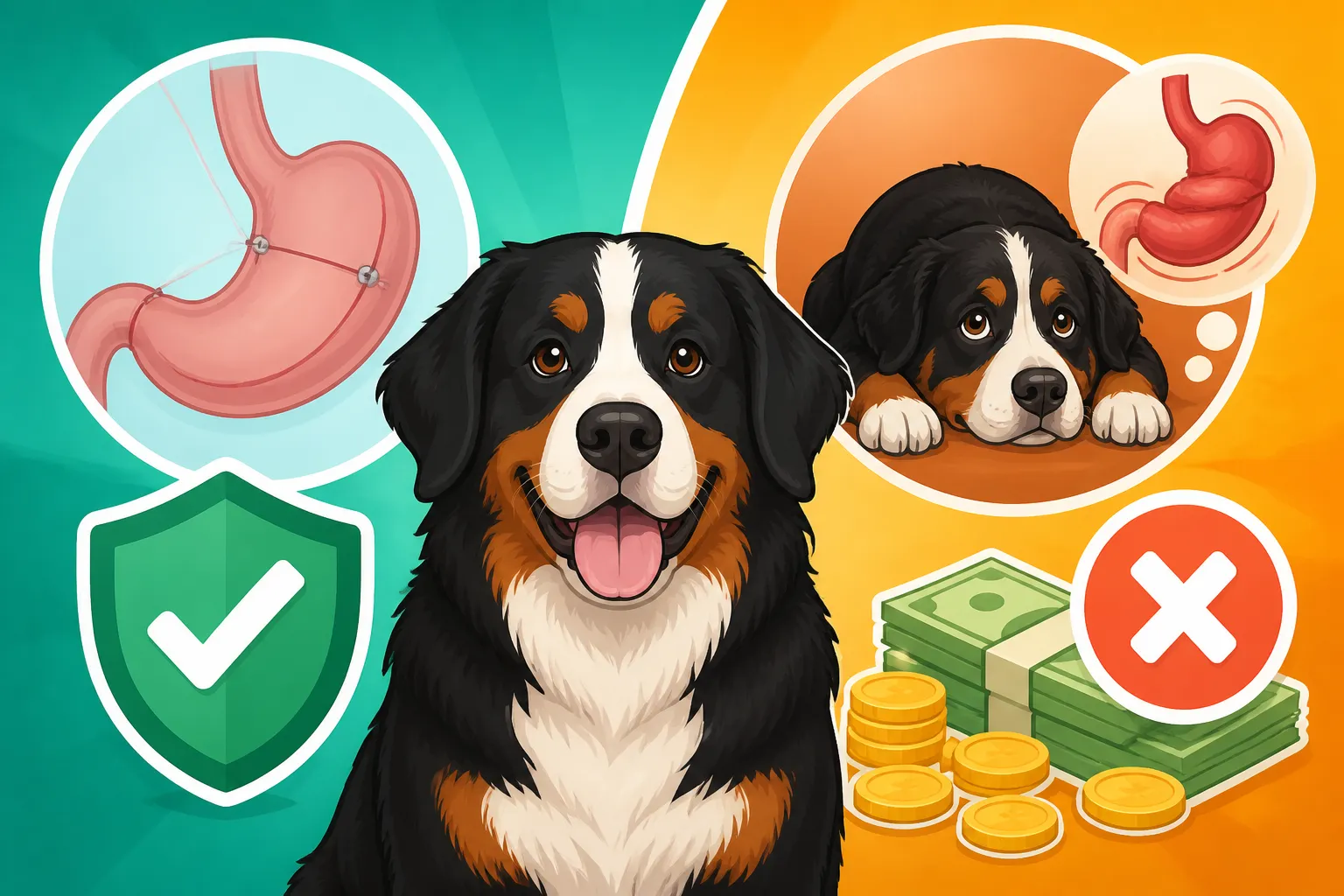
Now, let's get down to the brass tacks: does a preventive gastropexy truly save you money? For many Bernese Mountain Dog owners, the answer is a resounding "yes," especially when you consider the potential costs of not doing it.
The Cost of a "Wait and See" Approach
If you choose not to pursue a preventive gastropexy, you are essentially adopting a "wait and see" approach. This means accepting the risk that your Bernese Mountain Dog could bloat at any time. When bloat does occur, as we’ve established, the costs are immense and immediate. What Bloat Surgery Costs on a Bernese Mountain Dog can easily range into the high four figures, sometimes even five figures, depending on the severity, complications, and necessary intensive care.
Think about it: the cost of one emergency bloat surgery, especially with complications, could easily be several times the cost of a preventive gastropexy. If you’re lucky, your Berner might never bloat. But with a breed known to be at higher risk, like our beloved Bernese, that’s a gamble many owners aren't willing to take, either for their dog's health or their own wallet. Understanding Which Bernese Mountain Dogs Are Most at Risk of Bloat can help you assess your individual dog's risk profile.
Calculating the Potential Savings
Let’s look at a hypothetical comparison to illustrate the potential financial savings. Remember, these are broad estimates, and actual costs will vary greatly by location and clinic.
| Scenario | Initial Procedure Cost | Potential Emergency Costs (if GDV occurs) | Total Lifetime Financial Risk (Bloat Related) |
|---|---|---|---|
| Preventive Gastropexy | Moderate | Minimal (as twisting is prevented) | Moderate |
| No Preventive Gastropexy | None | Extremely High | Potentially Catastrophic |
Note: "Moderate" for initial procedure cost refers to the elective surgery. "Minimal" in emergency costs refers to the cost of treating dilation without torsion, which is still a vet visit but typically not emergency surgery.
As you can see, while there's an upfront cost for the preventive measure, it drastically reduces the risk of a much larger, emergency expense down the line. It's an investment in your dog's future health and your financial stability. Many owners feel that the peace of mind alone is worth the investment, let alone the potential monetary savings. It's similar to getting good home insulation; there's a cost upfront, but it saves on heating and cooling bills for years to come.
Smart Financial Planning for Your Berner's Health
Beyond the direct costs of gastropexy, thinking about your overall financial strategy for your Bernese Mountain Dog's health is crucial. These majestic dogs can come with significant expenses over their lifetime, and planning ahead can alleviate a lot of stress.
The Role of Pet Insurance
Pet insurance can be a game-changer when it comes to managing unexpected veterinary bills, including those for bloat. Many comprehensive pet insurance policies will cover a portion of the costs for emergency bloat surgery, provided the condition isn't pre-existing. However, it's essential to understand your policy's specifics. Some plans might even cover a portion of a preventive gastropexy, especially if your vet recommends it due to breed risk. You'll need to check with providers like Healthy Paws directly about their coverage details for elective procedures versus emergency treatments.
It's important to investigate policies thoroughly and consider factors like deductibles, reimbursement percentages, and annual limits. Insuring a Bernese Mountain Dog Against Cancer delves into why comprehensive insurance is so vital for this breed, and the same logic applies to bloat. Because Berners are prone to several costly health issues, including bloat and various cancers, they tend to be Why the Bernese Mountain Dog Is Expensive to Insure. It's a worthwhile investment to mitigate financial risk, but you must enroll before any symptoms arise for conditions to be covered.
Budgeting for Large Breed Care
Owning a Bernese Mountain Dog means you're signing up for a large dog lifestyle, and that includes budgeting for everything from larger quantities of food (whether you're buying from Chewy or a local store, those bags add up!) to bigger medications, and of course, potentially higher veterinary costs. Beyond specific procedures like gastropexy, regular preventative care, joint supplements, and unexpected illnesses are all part of the equation.
Building an emergency fund specifically for your Berner's health can provide a crucial safety net. Even with insurance, you'll still have deductibles and co-pays. Having readily available funds means you can make decisions about your dog's care based on their needs, not solely on your immediate financial constraints. This might involve setting aside a certain amount each month, much like you'd save for a child's college fund or a major home repair. Think about how much you spend on quality food, perhaps from a brand like Ollie, and consider dedicating a small percentage of your overall pet budget to this emergency fund. It's about being prepared for the realities of large breed ownership.
Choosing to undergo a preventive gastropexy for your Bernese Mountain Dog is a significant decision that involves both financial and emotional considerations. While it requires an upfront investment, it offers a powerful safeguard against the catastrophic costs and devastating consequences of emergency bloat. By understanding the risks, planning proactively, and exploring options like pet insurance, you can ensure your beloved Berner receives the best possible care while protecting your financial well-being.
Disclaimer
This article is for general informational purposes only and does not constitute professional advice. Laws, prices and regulations vary by location and change over time. Consult a qualified professional for guidance on your specific situation.