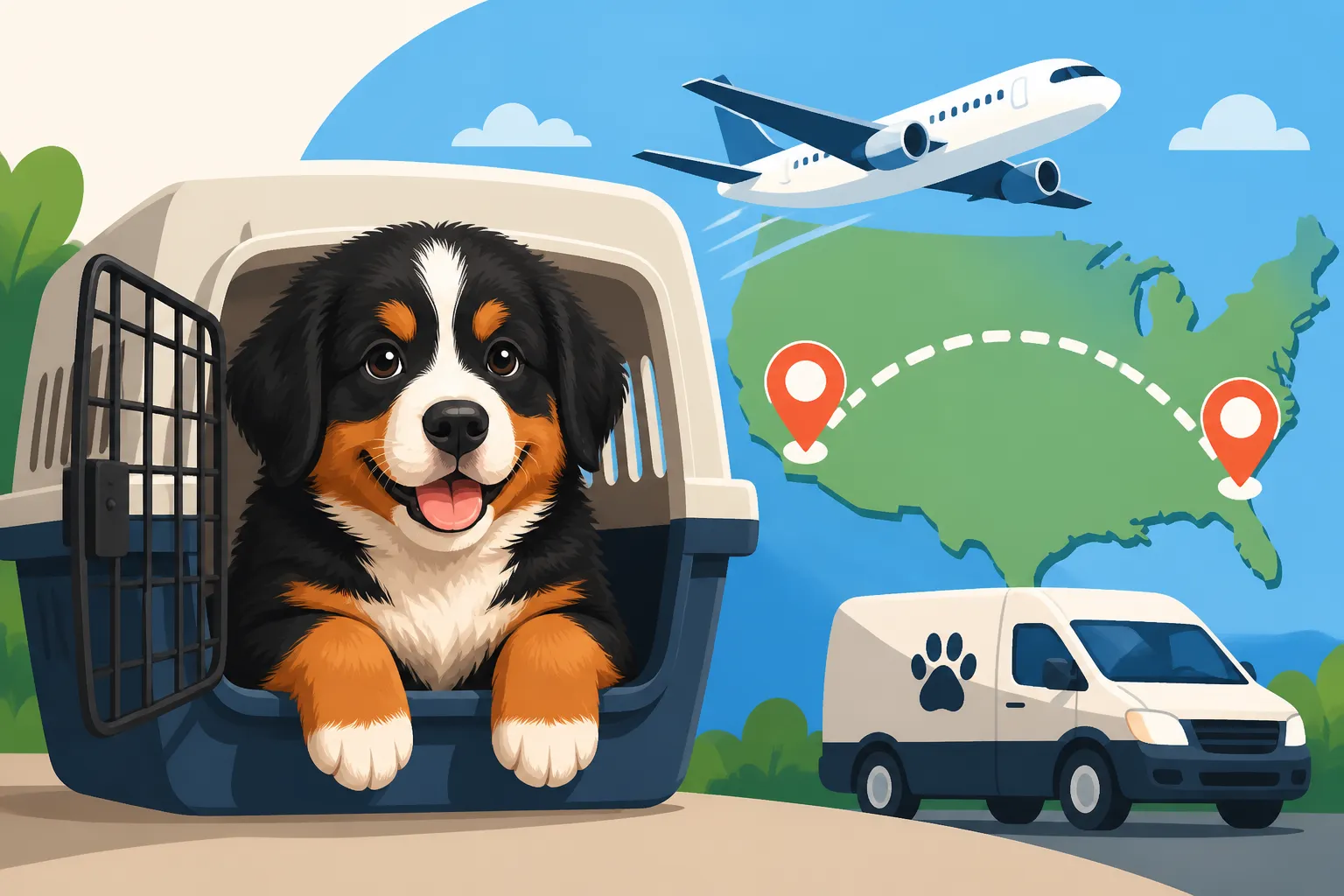
Shipping a Bernese Mountain Dog Puppy Across the Country
It's a bittersweet moment when you find the perfect Bernese Mountain Dog puppy, only to realize they're a thousand miles away. The initial joy of finding your future furry family member can quickly turn into a knot of anxiety as you ponder how on earth to get your precious new Berner safely from one end of the country to the other. This guide will meticulously walk you through the often-confusing world of cross-country puppy shipping, helping you navigate the various options, understand the real costs involved, and take every crucial step to ensure your Bernese puppy arrives healthy, happy, and ready to become a cherished part of your home.
The Realities of Puppy Shipping Across Distances
Bringing home a new Bernese Mountain Dog puppy is a huge decision, and sometimes, the perfect match is simply not down the street. When you've connected with a responsible breeder who champions Whether Bernese Mountain Dog Breeders Track Cancer and maintains excellent health clearances, distance becomes a hurdle you're determined to overcome. However, the process of shipping a live animal across state lines or the entire country is far more complex than sending a package, requiring careful planning, adherence to strict regulations, and a deep understanding of the potential challenges.
Navigating Airline Regulations and Restrictions
Shipping a puppy via air cargo might seem like the most straightforward option for long distances, but it's a labyrinth of rules and regulations. Airlines prioritize animal safety, and rightly so, which means they have stringent requirements that can change with little notice. You'll find that temperature restrictions are a major factor, especially for a thick-coated breed like a Bernese Mountain Dog. During summer months, many airlines impose "heat embargoes," refusing to transport animals when ground temperatures at either the origin, destination, or any layover point exceed certain thresholds. The same can apply to extreme cold in winter. This means your puppy's travel window might be very narrow, making flexible planning absolutely essential.
Beyond temperature, there are specific crate requirements. These aren't just suggestions; they are strictly enforced for the puppy's safety and comfort. The crate must be IATA-compliant, meaning it needs to be large enough for your Bernese puppy to stand up, turn around, and lie down comfortably, with proper ventilation on all four sides. It will also need food and water dishes accessible from the outside without opening the crate, absorbent bedding, and clear labeling with the puppy's information and "Live Animal" stickers. These crates aren't your typical soft-sided carriers; they are rigid, durable, and designed for secure transport. You might want to order a sturdy, airline-approved crate from a reputable supplier like Chewy well in advance to give your puppy time to get used to it before travel.
Breeder Responsibilities and Best Practices
A reputable Bernese Mountain Dog breeder will be your primary guide through the shipping process. They understand the intricacies of animal transport and will typically handle most of the arrangements, as they are sending the puppy from their location. Their responsibilities include ensuring the puppy is old enough to travel (usually at least 8 weeks old, and often 10-12 weeks for giant breeds), has received its initial The Puppy Shot Series for a Bernese Mountain Dog, and is healthy enough for the journey. A veterinarian must issue a health certificate, typically within 10 days of travel, confirming the puppy is fit to fly and free from communicable diseases. This document is non-negotiable for airline travel.
Responsible breeders will also spend time acclimating the puppy to the travel crate, making it a positive and familiar space rather than a scary, new one. They'll ensure the puppy has been fed and watered appropriately before departure, but not so close to travel that they become uncomfortable or experience motion sickness. Communication between the breeder and buyer is paramount. You should expect regular updates, flight information, and clear instructions on what to do upon your puppy's arrival. This strong partnership is crucial, especially when you're Buying a Bernese Mountain Dog Without Visiting the Breeder.
Potential Risks and How to Mitigate Them
While reputable shipping services and airlines take every precaution, shipping a live animal, especially a young puppy, across long distances carries inherent risks. Stress is a significant concern; puppies can become anxious or frightened by new environments, loud noises, and separation from their littermates and familiar humans. This stress can manifest as digestive upset, reduced appetite, or a weakened immune system, making them more susceptible to illness.
One of the most critical risks is temperature fluctuation. Even if the airline's temperature embargoes are met at departure and arrival, conditions in cargo holds, on the tarmac, or during layovers can be unpredictable. Overheating or excessive chilling can be dangerous, especially for a young puppy. You'll want to choose direct flights whenever possible to minimize transfer stress and exposure to varying temperatures.
To mitigate these risks, open and frequent communication with your breeder is key. Ask detailed questions about their shipping protocols, the specific airline they use, and how they prepare puppies for travel. Discuss backup plans in case of flight delays or cancellations. Upon arrival, plan to pick up your puppy immediately. A thorough post-travel vet check is highly recommended to assess their health and provide peace of mind. Investing in pet insurance from a provider like Healthy Paws even before your puppy arrives can also be a smart move, offering a safety net for any unexpected vet needs post-travel.
Understanding the Costs Involved
The romantic notion of a puppy arriving by plane often overlooks the substantial financial investment required to make it happen safely and legally. Shipping a Bernese Mountain Dog puppy across the country is rarely cheap, and it’s important to budget for all the associated fees, not just the base shipping cost. These expenses can quickly add up, often surprising first-time owners.
Breaking Down Shipping Fees
The core shipping fee will depend heavily on the method chosen. For air cargo, this fee is calculated based on the combined weight of the puppy and its travel crate, as well as the distance traveled. Given that a Bernese Mountain Dog puppy can already be quite substantial in size and weight, this can be a significant cost. You might also encounter additional charges for specific services like priority handling, larger crate sizes, or temperature-controlled compartments if available. These fees are set by the airlines or specialized pet transport companies and vary widely.
If you opt for a professional ground transport service, the costs are usually determined by mileage, the level of service (e.g., private transport versus a shared trip with other animals), and the size of the animal. While often slower, ground transport can sometimes be a less stressful option for some puppies and may avoid temperature embargoes, but it also means a longer time spent in transit. Always inquire about what's included in the fee—does it cover food, water, comfort stops, and direct communication throughout the journey?
Health Certificate and Crate Expenses
Before any journey, your Bernese Mountain Dog puppy must undergo a thorough veterinary examination to ensure it's healthy enough to travel. This exam culminates in a mandatory health certificate, signed by a licensed veterinarian, stating the puppy is fit for transport. This isn't just a formality; it's a vital safeguard for your puppy's well-being and a requirement for all airlines and many ground transporters. The cost of this veterinary visit and the certificate itself will be an additional expense, typically covered by the breeder, but sometimes factored into the overall puppy price or shipping fee.
As mentioned earlier, the travel crate is another essential purchase. For a growing Bernese Mountain Dog puppy, you'll need a large, sturdy, IATA-compliant kennel. These are not inexpensive. A good quality, appropriately sized hard-sided crate can be a significant upfront cost. Remember, the crate needs to accommodate your puppy's current size comfortably, with room to stand and turn around, which means a larger size than you might initially think. Don't skimp on this; a secure and comfortable crate is crucial for your puppy's safety and reduces stress during transit. Many breeders will factor the cost of the crate into the shipping fee, or they may ask you to purchase one and ship it to them prior to the puppy's departure.
Unexpected Costs to Budget For
Beyond the obvious, several other costs can crop up when shipping a puppy. What if a flight is delayed or canceled due to weather or unforeseen circumstances? This could lead to rebooking fees, or even unexpected boarding costs if the puppy has to stay an extra night at the breeder's or a designated animal handling facility. These situations, while hopefully rare, highlight the importance of having a buffer in your budget.
Another often overlooked aspect is setting up your home for your new arrival. You'll need quality puppy food (many breeders feed high-quality large breed puppy food, and some owners might consider premium options like Ollie for their nutritional needs), bedding, toys, and grooming supplies suitable for a Bernese Mountain Dog. These items should ideally be ready before your puppy arrives, so you're not scrambling. Consider too the cost of an immediate vet visit upon arrival to establish care and ensure everything is okay post-travel. Unexpected vet visits are always a possibility, so understanding What Oncology Bills Reach for a Bernese Mountain Dog or other potential health issues means pet insurance like that offered by Healthy Paws can be a real lifeline. Having a financial plan for The Monthly Bill in a Bernese Mountain Dog's First Year is crucial.
| Shipping Method | Pros | Cons | Estimated Cost Factor (Relative) |
|---|---|---|---|
| Air Cargo | Fastest for long distances; often less direct human contact | Strict temperature restrictions; breed restrictions; can be stressful; layover risks | High |
| In-Cabin Escort | Direct human supervision; less stress; climate-controlled | Limited by flight availability; size/weight limits (not ideal for Berners as they grow); high cost for human ticket | Very High (includes human ticket) |
| Professional Ground Transport | Avoids air restrictions; often door-to-door; consistent environment | Slower travel time; can be more expensive than air cargo for short distances; potential for longer confined time | Medium to High |
| Personal Pickup | Least stressful; direct bonding; full control; no shipping fees | Requires significant personal time/travel costs (flights, accommodation, fuel) | Varies (often similar to shipping) |
Ensuring a Safe and Stress-Free Journey
The goal isn't just to get your Bernese Mountain Dog puppy from point A to point B, but to ensure they arrive as calmly and healthily as possible. A stressful journey can have lasting impacts on a young puppy, affecting their initial adjustment to their new home and even their long-term temperament. Thoughtful preparation and careful choices are your best tools.
Preparing Your Puppy for Travel
The preparation for travel begins long before your puppy ever sees an airport or gets in a transport vehicle. A good breeder will start by familiarizing the puppy with its travel crate. This means making the crate a positive space, with cozy bedding, toys, and treats, rather than a place of confinement. Feeding the puppy in the crate and leaving the door open for short periods can help them see it as a safe den. This desensitization is critical in reducing anxiety during the actual journey.
Ensure your puppy has a light meal and water a few hours before departure, but nothing too close to actual travel to prevent motion sickness or accidents in the crate. Attach a small bag of their regular food, perhaps from a brand like Ollie, to the top of the crate, along with feeding instructions and the veterinarian's health certificate. This ensures that if there are delays, they have access to their familiar diet. The breeder should also provide a favorite toy or a piece of bedding with the scent of their littermates or mother, which can offer comfort during the journey. Remember that your Bernese will be going through The Bernese Mountain Dog Adolescent Stage soon enough, so a calm start is invaluable.
Choosing the Right Shipping Method
This is perhaps the most critical decision after choosing your puppy. For a Bernese Mountain Dog puppy, direct air cargo flights are often considered the most efficient for vast distances. However, as we discussed, weather embargoes can severely restrict this option. If air cargo is chosen, always opt for the most direct flight possible to minimize handling and stress. Avoid layovers at busy hubs where temperatures might differ significantly.
Ground transport offers a different set of advantages. If your puppy is traveling a long distance but not across the entire country, or if air travel is simply not an option due to restrictions, a reputable ground transport company could be ideal. Look for services that specialize in pet transport, not general cargo. They should offer climate-controlled vehicles, frequent comfort stops for exercise and potty breaks, and consistent communication with the driver. Always check references and ensure the company is properly licensed and insured. While slower, ground transport can provide a more consistent environment and direct human care throughout the journey. Consider What the BMDCA Asks of Bernese Mountain Dog Breeders in terms of transport recommendations, as they often have valuable insights.
| Factor | Air Cargo Considerations | Ground Transport Considerations | In-Cabin Escort Considerations |
|---|---|---|---|
| Speed | Fastest for cross-country distances. | Slower, multi-day journey for long distances. | Fastest for human travel; limited by flight schedules. |
| Stress Level | Can be high due to noise, unfamiliar environment, separation. | Generally lower, with more human interaction and comfort stops. | Lowest, with constant human contact and familiar surroundings. |
| Temperature | Highly susceptible to extreme temperature embargoes. | Climate-controlled vehicles, less impact from external weather. | Climate-controlled cabin, same as human passengers. |
| Cost | Based on weight/size of crate; additional fees possible. | Based on mileage; can be expensive for private, door-to-door. | Requires a human airline ticket + pet fee; often most expensive. |
| Breed Suitability | Generally suitable, but large size requires large crate. | Excellent for large breeds like Berners; more flexible on size. | Not suitable for Berners beyond a very young age due to size limits. |
| Human Contact | Minimal during transit. | Frequent interaction with driver during stops. | Constant interaction with human escort. |
| Documents Needed | Health Certificate, Rabies (if applicable), sometimes import permits. | Health Certificate, Rabies (if applicable). | Health Certificate, Rabies (if applicable), carrier approval. |
What to Expect on Arrival
The moment your Bernese Mountain Dog puppy finally arrives will be a whirlwind of emotions. They might be disoriented, a little dirty, and likely overwhelmed. Your first priority is to get them home to a calm, safe environment. Have a designated, quiet space ready for them, with soft bedding, fresh water, and a small, easily digestible meal. Avoid overwhelming them with too much excitement or too many new faces immediately. A Bernese Mountain Dog puppy needs time to decompress after such a journey.
Take your puppy outside for a potty break as soon as possible. Even if they've had accidents in the crate, they'll likely be relieved to stretch their legs and relieve themselves in a proper spot. Offer water first, then a small amount of food. Observe them closely for any signs of illness, lethargy, or loss of appetite. It's not uncommon for puppies to be a bit quiet or subdued for the first day or two.
A vet check-up within the first 48-72 hours of arrival is strongly recommended. This isn't just a follow-up; it's an opportunity for your local vet to give your puppy a thorough once-over, check for any travel-related stress or illness, and get them established in their new community. This is also a good time to discuss whether a Bernese Mountain Dog puppy needs puppy food and create a plan for future vaccinations, deworming, and parasite prevention. Don't forget to consider Whether to Insure a Bernese Mountain Dog Before Pickup to protect against unforeseen health issues after the journey.
Alternatives to Shipping and Final Considerations
While shipping can be a necessary evil for long distances, it’s not the only option. Sometimes, a little extra effort on your part can lead to a less stressful and more personal start for your Bernese Mountain Dog puppy. Exploring alternatives can not only reduce anxiety for the puppy but also offer you peace of mind.
Flying with Your Puppy in Cabin (When Feasible)
For larger breeds like Bernese Mountain Dogs, flying your puppy in the cabin with you is usually only an option for very young, small puppies. Most airlines have strict size and weight limits for in-cabin pets, requiring them to fit in a carrier that stows under the seat in front of you. A full-grown Bernese Mountain Dog is certainly not going to fit, and even a quickly growing Bernese puppy will outgrow this option rapidly.
However, if you've found a Bernese puppy that's still quite small and within the airline's carry-on pet limits, accompanying them in the cabin can be a wonderful, low-stress alternative. This means your puppy is directly under your care, in a climate-controlled environment, and you can provide comfort and reassurance throughout the flight. The cost involves a pet fee from the airline, in addition to your own airfare. This option provides invaluable peace of mind, allowing you to bond with your new Berner from the very start. Keep in mind that a Berner will be a big dog quickly, so it's a short window to utilize this method. Be ready for What a Bernese Mountain Dog Weighs at Each Month to quickly exceed in-cabin limits.
Ground Transport Options
Beyond professional ground transport, a more personal option for bringing your Bernese Mountain Dog puppy home is to undertake a road trip yourself. This involves driving to the breeder's location and bringing your puppy back via car. While it requires a significant time commitment and travel expenses (fuel, accommodation, food), it allows you complete control over the environment, breaks, and care your puppy receives.
During a road trip, you can take frequent stops for your puppy to relieve themselves, stretch their legs, and have a drink of water. You can introduce them to their crate gradually in the car, or simply let them ride in a secure, comfortable space with a passenger providing comfort. This minimizes the trauma of separation and allows for immediate bonding. It's an excellent way to start Socializing a Reserved Bernese Mountain Dog Puppy to car travel and new sights and sounds in a controlled manner. Consider bringing a companion along to help with puppy duties while driving.
The Emotional Toll on You and Your Berner Puppy
No matter how carefully you plan, the process of shipping a puppy across the country is inherently emotional for everyone involved. As the new owner, you'll likely feel a mix of excitement, anxiety, and perhaps a touch of guilt about sending such a young creature on a journey alone. Breeders, too, feel the weight of sending their beloved puppies off, and they do everything they can to ensure a safe passage.
For the Bernese Mountain Dog puppy, this journey is a significant life event. They are leaving their mother, littermates, and the only environment they've ever known. It’s normal for them to experience some degree of stress, and it’s up to you and your breeder to minimize this as much as possible. A calm demeanor, a familiar scent, and consistent routines once they arrive can help immensely. Allow them ample time to adjust to their new surroundings before introducing them to too many new experiences, even if you’re eager to begin Training Class Prices for a Bernese Mountain Dog Puppy. Remember, a little extra patience and understanding in the first few days can make all the difference in helping your Bernese Mountain Dog puppy settle into their forever home with confidence and joy.
Disclaimer
This article is for general informational purposes only and does not constitute professional advice. Laws, prices and regulations vary by location and change over time. Consult a qualified professional for guidance on your specific situation.