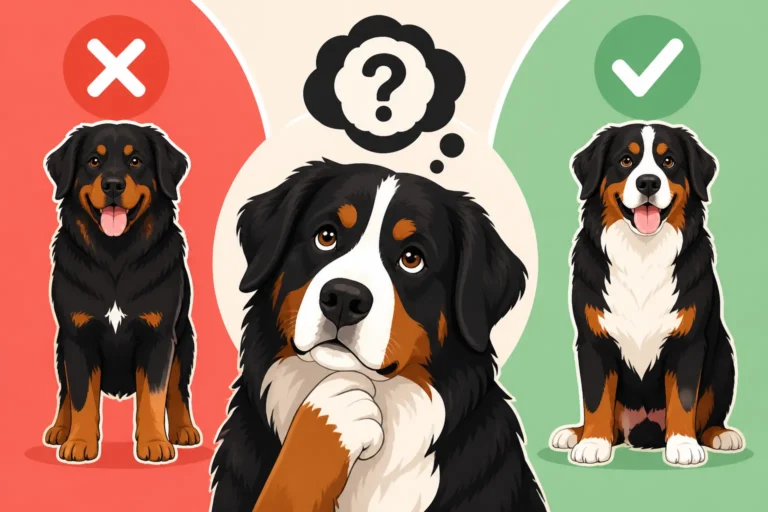
The First-Time Owner Who Chooses a Bernese Mountain Dog
A Bernese Mountain Dog puppy can look like the perfect first dog: affectionate, striking, and happy to be near the family. Then the realities arrive—rapid growth, heavy shedding, warm-weather limits, and the effort of handling a very large adolescent. This guide helps you decide whether a Berner fits your home, schedule, budget, and expectations before you bring one home.
What makes a Bernese Mountain Dog appealing to first-time owners
The temperament people fall in love with
Bernese Mountain Dogs are often gentle, people-oriented companions. Many enjoy being included in ordinary household life, whether that means lying nearby while you work or following you from room to room. That closeness can feel lovely, especially if you want a dog who is part of the family rather than a pet who prefers to keep to themselves.
But “gentle” doesn’t mean automatically easy. A Berner is a large, strong dog, and even friendly behavior can be a lot to manage when it comes from a growing puppy. A delighted youngster may lean against guests, crowd a doorway, or bump a child without intending harm. Early training and consistent house rules matter just as much as a sweet temperament.
Individual dogs vary, too. Some Berners greet new people readily; others take a little time to warm up. A thoughtful first-time owner makes room for that range instead of expecting every dog to behave like a social-media favorite. For a broader look at the breed’s everyday needs, read What a Bernese Mountain Dog Asks of a New Owner and Whether a Bernese Mountain Dog Is Right for You.
The puppy stage is not a preview of adult life
A fluffy puppy can make the breed’s size hard to picture. But the dog will grow into a powerful adult, and you’ll need to teach good habits before that happens. A puppy that jumps up, pulls on leash, or barrels through a narrow hallway may be manageable at first and challenging later. Training is easier when it’s built into daily routines from the beginning.
Berners also tend to mature gradually. A young dog may look nearly grown while still behaving like an impulsive adolescent. That means patience is useful: practice calm greetings, loose-leash walking, settling on a mat, and cooperative grooming in short, positive sessions. Don’t wait until the dog is full-sized to teach manners you’ll rely on every day.
First-time owners sometimes feel discouraged when a puppy seems to “forget” a cue around distractions. That doesn’t necessarily mean the dog is stubborn or untrainable. It may mean the environment is too exciting, the session is too long, or the behavior needs more practice in easier settings. A realistic training approach is covered in Training a Bernese Mountain Dog Without Breaking It.
The daily care a first-time owner should be ready for
Exercise, companionship, and a sensible routine
Berners generally need regular activity, but a first-time owner shouldn’t assume that a giant breed needs strenuous exercise every day. A comfortable walk, sniffing time, short training games, and chances to relax with the family can all contribute to a satisfying routine. The right amount depends on the individual dog, age, health, weather, and advice from your veterinarian.
Puppies need particular care around activity while they’re growing. Long runs, repetitive high-impact jumping, and forced exercise aren’t a sensible way to tire out a young dog. Instead, offer age-appropriate play and gentle exploration, and ask your vet how to adjust activity as your puppy develops. A puppy who is overexcited may need help settling, not simply a longer walk.
Companionship deserves equal attention. A Berner who spends long stretches alone may struggle, especially if they haven’t been gradually taught to cope with separation. Before choosing the breed, think through an ordinary weekday: who is home, when the dog gets bathroom breaks, and what happens when work runs late? If your household is often empty for much of the day, plan dependable support rather than hoping the dog will simply adapt.
Grooming and the realities of a double coat
A Bernese Mountain Dog’s coat is beautiful, but it takes regular care. Expect loose hair around the home, with heavier shedding periods when the undercoat releases. Brushing helps remove loose coat and lets you notice tangles, debris, or skin changes. Pay particular attention to areas where friction and feathering can encourage mats, such as behind the ears and around the legs.
Grooming is also a handling skill. Many adult Berners are too large to lift comfortably onto a grooming table or into a bathtub, so teaching a puppy to stand calmly, accept brushing, and have paws handled can save stress later. If bathing at home becomes impractical, look for a groomer equipped to work safely with large dogs. For a detailed routine, see Grooming a Bernese Mountain Dog's Long Tricolor Coat.
Set up a simple grooming station before you need it. A brush, comb, towels, nail-care tools, and a washable mat can keep supplies together. If you shop through Chewy, compare brush styles and grooming tools carefully rather than buying a large kit just because it’s marketed for shedding. The useful choice is the one that suits your dog’s coat and that you’ll actually use.
Home, climate, and family fit
Space matters, but layout matters more
A Berner doesn’t need a mansion, but a home should make it easy for a large dog to move around safely. Think about tight staircases, slippery floors, narrow doorways, and how much room the dog has to turn around in a busy kitchen. A puppy may fit under a desk today and become an inconvenient trip hazard as they grow.
A secure outdoor area can be useful for quick bathroom breaks and supervised sniffing, but a yard doesn’t replace walks, training, or company. Check fencing and gates with an adult dog’s strength and curiosity in mind. In a smaller home or apartment, consider whether the dog can settle comfortably away from household traffic and whether you can manage outings in every kind of weather.
Flooring is easy to overlook until a big, excited puppy skids across a smooth surface. Runners or rugs can give the dog better footing in common paths, particularly near the door and food area. A washable bed and a designated resting space are practical, too. Chewy may be one place to compare bed sizes or non-slip mats, but measure the space first and check return policies before ordering bulky items.
Warm weather, children, and everyday visitors
The breed’s thick coat makes heat management an important part of ownership. In places with hot summers, such as Atlanta or Phoenix, walks may need to happen during cooler parts of the day, with shade and fresh water available. Don’t rely on a dog’s enthusiasm to judge whether conditions are safe: a dog may keep following you even when they need to stop. See Getting a Bernese Mountain Dog Through Summer for more on planning around heat.
If children live in or visit your home, plan for supervision and teach both the child and dog how to interact calmly. A large dog can accidentally knock over a small child, even without rough behavior. Give the dog a quiet area where they can rest undisturbed, and don’t let children climb on, hug tightly, or interrupt a sleeping or eating dog. More family-specific guidance is available in The Bernese Mountain Dog Around Children.
Visitors also need a plan. A friendly Berner can still overwhelm someone by leaning, jumping, or putting paws on them. Use a leash, gate, or mat routine while teaching polite greetings; don’t expect guests to manage the dog’s training for you. These small household systems are often what make a large companion feel manageable.
| Part of life | What a first-time owner should consider | A practical first step |
|---|---|---|
| Training | The dog will become strong before every habit is polished | Start with short sessions and consistent household rules |
| Grooming | Loose hair and regular brushing are part of the deal | Keep tools together and practice handling early |
| Exercise | Activity should suit the dog’s age, health, and weather | Ask your vet about a safe routine for a growing puppy |
| Home setup | Size affects floors, doorways, beds, and car access | Check measurements before buying large equipment |
| Time alone | Many Berners value company and routine | Arrange gradual alone-time practice and backup care |
| Budget | Food, routine care, grooming, and emergencies all add up | Build a realistic monthly plan before choosing a puppy |
Health, cost, and making the decision
Consider the long-term commitment, not just the puppy
A Bernese Mountain Dog needs the same basic veterinary care as any dog, along with decisions about preventive care, nutrition, activity, and signs of illness. The breed is also associated with significant health concerns, so it’s sensible to ask a veterinarian about health planning and to learn what information a responsible breeder can provide about the puppy’s family. A pedigree or health record can inform a decision, but it cannot promise a particular outcome.
The breed’s lifespan can be shorter than many first-time owners expect, and that emotional reality is worth facing before you choose. Loving a Berner can mean dealing with age-related changes and difficult medical decisions earlier than you imagined. Reading The Average Age a Bernese Mountain Dog Reaches and What Bernese Mountain Dog Owners Wish Someone Had Said can help you think beyond the puppy years.
Look for a breeder who is willing to discuss health testing, temperament, and the strengths and limitations of their lines without brushing off your questions. Ask what support they offer after the puppy goes home, and be wary of pressure to decide quickly. If you’re considering rescue, ask what is known about the dog’s behavior, health, and comfort being alone. No route removes uncertainty, but careful questions can help you make an informed choice.
Budget for ordinary expenses and inconvenient surprises
The cost of bringing home a Berner doesn’t stop with the initial adoption or purchase. Food, veterinary care, grooming supplies or professional grooming, training, boarding, and sturdy everyday equipment all belong in the household budget. Larger dogs may also need larger beds, crates, harnesses, and transport arrangements, so small purchases can add up.
Emergency savings or suitable pet insurance are worth considering before there’s a problem. Read policy exclusions and waiting-period details closely, and don’t assume a policy covers every condition or treatment. It can also help to call your veterinary clinic and ask how they recommend planning for routine care and unexpected visits. For a wider view of ownership expenses, see Eight Years of Bernese Mountain Dog Bills.
Chewy can be convenient for recurring essentials such as food, waste bags, or grooming supplies, but convenience shouldn’t replace comparing the product with your veterinarian’s advice. If your dog has a medical diet or a food sensitivity, confirm the exact product with the clinic before switching. Keeping a simple record of food, medications, and recurring purchases can make the monthly cost easier to track.
A first-time owner checklist
Before you commit, picture a normal week rather than an ideal weekend. Can you provide daily company and training? Are you comfortable with a large dog taking up space, shedding, and needing help with grooming? Can your home and vehicle accommodate an adult dog? Do you have a plan for hot weather, time away, and veterinary expenses?
It’s also fair to decide that the timing isn’t right. Choosing a different breed, waiting until your schedule changes, or spending time with adult Berners before making a decision are all responsible options. A good match is not measured by how much you admire the breed; it’s measured by whether you can meet the dog’s needs through puppyhood, adulthood, and old age.
If the practical details still feel manageable after you’ve considered them, a Bernese Mountain Dog may be a wonderful first companion. Go in expecting to teach, adapt, and plan—not expecting the dog’s gentle reputation to do the work for you. That clear-eyed preparation gives both you and your future dog a better chance at a calm, rewarding life together.
Disclaimer
This article is for general informational purposes only and does not constitute professional advice. Laws, prices and regulations vary by location and change over time. Consult a qualified professional for guidance on your specific situation.