What the SOD1 Result Means for a Bernese Mountain Dog
That moment you get genetic test results back for your beloved Bernese Mountain Dog can feel like holding a lottery ticket – you're hoping for the best, but a knot of dread often tightens when you see terms like 'SOD1' and 'Degenerative Myelopathy' for the first time. It's completely normal to feel overwhelmed and anxious about these results. This guide is here to demystify what a SOD1 result truly means for your Berner, helping you understand the implications for their health, your peace of mind, and how to best prepare for their future.
Understanding the SOD1 Gene and Degenerative Myelopathy
For any Bernese Mountain Dog owner, understanding the basics of the SOD1 gene and its connection to Degenerative Myelopathy (DM) is crucial. It's a complex topic, but we can break it down into digestible pieces that make sense for everyday dog parents like us.
The Role of the SOD1 Gene in Canine Health
The SOD1 gene, short for Superoxide Dismutase 1, plays a vital role in the normal functioning of your dog's body. Think of it as a tiny, yet mighty, antioxidant enzyme. Its job is to protect cells from damage caused by harmful free radicals, essentially acting as a cellular cleanup crew. When this gene is working correctly, it's contributing to overall cellular health, including the health of your dog's nervous system.
However, a specific mutation in the SOD1 gene has been identified as a significant risk factor for Degenerative Myelopathy in Bernese Mountain Dogs and several other breeds, like Boxers and Welsh Corgis. When this mutation is present, the SOD1 protein doesn't function as it should. This malfunction is believed to lead to the accumulation of damaged proteins in the spinal cord, which then causes the progressive degeneration of nerve fibers. It's not that the gene itself is "bad," but rather that this particular faulty copy of it sets the stage for a serious neurological issue. Understanding that the SOD1 gene is just one part of the broader picture of your dog's genetic makeup, which is often revealed through a comprehensive test like the one that makes up a significant part of the Bernese Mountain Dog Health Panel, can help you grasp the full context.
What is Degenerative Myelopathy
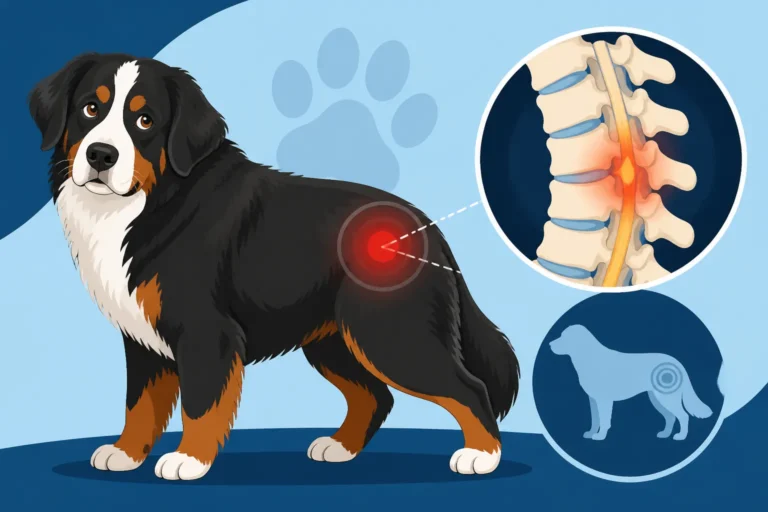
Degenerative Myelopathy (DM) is a cruel and progressive neurological disease that affects the spinal cord, particularly the white matter, which is essential for transmitting signals between the brain and the rest of the body. In simple terms, it's like the insulation around electrical wires in the spinal cord starts to break down, causing messages to get scrambled or stop altogether. The most devastating aspect of DM is that it typically leads to a gradual loss of coordination and strength in the hind limbs, eventually progressing to full paralysis.
It's a heartbreaking condition for owners because, unlike many other mobility issues, DM is not generally painful for the dog. They don't experience discomfort from the nerve degeneration itself, which can make the decision-making process even more complex as their physical abilities decline. Instead, they lose the ability to control their movements, their balance deteriorates, and simple actions like standing or walking become monumental challenges. Many compare the progression of DM in dogs to Amyotrophic Lateral Sclerosis (ALS) in humans, highlighting the similar impact on motor function.
Interpreting Your Bernese Mountain Dog's SOD1 Test Results
Receiving your Bernese Mountain Dog's genetic test results can be a moment of anxiety, but understanding the terminology is the first step toward clarity. The SOD1 test will typically report one of three possible genotypes: Clear, Carrier, or At-Risk. Each of these has distinct implications for your dog's health and, potentially, for breeding decisions if that's a path you're considering.
Decoding the Genotypes: Clear, Carrier, At-Risk
Let's break down what each of these results means in practical terms for your furry family member:
- Clear (N/N): This means your Bernese Mountain Dog has two normal copies of the SOD1 gene. Statistically, dogs with a "Clear" result are highly unlikely to develop Degenerative Myelopathy that is specifically linked to this SOD1 mutation. This is fantastic news, offering significant peace of mind. However, it’s important to remember that genetics are complex, and while this specific mutation is ruled out, no genetic test can guarantee absolute freedom from all diseases or from DM entirely if other, less common genetic factors or misdiagnoses are at play. Still, a Clear result for SOD1 is an excellent indicator of low risk for this particular condition.
- Carrier (N/A or N/DM): A "Carrier" result indicates that your Bernese Mountain Dog has one normal copy of the SOD1 gene and one mutated copy. For the vast majority of Berners with this genotype, they will not develop clinical signs of Degenerative Myelopathy in their lifetime, or if they do, it would be at a very advanced age. Think of it as having a backup copy that functions perfectly well. The primary implication of a Carrier status lies in breeding. If you have a carrier, it's crucial to understand their genetic contribution to any potential offspring. You might be wondering, "Will a Carrier Bernese Mountain Dog Get Symptoms?" and the answer is generally no, or at least not in a way that significantly impacts their normal lifespan.
- At-Risk (A/A or DM/DM): This result means your Bernese Mountain Dog has two copies of the mutated SOD1 gene. For dogs with an "At-Risk" genotype, there is a significantly higher probability of developing Degenerative Myelopathy during their lifetime. This is understandably the most concerning result for owners. However, it's vital to grasp that "at-risk" is not a guarantee. Not every dog with two copies of the mutated gene will develop DM, and the age of onset can vary widely. It simply means they have the genetic predisposition. This knowledge allows you to be proactive in monitoring your dog for early signs and discussing preventative care with your veterinarian.
| SOD1 Genotype | Meaning | Risk of Developing DM | Implications for Breeding |
|---|---|---|---|
| N/N (Clear) | Two normal copies of the SOD1 gene. | Very low risk | Can be bred with any dog without passing on the specific SOD1 mutation risk. |
| N/A (Carrier) | One normal, one mutated copy. | Extremely low to no risk | Should only be bred with a "Clear" (N/N) dog. Avoid breeding with other carriers or "At-Risk" dogs to prevent producing "At-Risk" offspring. |
| A/A (At-Risk) | Two mutated copies of the SOD1 gene. | High probability of developing DM | Should not be bred. If they are, all offspring will inherit at least one mutated copy, making them carriers or at-risk depending on the other parent. |
The Nuance of "At-Risk" and Symptom Onset
When your Bernese Mountain Dog receives an "At-Risk" (A/A or DM/DM) SOD1 result, it can feel like a devastating blow, a ticking clock hanging over your beloved companion. It's crucial, however, to understand the nuance: "at-risk" does not equate to an immediate or guaranteed diagnosis of Degenerative Myelopathy. It simply means your dog carries the genetic predisposition.
The penetrance of the SOD1 mutation isn't 100%, meaning that while most dogs with two copies will develop DM, some may live their entire lives without ever showing symptoms. The reasons for this variability aren't fully understood, but it highlights that other genetic or environmental factors might play a role. For those Berners who do develop DM, the average age of onset typically falls around 8 to 9 years old, though it can vary significantly, appearing earlier or later. This means you could have several wonderful, active years with your dog before any signs emerge, if they emerge at all. This period gives you valuable time to prepare, to enjoy every moment, and to implement proactive measures.
This early knowledge, gleaned from a simple genetic test, allows you to talk with your vet about monitoring for Early Degenerative Myelopathy in a Bernese Mountain Dog and consider pet insurance options from providers like Healthy Paws. Many experienced Bernese Mountain Dog owners advocate for early enrollment in a comprehensive pet insurance plan, even before any signs appear, as policies generally do not cover pre-existing conditions. Services like Healthy Paws are designed to help families afford the best possible care throughout their pet's life, especially when facing chronic conditions like DM.
Living with a Bernese Mountain Dog Affected by SOD1-Linked DM
Receiving an "at-risk" result or, even more challenging, a diagnosis of Degenerative Myelopathy for your Bernese Mountain Dog, can feel incredibly isolating. It's a tough road, but you're not alone. Many Berner families have walked this path, and there's a lot you can do to support your dog and maintain their quality of life.
Recognizing Early Signs and Progression
Being aware of the early indicators of DM is paramount for managing the condition effectively. The first signs are often subtle, sometimes just a slight clumsiness or a less vigorous wag of the tail. Owners commonly report a change in gait, where their Berner's hindquarters might seem a bit wobbly, they might stumble more frequently, or their paws might drag slightly, especially on walks. You might notice they have increasing difficulty rising from a lying position, or that their back legs cross when walking. These initial symptoms can sometimes be mistaken for other orthopedic issues, like hip dysplasia or arthritis, which are also common in the breed. This is why vigilance and regular veterinary check-ups are so important.
As the disease progresses, these signs become more pronounced. You might observe a more obvious loss of coordination in their hind limbs, leading to a "drunken" gait. They may struggle with stairs, jumping into the car, or maintaining balance. The progression of DM is typically slow, unfolding over several months to a few years, rather than weeks. This gradual decline gives you time to adapt and implement supportive care. To learn more about what to watch for, you might find it helpful to read about The Bernese Mountain Dog Whose Back Legs Give Out and get a deeper understanding of How Fast Degenerative Myelopathy Progresses in a Berner.
Supportive Care and Quality of Life
While there is currently no cure for Degenerative Myelopathy, the focus shifts entirely to supportive care to maximize your Bernese Mountain Dog's comfort and mobility for as long as possible. This isn't about giving up; it's about pivoting to a new kind of care that truly puts your dog first.
One of the cornerstones of managing DM is maintaining muscle mass and strength through controlled exercise and physical therapy. This could involve regular, gentle walks, swimming, or specific exercises recommended by a canine physical therapist. Hydrotherapy, where your dog exercises in water, can be particularly beneficial as it reduces stress on their joints while still allowing them to move and build strength. You can explore how these activities can contribute to Slowing Degenerative Myelopathy in a Bernese Mountain Dog and uncover more about Whether Physiotherapy Helps a Bernese Mountain Dog Walk Longer.
As their mobility declines, making your home DM-friendly becomes essential. Non-slip runners or rugs can provide traction on slick floors, preventing falls and building confidence. Ramps can help them get in and out of cars or navigate stairs. Lifting harnesses, like those from Help 'Em Up, can be invaluable for assisting your Berner with standing, walking, and getting outside for potty breaks. When hind leg paralysis advances, specially designed mobility carts, often called dog wheelchairs, can give your Bernese Mountain Dog a renewed sense of independence and allow them to continue enjoying walks and outdoor activities. Learning about A Cart for a Bernese Mountain Dog Losing Its Legs can provide insight into these vital aids.
Throughout this journey, regular check-ups with your veterinarian are crucial to monitor your dog's condition and adjust their care plan. The ongoing costs of veterinary care, mobility aids, and therapy can be substantial. Having a robust pet insurance plan, perhaps from a provider like Healthy Paws, can certainly alleviate some of that financial burden, allowing you to focus on your dog's comfort without constant financial stress. When considering medical treatments or supportive therapies for DM, it's wise to review your pet insurance policy. Companies such as Healthy Paws often detail what specific conditions and treatments are covered, offering peace of mind during a challenging time.
It's important to remember that DM is not painful, so your primary goal is to maintain their quality of life. As the disease progresses, you'll eventually face the incredibly difficult decision of deciding when it's time to say goodbye. This is a deeply personal choice, but having informed discussions with your vet, understanding the progression of the disease, and focusing on your dog's overall well-being can help guide you. You can find support and advice on navigating these profound moments in discussions about Deciding When to Let a Paralyzed Bernese Mountain Dog Go.
Responsible Breeding and the SOD1 Gene
The knowledge gained from SOD1 testing isn't just for current pet owners; it's a powerful tool for responsible breeders committed to the long-term health and vitality of the Bernese Mountain Dog breed. Genetic testing empowers breeders to make informed decisions that aim to reduce the incidence of debilitating diseases like Degenerative Myelopathy for future generations.
Making Informed Decisions for Future Generations
Responsible breeders have a profound commitment to the health of the puppies they produce. For Bernese Mountain Dogs, this means understanding and actively using genetic health screenings, including the SOD1 test. The goal isn't necessarily to completely eradicate the gene from the gene pool overnight, which could severely limit genetic diversity and potentially introduce other unforeseen health issues. Instead, the focus is on making careful, informed pairings.
A responsible breeder will never knowingly breed two Bernese Mountain Dogs that are both "at-risk" (A/A or DM/DM) for Degenerative Myelopathy, as this would guarantee that all offspring would also be at-risk. Similarly, breeding two "carrier" (N/A) dogs together is typically avoided, as this pairing carries a 25% chance of producing "at-risk" puppies. The ideal pairing, when a carrier is considered for breeding to maintain genetic diversity, is to breed a "carrier" dog with a "clear" (N/N) dog. This pairing will result in a litter where approximately 50% of the puppies are "clear" and 50% are "carriers," but critically, none will be "at-risk" for SOD1-linked DM. This strategy allows for the careful preservation of desirable traits within a line while progressively reducing the prevalence of the mutated gene. This kind of careful planning is part of a comprehensive approach to breeding, where other tests such as those included in The Bernese Mountain Dog Health Panel are also considered essential.
Understanding the "Carrier" Status in Breeding
The "Carrier" status (N/A) often causes confusion and sometimes unnecessary alarm among prospective owners and even newer breeders. It's vital to reiterate: a Bernese Mountain Dog that is a SOD1 carrier is, for all intents and purposes, a healthy dog who is highly unlikely to ever develop DM symptoms themselves. Their "carrier" status only becomes relevant when considering breeding.
For a responsible breeding program, a carrier dog can be a valuable asset. If a carrier possesses other excellent qualities—such as sound temperament, good conformation, and clear results on other important health screenings—excluding them from breeding entirely could remove valuable genetics from the gene pool. This is particularly important for breeds with already limited genetic diversity, where over-selection for just one or two genes could inadvertently lead to other problems.
Therefore, the key is not to eliminate carriers, but to manage their breeding responsibly. By consistently breeding carriers only to clear dogs, breeders can ensure that no "at-risk" puppies are produced, while still utilizing the positive traits a carrier dog brings to the breed. This careful, measured approach helps to improve the overall health of the Bernese Mountain Dog population over time without sacrificing other essential qualities. This proactive and informed decision-making process is crucial to the long-term health of the breed, helping ensure that the loving, giant companions we cherish remain with us for as long as possible. Even with responsible breeding, unexpected health challenges can arise. This is where comprehensive pet insurance from a reputable company like Healthy Paws can truly be a lifesaver, offering financial protection and peace of mind for Bernese Mountain Dog owners.
Disclaimer
This article is for general informational purposes only and does not constitute professional advice. Laws, prices and regulations vary by location and change over time. Consult a qualified professional for guidance on your specific situation.