Whether a Vet Can Examine a Standing Berner
Bringing a massive, sometimes wiggly, hundred-pound Bernese Mountain Dog to the vet can be a challenge, and the thought of getting them to stand perfectly still for an examination might seem like an impossible feat. Many owners worry about whether their large, often sensitive Berner can actually cooperate during a standing vet check, or if there are better, less stressful ways to ensure their beloved companion gets the care they need. This guide will delve into the nuances of standing examinations for Bernese Mountain Dogs, offering practical advice and empathetic insights to make vet visits smoother for both you and your furry family member.
The Realities of a Standing Exam for a Bernese Mountain Dog
When you envision a vet exam, you often picture a dog standing calmly on a table, or perhaps lying down for a more thorough check. With a Bernese Mountain Dog, neither of those scenarios is always straightforward, and understanding why a standing exam might be requested or challenging is the first step.
Why Standing Might Be Preferred (or Required)
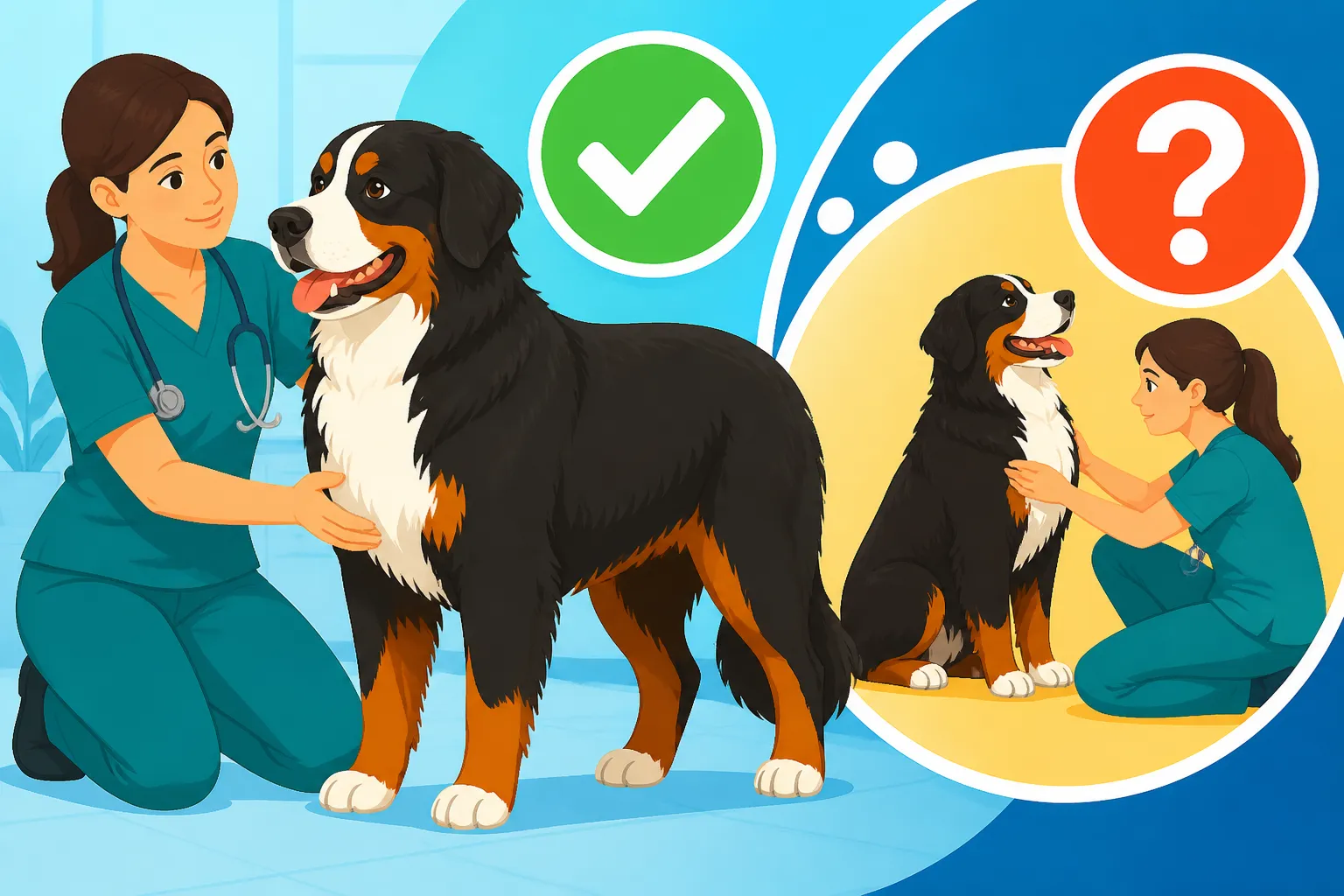
Believe it or not, a standing exam isn't just about convenience; it can be medically advantageous in several situations. For a breed as large and prone to certain orthopedic issues as the Bernese Mountain Dog, a standing position allows the veterinarian to assess weight bearing, posture, and symmetry more accurately. For instance, if your vet is checking for subtle lameness or issues like hip dysplasia, observing your Berner while they are naturally supporting their own weight can reveal things that might be hidden when they're lying down or being held. They can observe how your dog distributes weight across all four paws, how they shift their balance, and if there are any signs of discomfort when specific joints are gently manipulated in a weight-bearing state. This dynamic assessment is crucial for diagnosing early signs of Joint Disease in a Hundred Pound Bernese Mountain Dog or other musculoskeletal problems.
Furthermore, some procedures, like certain heart auscultations or abdominal palpations, are sometimes easier to perform with the dog standing. The body's organs settle differently, and the veterinarian can get a clearer picture of their size, position, and any tenderness without the compression or distortion that might occur when a large dog is lying on its side. It also allows for a quicker, less invasive check-up during routine visits, meaning less stress for a dog that might not love being restrained on a cold table.
The Physical Challenges for Your Berner
While a standing exam has its merits, it's not without its difficulties, especially for a Bernese Mountain Dog. Their sheer size is the first hurdle. Asking a hundred-pound-plus dog to stand still on a slippery clinic floor or an examination table (if they even fit) for an extended period can be physically demanding. They might fidget, lean, or shift their weight, not out of defiance, but simply because it's uncomfortable or unfamiliar. Whether a Bernese Mountain Dog Hides Discomfort is a real concern, and a dog trying to mask pain might stand in an unnatural way, making diagnosis harder.
Then there's the consideration of their deep chest. Bernese Mountain Dogs are prone to bloat, and while a standing exam usually isn't strenuous enough to trigger it, the stress of a vet visit combined with awkward positioning could be a factor in some sensitive individuals. Also, if your Berner has any underlying joint issues, such as those that contribute to The Bernese Mountain Dog Whose Back Legs Give Out, standing still for too long can exacerbate their discomfort or even make them more unstable. Their long, often fluffy coat can also hide subtle physical cues, meaning the vet has to be very hands-on, which can be perceived as intrusive by some dogs.
The Vet's Perspective: When Standing Helps and Hinders
From the veterinarian's point of view, a cooperative standing Berner is a dream. It allows for a quick visual assessment of overall health, body condition, and posture, which is a vital part of The Bernese Mountain Dog Health Panel. They can easily check the dog's eyes, ears, and teeth without major repositioning. Listening to the heart and lungs is often clearer, and feeling for lumps or bumps on the body is more efficient.
However, an uncooperative or anxious Berner in a standing position can hinder the exam significantly. If the dog is constantly moving, leaning, or trying to sit, the vet can't get accurate readings. A frightened dog might become defensive, making it difficult for the vet to perform even basic palpations or injections safely. This is where a good relationship between the dog, owner, and vet, coupled with positive training, truly shines. The goal is always to get the most accurate diagnostic information with the least amount of stress for the patient.
Preparing Your Bernese Mountain Dog for a Successful Standing Exam
The key to a smooth vet visit, including a standing exam, often lies in preparation long before you even step through the clinic door. It's all about making vet visits a positive, or at least neutral, experience.
Early Socialization and Positive Reinforcement
Starting early with your Bernese Mountain Dog puppy is paramount. Expose them to new sights, sounds, and people in a controlled, positive manner. This means not just other dogs or park visits, but also gentle handling. Get your puppy used to having their paws touched, their ears examined, their mouths opened, and their tails lifted. Use high-value treats and praise to reward calm behavior during these sessions. Think of it as practice for the vet. You want your Berner to associate being handled with good things. What a Bernese Mountain Dog Puppy Should Meet Early should include various tactile experiences.
When it comes to the vet clinic itself, consider "happy visits" where you just go in, give your Berner a treat, let them greet staff (if appropriate and calm), and then leave. No pokes, no prods, just positive associations. Many clinics are happy to accommodate this. If you adopted an older Berner, it's never too late to start this process, though it might take more time and patience. The goal is to build a foundation of trust and comfort.
Training for Stillness and Cooperation
Beyond general handling, specific training for a standing exam can make a huge difference. Teach your Berner a "stand" cue, and practice holding that position for increasing durations. Start with just a few seconds, rewarding heavily, and gradually extend the time. Use a release cue like "okay" to signal when they can break the position. You can even practice this on different surfaces at home, simulating the clinic environment.
It’s not just about standing; it's about cooperative care. This involves teaching your dog to participate willingly in their own care. This could mean Teaching a Bernese Mountain Dog to Stand for Grooming, where they learn to be still for brushing and nail trims, which translates directly to vet exams. You can also practice "chin rests" where they rest their head on your arm, making it easier for a vet to examine their head or administer injections to the neck area. Resources like BAXTER & Bella offer online training programs that focus on cooperative care, providing structured steps to teach your dog these invaluable skills, building their confidence and reducing fear.
Essential Gear for Vet Visits
Having the right gear can make a huge difference in managing a large breed like a Bernese Mountain Dog at the vet.
- Proper Leash and Collar/Harness: A well-fitting, sturdy leash and harness (like a front-clip harness for better control if they pull) are non-negotiable. This isn't just for walking them in; it's about keeping them secure and giving you control in a potentially stressful environment. Front-Clip Harnesses on a Hundred Pound Bernese Mountain Dog can be incredibly helpful for managing their strength.
- High-Value Treats: Forget the regular kibble. For the vet, bring something your Berner adores. Cooked chicken, cheese, or specialized training treats will get their attention and create positive associations, especially during vaccinations or unpleasant procedures.
- Muzzle (if necessary): This is a sensitive topic, but a well-fitted muzzle, introduced positively, can be a lifesaver for everyone's safety if your Berner is prone to nipping or snapping when stressed or in pain. It's a tool for safety, not punishment, and can actually reduce anxiety in some dogs because they know they can't accidentally bite. Training your dog to happily wear a muzzle is part of cooperative care, too. Muzzling a Frightened Bernese Mountain Dog at the Clinic should be a calm, pre-trained event, not a last-minute struggle.
- Non-slip Mat: If your vet's exam room has a slippery floor, bringing a small non-slip mat or towel for your Berner to stand on can make them feel much more secure and less anxious, especially when they're asked to stand still.
When a Standing Exam Isn't Possible or Ideal
Sometimes, despite all the preparation, a standing exam just isn't the best option. It’s crucial to recognize these situations and advocate for your Bernese Mountain Dog.
Addressing Fear, Anxiety, and Pain
If your Bernese Mountain Dog is visibly stressed, trembling, panting excessively, or trying to hide, forcing a standing exam will only escalate their fear. This fear can then generalize to all future vet visits, making care even harder. Similarly, if your Berner is in pain, asking them to stand still might be excruciating. They might snap, cry out, or collapse. Whether a Bernese Mountain Dog Hides Discomfort often depends on the individual dog, but many will show subtle signs of pain if you know what to look for: lip licking, yawning, shifting weight, avoiding eye contact, or a reluctance to move.
In these instances, a standing exam is counterproductive. It can compromise the accuracy of the exam if the dog is too tense, and it creates a negative emotional experience. Open communication with your vet is vital here. Don't be afraid to express your concerns about your dog's comfort and fear levels.
Alternative Positions and Techniques
Fortunately, veterinarians are highly skilled at adapting their examination techniques.
- Lying Down: Many parts of a physical exam can be performed with your Bernese Mountain Dog lying down on their side, especially if they are calm and cooperative in this position. This can be less stressful and more comfortable, particularly for dogs with orthopedic issues.
- Sitting: For some exams, a dog sitting is perfectly adequate. It allows access to the upper body, and if your Berner is more comfortable sitting, it's often preferred over a stressful standing struggle.
- On the Floor: For very large dogs like Berners, ditching the exam table altogether and performing the exam on the floor is often the best solution. It eliminates the fear of heights or slippery surfaces. The vet can kneel or sit with your dog, making the interaction less intimidating.
- Sedation or Anesthesia: In cases of extreme fear, aggression due to pain, or for more invasive diagnostics (like X-rays or extensive palpation), mild sedation might be the kindest and safest option. This allows the vet to perform a thorough exam without causing undue stress or risking injury to anyone. Discuss these options openly with your vet.
- Team Effort: Sometimes, it takes two people to gently support a Bernese Mountain Dog during an exam. One person can comfort and distract with treats, while the other provides stability. This is where Lifting a Hundred Pounds of Bernese Mountain Dog might become necessary, even if just to reposition them slightly.
Communicating Effectively with Your Vet
You are your Bernese Mountain Dog's primary advocate. Before your appointment, or at the start of the visit, clearly communicate any concerns you have.
- Prior History: Let the vet know if your Berner has a history of fear, anxiety, or pain during exams.
- Preferred Positions: Explain what positions your dog is most comfortable in. "Bruno is much calmer if we do his exam on the floor" is a perfectly acceptable statement.
- Pain Points: Point out any areas where your dog is sensitive or might be in pain.
- Training Background: Inform your vet about your Berner's cooperative care training. "We've been working on a stand-stay, but he still gets nervous here" helps them understand your dog's capabilities.
- Ask Questions: Don't hesitate to ask why a particular position is needed or if there are alternatives. A good vet will always work with you to find the best approach for your specific dog.
This open dialogue ensures that your vet can tailor their approach, making the experience as positive as possible for your Bernese Mountain Dog.
The Long-Term Benefits of Cooperative Care
Investing time in preparing your Bernese Mountain Dog for vet visits, regardless of whether they ultimately have a standing exam, pays dividends throughout their life.
Building Trust for Future Visits
Every positive or neutral experience at the vet reinforces the idea that it's not a scary place. When your Berner learns that they can trust you and their vet, even during uncomfortable procedures, their overall stress levels decrease. This makes future check-ups, emergency visits, or even routine procedures like Dosing Vaccines and Wormers for a Growing Berner much less traumatic for everyone involved. A dog that feels safe and understood is a dog that will cooperate more willingly, and this bond of trust is invaluable for both you and your veterinary team.
Impact on Overall Health Management
A dog that is comfortable at the vet is a dog that gets better care. If every visit is a struggle, it can lead to missed appointments, delayed diagnostics, and increased stress for you, the owner. When your Bernese Mountain Dog is calmly able to receive a thorough exam, it allows for early detection of potential health issues, which is especially critical for a breed with a shorter lifespan and predispositions to conditions like The Cancer That Kills Half of All Bernese Mountain Dogs or Bloat in a Deep-Chested Bernese Mountain Dog.
Cooperative care empowers you and your vet to manage your Berner's health proactively, ensuring they receive timely interventions and a better quality of life. It transforms vet visits from a dreaded event into a manageable part of responsible pet ownership, solidifying the loving bond you share with your magnificent Bernese Mountain Dog.
| Aspect | Standing Exam – Ideal Scenario | Standing Exam – Challenging Scenario | Alternative Methods |
|---|---|---|---|
| Dog's Demeanor | Calm, trained, comfortable with handling | Anxious, fearful, in pain, untrained, fidgety | Comfortable, relaxed, perhaps mildly sedated |
| Vet's Assessment Focus | Posture, gait, weight bearing, symmetry, quick general check | Difficulty assessing due to movement/tension | Detailed palpation, specific joint checks, less visual overall |
| Owner's Role | Holding leash, offering treats, maintaining verbal cues | Calming, distracting, acknowledging fear/pain | Supporting, comforting, providing consent for sedation |
| Best For | Routine checks, monitoring known stable conditions | Dogs needing careful handling, pain assessment, in-depth analysis | Anxious dogs, painful dogs, very large/heavy dogs, specific procedures |
| Primary Advantage | Natural posture observation, quick and efficient | Reduces stress, allows thorough examination without struggle | Reduces stress, allows thorough examination without struggle |
Disclaimer
This article is for general informational purposes only and does not constitute professional advice. Laws, prices and regulations vary by location and change over time. Consult a qualified professional for guidance on your specific situation.