Why a Bernese Mountain Dog Is Always Tricolor
One of the first things that strikes anyone who loves Bernese Mountain Dogs is their absolutely iconic coat. It’s not just beautiful; it’s remarkably consistent. Unlike many breeds that come in a rainbow of colors, Berners always seem to sport the same stunning black, rust, and white pattern, leading many to wonder if they've ever seen a Bernese Mountain Dog in any other shade. This guide delves into why the tricolor coat is not just a preference but a defining genetic characteristic of the breed, helping you understand the deep-rooted reasons behind this cherished uniformity.
The Defining Feature: What "Tricolor" Actually Means for a Berner
When we talk about a Bernese Mountain Dog being "tricolor," we're not just throwing around a fancy term; we're describing a very specific genetic and visual standard that has been carefully preserved for generations. It’s this precise combination of colors and their distribution that makes a Berner, well, a Berner. If you’ve ever admired one of these gentle giants, you’ve undoubtedly noticed their distinctive appearance, which is far from accidental. This isn't a coat that just randomly appeared; it's steeped in the breed's history and genetic makeup.
The Classic Bernese Palette: Black, Rust, and White
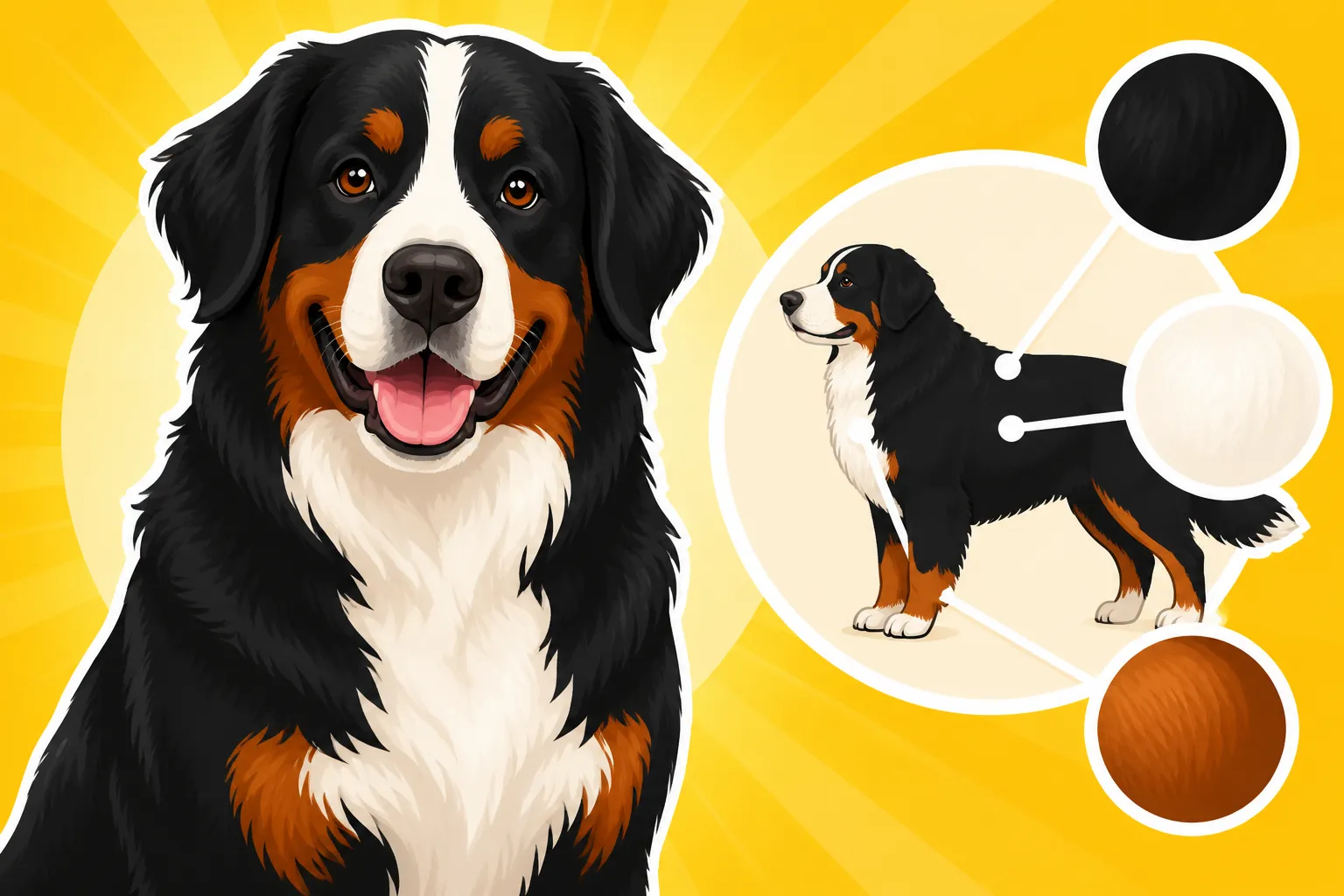
The "tricolor" refers to three distinct colors: a rich, jet black, vibrant rust (often described as tan or mahogany), and crisp, pure white. The primary color of the Bernese Mountain Dog's coat is black, covering most of the body, back, and sides. This deep, lustrous black forms the striking backdrop against which the other colors pop. It’s not a faded black or a charcoal; it's typically a profound, solid shade that really catches the light.
Then we have the rust markings, which are typically found on the cheeks, over each eye (like expressive eyebrows), on each side of the chest, down the legs, and under the tail. These rust patches aren't just an afterthought; they're warm, rich, and provide a beautiful contrast to the black. A healthy, well-nourished Berner often has particularly vibrant rust markings, highlighting their handsome features. These aren't just random blotches; their placement and saturation are part of what defines the breed's classic look.
Finally, the white areas are crucial. They appear as a blaze running up the forehead between the eyes, usually extending around the muzzle, forming a characteristic "Swiss Cross" on the chest, and typically on the tips of the paws and tail. The more symmetrical these white markings are, especially on the face and chest, the more aesthetically pleasing they are considered within the breed standard. This white is meant to be bright and clear, providing a sharp delineation from the darker colors. It’s this specific arrangement of black, rust, and white that forms the cherished Bernese aesthetic.
Understanding the Markings: Blaze, Chest, and Toes
The specific placement of these three colors isn't arbitrary; it follows a pattern deeply ingrained in the breed's visual identity. The white blaze on the head is a key identifying feature, often narrowing as it approaches the eyes and widening slightly towards the nose. This facial white should be clean and clear, framing their gentle expression beautifully. Many Berner owners can tell their dog apart from others just by the unique shape of their blaze, even though the general pattern is consistent.
On the chest, the white often forms what's lovingly called a "Swiss Cross." This isn't always a perfect cross shape, but rather a significant patch of white that extends up the neck and sometimes onto the shoulder area. This striking chest marking is a hallmark of the breed and contributes significantly to their stately appearance. It's a nod to their heritage, reminiscent of the Swiss flag, and a point of pride for many breeders and owners.
Further down, you'll find white on the feet and tail. The paws usually have white "socks" or markings, which ideally don't extend too far up the leg. The tip of the tail often has a distinct white flash. The combination of these markings, particularly the clear white, the vibrant rust, and the deep black, is what truly makes a Bernese Mountain Dog stand out. It’s a precise, beautiful pattern that breeders strive to maintain, ensuring each generation carries on this unmistakable look. Checking resources like the Bernese Mountain Dog Markings and What They Mean can give you even more insight into these specific patterns.
The Genetic Blueprint: Why Berners Carry Only These Colors
Understanding why Bernese Mountain Dogs are always tricolor takes us into the fascinating world of canine genetics. It's not just a matter of tradition or preference; it's dictated by the specific genes these dogs inherit. The genetic code of a Bernese Mountain Dog ensures that this beautiful tricolor pattern is the only one expressed, unlike breeds with a wider variety of coat colors. This genetic consistency is a cornerstone of the breed's identity.
The K-Locus and A-Locus: The Key Players
The tricolor pattern in Bernese Mountain Dogs is primarily determined by two important gene locations, or loci, on their chromosomes: the K-Locus (dominant black) and the A-Locus (agouti series). Without getting too deep into complicated Punnett squares, here's the simplified version:
-
The K-Locus: This gene controls whether a dog expresses black pigment. Bernese Mountain Dogs are typically dominant black (KB/KB or KB/ky at this locus). The KB allele effectively "overrides" other color expressions that might come from the A-Locus, ensuring that black is the primary color wherever it's genetically possible. Think of it as the master switch for "black."
-
The A-Locus: This locus is responsible for patterns like sable, fawn, and the classic tricolor or "tan point" pattern. Bernese Mountain Dogs consistently carry the "tan point" allele (at/at) at this locus. This allele means that while the dog is largely black (due to the K-Locus), there will be specific areas where tan (rust) markings appear. These are the beautiful rust spots above their eyes, on their cheeks, and down their legs. Because Berners are typically KB/KB or KB/ky at the K-locus, the tan points from the A-locus can only be expressed in specific areas where the dominant black allows them, resulting in the tricolor pattern. It’s a beautifully coordinated genetic dance that reliably produces the same result.
The white markings are controlled by a separate set of genes, often referred to as the S-locus (piebald spotting). Bernese Mountain Dogs typically carry alleles that result in what's called "Irish spotting" – those characteristic white markings on the chest, blaze, and feet. So, it's the combination of specific alleles at the K, A, and S loci that locks in the tricolor Bernese Mountain Dog look. This genetic uniformity is why Whether a Bernese Mountain Dog Can Be Any Other Color is such a consistent answer: no, not genetically within the purebred lines.
When Other Genes Try to Show Up: What's Not a Berner
Because of this specific genetic makeup, a true, purebred Bernese Mountain Dog will always be tricolor. If you encounter a dog advertised as a "Bernese Mountain Dog" with different colors – say, all black, or black and white, or even fawn – it’s almost certainly not a purebred Berner. These variations simply do not occur in the breed's genetic pool for coat color.
Sometimes, people might misunderstand puppy coloring or see a mixed breed and believe it's a variation. For example, a puppy might have lighter rust markings that darken with age, but the pattern itself is consistent from birth. Any deviation from the black, rust, and white tricolor with characteristic markings means you're looking at something other than a purebred Bernese. This isn't to say other colors aren't beautiful, but they simply aren't characteristic of the Bernese Mountain Dog breed. This is also why the breed standard is so strict about color, leading us to understand The Colors That Put a Bernese Mountain Dog Out of the show ring or even discerning purebred status.
This genetic lock on color is part of what makes the breed so recognizable. If a breeder shows you a "rare" or "unique" colored Bernese, it's a huge red flag that either the dog is not a purebred Bernese Mountain Dog, or the breeder is misrepresenting their stock. Responsible breeders prioritize preserving the breed's health and established characteristics, including its iconic coat. When you're looking for a Berner, their consistent tricolor coat is a visual assurance of their lineage.
The Breed Standard: Our Guide to Bernese Authenticity
The breed standard isn't just a set of arbitrary rules; it's the blueprint that defines what a Bernese Mountain Dog should look and act like. For dedicated enthusiasts and ethical breeders, it's the definitive guide, safeguarding the breed's unique characteristics, including its signature tricolor coat. Without such a standard, the distinctiveness of the Bernese could easily be lost to random variations. Understanding the breed standard helps us appreciate why certain traits are considered essential, and why the tricolor coat is non-negotiable.
Protecting the Look: Why the Standard Matters
The official breed standard, set by organizations like the American Kennel Club (AKC) or the Fédération Cynologique Internationale (FCI), explicitly describes the acceptable colors and markings for a Bernese Mountain Dog. It states unequivocally that the coat must be tricolored: black as the main body color, rust markings in specific areas, and white markings in designated spots. Any significant deviation from this is considered a fault, meaning it's a departure from the ideal representation of the breed. In the show ring, a dog with incorrect coloring would be disqualified.
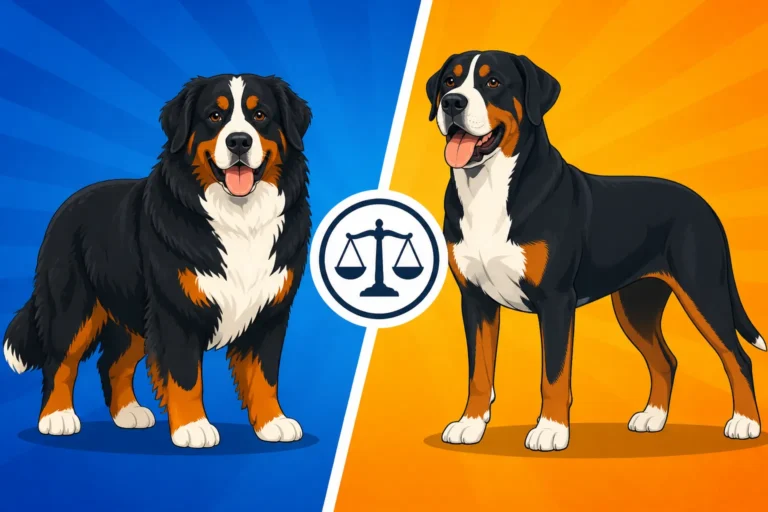
This strict adherence to the tricolor pattern isn't merely for aesthetics. It helps maintain the breed's historical identity and distinguishes it from other similar breeds. The uniform coloring acts as a visible marker of purity and heritage. For example, comparing the Bernese to its Swiss cousins helps illustrate this; while they share some general traits, their specific coat patterns are part of what makes each unique. The Bernese Mountain Dog Breed Standard goes into great detail about every aspect, including this crucial color requirement.
Furthermore, adhering to the standard helps prevent backyard breeders from trying to introduce or capitalize on "rare" colors, which can often come with unforeseen health issues or genetic instabilities. When you purchase a Bernese Mountain Dog, you expect a certain look and temperament, and the breed standard helps ensure that expectation is met across the board. It protects both the breed and prospective owners from misrepresentation. This is especially important when you’re investing in a puppy and want to be sure you’re getting a true Berner with the characteristics you love, perhaps even researching toys or beds for your future large companion on a site like Chewy.
Beyond Color: Other Breed Standard Elements
While color is a defining characteristic, the breed standard encompasses much more than just the coat. It details everything from the ideal temperament to physical structure, size, and movement. For instance, the Bernese Mountain Dog should have a kindly, confident, and good-natured demeanor. Their physical build should be sturdy and muscular, reflecting their history as working dogs in the Swiss Alps. These characteristics are just as important as the tricolor coat in defining the breed.
The standard also specifies coat texture, noting it should be long, soft, and slightly wavy or straight. While the long coat is a key feature, the presence of specific colors is non-negotiable. Even variations in coat texture, like an overly curly coat, would be considered a fault, though not as severe as an incorrect color. This holistic approach ensures that the entire dog conforms to the historical and functional blueprint established for the breed. If you're looking to understand the full picture, articles like The Bernese Mountain Dog Coat Texture a Judge Feels offer additional insights into these finer points.
Judges at conformation shows meticulously evaluate every aspect of a dog against this standard. It's a comprehensive document designed to maintain the integrity and health of the breed. This attention to detail, from head to tail, including those precise black, rust, and white markings, is what ensures that the Bernese Mountain Dog we know and love today remains true to its heritage.
Beyond the Standard: Misconceptions and Unofficial Variations
Despite the clear and strict breed standard, misconceptions about Bernese Mountain Dog colors persist. People sometimes encounter mixed breeds or dogs misrepresented by unscrupulous sellers and mistakenly believe that Berners come in a wider array of colors. It's important to understand the difference between a true Bernese Mountain Dog and dogs that might share some superficial resemblances but lack the breed's genetic purity and standard-compliant appearance.
"Rare" Berners: Separating Fact from Fiction
You might occasionally see advertisements for "rare" or "unique" colored Bernese Mountain Dogs, perhaps solid black, "red" and white, or even "blue." It's critical to understand that these claims are almost always fraudulent when referring to purebred Bernese. As discussed, the tricolor pattern is genetically fixed in the breed. There are no naturally occurring, recognized "rare" color variations within the purebred Bernese Mountain Dog population.
These so-called "rare" colors usually indicate one of two things:
- Mixed Breed: The dog is a crossbreed, often with another large breed that carries different color genes. For instance, a "black and white Bernese" might be a Berner mixed with a Newfoundland or a Great Pyrenees.
- Misrepresentation: An unscrupulous breeder is either ignorant of the breed standard or intentionally misleading buyers to sell puppies at inflated prices. They might claim a slight variation in the rust coloring is "rare," when it's simply a normal spectrum within the rust shade, or, more likely, they're selling dogs that aren't purebred.
It's tempting to think you've found something special, but when it comes to Bernese colors, consistency is key. Trusting established breed clubs and knowledgeable breeders is paramount. Always ask to see parent pedigrees and health clearances, and confirm that the puppies display the correct tricolor markings. Reputable breeders would never breed for or advertise "rare" colors outside the standard. You can also explore vast resources on breed specifics, and even find breed-specific items, on platforms like Chewy, which typically align with recognized breed standards.
The Difference Between Color and Coat Quality
While the tricolor pattern is non-negotiable, there can be some natural variations within the accepted parameters. For example, the shade of rust can vary from a deep mahogany to a lighter tan. The amount of white on the chest (the "Swiss Cross") can be larger or smaller, and the width of the white blaze on the face can differ. These are minor variations within the tricolor standard and do not make a dog "rare" or non-standard.
What's also important to distinguish is coat quality versus color. A Bernese Mountain Dog should have a thick, medium-long double coat that is either slightly wavy or straight. Factors like coat texture, length, and overall condition are evaluated in the breed standard, alongside color. A dog might have a perfect tricolor pattern but a poor quality coat (e.g., too sparse, too wiry), which would still be considered a fault in the show ring. However, even a poor coat quality doesn't change the fundamental tricolor pattern.
The integrity of the Bernese Mountain Dog breed relies on maintaining both its distinctive physical attributes and its wonderful temperament. The tricolor coat is a critical part of that identity, a constant reminder of their Swiss heritage and the careful breeding efforts that have preserved them for generations. So, when you see a beautiful Bernese, know that their classic black, rust, and white isn't just a pretty coat – it's a badge of authenticity and a testament to their enduring legacy. Understanding Why the Bernese Mountain Dog and Its Cousins Are Tricolor can also provide a broader perspective on the shared genetic traits within the Sennenhund family.
| Color Characteristic | Description for Bernese Mountain Dogs | Not a True Bernese Characteristic |
|---|---|---|
| Primary Color | Deep, lustrous black | Solid brown, solid black (without tan points), blue/grey |
| Secondary Color | Rich rust (tan/mahogany) markings | Fawn, cream, bright red |
| White Markings | Distinct blaze, Swiss cross on chest, paw tips, tail tip | Extensive white "piebald" patches, no white markings |
| Pattern | Tricolor with specific points (tan point with Irish spotting) | Bi-color, solid, merle, brindle |
| Genetic Basis | Dominant black (K-locus) & tan point (A-locus) alleles | Presence of other K-locus or A-locus alleles, or merle gene |
Disclaimer
This article is for general informational purposes only and does not constitute professional advice. Laws, prices and regulations vary by location and change over time. Consult a qualified professional for guidance on your specific situation.