Whether a Shaved Bernese Mountain Dog Recovers Its Coat
It's a common dilemma for Bernese Mountain Dog owners, especially as the temperatures rise or the never-ending shedding season feels overwhelming: "Should I shave my Berner?" The appeal of a seemingly cooler, less hairy dog is understandable, but the reality is that shaving a Bernese Mountain Dog can do more harm than good, often leading to a coat that never quite recovers its original glory. This guide will delve deep into why this happens and what you can do instead to keep your beloved companion comfortable and looking their best.
The Temptation to Shave: A Common Misconception for Bernese Mountain Dogs
When you’re constantly vacuuming up clouds of hair or watching your majestic Berner pant heavily on a warm day, the thought of shaving them down can feel like a quick, compassionate solution. It's a natural instinct to want to lighten their load, especially when other breeds seem to benefit from a summer trim. However, what works for one type of coat can be detrimental to another, and the Bernese Mountain Dog's specific double coat is a prime example of this.
Why Owners Consider Shaving a Berner
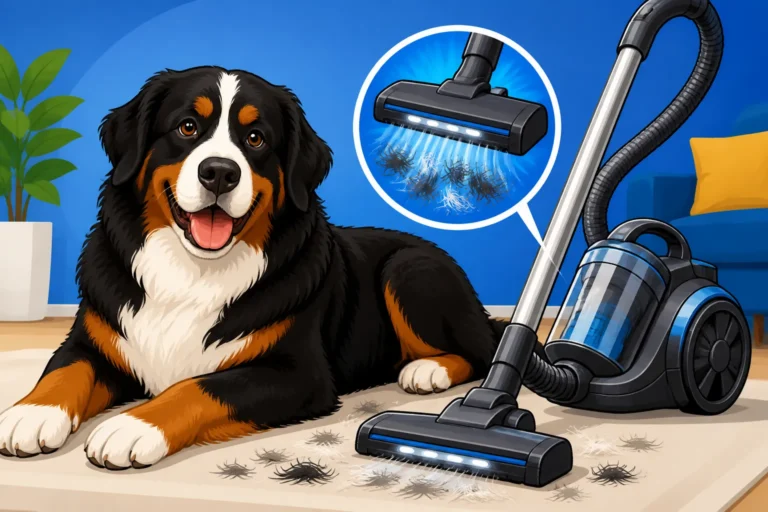
The primary reasons I hear from fellow Berner owners for considering a shave usually boil down to two big frustrations: heat and shedding. Living with a dog that has such a dense, long coat, especially in regions with distinct warm seasons, can make you worry about them overheating. We all want our dogs to be comfortable, and a thick black coat seems counter-intuitive to staying cool. Then there's the shedding. Oh, the shedding! It’s not just a seasonal event; for many Berners, it’s a lifestyle. Every surface, every piece of clothing, seems to gather a new layer of Berner fluff. It’s easy to think that if there’s less hair, there will be less heat retention and less mess. This line of thinking, while well-intentioned, often overlooks the intricate design of the Bernese coat.
Many owners also mistakenly believe that shaving will eliminate mats or make grooming easier. While it might seem to offer a temporary reprieve from brushing out tangles, it often sets the stage for future, more challenging coat problems. The idea of a "fresh start" for a matted coat can be alluring, but it rarely delivers the long-term benefits people hope for.
The Intended Purpose of a Bernese Mountain Dog's Coat
To truly understand why shaving is generally discouraged, we need to appreciate the natural engineering of the Bernese Mountain Dog’s coat. These dogs originated in the cold, mountainous regions of Switzerland. Their beautiful, thick double coat wasn't just for looks; it was a crucial survival tool. It provided insulation against biting winds and freezing temperatures, repelled snow and moisture, and even offered a degree of protection from minor abrasions while working as farm dogs.
Think of it like a highly specialized piece of outdoor gear. Just as you wouldn't shave a sheep in winter or expect a mountaineer's down jacket to be effective if it were ripped open, a Berner's coat is designed for specific environmental challenges. It's a testament to centuries of natural selection and breeding for function in a harsh climate. Removing this natural equipment, therefore, carries consequences that go beyond mere aesthetics.
What Happens When the Coat's Natural Function is Compromised
When you shave a Bernese Mountain Dog, you're stripping away the very system designed to protect them. You aren't just removing hair; you're dismantling a complex thermoregulatory and protective barrier. In winter, this would clearly lead to them being miserably cold. But in summer, it's a common misconception that less hair equals more coolness. In reality, the double coat creates an insulating layer that helps trap cool air close to the dog's skin, much like the walls of a well-insulated house. It also prevents the sun's harsh UV rays from directly hitting their sensitive skin.
Without this coat, your Berner becomes more susceptible to heat stroke because their skin is directly exposed to the sun's heat. They can also get sunburn, leading to painful skin damage and an increased risk of skin cancers. Furthermore, the exposed skin is more prone to insect bites, scrapes, and other irritations. The natural oils and protective qualities of the coat are lost, leaving them vulnerable. This is why you'll often hear experienced owners advocating strongly against the practice, emphasizing the long-term health and comfort of the dog over a temporary, and often misguided, attempt at relief. For a deeper dive into temperature concerns, check out The Temperature a Bernese Mountain Dog Stops Coping.
Understanding the Bernese Mountain Dog's Double Coat System
To truly grasp why shaving a Bernese Mountain Dog often leads to irreversible coat damage, we need to get a little scientific about their glorious fur. Their coat is a marvel of natural engineering, meticulously designed to perform multiple functions in various environmental conditions. It's not just "hair"; it's a dynamic, two-layered system.
The Protective Outer Guard Hairs
The outer layer of a Bernese Mountain Dog's coat consists of what we call "guard hairs." These are the longer, coarser, and generally straighter hairs that give the Berner their characteristic soft-to-wavy appearance. These guard hairs are not just for show; they form a protective shield. They are designed to repel water, much like the shingles on a roof, preventing moisture from soaking down to the skin. They also act as a physical barrier against dirt, burrs, and minor scrapes, keeping the underlying skin clean and healthy.
Crucially, these guard hairs also provide significant protection against harmful ultraviolet (UV) radiation from the sun. Think of them as built-in sunscreen. The natural pigment in the black areas of their coat, combined with the density and length of these hairs, helps to deflect and absorb sunlight, preventing sunburn on their delicate skin. When these guard hairs are clipped, this vital protection is instantly removed, leaving the skin exposed and vulnerable. This can lead to issues far more severe than just a funny-looking regrowth.
The Insulating Undercoat
Beneath the outer guard hairs lies the true workhorse of the Bernese Mountain Dog's coat: the dense, woolly undercoat. This layer is much softer and shorter than the guard hairs, and its primary function is insulation. In cold weather, it traps warm air close to the body, keeping the dog toasty. In warmer weather, it works in reverse – it helps to prevent external heat from reaching the skin, while also allowing air to circulate and keep the dog cooler. It’s like a natural air conditioning system.
The undercoat is also responsible for the vast majority of the famous Berner shed. As the seasons change, the undercoat sheds out in large quantities, making way for a thinner layer in summer and a thicker one in winter. This natural process allows the coat to adapt to changing temperatures. When you effectively shave off or severely trim this undercoat, you disrupt its ability to regulate temperature, often making the dog hotter in the long run, not cooler, because the insulating barrier and air circulation are compromised. For more on managing this, see Brushing Out a Bernese Mountain Dog's Undercoat.
The Natural Shedding Cycle and Its Importance
The Bernese Mountain Dog's shedding cycle is a marvel of biological design. They typically have two major "blows" of their coat each year, usually in spring and fall, but they also shed year-round to a lesser degree. During these periods, the undercoat detaches in large clumps, making way for new growth better suited to the upcoming season. This process is essential for maintaining a healthy, functional coat. It removes dead hair, skin, and debris, allowing the skin to breathe and preventing mats.
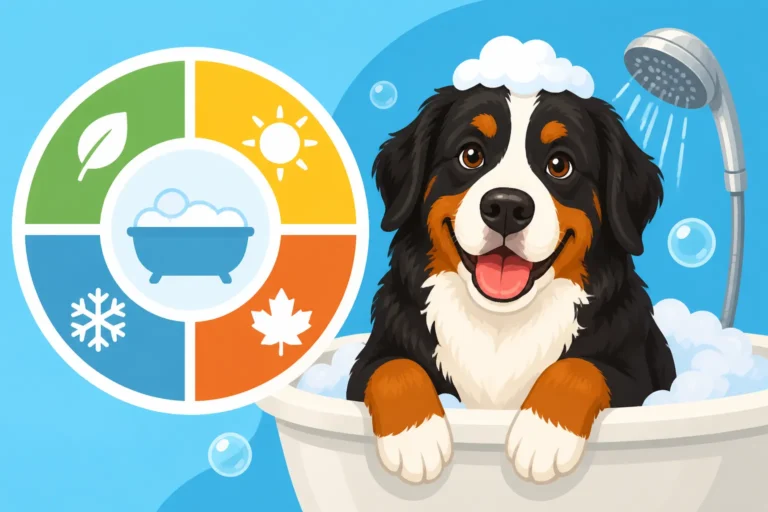
This is why regular grooming and de-shedding are so vital. When you consistently brush out the loose undercoat, you're helping your Berner manage their natural cycle efficiently. You’re removing the dead, insulating hair that would otherwise trap heat and create mats, without disturbing the protective guard hairs. Many owners find that a good professional de-shedding treatment can reduce shedding significantly and make their dog much more comfortable than any shave ever could. If you're struggling with the sheer volume of hair, you're not alone; read The Bernese Mountain Dog Shed and What It Fills for more insights.
The Realities of Shaving a Bernese Mountain Dog's Coat
So, you've gone ahead and shaved your Bernese Mountain Dog, perhaps out of desperation for relief from the heat or endless shedding. What happens next isn't always what you might expect or hope for. The consequences of shaving a double-coated breed often extend far beyond a temporary aesthetic change, impacting the coat's long-term health and appearance.
The Risk of "Clipper Alopecia" and Irregular Regrowth
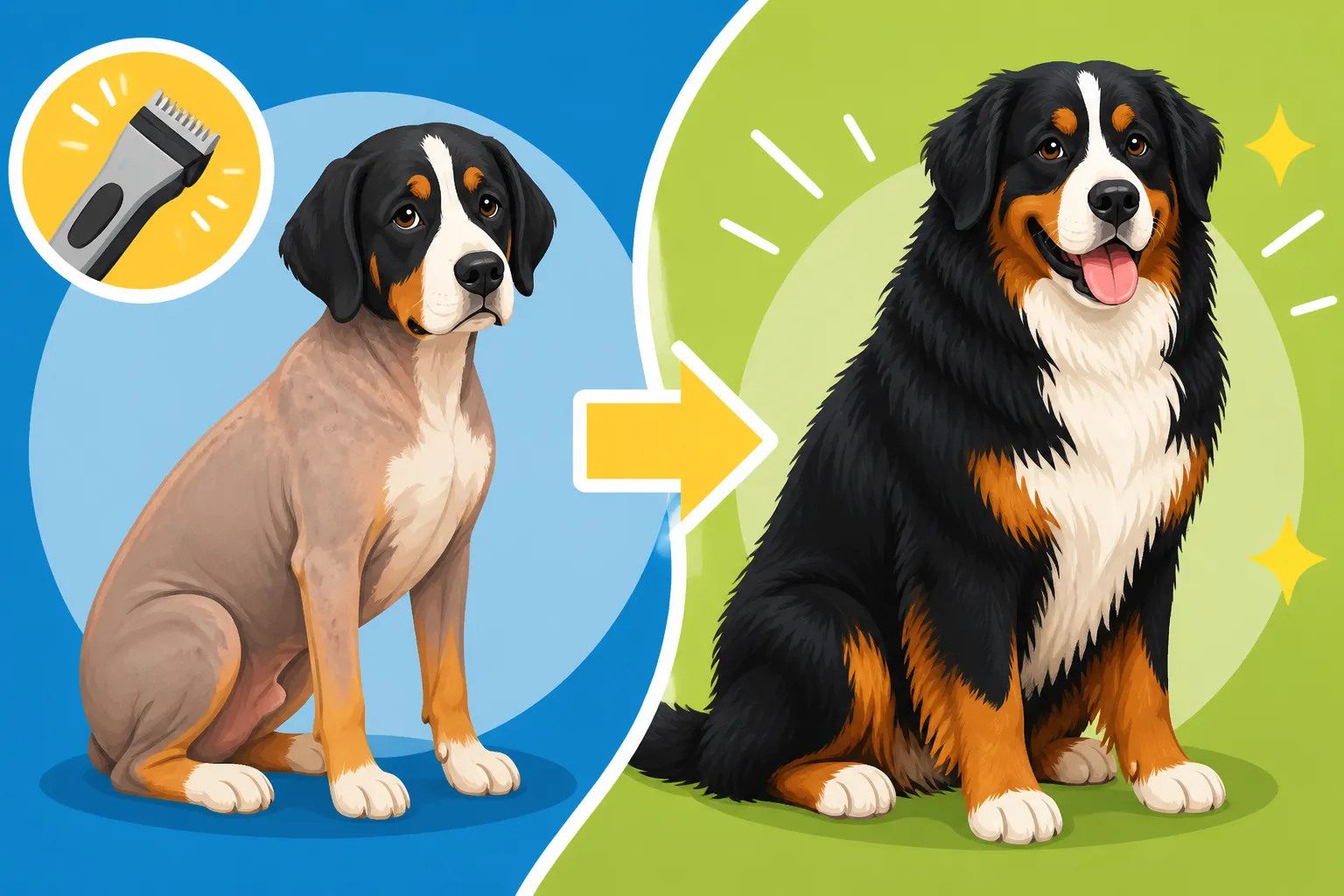
One of the most disheartening outcomes of shaving a Bernese Mountain Dog is the phenomenon known as "clipper alopecia" or "post-clipping alopecia." This isn't a guaranteed outcome for every shaved Berner, but it's a significant risk that every owner should be aware of. What happens is that the coat, especially the delicate undercoat and guard hairs, can fail to grow back properly, or sometimes not at all in certain areas. You might see patchy growth, areas where the hair is much thinner, or spots where the beautiful tricolor markings become faded or uneven.
The precise reasons for clipper alopecia aren't fully understood, but it's believed that the trauma of shaving can disrupt the hair follicles' natural growth cycle, particularly in breeds with dense double coats. The guard hairs, which have a longer growth cycle, can be permanently stunted or replaced by softer, cottony undercoat that lacks the protective qualities of the original. This uneven, damaged regrowth can take months, or even years, to partially recover, and in some unfortunate cases, the coat may never return to its original texture, density, or color. It's a gamble, and for a breed known for its magnificent coat, it's a risk most experts advise against taking.
Increased Risk of Skin Issues and Sunburn
Beyond the aesthetic concerns, shaving a Bernese Mountain Dog removes their natural armor, leaving their skin incredibly vulnerable. Without the protective layer of guard hairs and the insulating undercoat, their skin is directly exposed to the elements. This immediately raises the risk of sunburn, particularly on the sensitive pink areas that were once shielded. Just like us, dogs can get painful sunburns, which can lead to blistering, peeling, and a significantly increased risk of skin cancer over time.
Furthermore, the exposed skin is more susceptible to insect bites, allergic reactions, and environmental irritants. Mosquitoes, flies, and other biting insects can easily reach the skin, leading to itchy welts and potential infections. The coat also offers a physical barrier against scrapes and minor injuries from branches or rough play. Without it, your Berner could experience more frequent skin irritations and infections, adding discomfort and vet bills to your plate. Many people mistakenly think shaving will cool their dog, but as discussed in What Shaving Does to a Bernese Mountain Dog's Insulation, it often has the opposite effect.
Potential for Altered Texture and Further Grooming Challenges
Even if your Bernese Mountain Dog's coat does grow back fully, it might not be the same coat you remember. A common outcome after shaving a double-coated breed is that the softer undercoat grows back faster and often thicker than the coarser guard hairs. This can result in a coat that is duller, feels more like cotton, and is prone to matting even more easily than before. The natural texture that once shed dirt and water might be replaced with a coat that grabs onto everything and becomes a magnet for debris.
This altered texture can then lead to a vicious cycle of more difficult grooming. The soft, dense new growth is incredibly prone to tangling and felting, meaning you might find yourself needing to brush your Berner even more frequently just to keep up. This can be deeply frustrating for owners who shaved their dog to reduce grooming effort. It's a long road to try and re-establish the correct coat texture, requiring diligent brushing, professional guidance, and a lot of patience. Sometimes, the damage is so extensive that the coat never truly recovers its original protective and aesthetic qualities.
| Aspect of Coat | Before Shaving | After Shaving (Potential) |
|---|---|---|
| Outer Coat | Strong, water-repellent guard hairs | Stunted, sparse, or replaced by soft undercoat |
| Undercoat | Dense, insulating, sheds seasonally | Grows back excessively thick, cottony, irregular |
| Texture | Smooth, soft, sheds dirt | Coarse, dull, prone to matting and felting |
| Insulation | Excellent (cool in summer, warm in winter) | Compromised, can lead to overheating/chilling |
| UV Protection | High | Low, high risk of sunburn |
| Regrowth Time | Natural, cyclical | Slow, patchy, potentially incomplete |
Better Alternatives to Shaving for Your Bernese Mountain Dog
Understanding the risks of shaving your Bernese Mountain Dog can be a bit of a wake-up call, but don't despair! There are many effective and safe ways to keep your majestic companion comfortable, minimize shedding, and maintain their beautiful coat. The key lies in working with their natural coat, not against it.
Regular, Thorough Grooming as Your First Line of Defense
This is, hands down, the most important thing you can do for your Bernese Mountain Dog's coat and comfort. Consistent, thorough grooming helps their natural cooling system function optimally and significantly reduces shedding around your home. You'll want a good pin brush, an undercoat rake, and a de-shedding tool. Brands like Furminator (though use with caution to avoid stripping the coat too much) or simpler undercoat rakes available on Amazon or Chewy are popular choices.
Aim for a good brushing session several times a week, or even daily during heavy shedding periods. Focus on getting deep into the undercoat to remove all the loose, dead hair. Pay special attention to areas prone to matting, such as behind the ears, under the legs, and around the tail. Not only does this remove insulating dead hair that traps heat, but it also stimulates circulation and helps distribute natural oils, keeping the skin and coat healthy. You’ll be amazed at how much hair comes out, and how much cooler and happier your Berner feels afterwards. Remember, How Long Brushing a Bernese Mountain Dog Takes is an investment in their well-being.
Effective Cooling Strategies for Warm Weather
Instead of shaving, focus on proactive cooling strategies when the mercury rises. Your Berner's comfort in summer is about managing their environment and activity, not removing their coat.
- Timing Walks: Avoid walks and strenuous exercise during the hottest parts of the day. Stick to early mornings and late evenings. Exercising a Bernese Mountain Dog in Summer has more tips.
- Hydration: Always ensure fresh, cool water is available. Consider adding ice cubes to their bowl.
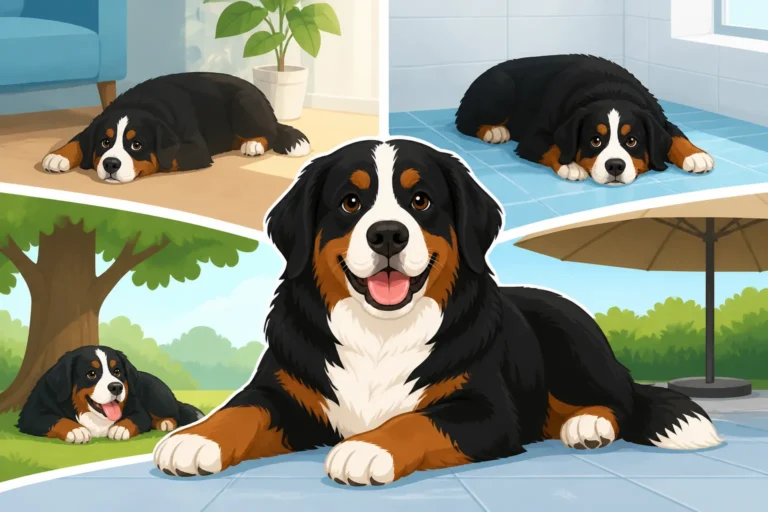
- Cooling Mats and Vests: There are fantastic products available that can help. Cooling mats (many options on Chewy or Amazon) contain gel that activates with pressure, providing a cool spot for your dog to lie on. Cooling vests, which you soak in water before use, can also help dissipate heat from their core. These are much safer and more effective than shaving. Find out more about these in Cooling Mats and Where a Bernese Mountain Dog Lies.
- Indoor Retreats: Ensure your Berner has access to cool, tiled floors or air-conditioned rooms during peak heat.
- Water Play: A shallow kiddie pool can be a lifesaver. Many Berners love to splash and cool their paws and bellies in cool water.
- Car Safety: Never leave your Bernese Mountain Dog in a parked car, even for a few minutes. Temperatures can rise dangerously quickly.
Professional Grooming for Coat Maintenance, Not Removal
A skilled professional groomer, one experienced with double-coated breeds, can be an invaluable ally. They won’t shave your Berner (unless absolutely necessary for medical reasons, and even then, with a clear understanding of the risks). Instead, they'll perform what's called a "de-shedding treatment." This involves specialized tools and techniques to thoroughly remove all the loose undercoat without cutting the guard hairs. This process can be incredibly effective at reducing shedding and improving air circulation through the coat, making your dog much more comfortable.
They might also offer "hygiene clips" around areas like the sanitary region or paws to keep things tidy and prevent matting in those hard-to-reach spots. These are minimal trims that don't compromise the integrity of the overall coat. Always choose a groomer who understands and respects the Bernese Mountain Dog's double coat, rather than one who suggests a full shave as a routine service. Discuss your concerns about heat and shedding, and they can offer tailored solutions that keep your Berner healthy and looking magnificent. For more on overall grooming, see Grooming a Bernese Mountain Dog's Long Tricolor Coat.
This article is for general informational purposes only and does not constitute professional advice. Laws, prices and regulations vary by location and change over time. Consult a qualified professional for guidance on your specific situation.