The Temperature a Bernese Mountain Dog Stops Enjoying Walks
Oh, the sheer joy of watching your Bernese Mountain Dog prance through a field on a crisp autumn day, or gleefully bury their nose in a fresh pile of snow! It's one of the greatest pleasures of Berner ownership. But then, summer rolls around, and suddenly those enthusiastic walks turn into a slow, reluctant drag, or even an outright refusal to budge past the front door. It’s utterly frustrating, isn't it? You want to give your beloved companion the exercise and mental stimulation they need, but their very nature seems to conspire against it when the mercury rises. This guide is here to help you understand precisely when your Bernese Mountain Dog stops enjoying their walks due to temperature, why it happens, and what you can do to keep them safe and happy through the warmer months.
Understanding Your Bernese Mountain Dog's Natural Thermostat
Let's face it, a Bernese Mountain Dog is built for comfort in entirely different conditions than most of us live in during the summer. Their very essence, their heritage, is a testament to cold weather, and that's something we, as their devoted caretakers, really need to grasp.
The Alpine Ancestry and Thick Double Coat
Imagine the Swiss Alps, crisp mountain air, snow-capped peaks, and hardy working dogs pulling carts or herding livestock through the chill. That's the Bernese Mountain Dog's ancestral home. They were bred for cold climates, to thrive in environments where warmth was a precious commodity. Their magnificent, thick double coat, which we all adore for its beauty and luxurious feel, is a testament to this heritage. It’s an incredibly efficient insulator, designed to trap warm air close to their body, protecting them from icy winds and frigid temperatures.
This remarkable coat works wonders in winter, making them practically impervious to the cold. I've seen my own Berner, Winston, happily lounging in a snowdrift while I'm bundled up in three layers! But that same incredible insulation becomes a serious liability when the temperatures creep up. It's like wearing a heavy wool coat in a sauna – completely counterproductive. When your Berner lies down mid-walk, panting heavily, or gives you that look that says, "Are you kidding me right now?" it's not defiance; it's their body screaming that it's struggling to cope. That thick coat simply isn't designed to dissipate heat quickly, and they can overheat astonishingly fast, even on days that feel merely "pleasant" to us. It can be heartbreaking to see your usually vibrant companion wilt so quickly, and it's a stark reminder that their comfort zone is vastly different from ours.
Signs Your Berner is Overheating on a Walk
Sometimes, we humans are so focused on our own comfort or our plans for a walk that we might miss the subtle cues our dogs are giving us. With a Bernese Mountain Dog, recognizing these signs early is absolutely critical. They might try to push through for a bit to please you, but their bodies will soon start to protest.
One of the first things you'll notice is an increase in panting. It goes beyond the normal exertion panting; it becomes more rapid, more intense, and shallower. They might also start to seek out any patch of shade available, even if it's just the shadow of a lamppost, and plop down with a sigh. Excessive drooling, more than their usual happy slobber, is another red flag, as is a darkening of their tongue and gums, indicating a potential lack of oxygenated blood. Their gait might become sluggish, they might start dragging their feet, or simply stop dead in their tracks and refuse to move, planting their hundred pounds firmly on the pavement. You might even see them stumbling or showing signs of confusion. I remember one summer day, pushing Winston just a little too far, and he suddenly veered off the path, trying to stick his whole head into a puddle. It was a clear sign I'd messed up. Don't wait for these drastic measures. If your Berner starts to lag, stops pulling on the leash when they usually do, or seems generally more subdued than usual, it’s time to pay close attention. Remember, they often try to hide discomfort, so these signs are already a clear message that they're not just warm, they're uncomfortably hot and potentially heading towards trouble. It’s vital to know How a Bernese Mountain Dog Behaves Before Heat Stroke so you can intervene.
Identifying the Temperature Tipping Point for Bernese Mountain Dogs
It's not a hard-and-fast rule, because every dog is an individual, and there are other factors at play, but we can certainly establish some general guidelines for when those walks become less enjoyable and more of a risk for our beloved Berners.
General Guidelines for Safe Walking Temperatures
For most Bernese Mountain Dogs, the sweet spot for truly enjoying a walk is generally below 65-70°F (about 18-21°C). Once the air temperature starts to creep above that, especially if there's any humidity or direct sunlight, you'll likely notice a significant decrease in their enthusiasm and comfort. For a short, shaded potty break, 70°F might be manageable, but for a proper walk, it's really pushing it.
Think about it from their perspective: they have that magnificent fur coat, and unlike us, they can't sweat efficiently through their skin. Their primary way to cool down is through panting, which becomes less effective in humid conditions because the evaporating moisture isn't as easily absorbed into the air. So, a dry 70°F day might feel okay, but a humid 70°F day could be far more dangerous. I often tell people, if it feels warm to you in a t-shirt, it’s probably too warm for your Berner. If you’re already sweating, they’re really struggling. The risk of serious health issues like Heat Stroke in a Bernese Mountain Dog escalates quickly above this range. It’s not just about comfort; it's about their safety. A good rule of thumb I use is to consider if I'd want to go for a brisk walk in a winter coat. If the answer is no, then it's probably too hot for my Berner.
Factors That Lower the Safe Temperature Threshold
While 65-70°F is a general guideline, several individual factors can significantly lower your Bernese Mountain Dog's comfortable and safe walking temperature. It's not just the number on the thermometer; it's the whole picture.
First, age plays a huge role. Very young puppies and senior Berners are much more susceptible to heat. Puppies haven't fully developed their thermoregulation, and older dogs might have underlying health conditions that make them less resilient. Just like us, older dogs can slow down significantly, and if your Berner is starting to show signs of The Bernese Mountain Dog Whose Back Legs Give Out, they're expending more energy just to move, making them heat up faster.
Second, health conditions are paramount. Dogs with respiratory issues, like brachycephalic (short-nosed) breeds, are notoriously bad at cooling, but even Berners with undiagnosed heart murmurs or other internal issues can struggle. Overweight Berners also have a harder time regulating their body temperature, as the extra insulation works against them. Whether a Bernese Mountain Dog's Weight Shortens Its Life is a real concern, and it certainly impacts heat tolerance.
Third, acclimation matters. A Berner living in Vermont might tolerate a slightly warmer spring day better than one who has spent their whole life in Southern California and isn't used to much heat at all. However, it's important to understand that no amount of acclimation will make a Bernese Mountain Dog comfortable in truly hot weather; their genetics simply don't allow for it.
Finally, and perhaps most critically, pavement temperature is often overlooked. The air might be 70°F, but asphalt in direct sunlight can easily reach 120-140°F, which is hot enough to burn their paw pads. Imagine walking barefoot on a scorching sidewalk. Always test the pavement with your hand for five seconds before heading out. If it's too hot for you, it's too hot for them. This is a topic I feel strongly about, and you can learn more about it in Pavement Temperature and a Bernese Mountain Dog's Pads.
Here’s a quick guide to temperature considerations:
| Air Temperature Range (approx.) | Humidity Level | Risk Level | Recommendations |
|---|---|---|---|
| Below 50°F (10°C) | Any | Very Low | Ideal for long walks and active play. Enjoy! |
| 50-65°F (10-18°C) | Low | Low | Generally comfortable. Monitor for older/less fit dogs. |
| 50-65°F (10-18°C) | High | Moderate | Increased vigilance needed, especially with exertion. Shorter walks, access to water. |
| 65-70°F (18-21°C) | Low | Moderate | Shorter walks, stick to shade. Active play should be limited. Monitor closely for signs of overheating. |
| 65-70°F (18-21°C) | High | High | Risky for walks. Consider only very short potty breaks in shade. Monitor extremely closely. |
| Above 70°F (21°C) | Any | Very High | Avoid walks completely. Restrict outdoor time to minimal potty breaks. Focus on indoor mental stimulation. This is where The Temperature a Bernese Mountain Dog Stops Coping becomes a real concern. |
Adjusting Your Walk Routine for Warmer Weather
So, if those lovely mid-day strolls are out, what's a devoted Berner owner to do? It's all about adapting. Our dogs rely on us to make smart choices for their well-being, especially when their instincts might tell them to keep going, or they're just too happy to be out with you to protest immediately.
Timing is Everything: Early Mornings and Late Evenings
When summer hits, your definition of "morning walk" and "evening stroll" is going to shift dramatically. Forget that leisurely 9 AM constitutional; you’ll be an early bird, often out the door before the sun has fully declared itself. My alarm clock often goes off at 5:30 AM in the summer, purely to get Winston out for a proper walk while the air is still cool and the pavement hasn't absorbed the day's heat.
Similarly, evening walks might not happen until after sunset, perhaps even closer to 9 PM or later, allowing the ground to cool down. During the peak heat of the day, from late morning to early evening, your Berner should be indoors, ideally in an air-conditioned space or at least a very cool room. Trying to force a walk during these hours is not only uncomfortable for them, but genuinely dangerous. This change in routine can feel restrictive for us, but it’s a non-negotiable for their health. On those days where even the early morning is already stifling, you might have to skip the traditional walk altogether and opt for indoor activities, like puzzle toys, training sessions, or even a game of hide-and-seek. It’s all about mental engagement when the physical exertion is too risky. You need to be mindful of The Hours a Bernese Mountain Dog Should Not Walk.
Shortening Walks and Seeking Shade and Water
Even when you manage to hit those ideal, cooler times of day, you still need to be mindful that your Bernese Mountain Dog isn't built for endurance in warmth. Those long, rambling hikes might need to be put on hold until autumn. Instead, think "short and sweet."
Opt for shorter, more frequent outings if needed, rather than one long one. A 15-20 minute walk in a shaded park during the cool morning hours might be far more beneficial and safer than trying to stretch it to 45 minutes. Always, always, always choose routes with ample shade. Parks with mature trees are your best friend. Avoid open fields or paved areas where there's no respite from the sun. Remember that Heat and the Bernese Mountain Dog's Black Coat means they absorb more solar radiation, making shade even more important.
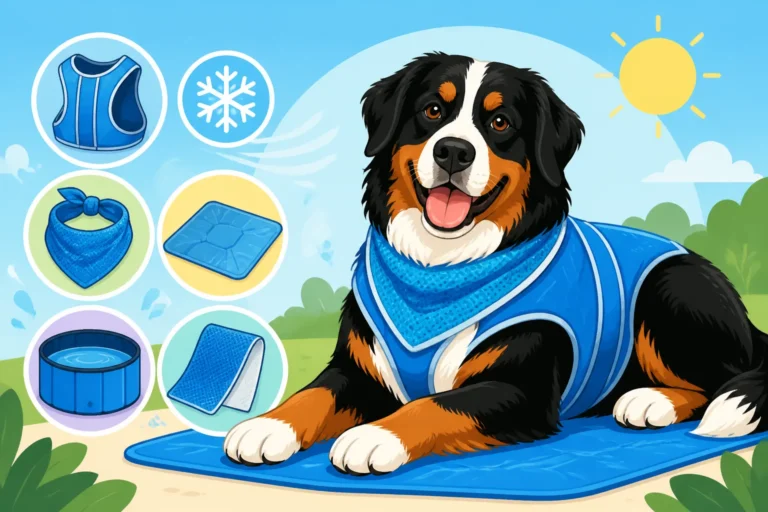
And water? Absolute essential. Carry a portable water bottle and a collapsible bowl (many great options on Amazon or Chewy) and offer water frequently, even if they don't seem thirsty. Better to offer and be refused than to wait until they're dehydrated. I keep a dedicated "Berner water station" in my car, just in case. If you notice them panting more heavily, it's a cue to stop, find some shade, and give them a drink and a few minutes to cool down. Don't be afraid to cut a walk short if your Berner seems uncomfortable. Their health is far more important than hitting a step count. Some owners even invest in cooling vests or bandanas (also available on Amazon) which can provide some relief, though they are not a substitute for avoiding heat entirely.
Recognizing and Preventing Heat-Related Emergencies
This is the serious part. We love our Berners for their sweet, gentle nature, and sometimes they'll try to push past their limits just to be with us. It’s our job to be their advocate and know when enough is truly enough.
When "Enjoying" Turns into "Enduring"
There's a subtle but critical shift that happens when a Bernese Mountain Dog goes from enjoying a walk, even a slightly warm one, to merely enduring it. That happy, wagging tail might droop, the curious sniffing might lessen, and their typical friendly curiosity could be replaced by a single-minded focus on just putting one paw in front of the other. They might start pulling towards every patch of grass or shade, indicating a desperate need for relief. It’s no longer about exploration or exercise; it’s about survival.
Pushing a Berner past this point is extremely dangerous. Their robust appearance can be deceptive; they are incredibly vulnerable to overheating. Unlike humans who can tolerate a wider range of temperatures, a Berner’s core body temperature can rise rapidly, leading to organ damage, neurological issues, and even death. It’s not an exaggeration to say that a few extra minutes in unsuitable conditions could be fatal. We, as their owners, have to be acutely aware of this, especially because they sometimes won't complain vocally until it’s too late. The silence can be the most frightening part. If you’re ever in doubt, err on the side of caution. Turn around, go home, even if it feels like a waste of a walk. A live, slightly disappointed Berner is infinitely better than one in distress. I always tell people that Whether a Bernese Mountain Dog Refuses to Walk in Heat is a good thing – it means they are still capable of self-preservation, but we shouldn't rely on it.
First Aid Steps and Knowing When to Call the Vet
If, despite all your precautions, you find your Bernese Mountain Dog showing signs of serious overheating – struggling to breathe, excessive drooling, wobbly gait, confusion, bright red or dark gums, or even collapsing – you need to act immediately. This isn't a situation to "wait and see"; it's a full-blown emergency.
Your first step is to get them out of the heat and into the coolest possible environment. This means shade, an air-conditioned car, or indoors. Next, start cooling them down. Do NOT use ice-cold water as this can cause their blood vessels to constrict, hindering the cooling process and potentially sending them into shock. Instead, use cool (not cold) water. Wet their entire body, paying special attention to their paws, armpits, and groin area where major blood vessels are close to the surface. You can use towels soaked in cool water and place them on these areas. If you have rubbing alcohol, a small amount on their paw pads can aid evaporation and cooling, but be very sparing. Offer small amounts of cool water to drink, but don’t force it.
While you are doing this, you need to be calling your veterinarian or the nearest emergency vet clinic. Even if your Berner seems to perk up, they still need to be seen by a professional. Internal organ damage can be silent and insidious. The vet can check their temperature, monitor for kidney damage, and provide intravenous fluids to help rehydrate and stabilize them. Time is of the essence in these situations. Knowing how to immediately cool A Collapsed Bernese Mountain Dog in the Field could literally save their life. Always keep your vet's emergency number handy and know the fastest route to their clinic. Prevention is always the best medicine, but being prepared for an emergency is paramount.
Disclaimer
This article is for general informational purposes only and does not constitute professional advice. Laws, prices and regulations vary by location and change over time. Consult a qualified professional for guidance on your specific situation.