Whether the Swiss Breeds Share Bernese Mountain Dog Health Problems
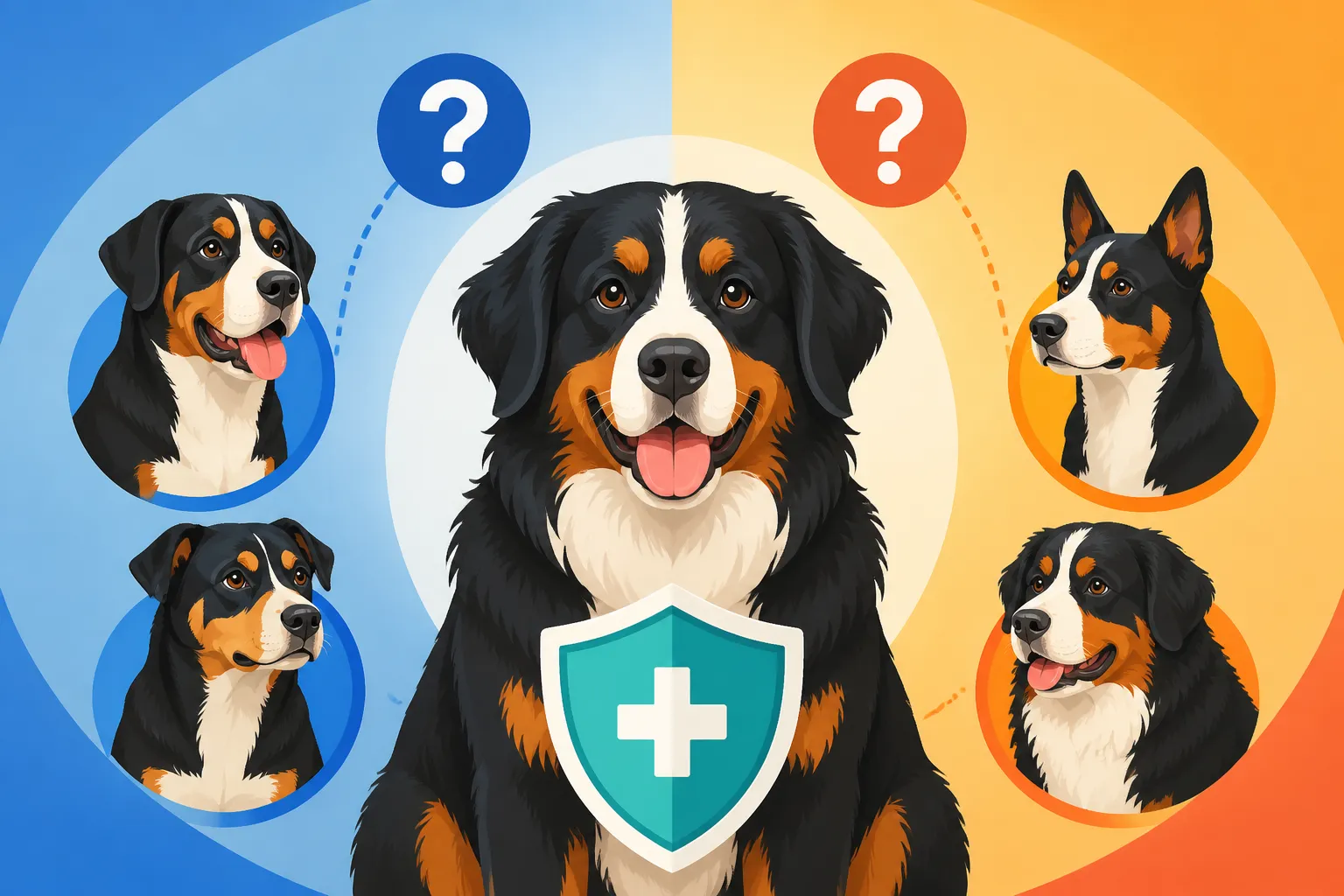
It's completely natural, when you've fallen in love with the majestic Bernese Mountain Dog, to wonder about their cousins from the same beautiful Swiss valleys. You see the strong build, the distinctive tricolor coats (or variations of it), and you start to think, "Do these magnificent dogs all face the same health challenges?" Given the Bernese Mountain Dog's well-documented health issues, especially their unfortunately shorter lifespan, it’s a crucial question for anyone considering one of the other Swiss Sennenhund breeds. This guide will help you understand the shared heritage and divergent health paths of these impressive dogs.
Understanding the Swiss Sennenhund Family
The Bernese Mountain Dog isn't alone in hailing from the Swiss Alps; they are part of a proud quartet of Sennenhund breeds. These "mountain dog" types were historically working dogs, indispensable companions to farmers and herders, performing tasks like herding cattle, guarding farmsteads, and pulling carts laden with milk or cheese to market. Their robust build, loyal temperaments, and distinctive markings are often what draw us to them.
The Shared Heritage and Divergent Paths
The four Swiss Sennenhund breeds are the Bernese Mountain Dog, the Greater Swiss Mountain Dog, the Appenzeller Sennenhund, and the Entlebucher Sennenhund. They all share a common ancestry, believed to be descendants of Roman mastiffs brought to the Alps over two millennia ago. For centuries, these dogs developed in relative isolation in different valleys, adapting to the specific needs and environments of their regions. This geographical separation, combined with selective breeding by local farmers, led to distinct variations in size, coat type, and temperament, ultimately creating the four breeds we know today. While they sprang from similar roots, their paths diverged enough to create unique genetic signatures, which in turn affect their health predispositions. The Swiss Valley the Bernese Mountain Dog Comes From offers more insight into their origins.
Distinctive Traits of Each Swiss Breed
Each of the four Swiss breeds brings its own unique charm and characteristics to the table.
- Bernese Mountain Dog: Our beloved "Berners" are famous for their long, silky tricolor coats and incredibly sweet, affectionate, and docile nature. They are substantial dogs, often weighing between 70 to 115 pounds, and are known for being gentle giants, especially with children. Their calm demeanor and striking appearance have made them incredibly popular worldwide, but this popularity has also, unfortunately, sometimes led to less stringent breeding practices in the past.
- Greater Swiss Mountain Dog: Often considered the largest and oldest of the Sennenhunds, the Greater Swiss Mountain Dog boasts a powerful, muscular build and a short, dense tricolor coat. They are confident, intelligent, and strong-willed, making them excellent working dogs and loyal family guardians. While they share the tricolor pattern, their smooth coat makes them distinct from the Bernese. The Greater Swiss Against the Bernese Mountain Dog delves into more of these differences.
- Appenzeller Sennenhund: This breed is a medium-sized, agile, and very energetic dog with a dense, short tricolor coat. Appenzellers are known for their lively and boisterous personalities, their distinctive "posthorn" tail curl, and their unwavering devotion to their families. They are active and need a job to do, making them less suited for a sedentary lifestyle than their Bernese cousins.
- Entlebucher Sennenhund: The smallest of the four, the Entlebucher is a compact, robust, and equally energetic dog. They also have a short tricolor coat, often with striking tan markings. Entlebuchers are intelligent, devoted, and highly spirited, often described as having a mischievous twinkle in their eye. Like the Appenzeller, they thrive on activity and mental stimulation.
Common Health Concerns in Bernese Mountain Dogs
Before we compare, it’s vital to understand the health landscape of the Bernese Mountain Dog, as their challenges are often the benchmark against which others are measured. Unfortunately, Berners are known for a shorter average lifespan than many other breeds of their size, primarily due to specific health predispositions. Why a Bernese Mountain Dog Lives Only Seven or Eight Years explores this in more detail.
The Shadow of Cancer and Joint Ailments
Cancer is, tragically, the leading cause of death in Bernese Mountain Dogs. They have a particularly high predisposition to certain aggressive forms, most notably:
- Histiocytic Sarcoma: This aggressive cancer can affect various organs and is notoriously difficult to treat. It's a significant concern for Berner owners and a condition often discussed in Berner communities. For more on this, consider reading Histiocytic Sarcoma in a Bernese Mountain Dog.
- Lymphoma and Mast Cell Tumors: While not as prevalent as histiocytic sarcoma, these cancers are also seen with higher frequency in Berners compared to the general canine population.
Beyond cancer, joint diseases are another major battle for these large, heavy dogs:
- Hip and Elbow Dysplasia: These genetic conditions involve malformation of the hip and elbow joints, leading to pain, arthritis, and lameness. Due to their size and rapid growth, Bernese Mountain Dogs are particularly susceptible. Early screening and responsible breeding practices are crucial here. Joint Disease in a Hundred Pound Bernese Mountain Dog provides a thorough examination of these issues.
- Osteochondritis Dissecans (OCD): This condition affects cartilage and bone development, particularly in the shoulders and elbows, causing pain and lameness. It's another growth-related orthopedic issue common in large, fast-growing breeds like the Berner.
Other Noteworthy Berner Health Challenges
While cancer and joint issues often dominate discussions, Bernese Mountain Dogs can also face other serious health problems:
- Bloat (Gastric Dilatation-Volvulus – GDV): This life-threatening condition occurs when the stomach fills with gas and twists, cutting off blood supply. Deep-chested breeds like the Bernese Mountain Dog are at higher risk, and it requires immediate veterinary intervention. Bloat in a Deep-Chested Bernese Mountain Dog covers this emergency extensively.
- Degenerative Myelopathy (DM): A progressive neurological disease affecting the spinal cord, leading to hind leg weakness and eventual paralysis. While a DNA test exists to identify carriers, the disease itself has no cure. The Bernese Mountain Dog Whose Back Legs Give Out offers further insights.
- Von Willebrand Disease (vWD): This is a genetic bleeding disorder that impairs the blood's ability to clot. It's important for breeders to screen for this, especially before any surgical procedures. Bleeding Disorders in a Bernese Mountain Dog provides more information on this condition.
Responsible breeders often screen for many of these conditions. Looking up a Bernese Mountain Dog's health records through databases like Berner-Garde and the OFA website is a critical step for prospective owners.
Health Landscapes of the Other Swiss Breeds
Now, let's turn our attention to the other Swiss Sennenhunds and see how their health profiles compare. While they share some broad vulnerabilities due to their large size and shared ancestry, there are notable differences.
Greater Swiss Mountain Dog Health Profile
The Greater Swiss Mountain Dog, while robust, does share some common large-breed orthopedic concerns with the Berner, but generally, they are considered to have a slightly longer lifespan.
- Hip and Elbow Dysplasia: Like Berners, Swissies are prone to these joint issues. Responsible breeders rigorously screen their stock to minimize the incidence of these conditions. Proper nutrition, especially during growth, can also play a role in managing risk.
- Osteochondritis Dissecans (OCD): This joint condition, particularly affecting shoulders, is also a concern for Swissies, much like their Bernese cousins.
- Bloat: As another deep-chested giant, the Greater Swiss Mountain Dog is also at risk for bloat. Owners need to be aware of the symptoms and preventative measures.
- Epilepsy: While less talked about than cancer in Berners, epilepsy can be a concern in Greater Swiss Mountain Dogs. It's a neurological disorder causing seizures, and while manageable with medication, it requires dedicated care.
- Eye Conditions: Conditions such as entropion (inward-rolling eyelids) can occur.
Interestingly, the prevalence of aggressive cancers like histiocytic sarcoma is significantly lower in Greater Swiss Mountain Dogs compared to Bernese Mountain Dogs. This is a key difference that contributes to their generally longer average lifespan.
Appenzeller and Entlebucher Sennenhund Health Considerations
As we move to the smaller, more agile Appenzeller and Entlebucher, we see a shift in some health concerns, though orthopedic issues remain a thread connecting all large and medium breeds.
-
Appenzeller Sennenhund Health:
- Hip and Elbow Dysplasia: Appenzellers can also be affected by hip and elbow dysplasia, though perhaps with slightly lower prevalence or severity than the larger Berners and Swissies, given their lighter frame. Careful screening by breeders is still paramount.
- Eye Conditions: Certain eye conditions have been noted in the breed.
- Epilepsy: Like the Greater Swiss, epilepsy is a concern within the Appenzeller population, and breeders are working to reduce its incidence through careful selection.
- Longevity: Appenzellers generally enjoy a longer lifespan than Bernese Mountain Dogs, often living into their early teens, making them quite robust.
-
Entlebucher Sennenhund Health:
- Hip and Elbow Dysplasia: Though the smallest, Entlebuchers are not immune to hip and elbow dysplasia. Again, responsible breeding and appropriate puppy care are essential.
- Progressive Retinal Atrophy (PRA): This is a genetic eye disease that causes progressive degeneration of the retina, eventually leading to blindness. There is a DNA test available, which good breeders use to ensure they don't produce affected puppies.
- Urinary Stones: Some lines have shown a predisposition to developing urinary stones.
- Longevity: Entlebuchers are known for being quite hardy and typically have a good lifespan, often living 11-13 years or even longer, outliving their Bernese cousins by a considerable margin.
Do They Share the Same Crosses to Bear?
So, do all the Swiss breeds share the same health problems as the Bernese Mountain Dog? The answer is a nuanced "yes and no." They share some, but certainly not all, and often not with the same frequency or severity.
Overlapping Large Breed Issues
The most significant overlap comes from issues common to most large, fast-growing dog breeds:
- Orthopedic Concerns: All four Sennenhund breeds are susceptible to hip and elbow dysplasia, and to a lesser extent, OCD. This is a common challenge for any breed that grows quickly and carries substantial weight. The sheer physics of supporting a heavy frame puts stress on developing joints. This is where good nutrition, like carefully formulated large-breed puppy food from reputable brands like Chewy, can make a difference in supporting healthy growth. Every Pound a Bernese Mountain Dog's Hips Carry gives perspective on this.
- Bloat Risk: The deep-chested conformation, a trait shared by the Bernese and Greater Swiss Mountain Dogs, puts them at a higher risk for bloat. While less common in the smaller Appenzeller and Entlebucher, all dog owners should be aware of this potential emergency.
- Genetic Bottlenecks: While specific to each breed, any breed that has gone through periods of low population numbers (which all Swiss breeds have, historically) can experience a "bottleneck" effect, concentrating certain genetic predispositions within the gene pool. This means that even if a disease isn't shared across all four, similar mechanisms for genetic disease transmission can exist.
Unique Genetic Predispositions and Their Impact
Where the health profiles truly diverge is in specific genetic predispositions:
- Cancer Prevalence: This is the most striking difference. The devastatingly high incidence of certain cancers, particularly Histiocytic Sarcoma, in Bernese Mountain Dogs is not mirrored in the other three Swiss breeds to the same extent. While any dog can get cancer, the Bernese's specific susceptibility is a breed-specific challenge. The Cancer That Kills Half of All Bernese Mountain Dogs provides more context.
- Specific Eye Diseases: While general eye issues can affect any breed, conditions like Progressive Retinal Atrophy (PRA) are more specifically associated with the Entlebucher Sennenhund, highlighting a unique genetic vulnerability in that breed.
- Neurological Conditions: Epilepsy appears to be a more significant concern in the Greater Swiss and Appenzeller breeds than in the Bernese, suggesting different genetic pathways for neurological disorders within the family.
- Bleeding Disorders: Von Willebrand Disease is a specific concern for the Bernese Mountain Dog, while it's less frequently discussed as a primary health issue for the other Sennenhunds.
Why Differences Persist
The continued differences in health profiles, despite shared ancestry, can be attributed to several factors:
- Breeding Population Size and Selection: The Bernese Mountain Dog experienced a surge in popularity, which, while good for the breed's survival, sometimes led to breeding without sufficient health testing, potentially exacerbating genetic issues like cancer. The other breeds, especially the Appenzeller and Entlebucher, have generally maintained smaller, more carefully managed breeding populations, often with a stronger emphasis on working ability and genetic diversity preservation.
- Genetic Drift and Founder Effects: Over centuries, as these groups of dogs were isolated, different random genetic mutations became fixed in their respective populations. If a certain health-related gene happened to be present in a small founding group of one breed but not another, it could become prevalent in one while being absent in a closely related one.
- Specific Breeding Goals: While all were working dogs, the exact tasks they performed and the traits breeders selected for might have subtly influenced their health over generations. For example, selecting for extreme size or coat characteristics could, inadvertently, have had downstream health consequences.
So, while you might find a common thread of hip dysplasia or bloat risk across the larger Sennenhunds, the specific "big ticket" health concerns, particularly the high cancer rate in Berners, are not universally shared among their Swiss cousins. This makes researching each specific breed's health a critical step for any prospective owner.
| Health Condition | Bernese Mountain Dog | Greater Swiss Mountain Dog | Appenzeller Sennenhund | Entlebucher Sennenhund |
|---|---|---|---|---|
| Hip Dysplasia | Common, high incidence | Common | Moderate | Moderate |
| Elbow Dysplasia | Common, high incidence | Common | Moderate | Moderate |
| Cancer (e.g., Histiocytic Sarcoma) | Very High (leading cause of death) | Low to Moderate | Low to Moderate | Low to Moderate |
| Bloat (GDV) | Moderate risk | Moderate risk | Lower risk | Lower risk |
| Degenerative Myelopathy | Known risk (specific gene) | Low | Low | Low |
| Eye Conditions | Some (e.g., entropion) | Some (e.g., entropion) | Some | PRA (specific, testable) |
| Epilepsy | Lower prevalence | Moderate | Moderate | Lower prevalence |
| Von Willebrand Disease | Known risk (testable) | Low | Low | Low |
| Average Lifespan | 6-8 years | 8-11 years | 10-13 years | 11-13+ years |
It's clear that while the breeds share a familial resemblance and some general large-dog vulnerabilities, the Bernese Mountain Dog carries a heavier burden of specific, aggressive health issues, particularly cancers, that are less prevalent in its Swiss brethren. This information is vital for anyone considering one of these incredible breeds, ensuring they are prepared for the specific care and potential challenges that each noble Sennenhund may bring into their lives. For joint health and overall wellness, always ensure you're providing high-quality nutrition and supplements, easily found on platforms like Chewy, tailored to your specific breed's needs.
Disclaimer
This article is for general informational purposes only and does not constitute professional advice. Laws, prices and regulations vary by location and change over time. Consult a qualified professional for guidance on your specific situation.