Every Pound a Bernese Mountain Dog’s Hips Carry
If you're a Bernese Mountain Dog owner, or dreaming of becoming one, the sheer size and majesty of these gentle giants are probably what drew you in. But let's be honest, that impressive weight comes with a real worry: their hips. It's a truth almost every Berner parent faces, and the thought of every pound potentially straining those vital joints can be incredibly stressful. This comprehensive guide will delve deep into the anatomy, challenges, and proactive steps you can take to understand and support your Bernese Mountain Dog's hip health throughout their precious life.
Understanding the Bernese Mountain Dog's Unique Structure and Weight
Our Berners are magnificent creatures, built for work in the Swiss Alps, which means they possess a sturdy bone structure and impressive muscle mass. However, this very build, coupled with their rapid growth, makes them particularly susceptible to joint issues. It's a genetic lottery mixed with environmental factors, and understanding their unique physiology is the first step in being a proactive advocate for their health.
The Anatomy of a Berner's Hips and Joints
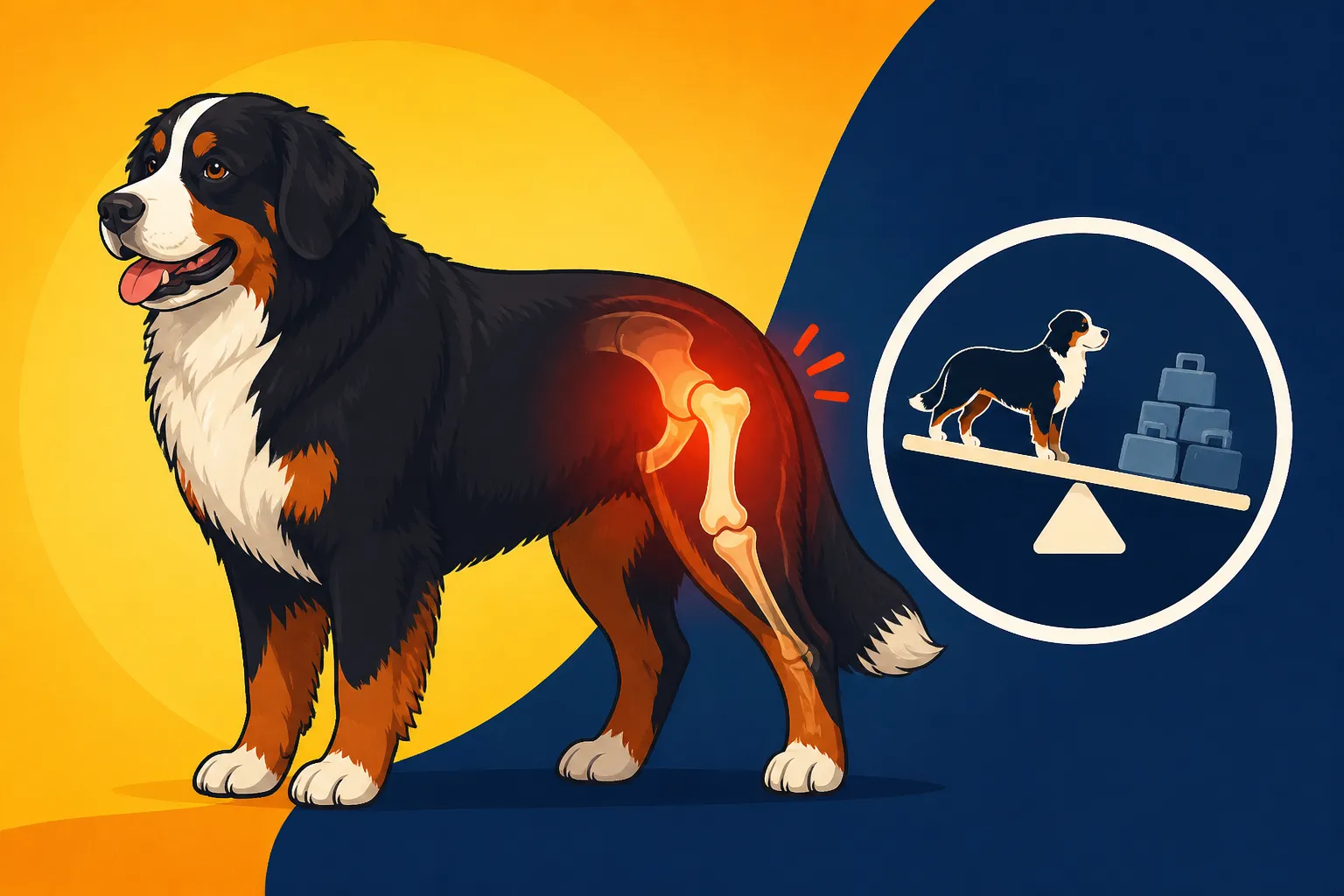
A Bernese Mountain Dog's hip joint is a ball-and-socket mechanism, where the head of the femur (thigh bone) fits snugly into the acetabulum (hip socket) of the pelvis. In a healthy dog, this fit is smooth and secure, allowing for fluid movement. Their joints are also cushioned by cartilage, and lubricated by synovial fluid, which helps everything glide effortlessly. Given their size, every component of this system is under immense pressure, far more than in a smaller breed. Imagine the forces at play when a 100-pound dog jumps, runs, or even just stands up. Any slight imperfection in this intricate design can lead to friction, wear, and eventually, pain. It's a delicate balance that needs careful consideration from puppyhood right through to their golden years.
Their stifle (knee) and elbow joints are also critical weight-bearing structures, and often, issues in one joint can compensate, or even exacerbate, problems in another. This interconnectedness means a holistic view of their musculoskeletal system is essential. When we talk about Joint Disease in a Hundred Pound Bernese Mountain Dog, we're not just focusing on hips in isolation; it's about the entire framework supporting that magnificent weight. The strength and integrity of their ligaments, tendons, and surrounding musculature play an equally vital role in supporting the joint capsules and absorbing impact. Without proper support from these soft tissues, even perfectly formed bones can be put at risk under heavy loads.
How Their Rapid Growth Impacts Joint Development
Bernese Mountain Dog puppies grow at an astonishing rate. They can go from a tiny fluffball to a substantial adolescent in a matter of months, often reaching close to their adult height and much of their weight by their first birthday. This rapid growth spurt is breathtaking to witness, but it also presents a significant challenge for their developing skeletal system. Their bones are not just getting longer; they're also undergoing complex remodeling and strengthening. If growth occurs too quickly, or if the puppy experiences excessive stress on their immature joints, the cartilage and bone can develop abnormally. This is particularly true for conditions like hip and elbow dysplasia, where the joints don't form correctly.
During these critical developmental phases, the soft growth plates at the ends of their long bones are still open and vulnerable. High-impact activities, excessive stair climbing, or even rough play on slippery surfaces can cause micro-traumas to these growth plates, potentially leading to long-term orthopedic problems. Owners often feel a strong desire to exercise their energetic puppies, but understanding What Fast Growth Costs a Bernese Mountain Dog's Joints is crucial. It’s a period where patience and controlled activity are far more beneficial than intense physical exertion. Think low-impact, short bursts of play, and plenty of rest. Ensuring a steady, controlled growth rate through appropriate nutrition and limited strenuous activity is one of the most impactful things a Berner owner can do to safeguard their dog's future joint health.
Why Every Pound Matters More for a Large Breed
For a Bernese Mountain Dog, every single extra pound they carry places exponential stress on their joints, especially their hips, elbows, and stifles. It's not a linear relationship; an additional five pounds on a small terrier is negligible, but on a large breed like a Berner, it can significantly increase the wear and tear on already vulnerable cartilage. Imagine carrying a backpack filled with bricks all day, every day – that's what even a slightly overweight Berner experiences. This constant, added pressure accelerates the degeneration of joint cartilage, leading to inflammation, pain, and the progression of conditions like arthritis.
Obesity is a major contributing factor to the severity and earlier onset of joint diseases. It makes it harder for dogs to move, reduces their desire to exercise, and creates a vicious cycle where decreased activity leads to further weight gain. Furthermore, adipose tissue (fat) is not just inert storage; it's metabolically active and produces inflammatory mediators that can worsen joint pain and damage. Keeping your Bernese Mountain Dog at a lean, healthy weight isn't just about aesthetics; it's a fundamental aspect of preventive care that can literally add comfortable, active years to their life. Regularly checking Finding a Bernese Mountain Dog's Ribs Under the Coat is a quick, practical way to monitor their body condition between vet visits. It’s a small effort with huge payoffs for their mobility and overall quality of life.
The Silent Threat: Hip Dysplasia in Bernese Mountain Dogs
Hip dysplasia is perhaps the most widely recognized and feared orthopedic condition in Bernese Mountain Dogs. It's a complex, multi-factorial disease, but its impact on a large, heavy dog like a Berner can be devastating. Owners often don't see the full extent of the problem until it's quite advanced, making early detection and proactive management all the more critical.
Recognizing the Early, Subtle Signs
The challenging thing about hip dysplasia in a stoic breed like the Bernese Mountain Dog is that they are masters at hiding discomfort. They often continue to play and interact, even when they're in pain. This means owners need to be extra vigilant and look for subtle changes, especially as puppies and young adults. Early signs might include a reluctance to jump, hesitation before going up or down stairs, or a slight lameness that comes and goes, often worse after rest or heavy exercise. You might notice a "bunny hop" gait when they run, where both hind legs move together. They might also shift their weight forward to alleviate pressure on their hips, leading to increased muscle development in their shoulders and chest, and atrophy (wasting) in their hindquarters.
Sometimes, the first sign isn't even physical. It could be a change in behavior – perhaps they're less enthusiastic about walks, or they're more irritable when touched around their hind end. These subtle cues are easily dismissed as "just growing pains" or "being lazy," but for a Berner, they could be red flags for developing joint issues. Keeping a detailed log of any limping, stiffness, or changes in gait can be immensely helpful when discussing concerns with your veterinarian. This proactive observation can make a world of difference in catching Hips That Fail Under a Bernese Mountain Dog's Weight before they become severely debilitating. Always trust your gut if something feels "off" with your dog's movement or demeanor.
The Genetic Component and What Breeders Do
Hip dysplasia has a significant genetic component, meaning it can be passed down from parents to offspring. This is why responsible Bernese Mountain Dog breeders are so meticulous about health testing their breeding stock. They typically screen for hip and elbow dysplasia through organizations like the Orthopedic Foundation for Animals (OFA) or PennHIP. OFA evaluates X-rays of the hips and assigns a grade (Excellent, Good, Fair, Borderline, Mild, Moderate, Severe), and conscientious breeders will only breed dogs with "Fair" or better hip ratings, and ideally, "Normal" elbow ratings. PennHIP provides a quantitative measurement of hip laxity, offering another valuable tool.
A reputable breeder will be transparent about their dogs' health clearances, providing registration numbers that allow you to look up the results on the OFA website or Berner-Garde database. They understand that breeding dogs without proper clearances is a gamble, increasing the likelihood that puppies will inherit predispositions to these painful conditions. When considering a puppy, always ask to see the OFA Clearances a Bernese Mountain Dog Should Have for both parents, and be wary of any breeder who makes excuses or claims testing isn't necessary. While genetics aren't the only factor, choosing a puppy from health-tested parents significantly reduces the risk of inherited joint problems.
Diagnosing Hip Dysplasia: Beyond the X-Ray
While X-rays are the gold standard for diagnosing hip dysplasia, the diagnostic process often involves more than just a single image. Your veterinarian will typically start with a thorough physical examination, observing your dog's gait, palpating their joints, and assessing their range of motion and pain response. They might perform specific maneuvers, like the Ortolani sign, which can indicate hip laxity. However, because a dog's muscles can tighten and mask laxity, these physical exams aren't always definitive, especially in larger breeds.
Sedated X-rays are usually required to get a clear, diagnostic view of the hip joints. This allows for optimal positioning and relaxation of the muscles, revealing the true condition of the bones and joint spacing. In some cases, a veterinarian might recommend additional imaging, such as a CT scan or MRI, especially if surgical intervention is being considered or if other joint issues are suspected. Blood tests might also be part of the work-up to rule out other causes of lameness or to assess overall health before anesthesia. The diagnosis isn't just about identifying the condition but also assessing its severity and determining the best course of action for your unique Bernese Mountain Dog.
Managing Weight for Optimal Hip Health
Weight management is perhaps the single most impactful thing you can control as a Bernese Mountain Dog owner to support their hip health. It starts from puppyhood and continues throughout their entire life, requiring a consistent, mindful approach to nutrition and exercise.
The Critical Role of Proper Nutrition from Puppyhood
Feeding a Bernese Mountain Dog puppy correctly is paramount for healthy joint development. The goal isn't to make them grow as fast or as big as possible, but rather to ensure a steady, controlled growth rate. Large breed puppy foods are specifically formulated with careful calcium-to-phosphorus ratios and moderate energy levels to prevent excessive rapid growth. Too much calcium, for instance, can interfere with proper bone mineralization and lead to developmental orthopedic diseases. Overfeeding, even with a "proper" large breed food, can also be detrimental by causing puppies to gain weight too quickly, putting undue stress on their immature joints.
It’s tempting to indulge a hungry puppy, but adhering strictly to feeding guidelines and monitoring their body condition is critical. Remember, these guidelines are just that – guides. Your individual puppy's metabolism and activity level will dictate their exact caloric needs. If your puppy seems chunky, it's time to adjust their food intake. Consult your vet or a veterinary nutritionist to ensure you're providing the best possible start. This careful approach to Feeding a Bernese Mountain Dog Puppy to a Hundred Pounds lays the foundation for a lifetime of better mobility. Brands like Chewy and Ollie often offer large-breed specific formulas that cater to these unique nutritional requirements, making it easier for owners to find suitable options.
Exercise: Finding the Right Balance for a Growing Giant
Just like nutrition, exercise for a Bernese Mountain Dog, particularly a puppy, needs to be carefully managed. While exercise is crucial for developing strong muscles that support the joints, too much or the wrong kind of exercise can be highly damaging to their still-developing bones and cartilage. Forced exercise, such as long runs, intense ball-chasing, or repetitive jumping, should be avoided, especially in their first 12-18 months. Think about The Five Minute Rule and a Bernese Mountain Dog Puppy – generally, five minutes of structured exercise per month of age, twice a day, is a good starting point. So, a four-month-old puppy would get 20 minutes, twice a day.
Instead, focus on short, controlled leash walks, gentle play on soft surfaces, and supervised exploration. Swimming can be an excellent low-impact exercise option as it builds muscle without stressing joints. As they mature, you can gradually increase the duration and intensity of exercise, always watching for signs of fatigue or lameness. The goal is to build muscle tone and maintain a healthy weight without overtaxing their sensitive joints. A mature Berner enjoys hiking and long walks, but even then, monitor them for signs of discomfort. It's a fine line between keeping them fit and pushing them too hard, and constant vigilance is key.
Monitoring Body Condition and Avoiding Obesity
Maintaining a lean body condition is probably the most powerful tool you have against the progression of joint disease. It's easy for a Berner to gain weight, especially as they get older and their metabolism slows, or if they're experiencing joint pain that reduces their activity level. You should be able to easily feel your Bernese Mountain Dog's ribs without seeing them, and they should have a discernible waist when viewed from above. Their tummy should also tuck up slightly when viewed from the side.
Regularly assess their body condition score (BCS) – you can find charts online or ask your vet to demonstrate. This isn't about vanity; it's about health. Even a few extra pounds can make a significant difference in comfort and mobility for a large dog. Adjust their food intake as needed, and remember that treats count! Consider healthy, low-calorie options or simply reduce their meal portion when giving treats. It’s an ongoing effort, but one that directly impacts their quality of life. Consistent monitoring and proactive adjustments are key to preventing Whether a Bernese Mountain Dog's Weight Shortens Its Life.
Here's a quick guide to managing weight and supporting joint health:
| Aspect | Puppyhood (0-18 months) | Adulthood (18 months – 6 years) | Senior (6+ years) |
|---|---|---|---|
| Nutrition Focus | Large breed puppy formula, controlled growth | High-quality adult formula, lean body condition | Senior/low-calorie formula, joint support |
| Exercise Type | Short, gentle walks; controlled play; swimming | Moderate walks, hiking, carting (if conditioned), swimming | Gentle walks, hydrotherapy, mental stimulation |
| Weight Goal | Lean, feel ribs easily, discernible waist | Lean, feel ribs, definite waist | Lean, preventing muscle loss, joint comfort |
| Joint Supplements | Discuss with vet; early intervention if advised | Consider proactively, especially if active | Essential, often higher doses, pain relief combined |
| Home Environment | Non-slip surfaces, minimize stairs | Non-slip surfaces, comfortable resting spots | Ramps, orthopedic beds, easy access to water |
| Vet Check-ups | Regular growth checks, early screening discussions | Annual wellness exams, discuss any gait changes | Bi-annual exams, pain assessment, mobility evaluation |
Supportive Care and Lifestyle Adjustments
Even with the best breeding and early care, some Bernese Mountain Dogs will develop joint issues. The good news is that there are many ways to support their comfort and mobility through supportive care and thoughtful lifestyle adjustments, making their lives as comfortable and happy as possible.
Creating a Joint-Friendly Home Environment
Your home environment plays a massive role in your Bernese Mountain Dog's joint health, especially if they're already showing signs of discomfort or are simply getting older. Slippery floors – hardwood, tile, or laminate – are often hidden culprits. They force dogs to splay their legs, putting unnatural strain on their hips and often causing painful falls, particularly when getting up or lying down. Lay down runners, area rugs, or anti-slip mats in high-traffic areas. Consider non-slip socks or paw pads for your dog if they struggle.
Stairs can also be challenging for large dogs with joint issues. If you have multiple floors, try to limit their access or use ramps if possible. Providing Bedding for an Arthritic Bernese Mountain Dog is absolutely essential. An orthopedic bed, ideally with memory foam or dense support, will evenly distribute their weight, reduce pressure points, and provide crucial support during long rest periods. These beds might seem like an indulgence, but they can significantly improve comfort and sleep quality for a dog with aching joints. Think about how you feel after sleeping on a bad mattress – your dog deserves the best support you can give them.
Supplements and Medications: What Works, What Doesn't
When it comes to supplements for joint health, the market is flooded with options, and it can be overwhelming. The most commonly recommended supplements contain glucosamine and chondroitin, often combined with MSM. These ingredients are thought to help support cartilage health and reduce inflammation. Omega-3 fatty acids (fish oil) are also widely used for their anti-inflammatory properties, which can be beneficial for arthritic joints. Quality matters immensely with supplements; look for reputable brands and discuss options with your vet before starting anything. Starting a Bernese Mountain Dog on Joint Medication Young might be a consideration, especially for predisposed breeds or those showing early signs of lameness.
For more advanced cases or when pain is evident, your veterinarian might prescribe non-steroidal anti-inflammatory drugs (NSAIDs) to manage pain and reduce inflammation. These medications can be incredibly effective at improving comfort and mobility, but they do require careful monitoring for potential side effects, especially with long-term use. Other medications, such as Amantadine or Gabapentin, might be used in conjunction with NSAIDs to address different types of pain. Never give your dog human pain medication, as many are toxic to canines. Always follow your vet's advice on dosage and administration.
Physical Therapy and Rehabilitation Options
Physical therapy and rehabilitation have become invaluable tools in managing joint disease in dogs, much like in humans. These therapies can help build muscle strength, improve range of motion, reduce pain, and enhance overall mobility without putting excessive strain on the joints. One of the most popular and effective modalities is Hydrotherapy for an Arthritic Bernese Mountain Dog. Swimming or walking on an underwater treadmill allows dogs to exercise in a low-impact environment, leveraging the buoyancy of water to support their weight while strengthening muscles.
Other physical therapy techniques might include therapeutic exercises, massage, laser therapy, acupuncture, and chiropractic adjustments. A certified canine rehabilitation therapist can develop a personalized program tailored to your Bernese Mountain Dog's specific needs and condition. They can teach you exercises to do at home and provide guidance on modifying activities to prevent further injury. These therapies can significantly improve a dog's quality of life, often delaying the need for more invasive interventions and helping dogs recover more effectively after surgery. The investment in professional rehabilitation can truly make a difference in your Berner's comfort and longevity.
When Surgery Becomes an Option
For severe cases of hip dysplasia or when conservative management is no longer sufficient to provide comfort and mobility, surgery may be considered. This is a significant decision, both medically and financially, and one that requires careful discussion with your veterinary team.
Exploring Different Surgical Interventions
There are several surgical options available, depending on the age of your dog, the severity of the dysplasia, and other individual factors. For younger dogs (typically under 10 months) with mild to moderate hip laxity, a Juvenile Pubic Symphysiodesis (JPS) or a Triple Pelvic Osteotomy (TPO) might be considered. These procedures aim to alter the pelvic structure to create a tighter, more stable hip joint before significant arthritis develops.
For older dogs with severe hip dysplasia and debilitating arthritis, a Total Hip Replacement (THR) is often the most effective solution. This involves replacing the damaged ball and socket with prosthetic components, similar to human hip replacements. While expensive and requiring a long recovery, THR can dramatically improve a dog's quality of life by eliminating pain and restoring excellent function. Another option, particularly when THR is not feasible, is a Femoral Head Ostectomy (FHO). In this procedure, the head of the femur is removed, and the body forms a "false joint" of scar tissue. While it doesn't restore a true ball-and-socket joint, it can alleviate pain by removing the bone-on-bone friction. Discussing The Case for Replacing a Bernese Mountain Dog's Hip with a specialist is crucial to determine the best path forward.
Post-Operative Care and Recovery Expectations
Regardless of the specific surgical procedure, post-operative care and rehabilitation are critical for a successful outcome. This is not a quick fix; recovery can be long and demanding, requiring immense dedication from the owner. Immediately after surgery, your dog will require strict rest, often confined to a crate, with controlled leash walks only for bathroom breaks. Pain management will be a top priority, involving a combination of medications.
As healing progresses, your vet or rehabilitation therapist will guide you through a gradual increase in activity, often starting with gentle range-of-motion exercises and progressing to more structured physical therapy. Recovery After a Bernese Mountain Dog's Hip Surgery can take several weeks to many months, and consistency with their prescribed rehabilitation program is key. This might involve regular trips to a rehab facility for hydrotherapy, laser treatments, and supervised exercises. The goal is to rebuild muscle strength, improve joint mobility, and ensure your Bernese Mountain Dog regains as much function as possible. It's a journey, but with patience and commitment, many dogs go on to live comfortable, active lives post-surgery.
The Emotional and Financial Considerations
Deciding on surgery for a Bernese Mountain Dog with hip issues is not just a medical choice; it's a deeply emotional and significant financial commitment. The thought of your beloved companion undergoing major surgery can be terrifying, and the recovery process can test even the most dedicated owner. You'll likely be dealing with pain management, restricted activity, and the emotional toll of seeing your dog uncomfortable. It's okay to feel overwhelmed and to take time to process all the information.
Financially, these surgeries can be very expensive. Total hip replacements, for example, can incur substantial costs. This is where pet insurance, if acquired early enough, can be a lifesaver. Without it, owners often face difficult choices. It's wise to have an emergency fund or to explore options like veterinary payment plans or charitable organizations if costs become prohibitive. The reality of What Oncology Bills Reach for a Bernese Mountain Dog (or major orthopedic surgery bills) can be staggering, so understanding the potential financial impact beforehand is crucial. Open communication with your veterinary team about costs and expected outcomes is essential to make an informed decision that is right for both you and your Berner.
Living a Full Life with a Bernese Mountain Dog and Hip Challenges
A diagnosis of hip issues doesn't mean the end of a happy, fulfilling life for your Bernese Mountain Dog. With thoughtful management, adaptation, and a deep commitment to their well-being, many Berners continue to thrive, even with orthopedic challenges.
Adapting Activities for Comfort and Happiness
The key to a good quality of life for a Berner with hip issues is adapting their activities, not eliminating them entirely. They still need mental and physical stimulation. Replace high-impact activities like fetch with gentler options such as leisurely walks, controlled swimming, or scent work that engages their minds. Instead of long, strenuous hikes, consider shorter, flatter walks on soft trails. Exercising a Bernese Mountain Dog in Summer might require even more modification, opting for early morning or late evening outings to avoid excessive heat and strain.
Puzzle toys, slow feeders, and training sessions that focus on obedience or gentle tricks can keep their minds sharp and their spirits high. A cart or wagon for drafting can still be an option if their condition allows, as it’s a controlled activity that uses different muscle groups, but always consult your vet. If their mobility is severely impacted, a doggie wheelchair or mobility harness (readily available on Amazon or Chewy) can provide invaluable assistance, allowing them to remain active and engaged with the world. The goal is to maintain their joy and quality of life, finding creative ways to engage them within their physical limits.
The Importance of Regular Veterinary Check-ups
Regular veterinary check-ups become even more critical when managing a Bernese Mountain Dog with hip challenges. These visits allow your vet to monitor the progression of the condition, assess pain levels, adjust medication dosages as needed, and ensure there are no new issues developing. For older Berners or those with diagnosed conditions, your vet might recommend bi-annual check-ups instead of just yearly.
During these appointments, be prepared to discuss any changes you've noticed in your dog's gait, activity level, appetite, or demeanor. Your observations are invaluable to your vet. They might perform follow-up X-rays to check for changes in the joints, conduct blood tests to monitor organ function (especially if on long-term medications), and evaluate their overall body condition. These consistent veterinary partnerships are foundational to successfully managing chronic conditions and ensuring your Berner receives the best possible care throughout their life. Seeing the Vet Twice a Year With a Berner can make a huge difference in catching problems early.
Advocating for Your Berner's Long-Term Well-being
As a Bernese Mountain Dog owner, you are your dog's primary advocate. This means being informed, asking questions, and making tough decisions when necessary. It means understanding that their comfort and quality of life are paramount, especially as they age. Don't hesitate to seek second opinions from orthopedic specialists or canine rehabilitation veterinarians if you feel uncertain about a diagnosis or treatment plan.
It also means being realistic about their lifespan. Berners are known for their relatively short lives, and many will face significant health challenges, including joint issues and What Ends a Bernese Mountain Dog's Life, particularly cancer. This knowledge, while heartbreaking, can empower you to make the most of every day and prioritize their comfort. Embrace palliative care when appropriate, and be prepared to make compassionate end-of-life decisions when their quality of life can no longer be maintained. Advocating for your Berner means prioritizing their peace and comfort above all else, ensuring their remaining time is filled with love, dignity, and as little pain as possible.
Disclaimer
This article is for general informational purposes only and does not constitute professional advice. Laws, prices and regulations vary by location and change over time. Consult a qualified professional for guidance on your specific situation.