The Milk Carts Bernese Mountain Dogs Pulled
It’s a common image, almost iconic, that sweet-faced Bernese Mountain Dog hitched to a small cart, perhaps laden with flowers or even a delighted child. But for centuries, this wasn't just a picturesque scene; it was a vital part of daily life in the Swiss Alps, a testament to the breed's strength, willingness, and indispensable role. This guide delves into the fascinating history of Bernese Mountain Dogs pulling milk carts and how this essential job shaped the breed we know and love today.
Historical Role of Bernese Mountain Dogs in Switzerland
Imagine rural Switzerland centuries ago, long before paved roads, motor vehicles, or even widespread horse-drawn transport for every household. Farmers lived in scattered homesteads, often in rugged, mountainous terrain, and they needed reliable ways to move goods, especially their precious dairy products, to market. This is where the Bernese Mountain Dog, or "Berner Sennenhund" as they are known in their homeland, truly shone.
More Than Just Farm Hands: Early Work
The ancestors of today's Bernese Mountain Dogs were quintessential all-around farm dogs. They weren't just for pulling carts; they were companions, protectors, and a crucial part of the family's livelihood. Their tasks were varied and demanding, requiring not just brawn but intelligence and a calm demeanor. They'd help move livestock, sound the alarm if strangers approached, and be a comforting presence in an often isolated existence. The strength and endurance required for these tasks naturally led them to carting. If you're curious about their broader duties, you might want to read What a Bernese Mountain Dog Did on a Swiss Farm.
Their thick, insulating coats, built for the cold Swiss winters, and their sturdy, muscular frames made them perfectly adapted to working outdoors in all weather. They were bred for substance and stamina, not just speed. This meant they could haul considerable loads over uneven terrain, a skill that was invaluable in a time when transportation options were limited to what a family could manage on foot or with the help of their dogs. The reliability of these dogs meant the difference between a successful market day and wasted effort, between fresh milk reaching town and spoiling on the farm.
The Importance of Carts in Rural Life
For small Swiss farmers, owning a large draft horse was often economically unfeasible. Horses required significant feed, stabling, and specialized equipment that many families simply couldn't afford or maintain in their small, often remote operations. Dogs, on the other hand, were already an integral part of the farm, fed on scraps and sharing in the family's life. Harnessing their natural strength for practical purposes was a logical, economical, and highly effective solution.
The carts themselves were often simple, sturdy wooden constructions, designed to be lightweight enough for a dog to pull but strong enough to carry heavy loads of milk, cheese, or even produce and firewood. These carts were perfectly sized for the mountain trails and village paths, navigating narrow passages where larger animals might struggle. The Bernese Mountain Dog became the farmer's trusted partner, an extension of their ability to bring their goods to market, helping to sustain their families and local communities. Without these dedicated canine workers, the logistics of rural Swiss agriculture would have been far more challenging, perhaps even impossible, for many.
The Milk Cart Tradition: A Lifeline for Farmers
The image of a Bernese Mountain Dog pulling a milk cart isn't merely folklore; it’s a snapshot of an essential historical function. This tradition was central to the economy and daily rhythm of many Swiss households.
The Daily Grind: Delivering Dairy Products
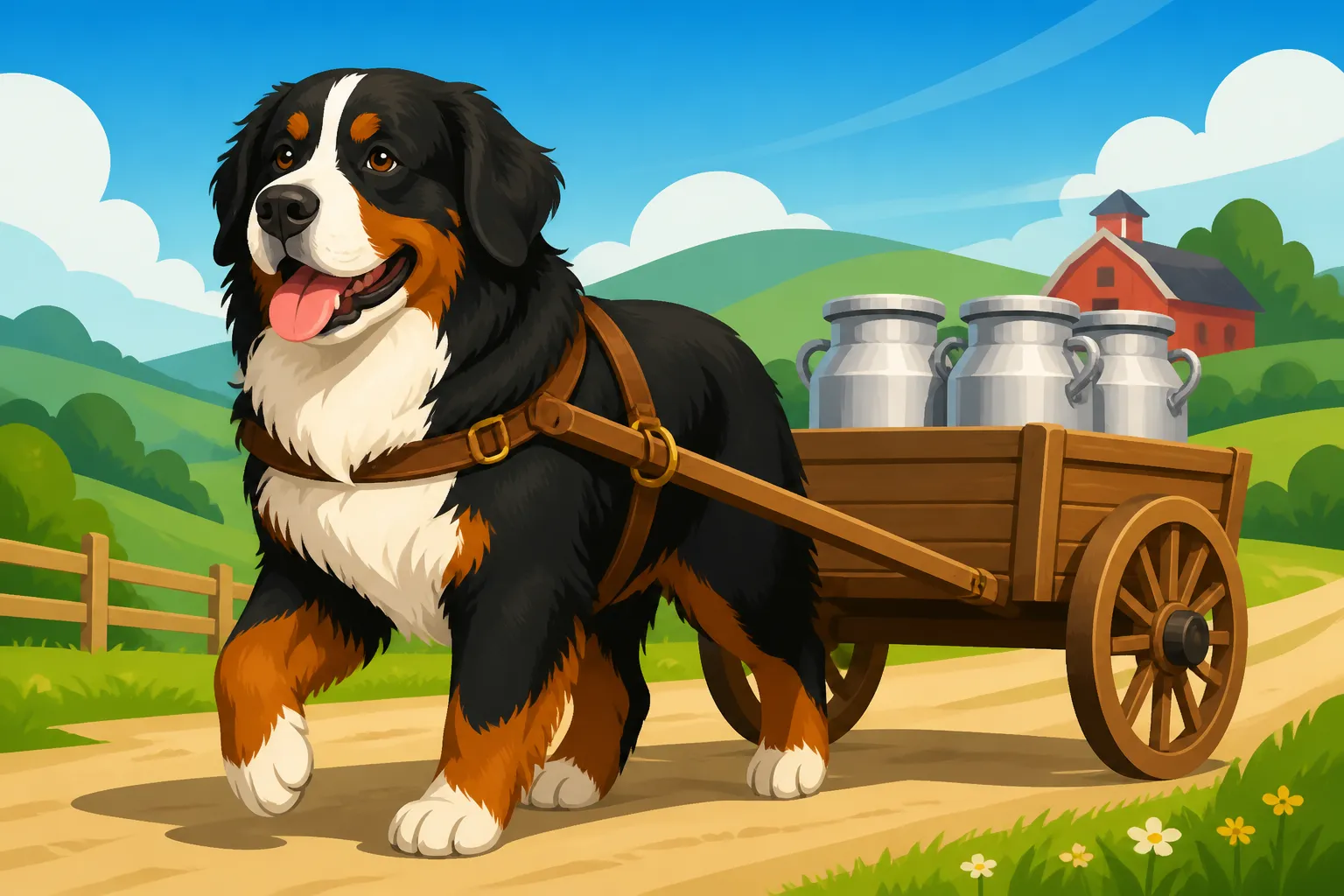
Picture a crisp Alpine morning. The farmer has milked the cows, and the fresh milk needs to get to the village dairy or directly to customers. This was no small feat. Milk is heavy, and depending on the size of the herd, multiple trips or a single, substantial load might be necessary. The Bernese Mountain Dog was often the designated transport. The dog, hitched securely to its cart, would dutifully make the journey, sometimes alongside its owner, sometimes trusted to navigate familiar routes alone.
These dogs weren't just pulling; they were often making multiple trips throughout the day, carrying milk cans or even large wheels of cheese. Their dedication meant that dairy products reached their destination fresh and on time, which was critical for income and preventing spoilage. It wasn't just about strength; it was about consistency and reliability. The dogs understood their routes, the importance of their cargo, and their role within the family unit. This level of trust and cooperation truly underscores the bond between these dogs and their human companions, a bond still evident in the breed's nature today.
Anatomy and Temperament: Perfect for the Job
The Bernese Mountain Dog’s physical attributes and inherent personality made them ideal carting dogs. Their large, powerful build, with a deep chest and strong hindquarters, provided the necessary leverage and muscle for pulling. They are robust, well-boned dogs, designed for stamina rather than bursts of speed. A healthy, well-conditioned Bernese Mountain Dog can pull a surprising amount of weight relative to its size, especially over short distances and with appropriate training.
Beyond their physicality, their temperament was key. Bernese Mountain Dogs are known for being calm, good-natured, and eager to please. This trainability and willingness to work cooperatively with humans was crucial. A dog that was anxious, aggressive, or easily distracted would not have been suitable for navigating busy village streets or encountering other animals and people. Their inherent gentle nature and steady disposition meant they could be relied upon to perform their duties without incident, a trait that makes them such wonderful family pets even now. This combination of strength and kindness is what truly sets them apart.
The Craft of Carting: Harnesses, Carts, and Training
While a Bernese Mountain Dog's natural inclination and physical build make them suitable for pulling, it's the careful art of proper equipment and thoughtful training that transforms them into a capable draft dog.
Building the Right Gear for a Big Dog
Just like any working animal, a Bernese Mountain Dog needed the right tools for the job. The harness was perhaps the most crucial piece of equipment. Unlike a walking harness, a draft harness is specifically designed to distribute weight evenly across the dog's chest and shoulders, allowing them to pull comfortably and efficiently without straining their neck or back. These harnesses were traditionally made from sturdy leather, meticulously fitted to each dog, ensuring no chafing or restriction of movement. Today, you can find excellent draft harnesses made from durable synthetic materials as well.
The carts themselves varied, but all shared key characteristics: robust construction, often from wood, and wheels appropriate for the terrain. For carrying milk, carts were typically open to accommodate cans, though some might have had a small lid to protect the contents. The goal was always functionality and durability. If you’re considering getting into modern draft work, What a Draft Harness Costs for a Bernese Mountain Dog can give you an idea of contemporary equipment expenses, and you'll want to think carefully about Choosing a Cart That Fits a Bernese Mountain Dog. Remember, the right gear protects your dog and makes the work enjoyable for both of you. Many pet supply stores, like Chewy, offer a range of sturdy harnesses that can be adapted or are specifically designed for recreational pulling.
Training a Bernese Mountain Dog to Pull
Training a Bernese Mountain Dog for carting is a gradual process built on positive reinforcement and patience, just like any good dog training. It typically starts young, familiarizing the puppy with the harness and then gradually introducing the concept of pulling light objects. The "stand and stay" command is critical, as is learning to move forward on cue, stop, and turn. The training progresses slowly, first with just the harness, then attaching a light drag, and finally, introducing the cart itself, initially empty.
The key is to make it a positive experience, building confidence and a strong working relationship. Punitive methods are counterproductive for a sensitive Berner. Instead, praise, treats, and consistent, clear commands are essential. Owners learn to read their dog's body language, ensuring they are enjoying the work and not being overwhelmed. This foundation of trust and understanding is vital for successful draft work, whether historical or modern. It's a true partnership, and you can learn more about the specifics in Training a Bernese Mountain Dog to Pull a Cart.
The Joy and Skill of a Working Berner
There's a deep satisfaction that many Bernese Mountain Dogs find in having a job to do. Their natural desire to be with their people and their innate work ethic combine beautifully in draft work. When properly trained, they approach their task with enthusiasm and focus. Watching a well-trained Berner navigate a course, turning precisely and pulling steadily, is truly a joy. It showcases their intelligence, physical prowess, and deep connection to their human handler.
This isn't just about brute strength; it's about skill. A good draft dog learns to anticipate turns, respond to subtle cues, and maintain a steady pace. They learn how to balance their effort, especially when dealing with varying terrain or slight inclines. The bond forged during this training is profound, and for many Bernese Mountain Dog owners, engaging in draft work is a wonderful way to honor their breed's heritage and provide their dog with fulfilling mental and physical exercise.
Modern Draft Work: Honoring a Heritage
While the economic necessity of milk carting has largely faded with modern transportation, the tradition of draft work for Bernese Mountain Dogs lives on as a beloved hobby and a way to celebrate their unique history.
Recreational Carting and Canine Sports
Today, recreational carting, also known as "drafting," is a popular activity for Bernese Mountain Dogs and their owners. It's a way to keep the breed's heritage alive and provide a fulfilling outlet for their natural instincts. Clubs and organizations across North America and Europe host draft tests and competitions where dogs demonstrate their ability to pull carts, often weighted, through a series of exercises that simulate real-world tasks. These tests evaluate control, teamwork, and the dog's willingness to work.
These events aren't just about competition; they're about camaraderie and celebrating the breed. Owners enjoy sharing tips, showing off their dogs' skills, and connecting with others who appreciate the Bernese Mountain Dog's working spirit. For many, it's a profound way to bond with their dog and tap into that ancient connection between farmer and canine helper. You can find more detail on the specifics in What Drafting Meant for a Swiss Bernese Mountain Dog.
The Community of Draft Enthusiasts
Joining a draft club or attending workshops is a fantastic way to get started. Experienced mentors can guide new owners through the process of selecting the right equipment, proper harness fitting, and step-by-step training techniques. These communities are incredibly supportive, understanding the nuances of working with a large, sensitive breed like the Bernese Mountain Dog. They provide a safe and encouraging environment for both dogs and handlers to learn and grow.
Events often include various levels of competition, from novice tests, where the dog might pull a relatively light load like The Twenty Pound Load a Novice Berner Carts, to advanced classes that require complex maneuvers and heavier weights. Judges carefully observe What Judges Score in a Bernese Mountain Dog Draft Test, looking for control, willingness, and a harmonious partnership. Earning draft titles, such as those discussed in The Draft Titles a Bernese Mountain Dog Can Earn, is a proud achievement for many owners, signifying their dog's proficiency and dedication to this historical sport. Websites like Chewy can be a great resource for finding books on dog sports and durable training supplies that will stand up to the rigors of draft work.
Beyond the Cart: Other Traditional Roles
While the milk cart is iconic, it's important to remember that Bernese Mountain Dogs were versatile farm dogs whose responsibilities extended far beyond simply pulling. Their presence was deeply integrated into the fabric of Swiss farm life.
Guarding and Droving Instincts
Bernese Mountain Dogs possessed a natural guarding instinct, though not in the aggressive sense often associated with some protection breeds. Their role was more about vigilance and deterrence. They would bark to alert their owners to approaching strangers or potential threats, making them excellent watchdogs for the homestead. Their imposing size alone was often enough to discourage unwelcome visitors. This watchful nature meant the farmers could trust their dogs to keep an eye on things while they were occupied with other chores or away at market.
Furthermore, they played a role in moving livestock. While not specialized herding dogs in the same vein as a Border Collie, their strength and presence were useful for guiding cattle from pastures to barns or moving them between grazing areas. This droving instinct, combined with their biddability, allowed them to be an effective part of the farm's daily operations, demonstrating their comprehensive utility. Cattle Droving and the Bernese Mountain Dog's Old Job delves deeper into these aspects of their past. Their ability to adapt to various tasks speaks volumes about their intelligence and cooperative spirit.
Companionship on the Farm
Perhaps one of their most understated, yet profoundly important, roles was that of loyal companion. Farm life, especially in remote mountainous regions, could be isolated and challenging. The Bernese Mountain Dog offered unwavering companionship, a comforting presence for adults and a gentle playmate for children. They were truly members of the family, sharing in both the hard work and the quiet moments of daily life.
This deep bond and affectionate nature are traits that continue to define the breed today, making them beloved family pets. The temperament that made them reliable working dogs — their calm demeanor, patience, and loyalty — are the very qualities that make them exceptional companions in our modern homes. They carried not just milk, but also the spirit of partnership and devotion, a legacy that continues to endear them to countless families around the world. These dogs truly understood their place and purpose, whether pulling a heavy cart or simply resting by the hearth.
Disclaimer
This article is for general informational purposes only and does not constitute professional advice. Laws, prices and regulations vary by location and change over time. Consult a qualified professional for guidance on your specific situation.