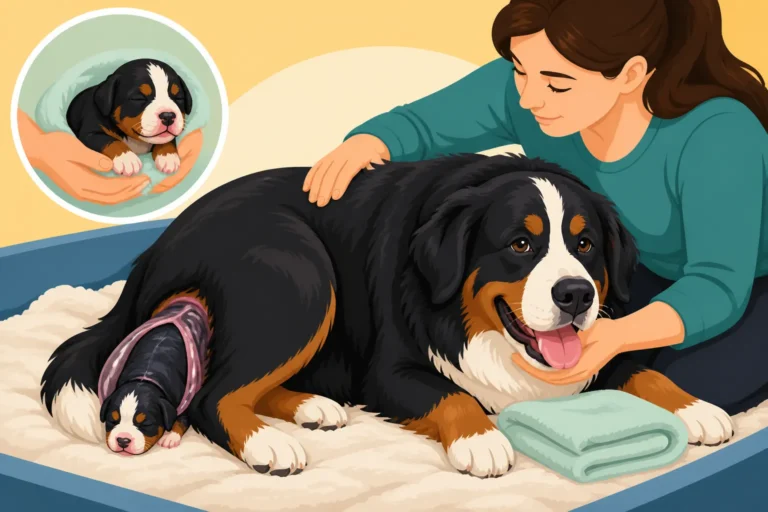
The Colors That Put a Bernese Mountain Dog Out
One of the most instantly recognizable traits of a Bernese Mountain Dog is their stunning tricolor coat. Owners often fall in love with the precise patterns of black, white, and rust, but sometimes, a puppy might display colors or markings that deviate from what’s considered "standard." This can lead to a lot of confusion, especially if you’re new to the breed or are considering showing your dog. This guide will help you understand exactly what colors and markings are considered outside the Bernese Mountain Dog breed standard and what that truly means for your beloved companion.
Understanding the Bernese Mountain Dog Breed Standard for Color
The Bernese Mountain Dog breed standard is a blueprint, a detailed description of the ideal dog of the breed. It covers everything from temperament and structure to, yes, specific colors and markings. For Berners, the tricolor coat isn't just a preference; it's a defining characteristic. This standard is what judges use in the show ring, and it's what breeders strive to achieve in their lines, aiming to preserve the distinct appearance that makes a Berner, well, a Berner!
The Ideal Tricolor Coat: A Symphony of Black, White, and Rust
When you picture a Bernese Mountain Dog, you're likely envisioning that classic, rich tricolor coat. It's a beautiful symphony of colors, each with its designated place. The primary color is a deep, jet black, which covers the majority of the dog's body. Over this striking black, you'll find the specific white and rust (or tan) markings that complete the picture.
The white typically appears as a blaze up the face, often forming an inverted "V" or "hourglass" shape, ideally extending from the muzzle up between the eyes. There’s also white on the chest, often forming a "Swiss cross," a truly iconic feature. White paws and a white tip on the tail are also highly desired. Then there are the rust or tan markings, which are usually symmetrically placed over each eye, on the cheeks, on either side of the white chest marking, and on all four legs, usually above the white "socks" and sometimes on the underside of the tail. The contrast and clarity of these colors are paramount – a crisp delineation between the black, white, and rust is what the standard calls for. It’s this specific, intricate pattern that makes them so visually striking and unique among the Sennenhund breeds. You can dive deeper into this by reading Bernese Mountain Dog Markings and What They Mean.
Why the Standard Exists: Preserving a Breed's Legacy
You might wonder why such strict rules apply to something as seemingly simple as coat color. The breed standard isn't about arbitrary aesthetics; it's about preserving the historical and functional integrity of the breed. For centuries, these specific colors and patterns identified the Bernese Mountain Dog as distinct from other working dogs in the Swiss Alps. It helped farmers and villagers recognize their dogs and their lines.
Today, the standard serves a similar purpose in the world of purebred dogs. It ensures that when you see a Bernese Mountain Dog, you're seeing a dog that conforms to the characteristics established over generations. For breeders, adhering to the standard guides their breeding programs, helping them maintain the unique look and often, the temperament, associated with the breed. When we talk about colors that "put a dog out," it simply means those colors or patterns deviate so significantly from this established blueprint that the dog would be disqualified from conformation showing. It doesn't mean the dog is any less of a loving companion or healthy family member; it simply means it doesn't meet the aesthetic requirements for competition in that specific arena. It’s a distinction important for those involved in showing, but often less so for a family looking for a pet.
Colors and Markings That Deviate from the Standard
While the tricolor pattern is the hallmark of a Bernese Mountain Dog, sometimes puppies are born with coats that don't quite fit the mold. These variations can range from subtle differences in marking placement to entirely different color combinations. Understanding these deviations is crucial, especially if you're working with a breeder or trying to identify if a dog truly is a purebred Bernese Mountain Dog. These differences aren't necessarily "flaws" in terms of health or personality, but they are considered disqualifying features in the show ring, meaning they "put a dog out" of competition.
Black and Tan (Bicolor) or Solid Colors: Missing the Mark
One of the most significant deviations from the Bernese Mountain Dog standard is the absence of one of the three core colors. A true Bernese Mountain Dog must be tricolor: black, white, and rust.
- Black and Tan (Bicolor): Imagine a Bernese Mountain Dog that has all the rust markings – above the eyes, on the cheeks, and legs – but entirely lacks the white markings on the face, chest, or paws. This would be a black and tan dog, not a tricolor. While beautiful in their own right, and common in some other breeds, a black and tan coat in a Berner is a clear disqualification from the breed standard. It's missing a key element of their defining appearance.
- Solid Colors: Even rarer, but sometimes seen, is a Bernese Mountain Dog that is solid black, or perhaps solid black with minimal white. A solid black Berner, or one that is predominantly black with only a tiny patch of white on its chest, would not meet the standard. The intricate dance of black, white, and rust is what defines them, and a solid coat simply doesn't fit the picture. It’s important to remember that these dogs are still Berners by lineage and spirit, but their coat color takes them out of contention for the show ring.
These color patterns often arise from recessive genes that surface when specific parent combinations occur. A reputable breeder will be transparent about the likelihood of such variations in their lines and will generally place these puppies in pet homes, often at a reduced price, as they cannot be shown in conformation.
Excessive White or Unplaced White Markings
While white markings are essential to the Bernese Mountain Dog's classic look, there's a delicate balance. Too much white, or white in the wrong places, can also be a disqualifying factor. The standard is very specific about where the white should and shouldn't be.
- Full White Collar: A full white collar that completely encircles the dog's neck is generally considered an excessive marking and would be a serious fault, often leading to disqualification in the show ring. While charming on many breeds, it deviates from the traditional "Swiss cross" pattern expected on a Berner's chest.
- White on the Back or Sides: Any significant white markings on the body, particularly on the back, sides, or extending far up the legs beyond the "sock" areas, is not acceptable. The black coat should be the dominant body color, providing a solid canvas for the precise white and rust accents. The Swiss Cross on a Bernese Mountain Dog's Chest details the ideal white placement.
- Irregular or Asymmetrical White: The markings on a Bernese Mountain Dog are ideally symmetrical. A heavily lopsided blaze, or a chest marking that doesn't resemble the classic cross, could also be considered a fault. Small, irregular white patches are minor faults, but extensive asymmetry or unplaced white would be a disqualification. The Four White Points a Bernese Mountain Dog Should Have outlines the expected locations.
These excessive white markings, much like the absence of color, are genetic variations. They don't affect a dog's health or temperament, but they do make them ineligible for conformation titles. For families looking for a companion, a Berner with an extra splash of white is still a wonderful dog, just one that will never stand on the podium in the show ring.
Other Color Variations: Beyond the Berner Palette
While less common, occasionally other color genetics can surface in some breeds, though they are highly atypical for the Bernese Mountain Dog. These include colors like blue, liver (brown), or merle. In the Bernese Mountain Dog, these colors are not simply non-standard; they indicate a complete departure from the breed's genetic color profile.
- Blue or Liver Coats: A Bernese Mountain Dog with a diluted black (appearing blue/grey) or liver (brown) coat would be a significant deviation. These colors are not part of the Bernese Mountain Dog's genetic makeup and would point to either a mixed lineage or an extremely rare and uncharacteristic genetic mutation for the breed. If you encounter a "blue" or "liver" Bernese Mountain Dog, it's highly likely that the dog is not a purebred Bernese Mountain Dog, regardless of what a seller might claim. True Berners carry only the black gene for their primary coat color.
- Merle Pattern: The merle pattern, characterized by mottled patches of color and often associated with blue eyes, is found in breeds like Australian Shepherds or Cardigan Welsh Corgis. It is absolutely not a color pattern found in purebred Bernese Mountain Dogs. If a dog represented as a Bernese Mountain Dog displays a merle coat, it is definitively a mixed breed. Furthermore, the merle gene can sometimes be associated with certain health issues, particularly when two merle dogs are bred together, leading to "double merle" offspring with severe eye and ear defects. This is another reason why adhering to breed-specific color standards is important: it safeguards against breeding practices that could introduce known health risks.
It’s crucial to be wary of any breeder advertising "rare" Bernese Mountain Dog colors like blue, liver, or especially merle. These are not rare variations of the breed; they are indications of cross-breeding or, in rare cases, significant genetic anomalies not typically found in the breed. A responsible breeder will strictly adhere to The Bernese Mountain Dog Breed Standard and would never knowingly breed for or promote such colors as being part of the Bernese Mountain Dog lineage.
The Impact of "Non-Standard" Colors on a Bernese Mountain Dog
Discovering your Bernese Mountain Dog has non-standard markings or colors can feel a little surprising, especially if you had visions of a show champion. However, it's really important to put this into perspective. For most owners, these color deviations have very little impact on the dog's life or their role as a cherished family member.
Show Ring Disqualification vs. Pet Quality: It's All About the Ribbon
The primary, and almost exclusive, impact of a non-standard color on a Bernese Mountain Dog is its eligibility for conformation dog shows. Conformation shows are where purebred dogs are judged against their breed standard. If a dog's coat color or markings deviate significantly from the written standard, it will be "put out," meaning it cannot compete, or if it does, it will be disqualified.
This is a critical distinction:
- Show Ring Disqualification: This simply means the dog doesn't fit the aesthetic requirements to win ribbons in a competition designed to evaluate adherence to a specific look. It's a judgment on appearance, not on the dog's inherent worth, health, or temperament. A dog might have a perfect temperament, excellent health clearances, and a wonderful personality, but if it has a full white collar, it won't be a show dog.
- Pet Quality: The vast majority of Bernese Mountain Dogs, regardless of their markings, are destined to be cherished family pets. A non-standard color simply means they are "pet quality." They are just as loving, intelligent, loyal, and goofy as their show-ring counterparts. Their non-standard coat doesn't make them any less of a Bernese Mountain Dog in terms of their character or ability to bring joy to your home. In fact, many people specifically seek out "pet quality" puppies, sometimes because they are more readily available or might be offered at a slightly different price point compared to "show quality" puppies. Whether a Pet-Quality Bernese Mountain Dog Costs Less is a good article to explore this topic further.
Think of it this way: a professional athlete might not meet the aesthetic requirements for a fashion model, but that doesn't diminish their athletic prowess or personal value. It's simply different criteria for different arenas. Your Bernese Mountain Dog with unique markings is a champion in its own right, just perhaps not in the conformation ring.
Potential Health Implications: Usually Cosmetic, but Be Aware of Extremes
For most of the typical Bernese Mountain Dog color deviations – like excessive white or an absence of rust markings – there are generally no associated health implications. These are usually purely cosmetic genetic variations that affect only the coat's appearance. A Bernese Mountain Dog with a black and tan coat, for example, is typically just as healthy as one with a perfect tricolor coat.
However, it's crucial to exercise caution if you encounter "Bernese Mountain Dogs" with highly unusual colors like blue, liver, or merle. As discussed earlier, these colors are not part of the purebred Bernese Mountain Dog genetic palette. Their presence strongly suggests that the dog is either a mixed breed or comes from an irresponsible breeding program that has introduced genes from other breeds.
In some breeds where these colors are natural, specific health concerns can be linked:
- Dilute Colors (like blue/gray): In certain breeds, the gene that dilutes black to blue can sometimes be associated with a condition called Color Dilution Alopecia (CDA), causing patchy hair loss and skin issues. While this isn't a known issue in true Bernese Mountain Dogs, it’s a concern in breeds where dilute colors are present.
- Merle Pattern: The merle gene, especially in its "double merle" form (when a dog inherits two copies of the merle gene), is well-documented to cause severe health problems, including deafness, blindness, and other eye abnormalities. Since merle is not a natural Bernese Mountain Dog color, if you see a "merle Berner," it’s an immediate red flag. This dog is not a purebred, and its breeding history should be questioned for potential health risks.
Therefore, while a minor deviation in the expected white or rust markings on a Berner is almost always just a cosmetic difference, any truly "exotic" or non-standard color should prompt careful investigation into the dog's true parentage and potential health risks. Always prioritize health and temperament over unique aesthetics, especially when dealing with breeds known for certain genetic predispositions, like The Cancer That Kills Half of All Bernese Mountain Dogs.
Finding a Reputable Breeder and Understanding Pedigrees
Bringing a Bernese Mountain Dog into your life is a significant decision, and finding the right breeder is paramount, regardless of whether you prioritize show-ring conformity or simply a loving family pet. A reputable breeder will not only ensure the health and temperament of their puppies but will also be transparent about their dogs' adherence to the breed standard, including coat color and markings.
What Reputable Breeders Look For: Health, Temperament, and Then Conformation
A responsible Bernese Mountain Dog breeder has a clear set of priorities. They are dedicated to improving the breed and producing healthy, well-adjusted puppies that embody the best traits of the Berner.
- Health Clearances First: This is non-negotiable. Reputable breeders thoroughly health test their breeding stock for common Bernese Mountain Dog health concerns such as hip and elbow dysplasia, eye conditions, cardiac issues, and certain genetic diseases like Von Willebrand's disease and Degenerative Myelopathy. They can provide documentation from organizations like the Orthopedic Foundation for Animals (OFA) or similar registries. Don't be shy about asking for these. What Health Testing a Bernese Mountain Dog Breeder Pays For goes into great detail about this.
- Temperament is Key: A Bernese Mountain Dog should be good-natured, self-confident, and gentle. Breeders spend a lot of time socializing their puppies and observing their parents' temperaments. A dog that is overly shy, aggressive, or nervous does not meet the breed standard for temperament, even if its coat is perfect. They want to ensure their puppies grow into wonderful companions in homes like The Kind of Home a Bernese Mountain Dog Belongs In.
- Conformation (Including Color and Markings): After health and temperament, a good breeder then considers conformation – how well the dog's physical appearance matches The Bernese Mountain Dog Breed Standard. This includes structure, gait, size, and, of course, coat color and markings. They strive for the ideal tricolor pattern but understand that sometimes a "pet quality" puppy with a minor marking deviation will occur in a litter. They are honest about these puppies and place them in appropriate homes. They would never breed solely for "unique" colors that fall outside the standard, especially those not native to the breed.
When you speak with a breeder, they should be eager to discuss all these aspects and show you the parents' pedigrees, health clearances, and even photos of previous litters. You can also research breeders by checking databases like Berner-Garde, which tracks health and pedigree information for Bernese Mountain Dogs.
Questions to Ask About Color and Markings
When you're interviewing a potential breeder, don't hesitate to ask specific questions about the puppies' coat colors and markings, especially if you have any interest in showing or are simply curious.
- "Are the puppies consistently producing correct tricolor markings in your lines?"
- "Have you ever had puppies with excessive white markings, like a full white collar, in your litters?"
- "What do you do with puppies that have non-standard markings? Are they still available for pet homes?"
- "Can you show me the parents' markings? How do they conform to the breed standard?"
- If a puppy has slightly unusual markings, ask the breeder to explain why they believe it occurred. A knowledgeable breeder will be able to discuss the genetics involved.
- Crucially, if a breeder ever mentions "rare blue Bernese," "liver Berners," or "merle Bernese Mountain Dogs," walk away immediately. This is a massive red flag that indicates either a lack of understanding of the breed standard, dishonesty, or mixed breeding. These colors are not part of the Bernese Mountain Dog breed.
A good breeder will value your informed questions and will be completely transparent about their breeding program and any variations that might occur. They want their puppies to go to homes that understand and appreciate the breed for all its qualities.
Accepting a Non-Standard Marked Berner: A Companion Beyond Competition
At the end of the day, the vast majority of Bernese Mountain Dogs are cherished family companions, not show dogs. If you're looking for a loving pet, a Bernese Mountain Dog with non-standard markings is absolutely capable of being an incredible addition to your home. Their personality, health (assuming reputable breeding), and capacity for affection are identical to their perfectly-marked siblings.
These dogs still offer all the wonderful traits that make Berners so special: their gentle giant nature, their devotion to their families, and their endearing tendency to lean on you. The only thing they're "out" of is the show ring. For everyday life, they are still 100% Bernese Mountain Dog. When it comes to everyday essentials like food bowls, comfy beds, or durable toys, you can find everything you need for any Bernese Mountain Dog, regardless of its markings, from retailers like Chewy. They deserve all the love and care you'd give to any Berner. Ultimately, deciding Whether a Bernese Mountain Dog Is Right for You should focus on their temperament and care needs, not solely on whether their coat could win a ribbon.
| Color/Marking Feature | Standard Bernese Mountain Dog | Non-Standard/Disqualifying |
|---|---|---|
| Primary Body Color | Jet Black | Blue/Gray, Liver (Brown), Solid Black |
| Tricolor Presence | Must be black, white, and rust/tan | Black and tan (lacking white), solid color (lacking white/rust) |
| White Markings | Blaze on face, "Swiss cross" on chest, white paws, tail tip | Full white collar, white patches on back/sides, significant asymmetry, unplaced white |
| Rust/Tan Markings | Over eyes, cheeks, chest sides, legs, under tail | Absent (e.g., solid black & white), indistinct, faded |
| Overall Impression | Clearly defined, symmetrical, rich colors | Mismatched, mottled (Merle), dull, or poorly defined colors |
| Show Ring Status | Eligible for conformation judging (if other criteria met) | Disqualified from conformation judging |
| Pet Quality Status | Excellent family companion | Excellent family companion |
| Health Implications | Generally none associated with ideal color alone | Usually cosmetic for typical Berner deviations; potential health risks if "exotic" colors like merle are present due to mixed breeding |
Disclaimer
This article is for general informational purposes only and does not constitute professional advice. Laws, prices and regulations vary by location and change over time. Consult a qualified professional for guidance on your specific situation.