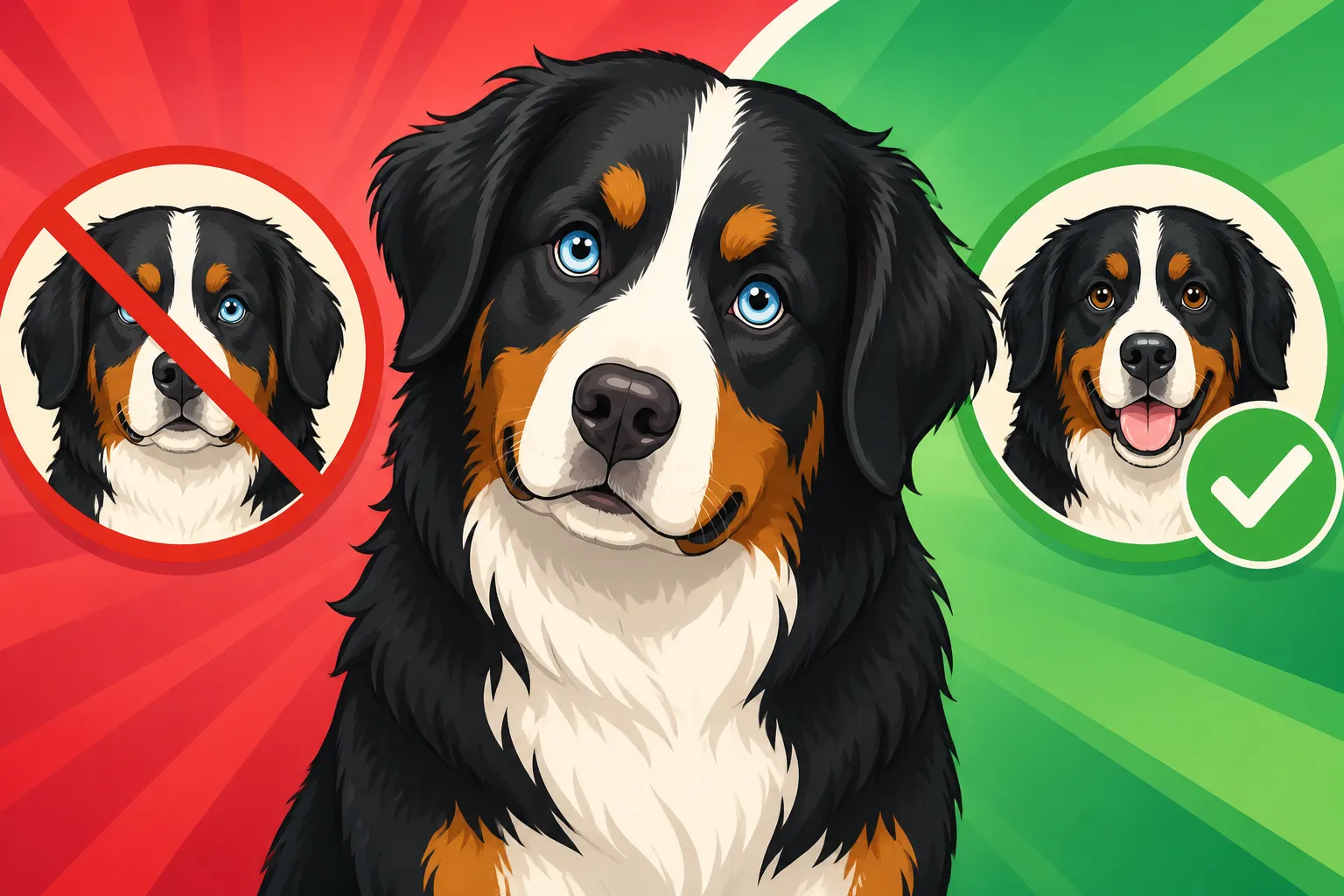
Whether Blue Eyes Disqualify a Bernese Mountain Dog
One of the most striking features of a Bernese Mountain Dog is their soulful, dark eyes, often described as conveying a gentle and intelligent expression. So, it's completely understandable why a prospective owner might raise an eyebrow or feel a pang of concern if they encounter a Berner, or even a Berner puppy, sporting eyes of a different hue, particularly blue. The question isn't just about aesthetics; it touches upon breed integrity, health, and what defines this magnificent dog. This guide will meticulously explore whether blue eyes are a recognized trait, a disqualification, or potentially a sign of something else entirely in a Bernese Mountain Dog.
Understanding the Bernese Mountain Dog Breed Standard
When we talk about purebred dogs, we often refer to something called a "breed standard." This isn't just some arbitrary set of rules; it's a carefully crafted blueprint, established by parent clubs and recognized by organizations like the American Kennel Club (AKC), that describes the ideal characteristics of a breed. These standards cover everything from coat color and texture to ear set, tail carriage, gait, and, crucially, eye color. For a Bernese Mountain Dog, these details are particularly important as they speak to the historical purpose and unique beauty of the breed.
The Importance of Breed Standards
Breed standards serve several vital purposes. Firstly, they act as a guide for breeders aiming to preserve the distinct traits and health of the breed. By adhering to a standard, breeders strive to produce dogs that not only look like a Bernese Mountain Dog but also possess the temperament and working abilities historically associated with them. Think of it as a quality control document that ensures the breed maintains its identity across generations. Without these standards, breeds could quickly diverge, losing the very characteristics that make them unique and beloved.
Secondly, these standards are the benchmarks by which dogs are judged in conformation shows. Judges assess how closely each dog aligns with the ideal described in the standard, not just for beauty, but also for functional soundness. A dog that deviates significantly from the standard, particularly on a major point, will not perform well in the show ring, and in some cases, certain deviations are considered "disqualifications," meaning the dog cannot be awarded any points or titles. This system encourages responsible breeding practices focused on maintaining breed type.
Acceptable Eye Color in Bernese Mountain Dogs
For the Bernese Mountain Dog, the breed standard is quite clear and specific about eye color. It explicitly calls for eyes to be dark brown. Not light brown, not hazel, and certainly not blue. The standard often emphasizes the importance of a "kind, intelligent, and lively expression," and the dark eye color is considered integral to achieving this characteristic Berner look. Anything outside of this dark brown range is considered a fault, and a distinct blue eye color is typically listed as a disqualification.
The preference for dark eyes isn't just cosmetic. In many working breeds, dark pigmentation around the eyes and on the eyelids helps to reduce glare from the sun and protect the eyes from bright light, which would have been beneficial for dogs working outdoors in the bright Swiss Alps. While modern Berners might not be herding cattle in sunny pastures daily, these traits are deeply embedded in their genetic makeup and represent the historical integrity of the breed. So, if you're looking at a Bernese Mountain Dog with truly blue eyes, know that while beautiful, it falls outside the recognized standard for the breed. The Bernese Mountain Dog Breed Standard outlines these requirements in detail, providing a comprehensive picture of the ideal Berner.
The Impact of Blue Eyes on a Bernese Mountain Dog
Discovering that a Bernese Mountain Dog has blue eyes can be a surprise, especially if you're familiar with the breed's typical appearance. But what does this deviation from the standard actually mean for the dog and its owner? It's important to distinguish between implications for show performance and implications for health and companionship.
Disqualification in the Show Ring
In the competitive world of dog shows, adhering to the breed standard is paramount. For a Bernese Mountain Dog, blue eyes are considered a disqualifying fault. This means that a judge, upon identifying blue eyes, would be required to dismiss the dog from competition, and it would not be eligible to receive any awards or championship points. This isn't a judgment on the dog's intrinsic worth or beauty, but purely a reflection of its deviation from the established breed type.
Imagine a breeder meticulously planning a litter, selecting parents with excellent conformation, temperament, and health clearances, all with those classic dark brown eyes. If a puppy from that litter develops blue eyes, it instantly loses its potential for a show career, no matter how perfect its gait or how magnificent its coat. This can be a significant disappointment for those aiming for conformation titles. The standard, including specific color requirements like The Colors That Put a Bernese Mountain Dog Out, serves to maintain consistency within the breed.
Health Implications of Blue Eyes
This is often the biggest concern for new owners: are blue eyes a sign of an underlying health problem in a Bernese Mountain Dog? Generally speaking, in Bernese Mountain Dogs, the presence of blue eyes, while a disqualification in the show ring, is not typically linked to specific health issues. Unlike some breeds where blue eyes are associated with merle patterning (which can carry health risks like deafness or vision problems if not bred carefully), the Bernese Mountain Dog's genetic makeup usually doesn't connect blue eyes to such serious concerns.
However, it's always wise to exercise caution. If a Bernese Mountain Dog puppy has blue eyes, especially if one eye is blue and the other dark, or if the blue is particularly pale or cloudy, it's a good idea to have a veterinarian perform a thorough eye exam. They can confirm the eyes are structurally sound and rule out any rare congenital anomalies or conditions that might happen to manifest with unusual eye color. In most cases, though, a blue-eyed Berner is just a visually unique dog with no related health issues, functioning perfectly normally. A comprehensive The Bernese Mountain Dog Health Panel can give owners peace of mind regarding overall health, regardless of eye color.
Blue Eyes and Pet Ownership
For the vast majority of Bernese Mountain Dog owners who are primarily seeking a loving companion, a dog with blue eyes is simply a unique individual. It absolutely does not diminish their capacity for affection, loyalty, or their wonderful Berner personality. In fact, some pet owners might even find the rarity of blue eyes in a Berner appealing, giving their dog a distinctive look.
Your blue-eyed Berner will still lean on you, still enjoy romps in the snow, and still be the gentle giant you fell in love with. Their ability to connect with your family, to learn commands, or to offer comfort is entirely unrelated to the color of their irises. What matters most for a pet is health and temperament, and a blue-eyed Berner can be just as healthy and well-adjusted as any other. So, while a breeder might steer clear of a blue-eyed pup for the show ring, a family looking for a cherished companion shouldn't let eye color deter them, as long as the dog is otherwise healthy and from responsible lines. For those looking for a pet, sometimes a Whether a Pet-Quality Bernese Mountain Dog Costs Less discussion comes into play, as disqualifying faults can sometimes affect pricing, making a loving companion more accessible.
When Blue Eyes Might Appear in a Bernese Mountain Dog
Understanding the genetics behind eye color can shed some light on why blue eyes, while rare, might occasionally pop up in a Bernese Mountain Dog, even if they're not standard. It's not always a clear-cut case of mixed breeding; sometimes, genetics can surprise us.
Genetic Factors and Pigmentation
Eye color in dogs, much like in humans, is determined by genetics, specifically the type and amount of melanin produced in the iris. Dark brown eyes are generally a dominant trait in most dog breeds, including the Bernese Mountain Dog. This means that if a dog inherits a gene for dark eyes from even one parent, it will likely have dark eyes. Blue eyes, on the other hand, typically result from a recessive gene or a lack of melanin production in the iris.
For a Bernese Mountain Dog, whose standard dictates dark brown eyes, the genetic pool is overwhelmingly geared towards producing dark eyes. True, vibrant blue eyes appearing in a purebred Bernese Mountain Dog is an anomaly. It would typically require both parents to carry a recessive gene for blue eyes, and even then, it's incredibly rare given the breed's genetic history. More often, a "blue-eyed" appearance might be a transient puppy phase or a result of mixed heritage. The discussion around Why a Bernese Mountain Dog Is Always Tricolor gives context to the strong genetic consistency expected in the breed's appearance.
Puppy Eye Color vs. Adult Eye Color
This is perhaps the most common scenario for "blue-eyed" Bernese Mountain Dogs. Many puppies are born with lighter eyes that appear blue or bluish-grey. This is perfectly normal across many breeds. Puppy eyes often lack the full pigmentation that develops as they mature. Just like human babies can be born with blue eyes that later change to hazel or brown, Bernese Mountain Dog puppies often have eyes that start lighter and gradually darken.
Typically, a Bernese Mountain Dog puppy's eye color will begin to settle and darken between 8 to 16 weeks of age, although for some, it can take up to 6 months or even a bit longer to reach their final, deep brown hue. If you see a very young Berner puppy with blue eyes, there's a good chance they will darken over time. It's only if they remain distinctly blue past this developmental period that it becomes a true deviation from the standard. A responsible breeder will be able to tell you if their lines have ever produced adult blue eyes and can provide insight into the expected eye color development of their puppies.
Mixed Breeds and Blue Eyes
The most straightforward explanation for a Bernese Mountain Dog-like dog having blue eyes is that it's a mixed breed. Many popular breeds, such as Siberian Huskies, Australian Shepherds, and certain types of Border Collies, naturally carry genes for blue eyes. When a Bernese Mountain Dog is crossed with one of these breeds, the resulting offspring, often affectionately called "Bernedoodles" or other designer mixes, can easily inherit the blue eye trait. These mixes can still be wonderful companions, but they are not purebred Bernese Mountain Dogs and therefore are not subject to the Bernese Mountain Dog breed standard.
It's crucial for prospective owners to understand the difference. If you specifically want a purebred Bernese Mountain Dog, it's important to look for breeders who adhere strictly to the breed standard and who can provide clear lineage and health testing information. Reputable breeders will often provide a health guarantee, sometimes requiring a visit to your vet within a few days of pickup, and will be transparent about their dogs' genetic backgrounds. What a Bernese Mountain Dog Breeder Puts in Writing often includes these details. Always be cautious if a "purebred" Berner is advertised with blue eyes, as it could indicate an undocumented mix.
What to Do if Your Bernese Mountain Dog Has Blue Eyes
If you find yourself with a Bernese Mountain Dog that has blue eyes, or are considering adopting one, there are a few practical steps you can take to ensure you're making an informed decision and providing the best care.
Consulting a Veterinarian
Your first stop should always be a trusted veterinarian. While blue eyes in a Bernese Mountain Dog are generally not associated with health problems, a vet can give them a thorough check-up. This includes a comprehensive eye exam to rule out any rare underlying conditions or congenital anomalies. They can confirm that the eyes are healthy, functioning correctly, and that the blue color is simply a pigmentation variation rather than a symptom of something more serious. This is especially important if the blue color seems to be affecting vision or if there are any other unusual eye characteristics. Regular vet check-ups are always a good idea for any Berner, particularly when considering their general health predisposition, such as Joint Disease in a Hundred Pound Bernese Mountain Dog.
During your visit, you can also discuss any concerns about vision, light sensitivity, or anything else that might cross your mind regarding their unique eye color. Most of the time, the vet will simply confirm that your dog's eyes are perfectly healthy, giving you peace of mind.
Understanding Your Dog's Pedigree
If you purchased your Bernese Mountain Dog from a breeder and they have blue eyes, it's worth reviewing their pedigree and discussing it with the breeder. A reputable breeder should be transparent about their lines and any genetic quirks that might occasionally appear. They can often provide insight into whether this is a known, rare occurrence in their specific lines or if it might suggest a distant, unacknowledged mix.
If you adopted your dog from a rescue organization, their history might be less clear. In such cases, while you might not get a definitive answer about their exact lineage, the focus shifts to providing the best possible care for the individual dog. Genetic testing services are also available for dogs, which can sometimes provide clues about breed composition if there's any doubt about their purebred status. However, for most owners, the deep bond with their pet far outweighs the need for a perfectly compliant pedigree. You can learn more about how breeders track lineage through resources like What the Berner-Garde Database Records.
Embracing Your Unique Companion
Ultimately, a Bernese Mountain Dog with blue eyes is, first and foremost, a Bernese Mountain Dog. They will possess the same wonderful temperament, the same desire to be near their family, and the same goofy charm that makes this breed so beloved. Their eye color is simply a cosmetic variation, and it doesn't change their ability to be a fantastic, loyal, and loving companion.
Many owners find that their dog's unique features, including a rare eye color, only add to their individuality and charm. Whether you adopted a blue-eyed Berner or discovered your puppy's eyes wouldn't darken, embrace what makes them special. Focus on providing them with a loving home, proper training, good nutrition (perhaps even exploring options on Chewy for specialized diets or treats), and plenty of opportunities for exercise and companionship. The love and joy a dog brings into your life transcend any breed standard, making every dog, especially a unique Berner, truly priceless.
Considerations for Breeding and Showing
For those involved in the breeding and showing of Bernese Mountain Dogs, the topic of blue eyes carries a different weight. While a blue-eyed Berner can make a wonderful pet, its presence in a breeding program or a show career is generally not advisable or even permitted.
Maintaining Breed Purity and Standards
The primary goal of responsible breeding is to maintain and improve the health, temperament, and conformation of the breed according to its established standard. Allowing dogs with disqualifying faults, such as blue eyes, into a breeding program could dilute the gene pool and potentially lead to an increase in such traits, moving further away from the recognized ideal. The Bernese Mountain Dog Markings and What They Mean article highlights the importance of precise physical attributes.
Breeders committed to the standard will carefully select breeding pairs to ensure that desirable traits are passed on and undesirable ones are avoided. If a reputable breeder unexpectedly produces a blue-eyed puppy, they would typically place that puppy in a pet home with a spay/neuter contract to prevent it from being bred. This isn't because the dog is "lesser," but because maintaining breed integrity requires adherence to these genetic guidelines.
Ethical Breeding Practices
Ethical breeders prioritize the health and well-being of their dogs and the future of the breed. They invest in extensive health testing for their breeding stock, including screenings for hip and elbow dysplasia, heart conditions, and certain cancers. They also strive to ensure their dogs meet the physical and temperamental aspects of the breed standard. OFA Clearances a Bernese Mountain Dog Should Have is an excellent resource for understanding these rigorous requirements.
A blue-eyed Bernese Mountain Dog, even if healthy, represents a deviation from the ideal that could impact a breeder's reputation and efforts to uphold the standard. Thus, while a blue-eyed Berner might capture hearts, it would not be considered a candidate for breeding by those dedicated to the breed's standard and longevity.
| Characteristic | Standard Bernese Mountain Dog | Blue-Eyed Bernese Mountain Dog (Purebred) | Mixed Breed (e.g., Bernedoodle) |
|---|---|---|---|
| Eye Color | Dark Brown | Blue (Disqualification in shows) | Can be blue, brown, or varied |
| Show Eligibility | Eligible for conformation shows | Disqualified from conformation shows | Not eligible as a purebred |
| Health Concerns | Generally healthy, predisposed to certain breed conditions | Generally healthy, but vet check recommended for anomaly | Varies widely depending on breeds involved |
| Temperament | Loyal, good-natured, calm | Same excellent Berner temperament | Varies, often combination of parent breeds |
| Purity | Purebred | Purebred, but with a disqualifying fault | Hybrid/Designer dog |
| Breeding Suitability | Excellent candidate for responsible breeding | Not suitable for breeding to maintain standard | Suitable for breeding only within its hybrid type (e.g., Bernedoodle to Bernedoodle) |
This table clearly illustrates the distinctions. While a blue-eyed purebred Berner might be a lovely pet, it's outside the established guidelines for the breed's future.
Disclaimer
This article is for general informational purposes only and does not constitute professional advice. Laws, prices and regulations vary by location and change over time. Consult a qualified professional for guidance on your specific situation.