Whether a Wavy Coat Is Allowed on a Bernese Mountain Dog
One of the most common questions I hear from new Bernese Mountain Dog owners, or even those just admiring the breed from afar, revolves around their magnificent coats. You see pictures, you read the breed standard, and then you look at your own fuzzy companion and wonder, "Is this right?" Specifically, the idea of a "wavy" coat can be a bit confusing. Many people worry that their Berner’s coat might be too wavy, or not wavy enough, leading to concerns about whether their beloved dog truly meets the breed's ideal description. This guide is here to untangle that particular knot, exploring exactly what the Bernese Mountain Dog breed standard permits regarding coat texture, what a wavy coat truly means for daily life, and how to appreciate the unique beauty of your Berner's glorious fluff.
The Bernese Mountain Dog Coat: What the Standard Says
When we talk about what makes a Bernese Mountain Dog, we often turn to the breed standard. This document is essentially the blueprint for what the ideal Berner should look like and behave like, established by breed clubs to maintain consistency and health within the lineage. For the coat, the language used is quite specific, and it's where the idea of a "wavy" coat comes into play. It’s not just a casual suggestion; it’s a defining characteristic.
Understanding the "Slightly Wavy" Description
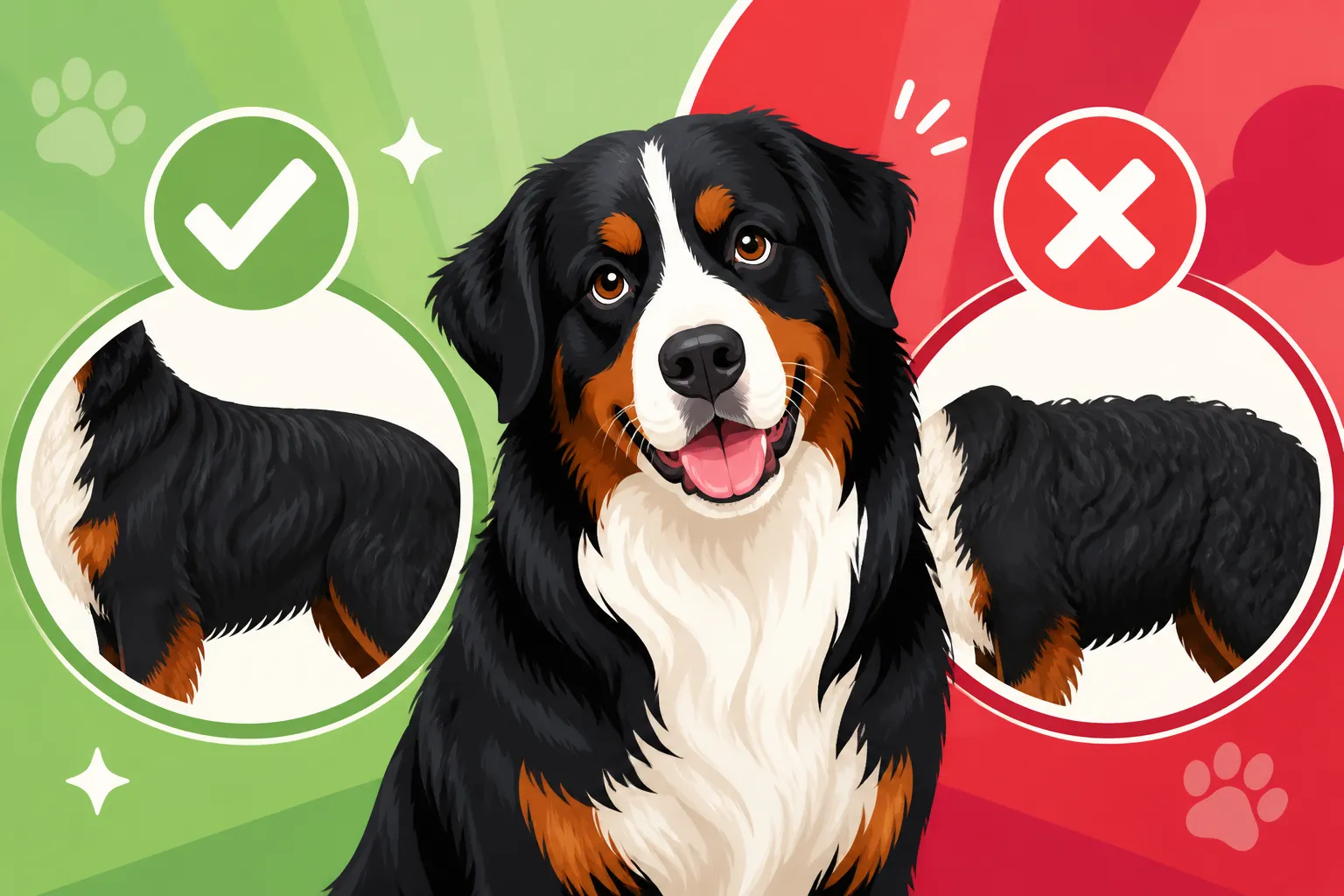
The official Bernese Mountain Dog breed standard typically describes the coat as being "thick, moderately long, slightly wavy or straight." Notice that "slightly wavy" is right there alongside "straight" as an acceptable texture. This isn't just a loophole; it’s an acknowledgement of the natural variation that exists within the breed while still maintaining a particular aesthetic and function. A true Berner coat is never meant to be tightly curled or woolly like some other breeds. Instead, that "slight wave" refers to a gentle undulation, a soft bend in the hair strands rather than a tight coil. Imagine the texture of a healthy, thick human head of hair that has some natural body to it, perhaps after being air-dried, as opposed to pin-straight or tightly permed. It’s that subtle, flowing quality that's being described, adding to the majestic appearance without becoming unruly. This slightly wavy texture often becomes more apparent in the feathering on their legs, tail, and chest, where the hair tends to be longer.
In a show ring, judges are looking for this balance. They're not going to fault a dog for having a beautiful, flowing coat with a gentle wave, because it falls squarely within the acceptable parameters. What they're assessing is the overall quality: the luster, the health, the density of the double coat, and how well it fits the description. It’s about the overall picture of a robust, weather-resistant coat, rather than an insistence on absolute straightness. If you've ever spent time watching Berners move, you'll notice how that slight wave can give their coats a gorgeous, dynamic flow, particularly when they're trotting happily. The Bernese Mountain Dog Coat Texture a Judge Feels delves deeper into these nuances.
Why Coat Texture Matters in the Breed Standard
You might wonder why such a specific detail about coat texture is included in the breed standard at all. It's not just for aesthetics; it's rooted in the breed's origins. Bernese Mountain Dogs hail from the cold, mountainous regions of Switzerland, where their coat served as essential protection against harsh weather. A thick, double coat provides insulation, keeping them warm in winter and helping to regulate their body temperature in summer. The specific texture – whether straight or slightly wavy – plays a role in this functionality.
A coat that is too fine, too short, or lacks the protective undercoat wouldn't offer adequate warmth. Conversely, a coat that is too tightly curled or woolly can be a nightmare for collecting snow, dirt, and debris, and it can also mat much more easily, compromising its insulating properties. The "slightly wavy" or "straight" description ensures a coat that sheds water, resists snow and ice from clinging excessively, and provides a barrier against the elements. It’s a working dog’s coat, designed for practicality as much as beauty. Understanding these historical roots helps us appreciate why breeders strive to maintain these traits, ensuring the Bernese Mountain Dog retains the characteristics that allowed it to thrive in its ancestral home in The Swiss Valley the Bernese Mountain Dog Comes From. It’s a testament to their heritage and a key part of their identity as a resilient mountain dog.
Distinguishing Acceptable Wavy from Faulty Coats
So, we know "slightly wavy" is okay. But how do you tell the difference between that acceptable texture and a coat that might be considered a fault? This is where many owners get tripped up, especially since puppies can have varying coat textures that sometimes change as they mature. The key is to understand the difference between a gentle wave and a true curl or a woolly texture.
The Spectrum of Wavy Coats in Berners
Imagine a spectrum. On one end, you have the perfectly straight, sleek Berner coat. On the other, you have a coat that is clearly curly or woolly. The "slightly wavy" coat falls comfortably in the middle, leaning more towards the straight side, but with noticeable bends. This natural variation can be quite beautiful. You might see a Berner with a mostly straight body coat, but with beautiful, flowing waves on their "trousers" (the hair on the back of their hind legs) or a gentle ripple along their topline. This kind of wave adds character and movement to the coat without compromising its overall structure or function.
Some Berners might develop more prominent waves as they mature, particularly if their coat grows very long. Puppy coats, too, can sometimes appear fluffier or slightly wavier than their adult coats will become. It's often a case of waiting to see how the coat settles. What's crucial is that the hair itself remains coarse and dense, with a good undercoat, even if it has a slight bend. It should feel like sturdy, protective hair, not soft, cottony, or tightly coiled. Many experienced Berner owners can tell the difference just by touch.
When a Coat Becomes a Fault
The breed standard explicitly states that a "curly" or "woolly" coat is a fault. This isn't about personal preference; it's about maintaining the structural integrity and historical function of the coat.
Let's break down what those terms mean:
- Curly: This refers to hair that forms distinct ringlets or spirals, much like a poodle or certain retriever breeds. It’s a much tighter curl than a gentle wave.
- Woolly: This describes a very soft, fine, cotton-like texture that lacks the coarse guard hairs and protective qualities of a proper Bernese coat. It often mats incredibly easily and doesn't shed weather effectively.
Why are these considered faults? Beyond the aesthetic, a truly curly coat can hold debris and moisture, potentially leading to skin issues, and it often lacks the necessary protective double layer. A woolly coat, on the other hand, struggles with insulation and can become a matted mess, trapping heat and moisture against the skin. These textures deviate significantly from the working dog heritage of the Bernese Mountain Dog. If your Berner has a coat that consistently forms tight curls or feels distinctly woolly, it’s likely a deviation from the ideal. While it doesn't make your dog any less lovable, it's something a responsible breeder would be aware of and strive to avoid in future generations. The Bernese Mountain Dog Breed Standard offers more precise definitions.
| Coat Type | Description | Breed Standard Status | Practical Implications |
|---|---|---|---|
| Straight | Hair lies flat, smooth, and without any discernible bends. | Acceptable | Easy to manage, sheds water well. |
| Slightly Wavy | Hair has a gentle undulation or soft bend, especially in feathering. | Acceptable | Adds movement, functional, needs regular brushing. |
| Curly | Hair forms distinct ringlets or spirals. | Fault | Prone to matting, less effective insulation, not typical for breed. |
| Woolly | Very soft, fine, cotton-like texture, lacks coarse guard hairs. | Fault | High matting risk, poor insulation, difficult to keep clean. |
Practical Considerations for a Wavy Bernese Mountain Dog Coat
Regardless of whether your Berner’s coat is straight or slightly wavy, one thing remains constant: it’s a lot of hair! Owning a Bernese Mountain Dog means embracing a life filled with glorious fur, and understanding how to care for that coat is paramount to your dog's comfort and health. The slight wave can sometimes add a layer of complexity, but it’s entirely manageable with the right approach.
Grooming a Wavy Bernese Coat
The primary difference when grooming a slightly wavy coat versus a straight one is often the increased likelihood of tangles and mats. Those gentle waves can sometimes catch loose hair and undercoat more easily, leading to felted patches if not addressed promptly. This is especially true behind the ears, under the "armpits," and in the "trousers" on their back legs.
Here’s what you need to prioritize:
- Regular Brushing: This is your best defense. Aim for at least 2-3 times a week, and more frequently during shedding season. You’ll want a good pin brush and a slicker brush, but the real MVP for a thick, wavy coat is an undercoat rake. This tool helps remove the loose, dead undercoat that gets trapped in the waves, preventing mats from forming deep within the coat. I often pick up my grooming essentials, like a sturdy undercoat rake or a deshedding tool, from Chewy. They have a great selection that holds up to the Berner challenge. Which Brush a Bernese Mountain Dog's Coat Needs provides a deep dive into specific tools.
- Line Brushing: Don’t just skim the surface. You need to get down to the skin. Part the coat and brush in sections, ensuring you’re working through any potential tangles. This is crucial for both straight and wavy coats, but particularly important for wavy ones where mats can hide closer to the skin.
- Tangle Prevention: Pay extra attention to areas prone to matting. Regularly check behind the ears, around the collar, and in the longer feathering. If you find a small tangle, work it out gently with your fingers, a comb, or a mat splitter before it becomes a major problem. For stubborn mats, a good detangling spray can be a lifesaver.
- Bathing and Drying: When you do bathe your Berner (and yes, you will need to, especially after they've rolled in something delightful), ensure you dry them thoroughly. A wet, wavy coat can become a matted mess very quickly. Using a high-velocity dryer can push out loose hair and prevent mats while speeding up the drying process. Remember that How Long a Wet Bernese Mountain Dog Takes to Dry is a significant consideration.
A slightly wavy coat, when well-maintained, looks absolutely stunning and moves beautifully. It just demands a bit more diligence in the grooming department.
Living with a Wavy-Coated Berner
Beyond the grooming routine, living with a Bernese Mountain Dog, whether straight or wavy-coated, means adjusting to their unique needs. The slightly wavy coat might present a few specific quirks, but nothing that can't be easily managed.
For example, during rainy weather or after playing in snow, the wavy feathering might hold onto moisture a little more than a super-straight coat. This means more diligent towel-drying when your Berner comes inside to prevent dampness from leading to skin irritation or that distinct "wet dog smell." Similarly, if you live in an area with a lot of burrs or sticky vegetation, the waves can act as little hooks, catching more plant matter than a sleek coat might. A quick check and brush-down after outdoor adventures becomes even more vital. Keeping a brush and a few towels near the door is just part of the Berner parent lifestyle!
The good news is that this slight wave rarely impacts their comfort or overall health, provided you're consistent with grooming. Their dense double coat is naturally resilient, and the waves often add to their overall protection by creating small air pockets, contributing to their insulation capabilities. It's truly a beautiful, functional coat when cared for properly. You'll find that with a regular routine and the right tools (many of which you can easily find at Chewy), managing a slightly wavy Berner coat becomes second nature. Grooming a Bernese Mountain Dog's Long Tricolor Coat offers further comprehensive tips.
The Impact of Coat Texture on Lifestyle and Health
While the primary concerns with coat texture often revolve around aesthetics and grooming, it's worth touching upon how a wavy coat might, or might not, impact a Bernese Mountain Dog's overall health and lifestyle. For the most part, an acceptable slightly wavy coat poses no health risks. It’s when the coat deviates significantly into a faulty curly or woolly texture that you might encounter more persistent issues.
Wavy Coats and Weather Protection
As we discussed, the Bernese Mountain Dog’s coat is designed for protection in challenging climates. A slightly wavy coat, like a straight one, excels at this task. The double coat system—a soft, dense undercoat for insulation and longer, coarser guard hairs that repel water—is what truly matters for weather resilience. The slight wave in the guard hairs can actually enhance this protective quality. Think of it like a thatched roof: the slight overlap and varied angles of the hairs can help shed water and prevent snow from packing down directly onto the body. This is a far cry from a woolly coat, which can soak up moisture like a sponge, or a tightly curled coat, which might not allow for proper airflow to the skin.
In colder temperatures, the wavy coat helps trap a layer of warm air close to the body, keeping your Berner toasty. In warmer weather, provided the undercoat is properly shed (which is where all that brushing comes in!), the coat still provides a barrier against the sun's harsh rays, preventing sunburn and helping with temperature regulation. It's a delicate balance, and the breed standard's allowance for a slight wave acknowledges this natural, functional characteristic. When winter rolls around, you'll be glad for that robust coat that allows them to truly enjoy Snow Balling Up in a Bernese Mountain Dog's Coat.
The Role of Genetics in Coat Type
Coat texture, like many physical traits, is primarily determined by genetics. When you're looking for a Bernese Mountain Dog puppy, a responsible breeder will be keenly aware of the coat types in their breeding lines. They're not just looking at the parents, but also at the grandparents and even further back, to ensure they're producing puppies with coats that conform to the breed standard. Genetic predispositions for overly curly or woolly coats are something ethical breeders actively try to avoid. What a Bernese Mountain Dog Breeder Puts in Writing often includes details about the health and conformation of the parent dogs, including coat quality.
If you have a Berner with a slightly wavy coat, it simply means they inherited genes that express that particular texture. It’s a natural variation within the acceptable range of the breed. It doesn't indicate a "lesser" quality Berner or a compromise in their health. It simply makes them uniquely beautiful, with their own charming flow and texture. It's a testament to the rich genetic diversity that ensures the breed's robustness while maintaining its distinctive appearance. Breeders submitting information to the Berner-Garde Records and What They Cost to Check are contributing to a vast database that helps track these traits over generations.
Ultimately, whether your Bernese Mountain Dog has a straight coat or a beautiful, flowing, slightly wavy one, the most important thing is that it is a healthy, well-cared-for coat. With consistent grooming and attention to their needs, your Berner's coat will remain a source of pride and a testament to their majestic heritage.
Disclaimer
This article is for general informational purposes only and does not constitute professional advice. Laws, prices and regulations vary by location and change over time. Consult a qualified professional for guidance on your specific situation.