Whether Owners Would Take a Bernese Mountain Dog Again
People who love their Bernese Mountain Dog may still hesitate when asked whether they would choose the breed again. The affection is real, but so are the shedding, expense, strength, health worries, and heartbreak of a relatively short life. This guide looks at why owners often say yes, why some would choose differently, and what to consider before bringing a Berner home.
Why many Bernese Mountain Dog owners would choose the breed again
The bond can be unusually close
Berners are often described by their owners as affectionate, people-oriented dogs who want to be near the family. That closeness can be lovely in ordinary ways: a dog settling at your feet while you work, greeting you after a long day, or quietly following you from room to room. It can also mean your dog is rarely content to be a distant presence in the yard.
For owners who want a companion woven into daily life, this is a major reason to choose the breed again. A Berner may enjoy a calm evening at home as much as a gentle outing, provided they can stay connected to their people. Many owners appreciate that combination of size and softness: a huge dog with a generally tender, companionable manner.
That closeness is not a guarantee that every individual dog will be outgoing or easygoing. Temperament, early experiences, health, and training all matter. A reserved dog may need time and space around visitors, while an exuberant adolescent may greet people with the enthusiasm of a small avalanche. Understanding what the breed standard means by a good-natured temperament—and the difference between reserved and fearful behavior—can help set realistic expectations. See The Kind of Home a Bernese Mountain Dog Belongs In and What a Bernese Mountain Dog Asks of a New Owner for more on the fit between dog and household.
Their calm, gentle presence suits many families
Owners who value a steady companion often find a lot to love in a Berner. Many are content to spend time with the household rather than needing constant high-intensity activity. They can be playful and energetic, especially when young, but most families still need to teach manners, provide regular exercise, and help the dog learn how to settle.
That mix can work well for people who enjoy being outdoors but do not want a dog that needs a demanding athletic routine every day. A Berner might join a leisurely walk, explore a quiet trail, or hang out while the family relaxes at home. The goal is not to exhaust a growing giant with strenuous exercise; it is to offer appropriate movement, interaction, and enrichment throughout life.
Families with children may be drawn to the breed’s gentle reputation. Still, a large dog can accidentally knock over a toddler, and no dog should be left unsupervised with a child. Good habits matter: give the dog a quiet place to rest, teach children not to climb on or disturb the dog, and supervise interactions closely. Owners who enjoy setting those boundaries may feel the family companionship is worth the effort. For practical considerations, see A Bernese Mountain Dog Around Children.
Owners value the dog they know, not just the breed description
People who say they would get another Berner are often thinking about their own dog: the specific personality, routines, and shared memories. Maybe their dog waits patiently by the door while they put on boots. Maybe it sprawls beside the sofa after a walk, or leans against a trusted person during a difficult week. Those details matter more than a tidy list of breed traits.
That affection can coexist with clear-eyed opinions about the hard parts. A person may say, “I’d choose this dog again, but I’d prepare better.” They might look for a responsible breeder more carefully, budget for veterinary care earlier, or choose a home with fewer stairs. A yes does not necessarily mean the experience was easy. It may mean the companionship made the challenges worthwhile for that particular household.
Other owners might love their Berner deeply and still decide that another breed would suit their next stage of life better. That is not a contradiction or a failure of love. It is an honest response to what daily care requires, and to the fact that circumstances can change.
Why some owners would hesitate or choose differently
The short lifespan can make the goodbye especially painful
One of the hardest realities of Bernese Mountain Dog ownership is that the breed is known for a relatively short lifespan compared with many smaller dogs. Individual lives vary, and no one can predict exactly how long a particular dog will live. Still, owners may face serious illness or loss earlier than they expected when they first brought home a puppy.
This can shape the answer to “Would you do it again?” Some owners say yes, knowing the grief is part of the bargain they would accept. Others say they could not go through that loss again, or would need time before deciding. A person who loved the breed but felt blindsided by the short timeline may want to learn more about lifespan and health before making another commitment. Why a Bernese Mountain Dog Lives Only Seven or Eight Years and Whether Bernese Mountain Dog Owners Regret the Short Life explore that difficult subject.
Health concerns also affect the emotional side of ownership. Routine checkups, watching for changes, and making decisions when a dog becomes ill can be stressful. It helps to have a veterinary relationship in place and to understand what testing, treatment, or comfort-focused care might involve. Reading about breed health is not a reason to assume the worst; it is a way to prepare thoughtfully.
The coat, size, and everyday mess are not small details
A Berner’s long double coat is beautiful, but it sheds. There will be hair on clothing, furniture, floors, car upholstery, and sometimes places you did not think a dog could reach. Seasonal shedding can make the workload feel especially obvious. Regular brushing helps manage loose coat and tangles, but it does not make the hair disappear.
Grooming is also a physical task. A large, damp dog takes time to bathe and dry, and nail care may be challenging if the dog dislikes having its feet handled. Owners who enjoy brushing may find it a calming routine. Owners who find grooming tedious may feel it becomes one more recurring chore on an already full schedule. It is worth considering whether you have the time, space, and willingness to maintain that coat. See Grooming a Bernese Mountain Dog's Long Tricolor Coat for a more detailed look.
Then there is the sheer footprint of a giant dog. A Berner needs room to lie down comfortably, and a car, crate, bed, and harness must suit the dog’s size. Wet paws, muddy feathering, drool, and the occasional body-blocking nap in a hallway are part of life for many households. For some owners, these are funny and familiar inconveniences. For others, they are a constant source of frustration.
The financial and physical commitment can be substantial
Food is only one part of the budget. Owners need to plan for routine veterinary visits, preventive care, grooming tools or professional grooming, training, equipment, and unexpected medical needs. Costs vary with location, the dog’s health, and the choices a household makes, so a realistic budget should include room for more than the predictable monthly basics. The Running Costs of a Hundred Pound Bernese Mountain Dog offers a broader breakdown of ownership expenses.
The dog’s size can also make ordinary tasks surprisingly demanding. A puppy that fits in your arms will grow into a dog who may be difficult to lift, restrain, or move if injured or reluctant. Training for calm handling, car loading, walking politely, and cooperating at the vet is not optional nicety; it makes care safer for everyone. If an older dog develops mobility problems, home layouts with slippery floors or steep stairs can become a concern.
Owners who would choose the breed again often have a plan for these realities. They may have a reliable veterinary clinic, a financial cushion, a suitable vehicle, and help available if lifting or transport becomes difficult. Those who felt unprepared may decide they would choose a smaller or less demanding dog next time.
| Ownership reality | Why some owners accept it | Why others might reconsider |
|---|---|---|
| Close attachment to family | They want a companion who shares daily life | The dog may struggle with long periods alone |
| Large, gentle presence | The size and affectionate nature feel comforting | A big dog can knock people over or be hard to handle |
| Heavy shedding and coat care | Brushing becomes a pleasant routine | Hair and grooming feel like constant work |
| Potential health concerns | They are willing to plan and adapt | Uncertainty and difficult care decisions feel overwhelming |
| Shorter expected lifespan | The bond is worth the risk of earlier loss | The grief may feel too painful to repeat |
| Significant ongoing expenses | They can budget for ordinary and unexpected care | The financial commitment does not fit their circumstances |
What owners wish they had understood before choosing
A Berner puppy takes time to grow up
A puppy’s size can make people expect adult-level steadiness before the dog is mature. In reality, a young Berner may be playful, distractible, mouthy, or clumsy, and the adolescent period can test even patient owners. Good intentions are not enough: early social experiences, reward-based training, and consistent household rules help the dog learn how to behave in a world that is much smaller than they are.
Training is especially important because strength grows quickly. A puppy that pulls on leash may be manageable at first and much harder to control months later. Teaching loose-leash walking, settling, coming when called, and polite greetings early can prevent daily routines from becoming exhausting. Owners who assume a gentle nature automatically means easy manners may be surprised by the work involved.
It also helps to be realistic about the dog’s needs as it grows. Large-breed puppies should not be pushed into excessive or inappropriate exercise, and advice about food and growth should come from a veterinarian who understands the dog’s age and development. For a grounded picture of what experienced owners often wish they had known, read What Bernese Mountain Dog Owners Wish Someone Had Said.
“Family dog” does not mean “easy in every setting”
A Berner may adore its family and still need careful introductions to guests, other dogs, or busy places. Individual personalities vary. Some dogs are eager to greet everyone; others are watchful and prefer to approach at their own pace. Owners should not force interaction to prove that their dog is friendly.
A home with frequent visitors may need a routine for managing the dog at the door. A household with other pets should plan gradual introductions and give each animal a safe space. And in public, a large dog’s presence can draw attention: strangers may want to pet them, children may run toward them, and other owners may assume that a friendly-looking dog is comfortable with every greeting.
This is one reason owners sometimes say they would choose a Berner again only under different circumstances. Perhaps they would wait until their children were older, arrange more support during the workday, or choose a home with easier access to outdoor space. Thinking through those details before adoption or purchase helps separate a genuine breed fit from a fondness for the dog’s appearance.
A thoughtful plan can reduce avoidable stress
Before bringing home a Berner, consider a normal Tuesday, not just the best day of the year. Who brushes the dog? Who handles the midday bathroom break? Where does the dog ride in the car? What happens if the dog is ill and cannot manage the stairs? How will you keep the household manageable during shedding season?
A written plan can make these questions easier to answer. List regular care tasks, identify a veterinarian, discuss how the household will share training and grooming, and think through backup care for travel or emergencies. If you use an online retailer such as Chewy for routine food or supplies, keeping a household list of what the dog uses can help prevent last-minute shortages. That convenience does not replace veterinary advice, especially for diets, medications, or health changes.
It can also help to speak with adult Berner owners, not only people with puppies. Ask what a typical week looks like, what surprised them, and what they would do differently. If you are considering a breeder, ask about health testing, temperament, and the experience of relatives in the dog’s lines. If you are considering rescue, ask what is known about the individual dog’s behavior, health, and comfort with handling. Neither route guarantees an effortless match, but careful questions improve the odds of a good one.
How to decide whether you would choose a Berner again
Separate love for one dog from readiness for another
If you already have or have had a Bernese Mountain Dog, it is natural to compare any future decision with the dog you loved. Try to separate three questions: Did I love this individual dog? Did the breed suit my household? And do my current circumstances still make the breed a practical choice?
Those answers may differ. You might love your dog completely, recognize that the breed was a poor match for your work schedule, and still consider another Berner once your life changes. Or you may decide that the best way to honor your dog is to choose a different companion next time. Neither answer reduces what the relationship meant.
Be especially honest about the difficult period near the end of a dog’s life. If illness, care demands, or grief shaped your experience, give yourself space before deciding. Some owners find the memories soften and the desire for another Berner returns. Others do not. There is no deadline for choosing.
Use a practical checklist before committing
Ask yourself:
- Do I want a large dog in my home and car? Think about doorways, sleeping space, travel, and what happens if the dog cannot jump into the vehicle.
- Can I manage regular coat care? Picture brushing when you are busy, cleaning up after rain, and dealing with seasonal shedding.
- Can I afford routine care and unexpected needs? Make a budget that accounts for veterinary care, equipment, food, and possible emergencies.
- Can I give the dog time and company? Consider your workday, travel, family schedule, and support network.
- Am I prepared for health uncertainty and grief? Loving a Berner can mean making difficult decisions sooner than you hoped.
- Does this dog fit my household now? Include children, older adults, other pets, housing, and your ability to supervise and train a powerful dog.
If several answers feel uncertain, that does not automatically mean “no.” It means you have useful questions to resolve before making a commitment. You may want to meet adult dogs, talk to experienced owners, or consider fostering if a reputable rescue offers a suitable arrangement. For a wider decision framework, see Whether a Bernese Mountain Dog Is Right for You.
What a sincere “yes” usually means
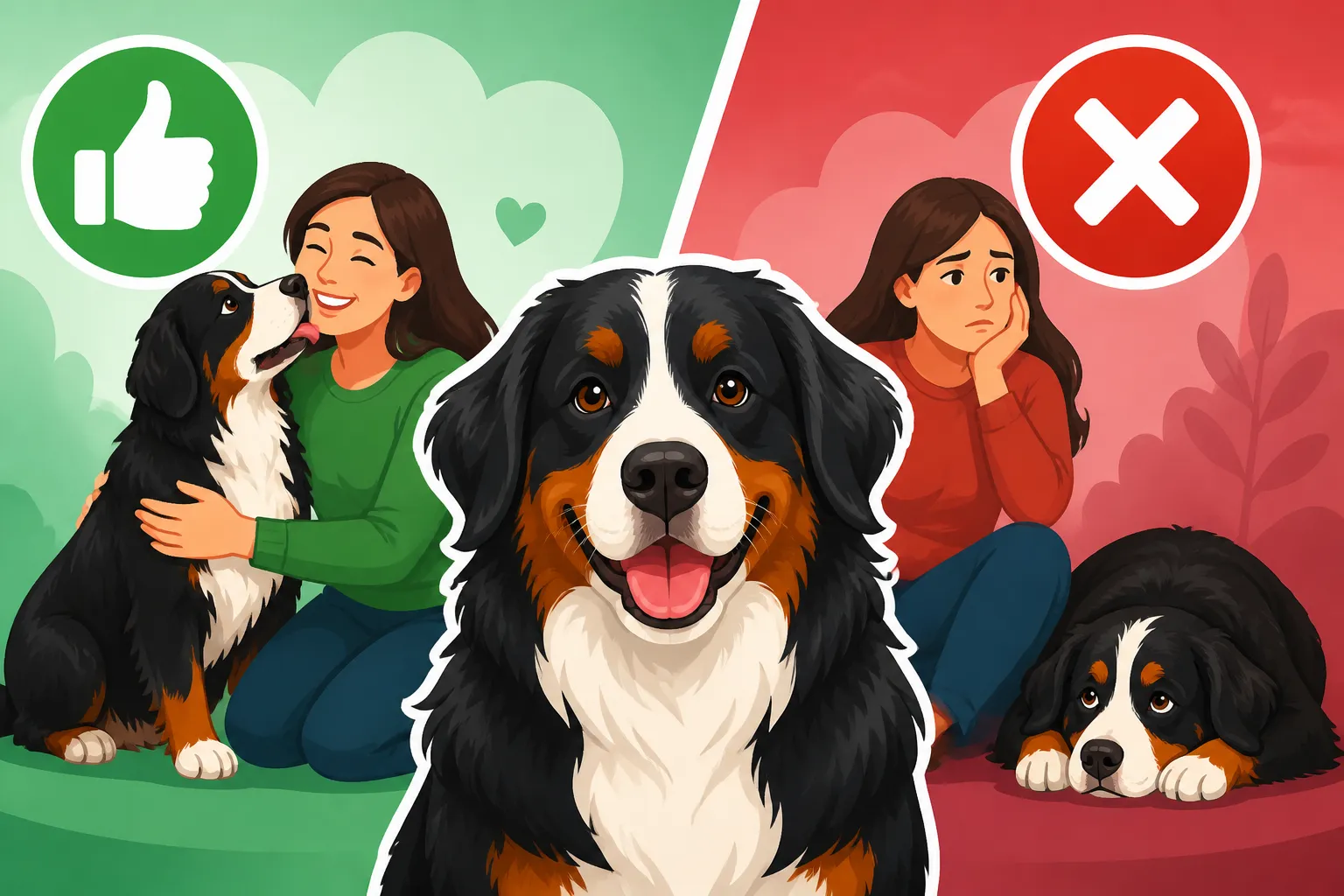
When owners say they would choose a Bernese Mountain Dog again, they are not necessarily saying the breed is easy, inexpensive, or free of heartbreak. Often they mean that the affection, companionship, and personality of their dog outweighed the hard parts for them. They may also mean they would do some things differently next time.
A sincere “no” can be just as thoughtful. It may reflect a household that cannot manage the grooming, size, cost, time alone, or emotional risk right now. Choosing another breed—or waiting—can be a responsible decision rather than a rejection of the dog you loved.
There is no single answer that fits every owner. The useful question is not whether Berners are “worth it” in the abstract, but whether their needs and challenges match the life you can offer. If you are still weighing the everyday routines, retailers such as Chewy may be one option for organizing recurring food and supply purchases, while your veterinarian remains the right person to advise on health-related products. Take the time to think through the ordinary days, not just the puppy-day excitement. That is the kind of honest preparation that gives both dog and owner the best chance of a rewarding life together.
Disclaimer
This article is for general informational purposes only and does not constitute professional advice. Laws, prices and regulations vary by location and change over time. Consult a qualified professional for guidance on your specific situation.