What Bloat Looks Like in a Bernese Mountain Dog
One of the most terrifying things a Bernese Mountain Dog owner can experience is the sudden onset of bloat, a condition that can escalate from seemingly mild discomfort to a life-threatening emergency in mere minutes. The fear of missing the subtle cues, or mistaking a serious medical crisis for an upset stomach, is a heavy burden many of us carry. This guide is dedicated to helping you recognize the critical, often subtle, signs of bloat in your beloved Berner, ensuring you can act swiftly and decisively to save their life.
Understanding Bloat in Bernese Mountain Dogs
When we talk about "bloat" in Bernese Mountain Dogs, we're almost always referring to something far more sinister than just a belly full of gas. We're talking about Gastric Dilatation-Volvulus, or GDV, a condition where the stomach not only fills with gas and fluid but also twists upon itself. This isn't just uncomfortable; it's a rapidly progressing emergency that demands immediate veterinary intervention.
What is Gastric Dilatation-Volvulus GDV?
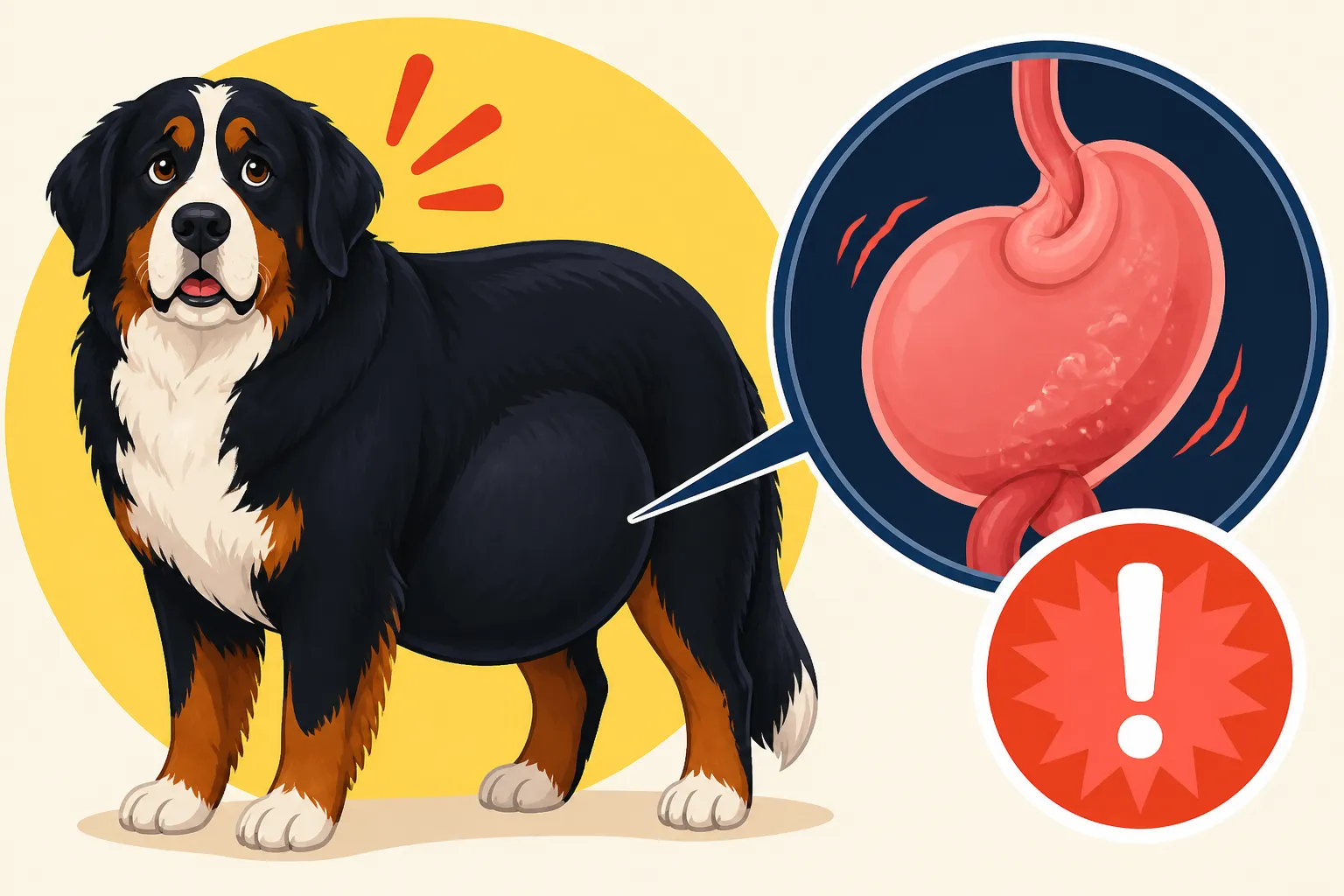
Imagine your dog's stomach like a large sac, sitting quite freely in their abdominal cavity. In GDV, this sac first distends, often dramatically, with gas, fluid, and sometimes food. This dilatation alone causes immense pain and puts pressure on surrounding organs, hindering blood flow and breathing. But the real danger arises when this distended stomach then twists, or "volvuluses," often 180 to 360 degrees. This twisting pinches off both the entrance (esophagus) and exit (duodenum) of the stomach, trapping everything inside.
The trapped gas and fluids continue to build, further expanding the stomach like a balloon, and putting even more pressure on vital blood vessels. This can cut off blood supply to the stomach wall, leading to tissue death, and also impair the function of other organs, including the heart and lungs. The dog can rapidly go into shock. For a deep-chested breed like the Bernese Mountain Dog, this twisting is a tragically common and swift killer. Understanding How Fast Bloat Kills a Bernese Mountain Dog truly underscores the urgency.
Why Berners Are at Higher Risk
It's heartbreaking to know that some breeds are simply predisposed to certain conditions, and Bernese Mountain Dogs unfortunately fall into the high-risk category for GDV. Their unique anatomy plays a significant role.
Firstly, their deep, narrow chests are a primary factor. Picture their torso: long from spine to sternum, but relatively narrow side-to-side. This conformation allows their stomach to swing more freely, making it easier for it to twist when distended. Other deep-chested breeds like Great Danes, Weimaraners, and German Shepherds also share this unfortunate predisposition.
Beyond anatomy, there might be a genetic component at play, though it's not fully understood. It appears that certain lines may have an even higher risk. Age also plays a role, with older Berners generally being more susceptible, though it can strike at any age. While less definitively proven, some contributing factors are often cited by veterinarians and experienced owners. These include eating large meals rapidly, especially if followed by vigorous exercise, drinking large amounts of water immediately after eating, and even stress or anxiety. While Whether Exercise After Eating Bloats a Bernese Mountain Dog is debated, many owners err on the side of caution. If your Berner wolfs down their food, consider a slow feeder bowl to mitigate this risk.
The Critical Signs of Bloat You Cannot Miss
Recognizing the signs of bloat is absolutely paramount. It's easy to dismiss early symptoms as a simple upset stomach, but with GDV, every minute counts. You need to be vigilant and know what to look for, even if your Berner is usually stoic.
Visible Physical Changes
The most classic and often discussed symptom of bloat is the distended abdomen, but it’s not always the first or most obvious sign.
Abdominal Distension: This is the hallmark symptom, but it can be subtle at first, especially in a heavily coated Bernese Mountain Dog. Look for swelling or a "drum-like" appearance, particularly on the left side of their abdomen, behind their ribs. If you gently tap this area, it might sound hollow, like a drum. The abdomen will feel tense and hard to the touch. Your dog might resist you touching their belly because of the extreme pain. It’s important to note that sometimes, in the very early stages, or if your dog is particularly large, the distension may not be immediately obvious, so don't wait solely for this sign.
Restlessness and Discomfort: This is often one of the earliest and most telling signs. Your usually calm Berner might suddenly become agitated, pacing endlessly, unable to get comfortable. They may repeatedly stand up and lie down, shift positions, or stretch as if trying to relieve pressure. They might frequently look at their flank or abdomen, almost as if saying, "Something is wrong here!" They'll be visibly uncomfortable, perhaps whining or groaning softly. It's a distress that's hard to ignore once you recognize it.
Retching/Non-productive Vomiting: This is a crucial indicator. Your Bernese Mountain Dog will try to vomit, heaving and gagging, but nothing or very little will come up, maybe just some foamy saliva or white mucus. This is because the twisted stomach is blocking the exit. If your dog is repeatedly trying to vomit but producing nothing, consider this a flashing red light. This isn't just a regular dog throwing up; it's a desperate, futile attempt to relieve pressure that they cannot. This symptom is often more alarming and noticeable than subtle abdominal swelling.
Behavioral and Physiological Indicators
Beyond the visible stomach changes, your Berner's behavior and physical state will also broadcast distress signals.
Excessive Drooling and Panting: Dogs drool for many reasons, but if your Berner is suddenly drooling profusely and panting heavily, especially without exertion or heat, it's a sign of pain and stress. Their body is trying to cope with the immense discomfort and potentially the onset of shock. Their breathing might become labored or shallow.
Weakness, Collapse, or Lethargy: As GDV progresses, your dog's condition will rapidly worsen. They might become weak, unsteady on their feet, and eventually collapse. This signals that they are going into shock, a life-threatening state where their circulatory system is failing. They might appear lethargic, unresponsive, or simply unable to move due to severe pain and systemic distress. This is a very late stage symptom, and by this point, time is critically short.
Pale Gums and Rapid Heart Rate: Check your dog's gums. Normally, they should be a healthy bubblegum pink. In a dog suffering from bloat and going into shock, their gums may become pale, white, or even bluish (cyanotic), indicating poor blood circulation and lack of oxygen. Their capillary refill time (CRT) – how quickly color returns to the gums after you press on them – might also be prolonged. Simultaneously, their heart rate will likely be very rapid as their body tries to compensate for the plummeting blood pressure. You might feel their pulse, which will be thready and fast.
Difficulty Breathing: The distended stomach can put significant pressure on the diaphragm, making it difficult for your Bernese Mountain Dog to expand their lungs fully. This can lead to shallow, rapid, or gasping breaths. You might notice their chest heaving more prominently than usual.
Here's a quick comparison table to help you distinguish between normal behavior and potential bloat symptoms:
| Symptom Category | Normal Bernese Mountain Dog Behavior | Potential Bloat Symptom (GDV) |
|---|---|---|
| Abdomen | Soft, pliable, normal size | Tense, hard, distended (drum-like sound), especially on left side |
| Vomiting | Actual expulsion of food/bile | Retching, heaving, gagging, little to no production of vomit (foamy saliva possible) |
| Comfort | Relaxed, lies down easily | Restless, pacing, inability to get comfortable, repeatedly standing/lying, looking at flank |
| Breathing | Regular, calm panting when hot/exercised | Rapid, shallow, labored breathing, excessive panting without exertion |
| Drooling | Minimal, after eating/anticipation | Excessive, continuous drooling |
| Energy Level | Energetic, playful, responsive | Weak, lethargic, unsteady, may collapse |
| Gums | Healthy pink, quick capillary refill | Pale, white, grey, or bluish; slow capillary refill |
| Heart Rate | Normal resting rate | Very rapid, thready pulse |
Acting Fast When Bloat Strikes
If you suspect bloat, even if you’re only slightly unsure, time is not on your side. This isn't a "wait and see" situation. This is a "call the emergency vet right now" situation. The Half-Hour That Decides a Bloated Bernese Mountain Dog is not an exaggeration – every minute matters.
Immediate Steps for Suspected Bloat
Do Not Wait; Contact Vet Immediately: This cannot be stressed enough. If you observe any combination of the symptoms listed above, especially non-productive retching and restlessness, consider it an absolute emergency. Call your regular veterinarian if it's during business hours, or more likely, your nearest emergency veterinary clinic, and tell them you suspect GDV in your Bernese Mountain Dog. This allows them to prepare for your arrival, gather the necessary equipment, and get staff ready. Do not drive to the vet without calling first, as precious time can be lost in intake.
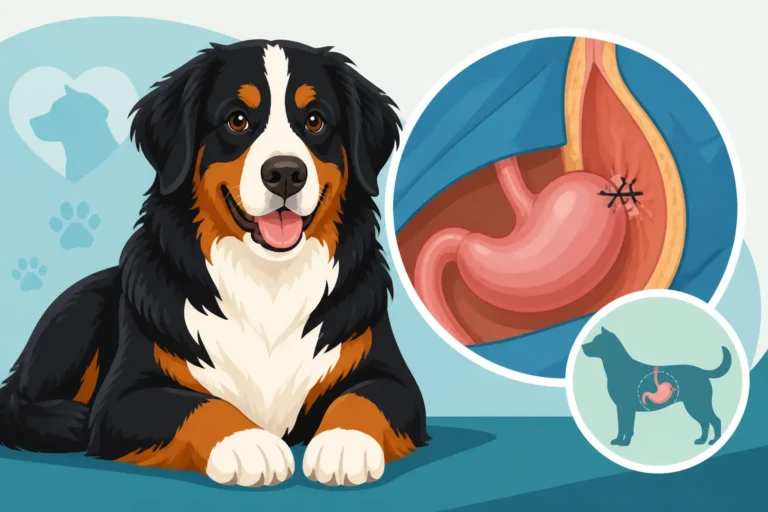
Emergency Vet Visit – What to Expect: Once you've called ahead, head straight to the clinic. Your vet will likely perform a quick physical examination and then confirm the diagnosis with an X-ray of the abdomen. The X-ray will clearly show if the stomach is distended and, crucially, if it has twisted. If GDV is confirmed, surgery will be necessary to de-rotate the stomach and potentially perform a gastropexy. This procedure, known as Tacking a Bernese Mountain Dog's Stomach, involves suturing the stomach to the abdominal wall to prevent future twisting. It’s a major operation, and it’s important to understand the significant financial commitment involved. The Night Bill When a Bernese Mountain Dog Bloats can be substantial. Insurance providers like Healthy Paws can be a lifesaver in these situations, as emergency surgeries are notoriously expensive.
Preparing for the Worst, Hoping for the Best: This is a traumatic experience for both you and your Berner. Be prepared for a candid conversation with your vet about the risks involved with surgery and recovery. Even with successful surgery, there can be complications like heart arrhythmias, stomach tissue damage, or infections. The recovery period is critical and requires intensive care. Understanding Whether a Bernese Mountain Dog Survives Bloat Surgery is crucial for informed decision-making during this stressful time.
Preventative Measures to Consider
While there's no 100% guarantee against bloat, there are several proactive steps you can take to significantly reduce your Bernese Mountain Dog's risk.
Slowing Down Eating (Slow Feeder Bowls): If your Berner inhales their food, a slow feeder bowl is a simple and effective tool. These bowls have various ridges and obstacles that force your dog to eat around them, making them take smaller bites and eat at a slower pace. This reduces the amount of air they swallow with their food, and prevents rapid stomach distension.
Multiple Small Meals: Instead of feeding one or two large meals a day, consider breaking their daily ration into three or more smaller meals. This keeps their stomach less full at any given time, reducing the potential for significant distension. This is a widely recommended practice, particularly for breeds at risk of bloat.
Restricting Exercise Before/After Meals: While the direct link between exercise and bloat isn't definitively proven for every dog, it's a commonly cited risk factor. Most veterinarians and experienced Berner owners recommend avoiding strenuous exercise, rough play, or exciting activities for at least an hour before and two hours after meals. This allows the stomach to digest food more calmly. This also applies to vigorous drinking immediately after a meal.
Gastropexy: This is arguably the most impactful preventative measure, especially for high-risk breeds like the Bernese Mountain Dog. A gastropexy is a surgical procedure where the stomach is permanently tacked to the abdominal wall. This prevents the stomach from twisting, although it doesn't prevent it from distending (which is still uncomfortable but not as immediately life-threatening). Many owners choose to have a gastropexy performed electively, often at the same time as a spay or neuter procedure. Adding a Gastropexy to a Bernese Mountain Dog's Spay is a common approach. If your Berner is male, or already neutered, a laparoscopic gastropexy is a minimally invasive option. Discussing What a Gastropexy Costs for a Bernese Mountain Dog with your vet is important, as is considering if your pet insurance, like Healthy Paws, would cover an elective procedure or only emergencies. It's an investment in their future health, offering significant peace of mind.
Taking these steps can help mitigate the risks, but constant vigilance for the signs of bloat remains the most important tool in protecting your cherished Bernese Mountain Dog.
Disclaimer
This article is intended for informational purposes only and does not constitute medical advice. Always consult with a qualified veterinarian for any health concerns or before making any decisions about your Bernese Mountain Dog's health or treatment.