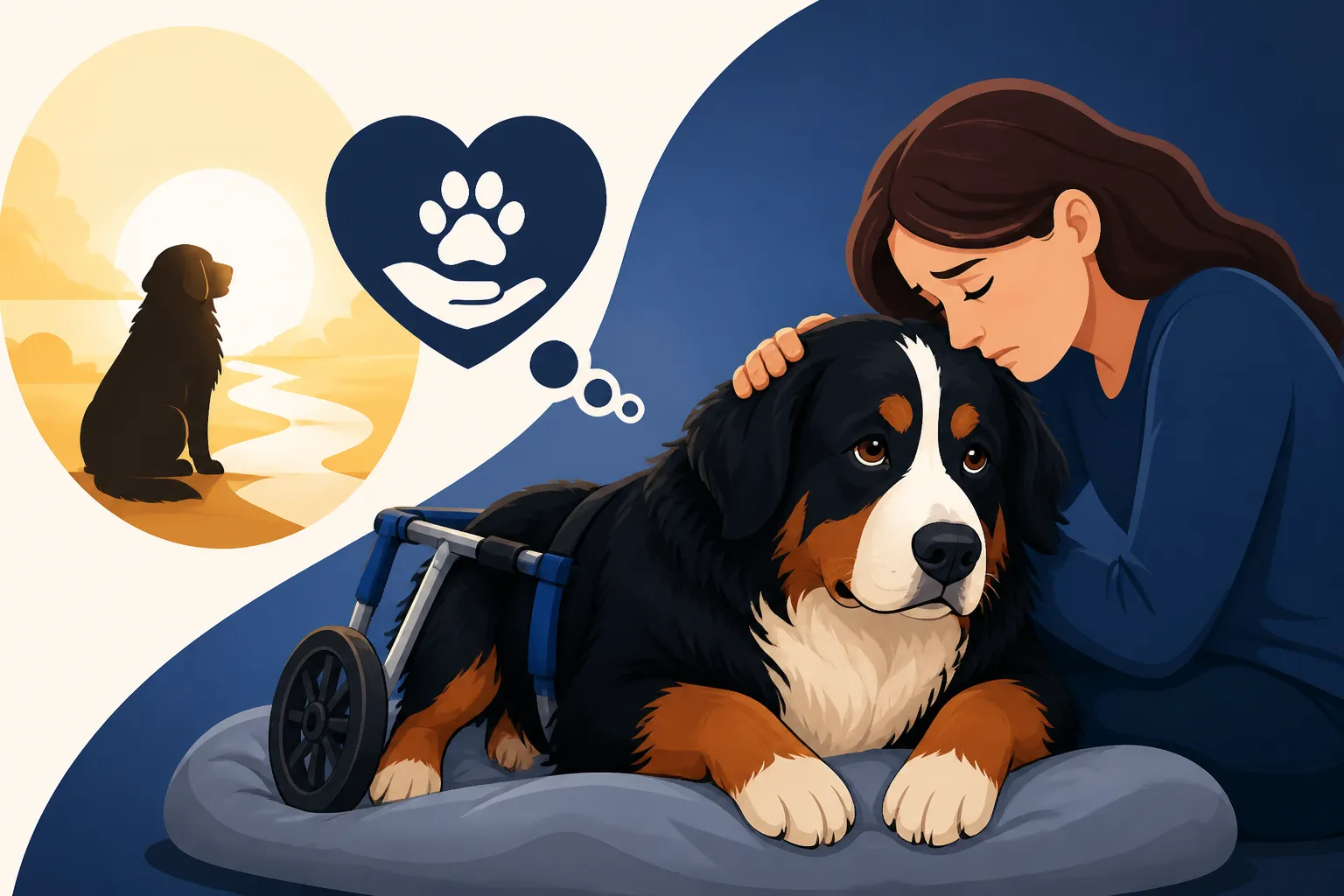
Deciding When to Let a Paralyzed Bernese Mountain Dog Go
The moment you realize your beloved Bernese Mountain Dog, once a picture of strength and joy, can no longer stand or move its back legs, is utterly heartbreaking. This unimaginable situation leaves you grappling with a whirlwind of emotions and an overwhelming question: when is it time to say goodbye to a paralyzed Bernese Mountain Dog? This guide is here to offer a compassionate framework for navigating this incredibly difficult decision, focusing on understanding your Berner's condition, assessing their quality of life, and supporting yourself through the process.
Understanding Paralysis in Your Bernese Mountain Dog
Paralysis, especially in a large breed like a Bernese Mountain Dog, can manifest suddenly or progress gradually, and understanding its root cause is the first step in determining the path forward. It's a devastating diagnosis that changes everything, not just for your dog, but for your entire household.
Common Causes of Paralysis
Berners are susceptible to several conditions that can lead to partial or full paralysis, most often affecting their hindquarters. One of the most common and devastating is Degenerative Myelopathy (DM). This insidious neurological disease, often referred to as "ALS for dogs," slowly and relentlessly attacks the spinal cord, leading to progressive weakness, stumbling, and eventually, complete paralysis of the hind limbs. Owners often first notice subtle changes, like a slight drag in a paw or an awkward gait, which can be difficult to pinpoint. Genetic testing, specifically The SOD1 Test for a Bernese Mountain Dog, can identify carriers or at-risk dogs, but there's no cure for DM itself.
Beyond DM, other causes of paralysis in a Bernese Mountain Dog can include acute spinal injuries, severe intervertebral disc disease (IVDD) where a disc ruptures and compresses the spinal cord, or even certain types of tumors that put pressure on neurological pathways. These conditions can sometimes have surgical interventions or more aggressive medical management options, depending on the severity and specific diagnosis. However, for many Berners, especially those with advanced DM, paralysis becomes a permanent, irreversible state. It’s crucial to get a definitive diagnosis from your veterinarian to understand the prognosis and potential avenues, if any, for treatment.
The Progression and Physical Realities
Once paralysis sets in, especially from conditions like DM, the physical challenges become immense. A paralyzed Bernese Mountain Dog loses the ability to support its own weight, stand, or walk independently. This often leads to secondary issues that severely impact their daily comfort and hygiene. Bladder and bowel control are frequently lost, meaning your dog will be incontinent, requiring manual expression of their bladder several times a day and constant vigilance to keep them clean and dry. This is not only a physical challenge but also a blow to their dignity, as they are naturally clean animals.
Muscle atrophy, particularly in the hind legs, happens quickly without use, making it even harder for them to attempt any movement or for you to assist them. Skin breakdown and bedsores are also significant risks, especially for a heavy dog that spends much of its time lying down. Constant repositioning, soft bedding like Orthopedic Beds Sized for a Bernese Mountain Dog, and meticulous hygiene are essential to prevent these painful complications. The reality of Living With a Bernese Mountain Dog Losing Its Back Legs is a profound shift in daily life, transforming the lively companion into a dependent patient needing constant care.
Assessing Your Paralyzed Berner's Quality of Life
This is arguably the most critical and emotionally draining part of the journey. Deciding when to let go isn't about giving up; it's about making an informed, loving choice when their suffering outweighs their joy. It requires an honest, objective, yet empathetic evaluation of their daily existence.
Beyond Movement: Evaluating Joy and Comfort
When a Bernese Mountain Dog is paralyzed, their world shrinks considerably. They can no longer run, play, or even get up to greet you at the door. But paralysis doesn't automatically mean a poor quality of life. Many paralyzed dogs can still experience significant joy if their pain is managed and they receive dedicated care. The key is to look beyond their physical limitations and evaluate their overall well-being.
Ask yourself: Does your Berner still enjoy food? Do their eyes light up when you enter the room? Do they still engage with their favorite toys, even if it's just by batting at them with a front paw? Are they still keen on gentle head rubs or belly scratches? Do they show interest in their surroundings, or do they seem withdrawn and disengaged? A dog's ability to express joy often lies in these small, subtle interactions. If your dog still shows clear signs of happiness and engagement, despite their immobility, it can be a strong indicator that they still find value in their life. However, if these sparks of joy diminish and are replaced by apathy or chronic discomfort, it's a red flag.
The Role of Pain Management and Dignity
Pain is a silent enemy, and dogs are masters at hiding it. While paralysis itself might not be painful, the underlying cause, or secondary complications like severe arthritis from compensation, bedsores, or urinary tract infections from incontinence, can be excruciating. It's vital to work closely with your veterinarian to ensure your Berner is on an effective pain management regimen. This might include oral medications, injections, or even alternative therapies such as physiotherapy for an arthritic Bernese Mountain Dog to maintain muscle mass and comfort in their front limbs. While a definitive answer to "Whether a Bernese Mountain Dog With Myelopathy Is in Pain" is complex, managing any potential discomfort is paramount.
Dignity is another crucial, though often overlooked, aspect. A naturally majestic and independent breed like the Bernese Mountain Dog can suffer emotionally when they lose control of basic bodily functions. Being constantly wet or soiled, unable to escape their own mess, or needing constant manual intervention for urination and defecation can be deeply distressing for them. While some dogs adapt remarkably, others become visibly anxious, depressed, or even aggressive when handled for hygiene. Observe your dog's reactions during these necessary daily tasks. Are they tolerating it, or are they showing signs of deep unhappiness or resignation? A decline in dignity, coupled with a lack of joy, can weigh heavily on their quality of life.
Here's a simple Quality of Life Checklist you can use:
| Indicator | Excellent Quality of Life | Acceptable Quality of Life | Poor Quality of Life |
|---|---|---|---|
| Pain/Comfort | No signs of pain, comfortable with medication. | Managed pain, occasional discomfort. | Constant pain, cannot be managed effectively. |
| Appetite | Eating well, enthusiastic for meals/treats. | Eats some meals, might be picky. | Refuses food, significant weight loss. |
| Hydration | Drinking adequately, no signs of dehydration. | Drinks sometimes, needs encouragement. | Refuses to drink, dehydrated. |
| Hygiene | Clean, minimal incontinence, easily managed. | Occasional accidents, requires regular cleaning. | Constant soiling, skin irritation, distressed by cleaning. |
| Happiness | Engaged, seeks interaction, enjoys attention. | Some interaction, moments of joy, mostly withdrawn. | No interest in surroundings or interaction, depressed. |
| Breathing | Normal, comfortable breathing. | Occasional labored breathing, manageable. | Consistent labored breathing, distress. |
| Mobility | Utilizes cart, can pivot, shows effort to move front. | Requires full assistance, may have limited front limb use. | Completely immobile, no effort to move at all. |
| Overall Energy | Bright and alert, responsive. | Lethargic, sleeps often, less responsive. | Dull, unresponsive, severe weakness. |
This checklist is a guide, not a definitive answer. Your dog's unique personality and history should always be considered.
The Emotional Toll on Caregivers
Caring for a paralyzed Bernese Mountain Dog is an act of profound love, but it's also incredibly demanding physically, emotionally, and financially. It’s easy to feel guilty for struggling, but acknowledging the immense burden is part of being realistic and kind to yourself.
Physical and Financial Demands
The sheer size of a Bernese Mountain Dog means that daily care of a paralyzed one is physically exhausting. Lifting a Hundred Pounds of Bernese Mountain Dog several times a day for bathroom breaks, repositioning, or just moving them from one spot to another can lead to back injuries for the caregiver. Many owners invest in specialized equipment like slings, full-body harnesses, or even carts, such as A Cart for a Bernese Mountain Dog Losing Its Legs, to aid with mobility and support. However, even with these aids, the manual labor remains substantial.
Beyond the physical, there's a significant financial strain. While pet insurance like Healthy Paws can often cover a portion of diagnostic tests, vet visits, and some treatments for the initial diagnosis or acute phases of conditions like disc disease, the long-term costs of palliative care can quickly add up. This includes medications for pain and inflammation, supplements, special bedding, incontinence supplies (pads, diapers), professional grooming to prevent matting and skin issues, and potentially regular veterinary check-ups to monitor secondary infections. These ongoing expenses can be overwhelming, adding another layer of stress to an already difficult situation.
Guilt, Burnout, and the Unspoken Truth
It's common for caregivers of chronically ill or paralyzed pets to experience burnout. The relentless schedule, the constant worry, the lack of sleep, and the emotional weight of watching your beloved companion decline can be crushing. You might find yourself feeling isolated, unable to leave your dog for extended periods, or sacrificing your own health and well-being to provide care. These feelings are normal, not a sign that you don't love your dog enough.
The unspoken truth is that sometimes, maintaining a pet's life becomes more about our inability to let go than about their true quality of life. The guilt associated with even considering euthanasia is immense. We promise them forever, and the idea of making that final decision feels like a betrayal. However, a crucial part of unconditional love is recognizing when we are holding on, and when our dog is truly suffering or has lost their zest for life. It's okay to admit that you're exhausted, overwhelmed, and heartbroken. Your feelings are valid, and seeking support from friends, family, or even a pet bereavement counselor can be incredibly helpful.
Making the Final Decision with Love and Compassion
This is the hardest conversation any pet owner will ever have, and there's no right or wrong answer, only the most loving one for your unique Bernese Mountain Dog.
Recognizing the Signs It's Time
The decision to say goodbye is rarely a single, dramatic event. More often, it's a gradual realization, a series of mounting signs that indicate your Bernese Mountain Dog's quality of life has irreversibly diminished. Look for a consistent pattern, not just one bad day. Are the "bad days" starting to outnumber the "good days"? Does your Berner show more signs of discomfort, apathy, or anxiety than joy or engagement?
Specific signs to look for might include:
- Persistent pain that can no longer be controlled by medication.
- Complete loss of appetite and refusal to drink, leading to significant weight loss and dehydration.
- Loss of interest in favorite activities, toys, or even interaction with family members.
- Chronic incontinence leading to frequent skin infections, bedsores, or visible distress during cleaning.
- Difficulty breathing or other secondary health complications that make them consistently uncomfortable.
- Visible depression or anxiety, where they seem withdrawn, restless, or simply "done."
Your veterinarian is your most important ally in this process. They can provide an objective assessment of your Berner's physical condition and help you interpret subtle signs of suffering. Don't hesitate to have an honest conversation about your dog's prognosis and quality of life. Sometimes, an experienced vet can see things we, blinded by love and hope, might miss.
Creating a Peaceful Transition
Once the agonizing decision is made, focus on ensuring your Bernese Mountain Dog's final moments are as peaceful and comfortable as possible. Many veterinary clinics offer Home Euthanasia for a Bernese Mountain Dog, allowing your beloved companion to pass away in the familiar, loving environment of your home, surrounded by their family. This can significantly reduce stress for both your dog and for you.
Before the day, consider what will bring your Berner comfort. Perhaps it's a special meal, their favorite blanket, or simply being held close. Allow yourself to grieve. This is the hardest part of loving a pet, but it is also the ultimate act of selflessness and compassion. Remember that you are freeing them from suffering, giving them the peace they deserve. The decision to say goodbye to a paralyzed Bernese Mountain Dog is an act of deep, unconditional love, and it's a decision no one should ever have to make alone.
Disclaimer
The information provided in this article is for general informational purposes only and is not a substitute for professional veterinary advice. Always consult with a qualified veterinarian for any health concerns or before making any decisions related to your pet's care.