A Bernese Mountain Dog That Bunny Hops
It’s incredibly unsettling to watch your usually graceful Bernese Mountain Dog suddenly start moving differently, especially if they begin what's often described as a "bunny hop." This peculiar gait, where both hind legs move together like a rabbit’s, is more than just a funny quirk; it’s a red flag, often signaling underlying discomfort or a significant orthopedic issue in your large breed companion. This guide will walk you through what bunny hopping means, its common causes in Bernese Mountain Dogs, and what steps you can take to help your beloved Berner.
Understanding the "Bunny Hop" Gait in Bernese Mountain Dogs
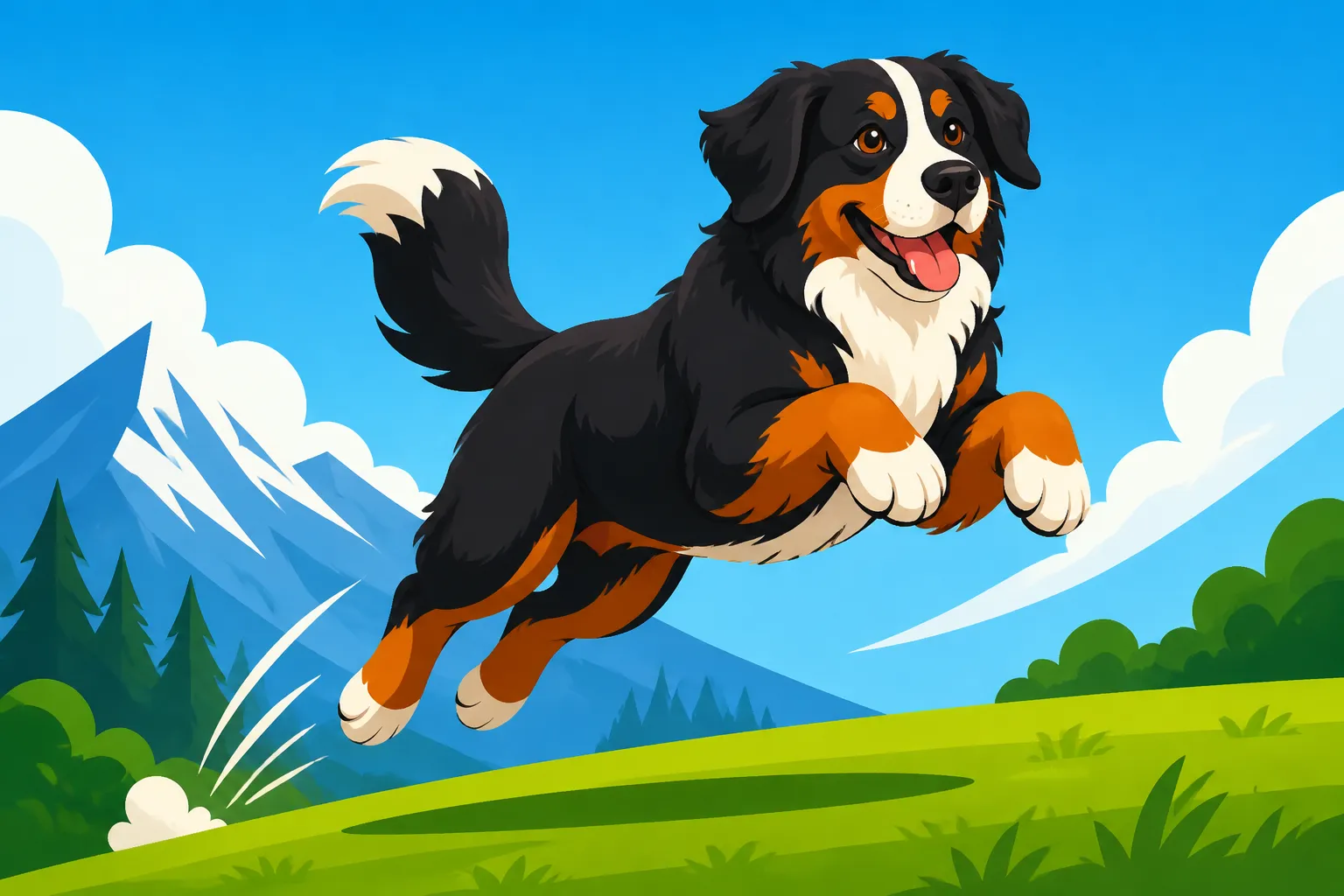
When we talk about a Bernese Mountain Dog that bunny hops, we're not referring to a playful jump or a quick burst of energy. Instead, it's a specific way your dog might try to move their hindquarters, particularly when running, going up stairs, or sometimes even just walking briskly. Instead of each hind leg extending and contracting independently in a smooth, alternating motion, they move both rear legs simultaneously, pushing off the ground together. It looks almost as if their rear end is bouncing or hopping forward.
For many Berner owners, this can be a gradual change, so subtle at first that you might not even register it as unusual. Perhaps you notice it most when your dog is chasing a ball in the park, or when they're trying to gain speed. Over time, it might become more pronounced, and you might see them struggling with tasks that used to be effortless, like climbing into the car or navigating a set of stairs. It's a compensatory mechanism, an attempt by your dog to minimize pain or instability in their hips, knees, or lower back. They are essentially trying to stabilize their rear end by using both legs as a single unit, rather than relying on the individual strength and articulation of each limb.
This action suggests that there's a problem with the natural, efficient locomotion of their hindquarters. Given the large size and genetic predispositions of Bernese Mountain Dogs, any change in gait warrants close attention and investigation. It's their silent way of telling you that something isn't quite right, and ignoring it could lead to increased discomfort and further deterioration of their joint health.
Recognizing the Specifics of the Gait
It's important to observe your Bernese Mountain Dog closely to really pinpoint when and how they are bunny hopping. Is it constant, or only at certain speeds? Does it happen when they first get up after resting, or only after prolonged exercise? You might notice that their back arches slightly as they move, or that their hindquarters sway more than usual. Some dogs will also exhibit a reluctance to use stairs or jump, or you might see a general decrease in their overall activity level. They might seem less enthusiastic about walks or playtime, preferring to lie down more often.
Imagine your Berner, typically a robust and active dog, suddenly hesitating at the bottom of the stairs, then attempting to bound up with both back legs together. This is a classic example. Or perhaps when they are running across the yard, instead of a fluid gallop, their rear end moves in distinct, synchronized hops. This isn't normal locomotion for a dog, especially one of the working breeds known for their strength and endurance. The sight can be quite alarming for an owner who knows their dog's usual agile movements.
Sometimes, this gait can be accompanied by other subtle signs of discomfort, like a slight yelp when jumping or being touched in the hip area, or a change in their sitting posture, often favoring one hip. They might also begin to lick or chew at their hind legs or paws more frequently, an attempt to self-soothe or distract from the underlying pain. Keeping a detailed log of these observations can be incredibly helpful for your veterinarian when it comes time for a diagnosis.
Common Reasons for Bunny Hopping in Bernese Mountain Dogs
When a Bernese Mountain Dog starts to bunny hop, the immediate suspicion usually falls on their hips. These majestic dogs are unfortunately prone to certain orthopedic conditions, largely due to their rapid growth, large size, and genetic predispositions. While hip dysplasia is the most frequent culprit, it's crucial to understand that other issues can also manifest with a similar gait.
Hip Dysplasia: The Primary Suspect
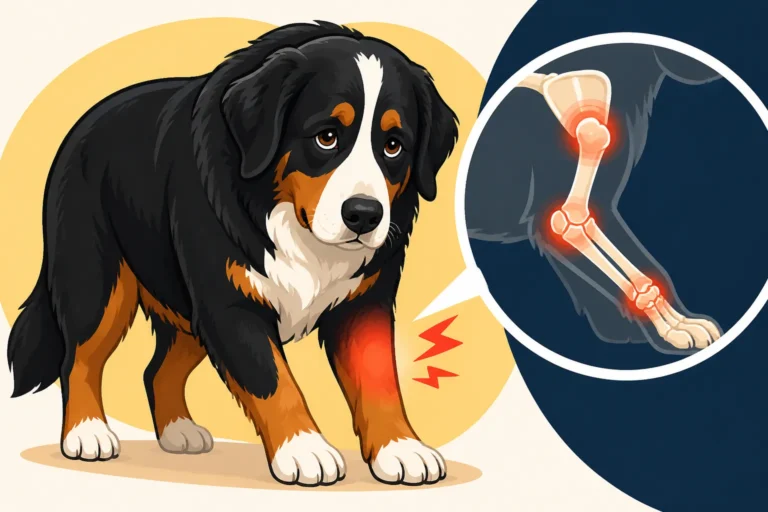
Hip dysplasia is a genetic condition where the ball and socket joint of the hip do not fit together properly. Instead of a smooth, congruent fit, the joint is loose, causing friction and instability. Over time, this abnormal wear and tear leads to the degeneration of the joint, resulting in pain, inflammation, and arthritis. For a large breed like the Bernese Mountain Dog, who carries significant weight, this condition can be particularly debilitating.
When a dog with hip dysplasia moves, especially at a trot or gallop, they experience discomfort. To alleviate this, they adopt the bunny hop gait as a coping mechanism. By moving both hind legs together, they distribute their weight more evenly across the unstable joint or reduce the jarring motion that would occur if each leg pushed off independently. This minimizes the amount of time each hip joint is subjected to stress, essentially reducing the painful impact of their movement. The condition can range from mild laxity, where symptoms are barely noticeable, to severe malformation, causing significant pain and lameness. It's one of the primary reasons why breeders meticulously screen their dogs with OFA Clearances a Bernese Mountain Dog Should Have before breeding.
The signs of hip dysplasia are often more noticeable as the dog ages, but some Berners can show symptoms as early as puppyhood. Beyond bunny hopping, you might observe difficulty getting up from a lying position, lameness in one or both hind legs, a reluctance to run or jump, or even a decrease in muscle mass in the hindquarters as the dog tries to avoid using the painful limbs. Watching The Bernese Mountain Dog Whose Back Legs Give Out can offer further insights into this and similar issues affecting their mobility.
Other Orthopedic and Neurological Causes
While hip dysplasia is often the first thing that comes to mind, a bunny hop gait can also be a symptom of other orthopedic or even neurological problems. It’s vital not to jump to conclusions, as proper diagnosis dictates the most effective treatment.
One common alternative is a cruciate ligament injury, particularly the cranial cruciate ligament (CCL) in the knee. This ligament is crucial for stabilizing the knee joint. When it tears, partially or completely, the knee becomes unstable, causing pain and lameness. A dog with a torn CCL might hop with their hind legs to avoid putting full weight on the injured knee, mimicking a hip-related bunny hop. This is a common injury, especially in active, large breeds. Owners often notice a sudden lameness followed by a persistent limp, which can evolve into a bunny-hopping motion as they try to compensate.
Another possibility involves the spine. Conditions like degenerative myelopathy (DM) or intervertebral disc disease (IVDD) can affect the nerves controlling the hind legs, leading to weakness, incoordination, and an altered gait. While DM usually causes more of a progressive weakness and wobbliness, severe cases of IVDD or other spinal compression can sometimes result in a synchronized hind leg movement as the dog tries to maintain balance and avoid pain. It's less common for these to present only as bunny hopping, but they should certainly be on the differential list.
Lastly, general Joint Disease in a Hundred Pound Bernese Mountain Dog, such as generalized arthritis in the hocks (ankles) or stifles (knees), not necessarily tied to dysplasia or specific ligament tears, can also cause enough discomfort to make a dog alter their gait. Even less common conditions like Legg-Calve-Perthes disease (though more common in smaller breeds, it's not unheard of) or other bone developmental issues could theoretically contribute to an unusual gait. This is why a thorough veterinary examination is paramount to get to the root of the issue.
Diagnosing the Underlying Problem
When you notice your Bernese Mountain Dog bunny hopping, the first and most crucial step is to schedule an appointment with your veterinarian. Don’t delay, as early diagnosis and intervention can significantly impact the long-term prognosis and quality of life for your dog.
Your vet will start with a comprehensive physical examination. This isn't just a quick look; it will involve observing your dog's gait in the examination room, feeling their joints for swelling, crepitus (a grinding sensation), or pain, and assessing their range of motion in the hips, knees, and hocks. They will also perform specific orthopedic tests, such as the Ortolani test for hip laxity, or manipulate the knee to check for cranial drawer sign, indicative of a CCL tear. They’ll also check neurological reflexes and sensation in the hind limbs to rule out spinal issues.
During this examination, be prepared to share all your observations: when the bunny hopping started, when it's most noticeable, any other changes in behavior or activity level, and whether your dog seems to be in pain. The more details you can provide, the better your vet can narrow down the potential causes. They might even ask to see a video of your dog bunny hopping, as it can be hard to replicate in the clinic setting.
Imaging and Specialized Tests
Once the physical exam is complete, imaging is usually the next step to confirm a diagnosis. X-rays are the gold standard for assessing skeletal structures and are almost always performed to evaluate the hips and knees. For hip dysplasia, radiographs will show the degree of laxity, the presence of degenerative changes like osteophytes (bone spurs), and the overall conformity of the hip joints. For knee issues, X-rays can reveal swelling, joint effusion, or changes indicative of a CCL tear.
In some cases, especially if spinal issues are suspected or if X-rays are inconclusive, your vet might recommend more advanced imaging techniques. These can include a CT scan (Computed Tomography) or an MRI (Magnetic Resonance Imaging). While more expensive, these can provide incredibly detailed images of soft tissues, nerves, and spinal cords, allowing for the detection of disc herniations, tumors, or other neurological conditions that might be contributing to the gait change.
Blood tests are generally not diagnostic for orthopedic conditions, but they might be performed as part of a pre-anesthetic workup if sedation is needed for X-rays or if surgery is being considered. They can also rule out inflammatory conditions or systemic illnesses. For genetic conditions like degenerative myelopathy, specific DNA tests are available, such as The SOD1 Test for a Bernese Mountain Dog, which can identify carriers or affected dogs. It’s a multi-pronged approach, but each piece of information helps paint a clearer picture of what's truly going on.
Managing and Treating Bunny Hopping
Once a diagnosis has been made, your veterinarian will discuss a tailored treatment plan for your Bernese Mountain Dog. The approach will depend entirely on the underlying cause, its severity, and your dog's age and overall health. Generally, treatment options fall into conservative (non-surgical) management and surgical intervention.
Conservative Management and Supportive Care
For many mild to moderate cases of hip dysplasia, early stages of arthritis, or even partial ligament tears, conservative management is often the first line of defense. The goal here is to manage pain, reduce inflammation, and support joint health to improve your dog's comfort and mobility.
This typically involves a combination of strategies:
- Weight Management: Maintaining a lean body condition is paramount for large breeds like Berners, especially those with joint issues. Every extra pound puts additional stress on already compromised joints. Your vet can help you determine an ideal weight and recommend a feeding plan. Losing even a few pounds can make a significant difference in reducing discomfort and improving mobility.
- Anti-inflammatory Medications: Non-steroidal anti-inflammatory drugs (NSAIDs) are commonly prescribed to reduce pain and inflammation in the joints. Medications like carprofen, meloxicam, or galliprant can significantly improve comfort. Your vet will monitor your dog for side effects, especially with long-term use.
- Joint Supplements: Glucosamine, chondroitin, MSM, and Omega-3 fatty acids (like those found in fish oil) are popular supplements that can help support cartilage health and reduce inflammation. While not a cure, they can be a valuable addition to a comprehensive treatment plan, especially when Starting a Bernese Mountain Dog on Joint Medication Young. Brands like Nutramax's Dasuquin and Cosequin are often recommended.
- Physical Rehabilitation: Just like in humans, physical therapy can be incredibly beneficial. This might include hydrotherapy (underwater treadmill), therapeutic exercises to strengthen supporting muscles, massage, and stretching. Hydrotherapy for an Arthritic Bernese Mountain Dog can reduce impact on joints while building strength. These therapies can improve flexibility, reduce pain, and enhance overall function.
- Controlled Exercise: While rest is sometimes necessary, complete inactivity can lead to muscle atrophy. Your vet will recommend a controlled exercise regimen, often consisting of short, leash-walks on soft surfaces. High-impact activities like jumping, running, or strenuous play should be avoided.
- Environmental Modifications: Making your home more joint-friendly can include providing orthopedic beds, using ramps to access cars or furniture, and laying down non-slip rugs on slick floors to prevent slips and falls.
Remember, conservative management is an ongoing commitment. Regular check-ups with your vet are essential to adjust the plan as needed and monitor your Bernese Mountain Dog's progress.
Surgical Interventions
When conservative methods are insufficient to manage pain or instability, or for severe cases, surgery might be the best option. The type of surgery depends entirely on the specific diagnosis.
For severe hip dysplasia, several surgical options exist:
- Total Hip Replacement (THR): This is considered the gold standard for severe hip dysplasia, offering excellent long-term results. The damaged ball and socket are replaced with prosthetic implants, similar to human hip replacements. This is a major surgery, but it can completely eliminate pain and restore normal function. The Case for Replacing a Bernese Mountain Dog's Hip is a significant one, both emotionally and financially.
- Femoral Head Ostectomy (FHO): In this procedure, the head of the femur (the ball part of the joint) is removed. The body then forms a "false joint" of scar tissue. While it doesn't restore a normal joint, it eliminates bone-on-bone pain. FHO is often considered for smaller dogs, but can be an option for Bernese Mountain Dogs if THR is not feasible, though the functional outcome might be less ideal for a large, heavy breed.
- Triple Pelvic Osteotomy (TPO) / Double Pelvic Osteotomy (DPO): These procedures are typically performed on younger dogs with hip laxity but without significant arthritic changes. The pelvis is cut in specific places and rotated to improve the coverage of the femoral head by the socket, stabilizing the joint.
For cranial cruciate ligament (CCL) tears, common surgical options include:
- Tibial Plateau Leveling Osteotomy (TPLO) or Tibial Tuberosity Advancement (TTA): These are the most common and effective surgeries for large breed dogs with CCL tears. They involve cutting and repositioning parts of the tibia to alter the biomechanics of the knee, making the torn ligament less critical for stability.
- Extracapsular Repair (Lateral Suture): This involves placing a strong suture outside the joint to mimic the function of the torn CCL. It's often used for smaller dogs or as a less invasive option, though TPLO/TTA generally offer superior long-term stability for large breeds.
Post-operative care is critical for surgical success, involving strict rest, pain management, and often extensive physical therapy for Recovery After a Bernese Mountain Dog's Hip Surgery or knee surgery. While surgery can be expensive, it's an investment in your dog's future comfort. When considering the financial implications of such significant procedures, discussing options with pet insurance providers like Healthy Paws can be incredibly helpful. A good pet insurance policy can cover a substantial portion of these high veterinary costs, allowing you to make decisions based on your Berner's health needs rather than solely on your budget.
Here’s a simplified comparison of general approaches:
| Approach | Description | Pros | Cons |
|---|---|---|---|
| Conservative Care | Weight management, NSAIDs, joint supplements, controlled exercise, physical therapy, environmental changes. | Less invasive, often cheaper initially, good for mild cases or managing advanced arthritis. | May not fully resolve pain, requires long-term commitment, may not prevent progression of disease. |
| Surgical Repair | Total Hip Replacement, FHO, TPLO/TTA, etc. | Can provide complete pain relief, restore significant function, halt disease progression. | Invasive, expensive, requires significant recovery time and post-operative care, potential surgical risks. |
Navigating these choices can be daunting, but remember your vet is your best resource. They will guide you through the pros and cons of each option, helping you decide what's best for your beloved Bernese Mountain Dog. Organizations like the Bernese Mountain Dog Club of America also provide valuable resources and support for owners dealing with these health challenges.
Disclaimer
Please note that the information provided in this guide is intended for educational purposes only and should not be considered a substitute for professional veterinary advice. Always consult with a qualified veterinarian for any health concerns or before making any decisions about your pet's medical care. Every dog is an individual, and proper diagnosis and treatment require a personalized approach from a veterinary professional.