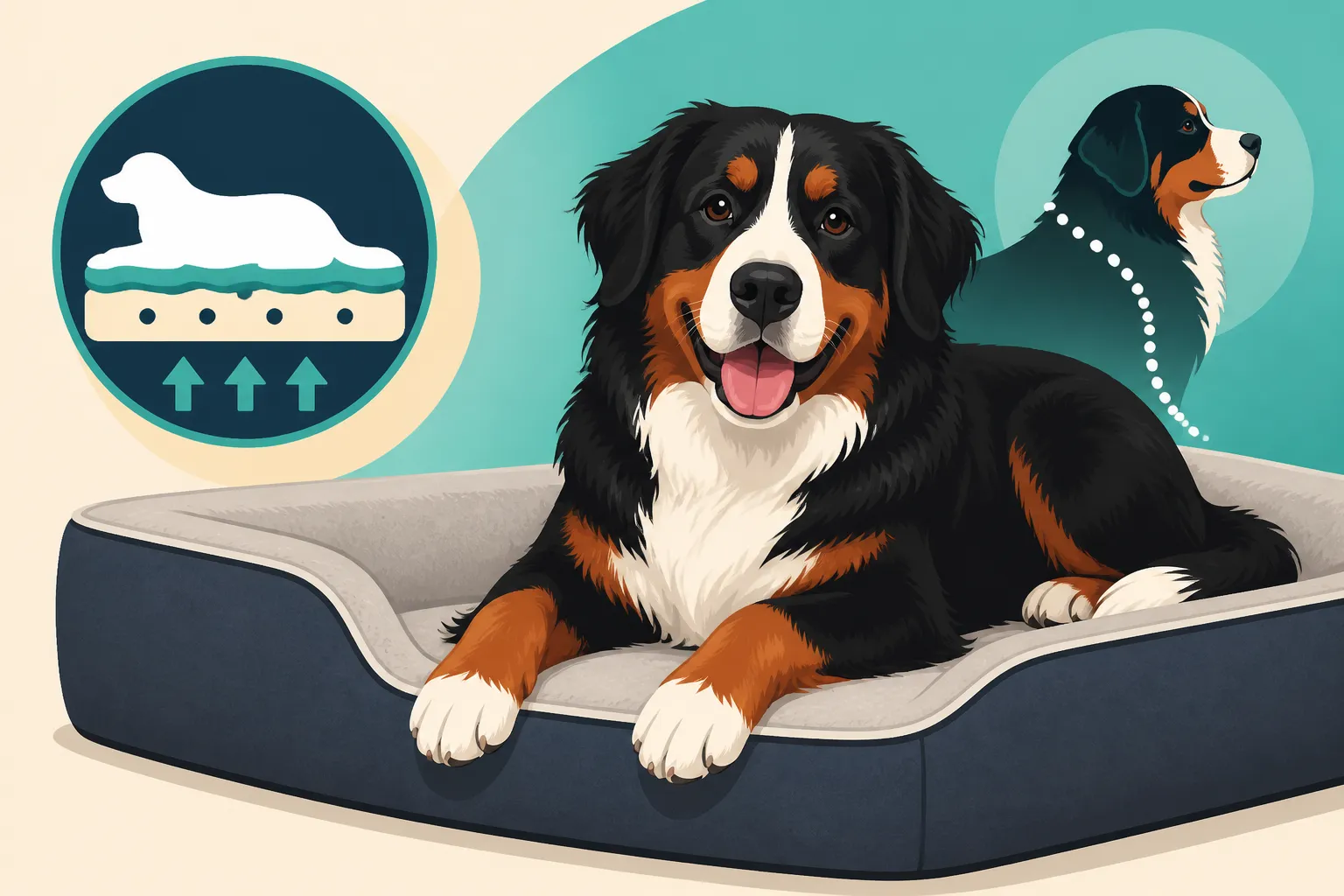
Orthopedic Beds Sized for a Bernese Mountain Dog
It can be incredibly disheartening to watch your beloved Bernese Mountain Dog struggle to get comfortable, especially as they get older or if they're dealing with joint pain. These magnificent dogs deserve a truly supportive place to rest, one that cradles their substantial weight and eases pressure on their hardworking joints. This guide is all about helping you understand why a specialized orthopedic bed isn't just a luxury, but a necessity for your Berner, and how to choose the very best one to ensure their comfort and long-term well-being.
Why a Bernese Mountain Dog Needs a Specialized Orthopedic Bed
Bernese Mountain Dogs are simply not built like other dogs. Their impressive size, powerful bone structure, and predispositions to certain health conditions mean that a standard dog bed just won't cut it. It’s not about being picky; it’s about providing the fundamental support their unique physiology demands.
The Weight and Frame: More Than Just a Large Dog
Think about the sheer mass of a Bernese Mountain Dog. We're talking about a dog that can easily tip the scales at 80 to over 100 pounds, sometimes even more. When a dog this size lies down, their weight isn't evenly distributed on a flimsy, overstuffed pillow. Instead, pressure points concentrate on their hips, shoulders, elbows, and spine. On a less-than-adequate bed, these areas can sink right through to the hard floor, leading to discomfort, poor circulation, and even pressure sores over time.
This isn't just about temporary discomfort; it’s about long-term health. A firm, supportive orthopedic bed acts like a custom mattress for your Berner, distributing their weight uniformly and cradling their body without allowing them to "bottom out." It maintains the natural alignment of their spine and joints, which is crucial for such a large and heavy breed. Without this foundational support, every nap and night's sleep can contribute to the wear and tear on their joints, accelerating issues rather than mitigating them.
Common Joint Issues That Demand Support
Sadly, Bernese Mountain Dogs are prone to a host of joint problems. Conditions like hip and elbow dysplasia are all too common in the breed, often starting to manifest even when they're relatively young. As they age, many Berners will develop arthritis, making every movement a conscious effort and every lie-down a potential struggle. An orthopedic bed becomes an indispensable tool in managing these conditions. Joint Disease in a Hundred Pound Bernese Mountain Dog is a reality many owners face, and proactive measures like proper bedding are vital.
Imagine the pain of inflamed joints pressing against a hard surface. A quality orthopedic bed, particularly one made with dense, supportive memory foam, cushions these sensitive areas. It reduces the impact when they lie down and provides a stable, non-sinking surface that makes it easier for them to stand up again. This relief isn't just about pain management; it can also help to slow the progression of some degenerative conditions by reducing constant strain. For a dog that might experience Arthritis in a Bernese Mountain Dog by Six, having a soft, yet firm, landing spot is paramount.
Age-Related Mobility Challenges
As our Berners gracefully enter their senior years, their mobility inevitably declines. Getting up from a lying position, especially after a long nap, can become a slow, sometimes painful, endeavor. Their muscles might weaken, and conditions like degenerative myelopathy can affect their hind legs, making coordination and strength a challenge. The Bernese Mountain Dog Whose Back Legs Give Out is a heartbreaking reality for some owners, and a good bed can significantly improve their quality of life.
An orthopedic bed designed for senior dogs often has lower entry points or a completely flat surface to eliminate any awkward steps or climbs. The firm support means they don't have to work as hard to push themselves up from a soft, sinking cushion. This thoughtful design helps preserve their remaining mobility, reduces the risk of falls or injury during transitions, and allows them to maintain a sense of independence for longer. It's about making their golden years as comfortable and dignified as possible, offering them a true sanctuary where they can rest without unnecessary strain. This approach to care is essential for Caring for a Bernese Mountain Dog After Six.
Key Features to Look For in a Bernese Mountain Dog Orthopedic Bed
Choosing the right orthopedic bed for your Bernese Mountain Dog isn't as simple as picking the biggest one you see. There are specific features that truly make a difference for these large, heavy, and often joint-troubled companions. You need to consider materials, size, and how easy it is to keep clean and durable for years to come.
Material Matters: Memory Foam and Support Layers
When we talk about orthopedic beds, the conversation almost always turns to memory foam, and for good reason. True orthopedic beds for giant breeds like the Bernese Mountain Dog typically feature high-density, open-cell memory foam. This isn't the same soft, squishy foam found in many cheaper dog beds. High-quality memory foam contours to your dog's body, distributing their weight evenly across the surface and relieving pressure points. It's designed to rebound slowly, retaining its shape and support over time, unlike cheaper alternatives that quickly flatten out.
Beyond just memory foam, look for beds with multiple layers. Often, a supportive base layer of firmer foam is crucial underneath the memory foam layer. This base prevents your Berner from sinking straight through to the floor, even with their substantial weight, which is a common issue that can exacerbate problems like Hips That Fail Under a Bernese Mountain Dog's Weight. Some beds might also include a gel-infused foam layer for cooling, which can be a real bonus for a thick-coated breed that can easily overheat. It’s an investment, but the right combination of materials ensures superior comfort and therapeutic benefits.
Sizing Up: Getting the Dimensions Right
This might seem obvious, but proper sizing is critical for a Bernese Mountain Dog. A bed that's too small, even if it's orthopedic, defeats the purpose because your dog won't be able to stretch out fully or change positions comfortably. Your Berner should be able to lie completely outstretched from nose to tail, with all four paws on the bed, without any part of their body hanging off. This means you'll likely be looking at "Jumbo," "Giant," or "XXL" sizes, and even then, double-check the actual dimensions.
Don't just measure your dog when they're curled up in a tight ball. Wait until they are fully relaxed and stretched out, perhaps during a nap. Measure them from nose to tail base and add at least 6-12 inches to that length. Also, consider the thickness of the bed. For a Bernese Mountain Dog, a bed should ideally be at least 4-6 inches thick, or even more, to provide adequate support against their weight without flattening over time. A thick bed helps them maintain comfort, especially if they are already dealing with Bedding for an Arthritic Bernese Mountain Dog.
Durability and Ease of Cleaning
Let's be realistic: a Bernese Mountain Dog is a large, often hairy, sometimes drooly creature. Their bed is going to get dirty. You need a bed that can withstand not just their weight, but also their shedding, any potential accidents, and the general wear and tear of a giant breed. Look for beds with durable, machine-washable covers. Heavy-duty upholstery-grade fabrics are excellent, as they resist tears and stand up to frequent washing. Water-resistant or waterproof liners underneath the main cover are also a godsend, protecting the valuable foam core from moisture, odors, and accidents.
Some brands, often found on reputable sites like Chewy, offer covers made from materials designed to resist hair and dirt, which can make daily maintenance a breeze. Zippers should be sturdy and ideally tucked away so your Berner can't chew on them. While cost is a factor, remember that investing in a high-quality, durable, and easy-to-clean bed will save you money and headaches in the long run compared to constantly replacing cheaper, flimsy options. The ability to keep the bed fresh and hygienic is crucial for your dog’s health and your home environment.
| Feature | Why it Matters for a Bernese Mountain Dog | Considerations |
|---|---|---|
| High-Density Memory Foam | Distributes immense weight evenly, relieves pressure on joints. | Look for multiple layers; 4-6+ inches thick. Avoid shredded foam. |
| Generous Sizing | Allows full stretching and comfortable position changes. | Measure your dog outstretched, add 6-12 inches to length. Ensure ample width. |
| Durable, Washable Cover | Withstands heavy use, shedding, and frequent cleaning. | Upholstery-grade fabric, hidden zippers. Replaceable covers are a bonus. |
| Waterproof Liner | Protects foam core from accidents, drool, and odors. | Essential for older dogs or those prone to accidents, preserving bed longevity. |
| Non-Skid Bottom | Prevents bed from sliding, aiding stability for less mobile dogs. | Important on hard floors to prevent slips when getting on or off. |
| Bolsters (Optional) | Provides head/neck support, a sense of security for dogs who like to nest. | Ensure bolsters don't reduce usable sleeping space too much; not ideal for full sprawl. |
Setting Up the Perfect Sleep Environment for Your Berner
Once you've found that ideal orthopedic bed, the next step is ensuring it becomes your Bernese Mountain Dog's favorite spot in the house. It's not just about the bed itself, but how it integrates into their daily life and makes them feel secure and comfortable.
Placement for Comfort and Accessibility
Where you place your Berner's orthopedic bed can make a huge difference in how much they use and enjoy it. For many Bernese Mountain Dogs, being near their family is important, so a spot in the living room or a frequently used common area is often preferred. However, ensure it’s not in a high-traffic zone where they might get tripped over or constantly disturbed. A quiet corner where they can still see what's going on, but feel safe, is often ideal.
Consider the temperature. With their thick double coats, Berners can get warm, so avoid direct sunlight or areas near heat vents. Conversely, drafty hallways are also not ideal, especially for older dogs with stiff joints. If your Berner struggles with mobility, choose a spot that's easy to access without navigating stairs or slippery floors. Adding Runners and Rugs for a Bernese Mountain Dog That Slips around the bed area can create a safer approach. The goal is to create a true sanctuary where they can unwind completely, knowing they are both comfortable and safe.
Encouraging Use and Making it Their Sanctuary
Some dogs take to a new bed immediately, while others might be a little hesitant. To encourage your Bernese Mountain Dog to use their new orthopedic haven, make it a positive experience. Place some of their favorite toys or a familiar blanket on the bed. You can even spray it lightly with a calming pheromone spray if they seem anxious. Reward them with praise and treats every time they voluntarily lie on the bed. For dogs motivated by food, placing a chew toy or a small snack from a brand like Ollie on the bed can create a positive association.
Consistency is key. Encourage them to use the bed for naps and overnight sleep. If they have another, less supportive bed, gradually phase it out. The orthopedic bed should become their go-to spot for rest and relaxation. Over time, they'll associate it with comfort and safety, and it will naturally become their cherished sanctuary, a place where they can escape the hustle and bustle of the house and truly rejuvenate.
When to Consider Multiple Beds
While one excellent orthopedic bed is a fantastic start, there are situations where having multiple beds can be incredibly beneficial for a Bernese Mountain Dog. If your Berner has free roam of your home, or if you spend significant time in different areas (e.g., a den and a living room), having a supportive bed in each main area ensures they always have a comfortable spot to lie down without having to travel far, especially if they have Living With a Bernese Mountain Dog Losing Its Back Legs.
Additionally, if you have more than one dog, especially another large breed, it's often best to provide each dog with their own dedicated orthopedic bed. This prevents competition for the best spot and ensures both dogs receive the individualized support they need. For a Bernese Mountain Dog that might be recovering from surgery or a particular illness, a secondary, easily accessible bed in a quiet room might also be useful for focused rest and recovery, even if their primary bed is in a more social area. Think about how your Berner uses your home and where they most often choose to rest; those are prime locations for an orthopedic haven.
Different Types of Orthopedic Beds and Their Benefits
The world of dog beds can be surprisingly varied, even within the orthopedic category. While the core purpose is always support, different designs cater to different preferences and needs for a giant breed like the Bernese Mountain Dog. Understanding these variations can help you pick the perfect match for your furry friend.
Bolster Beds vs. Flat Mattresses
One of the most common distinctions you'll encounter is between bolster beds and flat mattress-style beds. A bolster bed features raised edges, creating a cozy, den-like feel that many dogs adore. For a Bernese Mountain Dog who loves to curl up, nest, or rest their head on a pillow, the bolsters can provide excellent neck and head support, mimicking a pillow. This can be particularly comforting for dogs who feel more secure with a defined space around them.
However, bolsters can sometimes reduce the overall usable sleeping area. If your Berner prefers to sprawl out completely, stretching their legs in every direction, a flat mattress-style bed might be more suitable. These beds offer maximum surface area for unhindered stretching and are often easier for dogs with significant mobility issues to get on and off, as there are no edges to step over. Ultimately, the choice often comes down to your individual dog's sleeping habits and preferences. Observe how your Berner normally sleeps – do they curl up tight or stretch out long? This will guide your decision.
Elevated Beds: A Cooler Option
Elevated dog beds, often featuring a mesh or canvas fabric stretched over a frame, are gaining popularity, especially in warmer climates or for dogs that tend to overheat. The primary benefit of an elevated bed is improved air circulation underneath, which helps keep your Bernese Mountain Dog cooler by preventing heat from trapping against the floor. This can be a huge advantage for a breed known for its thick coat and potential for heat intolerance. Heat and the Bernese Mountain Dog's Black Coat can be a real concern.
However, for a Berner, especially an older one or one with severe joint problems, a purely elevated mesh bed might not offer enough orthopedic support on its own. The fabric can sag under their weight, creating pressure points. A great solution is to combine an elevated frame with a high-quality orthopedic mattress or thick pad placed on top. This way, you get the benefits of elevated cooling and superior joint support. Always ensure the elevated bed frame is sturdy enough to safely support your Bernese Mountain Dog's weight without wobbling or collapsing, and that the height isn't too challenging for them to get on and off, particularly if they are Slowing Degenerative Myelopathy in a Bernese Mountain Dog.
Travel and Outdoor Orthopedic Solutions
Life with a Bernese Mountain Dog often involves adventures, whether it's a road trip, a camping excursion, or simply spending time in the backyard. Just because you're away from home doesn't mean their orthopedic needs disappear. Many brands offer portable orthopedic options that ensure your Berner stays comfortable wherever you go. These can include roll-up memory foam mats, often with waterproof or water-resistant covers, that are easy to transport and set up.
For outdoor use, look for materials that are specifically designed to be weather-resistant, UV-protected, and easy to wipe clean. Some outdoor orthopedic beds feature a durable, quick-drying fabric that can withstand dampness, dirt, and sun. Having a dedicated travel or outdoor orthopedic pad means you don't have to compromise on your Berner's joint health when you're on the go. Whether it's a cozy spot at the campsite or a supportive pad for their crate during a long car ride, ensuring continuous orthopedic support is a critical part of their overall well-being. Even if you have pet insurance like Healthy Paws, taking preventative steps to maintain comfort is always the best approach.
Disclaimer
This article is for general informational purposes only and does not constitute professional advice. Laws, prices and regulations vary by location and change over time. Consult a qualified professional for guidance on your specific situation.