Why a Black Coat Overheats a Bernese Mountain Dog
If you're a Bernese Mountain Dog owner, you know the heart-stopping panic of watching your big, fluffy companion pant excessively on even a moderately warm day. It's a frustrating and often frightening reality that their beautiful, dense, black coat, which makes them so striking, can also be their biggest enemy when the temperature rises. This guide will meticulously break down the science behind why that gorgeous black fur acts like a personal solar panel, how it impacts your Berner, and what you can do to keep them safe and comfortable.
The Science Behind Dark Coats and Heat Absorption
It's not just an old wives' tale; there's a real, scientific reason why that deep, rich black coat makes your Bernese Mountain Dog feel the heat more intensely than their lighter-colored canine cousins. Understanding the physics involved can help you better appreciate the challenges your Berner faces.
How Color Affects Thermal Radiation
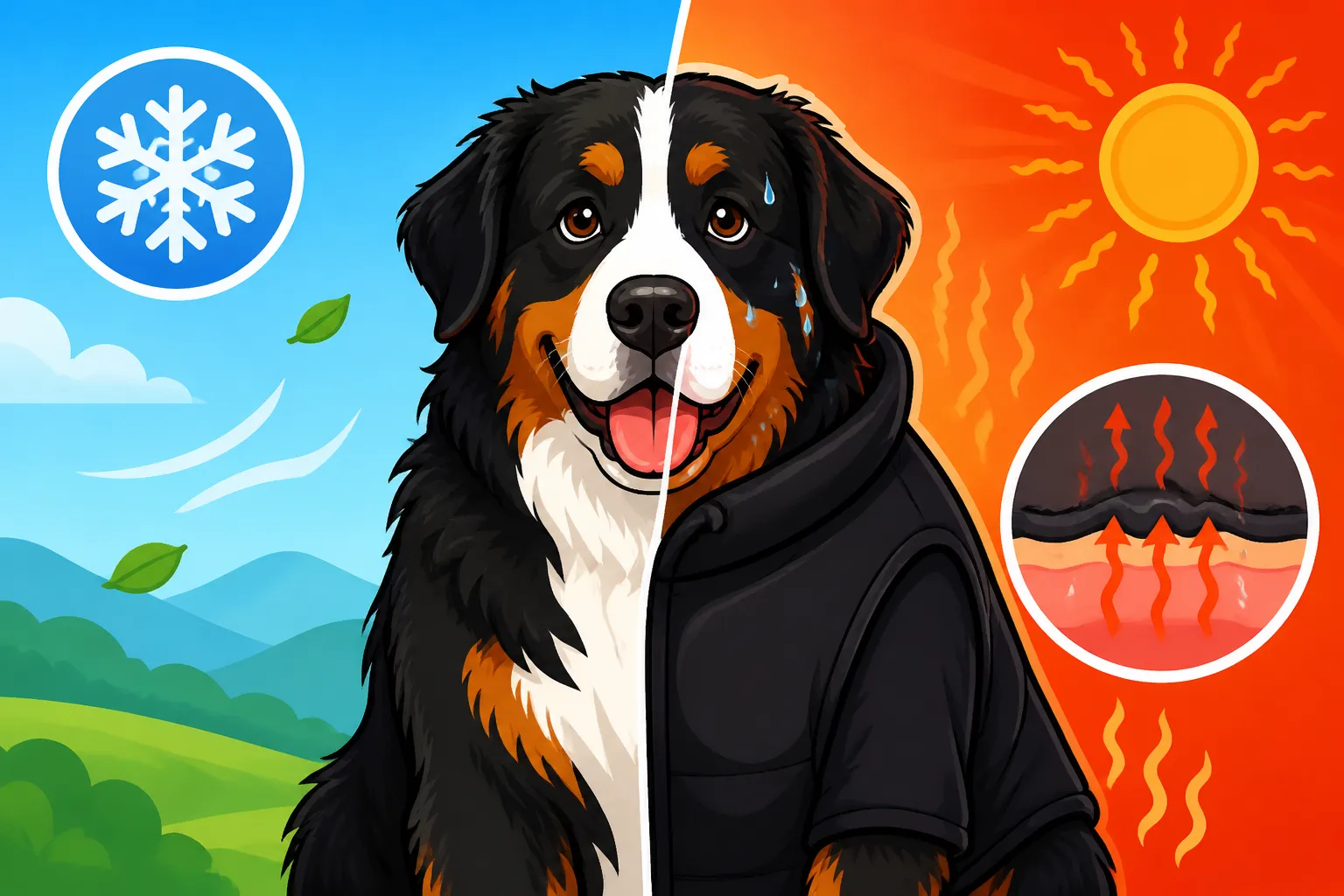
Think about walking outside on a sunny day wearing a black t-shirt versus a white one. You'll feel the difference almost immediately. The same principle applies to your Bernese Mountain Dog's magnificent black coat. Black, by its very nature, is an excellent absorber of radiant energy across the entire visible light spectrum. When sunlight, which is essentially electromagnetic radiation, hits a black surface, most of those light waves are absorbed rather than reflected.
This absorbed light energy is then converted into thermal energy, or heat. So, every ray of sunshine that lands on your Berner's black fur isn't just bouncing off harmlessly; it's actively contributing to a rise in their surface and core body temperature. Lighter colors, on the other hand, reflect a significant portion of sunlight, meaning less energy is absorbed and converted into heat. This fundamental difference in how colors interact with light is the primary reason your Bernese Mountain Dog’s black sections of coat get so incredibly warm, sometimes feeling almost hot to the touch, even when the air temperature isn't scorching. It’s like they’re wearing a heavy, heat-retaining blanket made of pure sunshine.
The Double Coat's Role and Misconception
Now, add another layer to this heat equation: the Bernese Mountain Dog’s iconic double coat. Many people mistakenly believe that a thick coat helps keep a dog cool in summer by providing insulation. While it's true that a well-maintained double coat can insulate a dog from both cold and heat, there's a critical nuance, especially when the ambient temperature is higher than the dog's body temperature, and especially for a dog with a predominantly dark coat.
A double coat consists of a softer, dense undercoat and longer, coarser guard hairs. In cold weather, this system traps a layer of air close to the body, which is warmed by the dog's natural body heat, providing excellent insulation. However, in hot weather, particularly when the black guard hairs and undercoat are absorbing radiant heat, this same trapped air can become a barrier to heat loss. Instead of allowing cooler air to circulate against the skin and facilitate evaporative cooling (through panting and paw pads), the dense coat can effectively trap the heat that's being generated both externally (from the sun) and internally (from the dog's metabolism). It becomes a heat sink that is difficult to dissipate. So, while it offers protection against sunburn and some radiant heat, the sheer volume and density, combined with the dark color, can make it harder for your Berner to release the heat they've accumulated.
Beyond Just the Black: Surface Area and Density
While the black color is a major player in heat absorption, it's not the only factor. The sheer volume, length, and density of a Bernese Mountain Dog's fur also significantly contribute to their challenge with overheating. Their coat isn't just black; it's a lot of black fur.
Imagine trying to cool down a small, thin towel versus a thick, plush comforter. The comforter, even if it’s a lighter color, will hold onto heat for much longer simply because it has more material and more trapped air within its fibers. Your Bernese Mountain Dog's coat is like that plush comforter. Each individual hair, especially the thick undercoat, provides surface area where heat can be absorbed and trapped. The density of their fur means there's less direct airflow to the skin, which is where much of a dog's non-panting heat dissipation occurs. This combination of dark color, significant fur volume, and dense undercoat creates a perfect storm for heat retention. It’s a beautifully adapted coat for the frigid Swiss Alps, but a significant liability in warmer climates or during summer days, making it one of the reasons the answer to whether a Bernese Mountain Dog suits a hot climate is often a resounding "no."
Specific Challenges for a Bernese Mountain Dog's Black Coat
Owning a Bernese Mountain Dog means always being acutely aware of the weather, especially when the sun is out. Their coat isn't just warm; it presents very particular hurdles that other breeds might not face to the same extent.
Sun Exposure and Rapid Heat Gain
The most immediate and obvious challenge for your Bernese Mountain Dog is direct sun exposure. Picture your Berner napping peacefully in a patch of sunlight in the backyard. While it might look idyllic, their black fur is working overtime, absorbing every photon of light and converting it to heat. This isn't a gradual warming; it's a remarkably efficient process. Within minutes, the surface temperature of their black coat can become significantly hotter than the ambient air temperature, rapidly increasing their internal body temperature.
This rapid heat gain can be deceiving because the air might still feel pleasant. You might not realize how hot your dog is getting until they start showing obvious signs of distress. Even a brief walk in the sun, especially during the peak hours of the day, can be enough to push a sensitive Berner towards overheating. It's not just about the external air temperature; it's about the radiant heat from the sun directly striking that dark fur, turning their beautiful coat into an oven. This is why it's so important to adhere to The Hours a Bernese Mountain Dog Should Not Walk during warmer seasons.
Limited Heat Dissipation
Once a Bernese Mountain Dog's black coat has absorbed a significant amount of heat, the next problem arises: how do they get rid of it? Unlike humans who sweat all over their bodies, dogs primarily regulate their temperature through panting and through the pads of their feet. While their double coat is excellent at trapping heat, it's not very efficient at releasing it once trapped, especially when the external temperature is high.
The dense undercoat, designed to keep them warm in freezing temperatures, now acts as a barrier, preventing efficient convection and radiation of heat away from the skin. This means that the heat generated by their own metabolism, combined with the heat absorbed by their black coat, gets trapped. Their body then has to work even harder, panting more vigorously, to try and cool down. This extra effort further raises their body temperature, creating a dangerous feedback loop that can quickly escalate into heatstroke if not interrupted. It's a continuous uphill battle against their own physiology and the environmental conditions.
Geographic Considerations and Climate Impact
The challenges posed by a Bernese Mountain Dog's black coat are amplified tremendously by geography and local climate. These dogs originated in the frigid, snowy Swiss Alps, where their thick, dark coats were a vital survival tool, absorbing what little warmth the high-altitude sun offered and insulating them from bitter cold.
Transplant that dog to a hot, humid climate like the American South or even a warm summer in the Midwest, and you're asking their body to perform a physiological feat it's not ideally designed for. In regions with consistently high temperatures and intense sunlight, the risk of overheating becomes a daily, constant concern. Owners in these areas must be extremely diligent, often having to drastically alter their routines and environments to accommodate their dog's needs. This is why you often see Berner owners living in warmer climates investing heavily in air conditioning, cooling mats, and even specialized cooling gear for a Bernese Mountain Dog. Their beautiful coats, while perfect for a winter wonderland, are a significant liability in climates far removed from their snowy origins, making Summer Routines for a Bernese Mountain Dog a complex puzzle to solve every year.
Practical Strategies to Mitigate Overheating Risks
Understanding why your Berner overheats is crucial, but knowing what to do about it is even more important. Thankfully, there are many practical steps you can take to help your black-coated companion stay cool and comfortable.
Strategic Grooming for Heat Management
Proper grooming isn't just about aesthetics; it's a vital tool for temperature regulation in a Bernese Mountain Dog. Regularly brushing your Berner, especially with a good deshedding rake, helps to remove dead and loose undercoat. This is critical because a matted or thick, un-shed undercoat acts like an extra layer of insulation, trapping warm air against their skin and preventing vital airflow.
By thinning out the undercoat, you create space for air to circulate, which can help dissipate heat more effectively. Aim for regular brushing sessions, especially during seasonal shedding periods when they're blowing their coat. This allows the remaining guard hairs to do their job of protecting the skin from UV rays, while the reduced undercoat allows for better cooling. What you should never do, despite the temptation, is shave your Bernese Mountain Dog. Their double coat provides crucial protection from sunburn and helps regulate temperature by creating an air barrier. Shaving can actually disrupt this natural system, leading to skin damage and potentially making them more vulnerable to heat and sun. If you’re ever wondering if it’s a good idea, remember The Case Against Shaving a Bernese Mountain Dog in June.
Environmental Adjustments and Cooling Aids
Creating a cool environment for your Berner is non-negotiable. Air conditioning is often a necessity, not a luxury, especially during peak summer months. If you live in a climate where The Temperature a Bernese Mountain Dog Stops Coping is frequently reached, ensure your home remains a cool sanctuary.
Beyond central air, strategic placement of fans can help move air and create a cooling breeze, particularly if aimed at their favorite resting spots. Cooling mats, which typically contain a gel that absorbs body heat, can be a godsend. These are pressure-activated and provide a cool surface for your Berner to lie on, helping to draw heat away from their body. Always have fresh, cool water readily available, both inside and out, and consider adding ice cubes to their bowl. For outdoor time, ensure there is ample shade at all times. Even on cloudy days, UV rays can penetrate and contribute to heat absorption by their dark coat. A kiddie pool with a few inches of water can also provide a great way for them to cool their paws and belly. For more tips on keeping your indoor space comfortable for them, check out Keeping a Room Cool Enough for a Bernese Mountain Dog.
Smart Exercise Routines
Exercise is vital for your Bernese Mountain Dog's physical and mental health, but it needs to be managed carefully when dealing with a heat-absorbing coat. The key is timing. Avoid walks, playtime, or any strenuous activity during the hottest parts of the day, typically between 10 AM and 4 PM. Instead, aim for early mornings (before the sun gets strong) and late evenings (after the sun has set and the pavement has cooled down).
Even on cooler days, be mindful of humidity, which can make it harder for dogs to cool themselves through panting. Keep exercise sessions shorter and less intense than you might with a lighter-coated breed. Always carry water for both you and your dog, and offer frequent breaks in the shade. Be vigilant about the temperature of pavement and asphalt, as these surfaces can absorb and radiate heat, burning your Berner's paw pads even if the air feels mild. Consult Pavement Temperature and a Bernese Mountain Dog's Pads for more information. Remember that even a slight limp could indicate a serious problem, and if you notice any signs of overheating, stop immediately and begin cooling procedures.
Recognizing and Responding to Heat Stress
Knowing the signs of heat stress and acting quickly can save your Bernese Mountain Dog’s life. Because their black coats can bring on overheating so rapidly, recognizing the early warnings is paramount. Initial signs of heat stress include excessive panting (more than usual, with a wide open mouth and possibly a visible tongue), seeking shade, slowing down or becoming sluggish, and an increased heart rate. Their gums might appear darker red.
As heatstroke progresses, symptoms become more severe: staggering, collapsing, vomiting, diarrhea, glazed eyes, stupor, and even seizures. Their body temperature can rise dangerously high. If you suspect your Berner is overheating, move them immediately to a cool, shaded area. Offer small amounts of cool (not ice-cold) water. Wet their coat with cool water, focusing on their belly, armpits, and groin, where major blood vessels are close to the surface. You can use a hose or wet towels. Do not use ice water, as it can cause blood vessels to constrict and actually hinder cooling. If the symptoms are severe or don't improve quickly, seek immediate veterinary attention. Read How a Bernese Mountain Dog Behaves Before Heat Stroke for a detailed breakdown of symptoms and follow the advice in Cooling a Collapsed Bernese Mountain Dog in the Field for emergency steps.
Long-Term Considerations for Bernese Mountain Dog Owners
Living with a Bernese Mountain Dog means being prepared for their unique needs throughout their lives, especially when it comes to their health and comfort in various environmental conditions.
The Importance of a Health and Wellness Plan
Proactive health management is critical for Bernese Mountain Dogs, given their predisposition to certain health challenges and their sensitivity to heat due to their black coat. Regular veterinary check-ups are essential to monitor their overall health, including heart and respiratory function, which can be strained by overheating. Discuss climate considerations with your vet, especially if you live in a warmer region. They can offer tailored advice on managing heat risk, including dietary adjustments, hydration strategies, and appropriate activity levels.
Beyond routine care, having a robust financial plan in place for potential emergencies is wise. Heatstroke can lead to significant veterinary bills, sometimes requiring overnight stays, IV fluids, and extensive monitoring. Investing in pet insurance, such as a comprehensive plan from Healthy Paws, can provide immense peace of mind. A good policy can help cover the costs of emergency treatments, diagnostics, and follow-up care for heat-related illnesses, allowing you to prioritize your Berner's health without added financial stress. It’s an investment in their well-being, especially considering how quickly a heat-related incident can turn serious.
Understanding Breed-Specific Vulnerabilities
The black coat is just one piece of the puzzle when it comes to a Bernese Mountain Dog’s overall heat sensitivity. This breed, in general, is not well-suited for hot climates. Their large size means they have a greater body mass to cool, and their deep chest cavity, while majestic, doesn't inherently aid in heat dissipation. They are built for endurance in cold environments, not for dissipating heat efficiently.
Their inherent stoicism can also be a vulnerability; they might try to push through discomfort longer than other breeds, masking early signs of heat stress. As responsible owners, it's our job to be hyper-aware of their environment and behavior, stepping in before they reach a critical point. Understanding Heat and the Bernese Mountain Dog's Black Coat isn't just about the color, but about the whole physiological package that makes them so unique and, in warm weather, so vulnerable.
Debunking Myths: The "Insulating" Coat
Let's clear up a common misconception once and for all: while a well-maintained double coat does provide insulation, it’s a double-edged sword for Bernese Mountain Dogs in hot weather. The idea that it "insulates against heat" in the same way it insulates against cold is often misunderstood. In cold weather, it traps a layer of warm air. In hot weather, it traps a layer of air, but if that air is already warm (from their body heat or the environment) and the outside air is also warm, it becomes a barrier to cooling, not a facilitator.
Think of it like wearing a down jacket in summer. Yes, it insulates, but it keeps you too warm. The coat's primary function in their native environment was to protect against extreme cold. When ambient temperatures rise above a certain point, particularly their internal body temperature, the coat, especially one laden with a thick, dark undercoat, prevents the efficient release of excess heat from their body to the cooler surroundings. It effectively slows down the natural process of heat exchange, making it harder for your Bernese Mountain Dog to shed the heat they are generating. This is why managing their coat through grooming is so vital, but never to the extent of shaving, which can strip them of their natural defenses against UV radiation and disrupt the natural cycle of their protective fur.
Comparing Coat Colors and Heat Absorption
To further illustrate the impact of coat color, here's a simplified comparison of how different colors interact with solar radiation, highlighting why black poses a particular challenge for your Bernese Mountain Dog.
| Coat Color | Primary Interaction with Sunlight | Heat Absorption | Heat Reflection | Risk of Overheating |
|---|---|---|---|---|
| Black | Absorbs nearly all visible light | Very High | Very Low | Highest |
| Dark Brown | Absorbs much visible light | High | Low | High |
| Medium Brown | Absorbs some visible light | Moderate | Moderate | Moderate |
| White/Light | Reflects most visible light | Very Low | Very High | Lowest |
This table clearly shows that a black coat is engineered by nature to absorb heat, a brilliant adaptation for the cold climate it evolved in, but a significant challenge for modern Bernese Mountain Dogs in warmer conditions.
Disclaimer
The information provided in this article is for educational purposes only and is not intended to be a substitute for professional veterinary advice, diagnosis, or treatment. Always seek the advice of your veterinarian or other qualified health provider with any questions you may have regarding a medical condition. Never disregard professional veterinary advice or delay in seeking it because of something you have read in this article.