Stopping a Bernese Mountain Dog Jumping Up
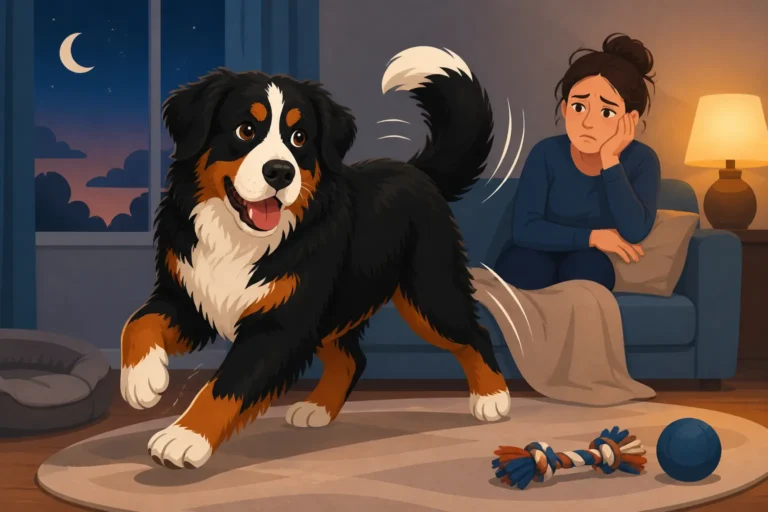
Few things are quite as startling, or frankly, intimidating, as a hundred-pound Bernese Mountain Dog launching itself upward in a burst of enthusiasm. That joyful leap, meant as a greeting, can send a small child sprawling, knock over an elderly relative, or simply bruise your shins and leave muddy paw prints on your favorite clothes. It’s a common frustration for Berner families, and this guide is here to walk you through compassionate, effective strategies to help your gentle giant learn polite ways to say hello.
Understanding Why Your Bernese Mountain Dog Jumps Up
Before we can even begin to tackle the "how" of stopping jumping, it’s crucial to understand the "why." Your Bernese Mountain Dog isn't jumping up to be naughty or dominant; they're doing it for reasons that make perfect sense to them, rooted deep in their canine nature. Once you grasp these motivations, you can tailor your approach to be far more effective and empathetic.
The Instinctual Greeting of a Gentle Giant
Imagine your Berner as a puppy meeting their mother or littermates. What did they do? They probably nuzzled, licked faces, and perhaps even put paws on their siblings to initiate play or get attention. This is a very natural canine greeting behavior, an instinct to get closer to the face, to connect eye-to-eye, and to solicit interaction. For smaller dogs, this might manifest as a dainty little hop against your leg. But when you have a large, powerful breed like a Bernese Mountain Dog, that instinct translates into a full-body lunge that can feel overwhelming, even dangerous, to the unprepared human.
Puppies especially use jumping as a way to engage with their world. They’re curious, excitable, and often haven’t yet learned the subtle nuances of human social norms. When they see a person, their natural inclination is often to get up to their level, to interact directly. This isn’t a malicious act; it’s an attempt at communication and connection, albeit one that needs careful guidance in a giant breed.
Seeking Attention and Reinforcement
This is probably the biggest culprit when it comes to persistent jumping. Dogs, including our beloved Berners, are masters of learning what behaviors get them what they want. And often, what they want most is attention. Think about it: when your Berner jumps up, what do you usually do? Even if you say "No!" or push them off, that's still attention. You've looked at them, spoken to them, touched them. To a dog, even "negative" attention can be rewarding if it's the only attention they're getting in that moment.
Consider a scenario where a friend comes over. Your Bernese Mountain Dog is thrilled. They jump up, and your friend, perhaps without thinking, pats them on the head while saying "Down, boy!" In that instant, your dog has been rewarded for jumping – they got a pet, a voice, an interaction. This accidental reinforcement is incredibly common and incredibly powerful in cementing the unwanted behavior. It's not just deliberate petting; it's any acknowledgment that says, "I see you, and you got a reaction from me." Your Berner quickly learns: jumping works to get people to notice me.
Lack of Consistent Training and Boundaries
Another major reason a Bernese Mountain Dog might continue to jump is a lack of clear, consistent boundaries and training. If one person in the household allows jumping, even occasionally, while another strictly enforces "four on the floor," your Berner gets confused. Dogs thrive on predictability and clear rules. If the rules are a moving target, or if different people apply different standards, your dog won't understand what's expected of them. They might try jumping with everyone, hoping to find the "exception" that day.
This inconsistency can also extend to various situations. Perhaps your Berner isn't allowed to jump on you when you walk through the door, but they're allowed to jump on guests because you're embarrassed to correct them. Or maybe they jump on people in the park but not at home. Each inconsistency creates a loophole in their understanding, making it much harder for them to generalize the "no jumping" rule to all people in all situations. Establishing universal rules and ensuring everyone interacts with your Bernese Mountain Dog in the same way is paramount.
Laying the Foundation: Early Training and Socialization
The old adage "an ounce of prevention is worth a pound of cure" couldn't be more true when it comes to a Bernese Mountain Dog and jumping. Starting early, being consistent, and setting clear expectations from puppyhood can save you a world of trouble (and bruised knees) down the line. Even if you have an adult Berner with a jumping habit, these foundational principles are still vital to integrate into your training.
Starting Young: Puppy Management and Positive Reinforcement
When you first bring home your fluffy Berner puppy, they are a blank slate, eager to learn. This is your golden opportunity to shape their behavior before bad habits take root. The key here is management and positive reinforcement.
Management means preventing the opportunity for jumping in the first place. When your puppy approaches you, and you anticipate a jump, immediately get down to their level. Sit on the floor, crouch down, or kneel. This way, they don't need to jump to reach your face for a greeting. Reward them profusely with gentle pets and soft words when all four paws are on the floor. If they do try to spring up, stand up, turn your back, and completely disengage. The moment their paws are back on the floor, turn around and calmly reward. This teaches them: "Four on the floor gets attention; jumping gets nothing."
Another excellent strategy is to teach a "sit" cue very early on. Before giving any attention, before offering food, or before going outside, ask for a sit. When they comply, then reward them. This builds a strong association: calm, seated behavior earns good things. You can find excellent resources on positive reinforcement training for puppies, often including local Training Class Prices for a Bernese Mountain Dog Puppy, which can provide valuable hands-on guidance.
Socializing Your Bernese Mountain Dog for Polite Greetings
Socialization isn't just about exposing your puppy to new sights and sounds; it's about teaching them how to interact politely with them. For a Bernese Mountain Dog, whose size can intimidate, polite greetings are absolutely essential.
Start with controlled introductions to various people in different settings. Always keep your Berner on a leash during these initial greetings, even if it's just in your living room. Before a new person approaches, ask your Berner to sit. If they remain seated when the person approaches, that person can offer a calm, gentle pet and a treat. If your Berner tries to jump, the person immediately stands up straight, turns away, and ignores them. They only re-engage when your dog's paws are on the floor again.
The goal is to teach your Berner that calm, non-jumping greetings are the only way to get the positive interaction they crave. This requires patience from both you and your guests. Explain the training process to everyone who interacts with your dog, so they understand the importance of consistency. Vary the types of people your dog meets – men, women, children, people with hats, people with canes – to generalize the behavior. A well-socialized Bernese Mountain Dog will be more confident and less likely to resort to boisterous jumping out of nervousness or overexcitement. You can get more tips on Socializing a Reserved Bernese Mountain Dog Puppy if your Berner tends to be a bit shy with strangers.
Teaching Alternative Greeting Behaviors
Instead of just telling your Bernese Mountain Dog what not to do, it's far more effective to teach them what to do instead. The most common and useful alternative greeting behaviors are "sit" or "down."
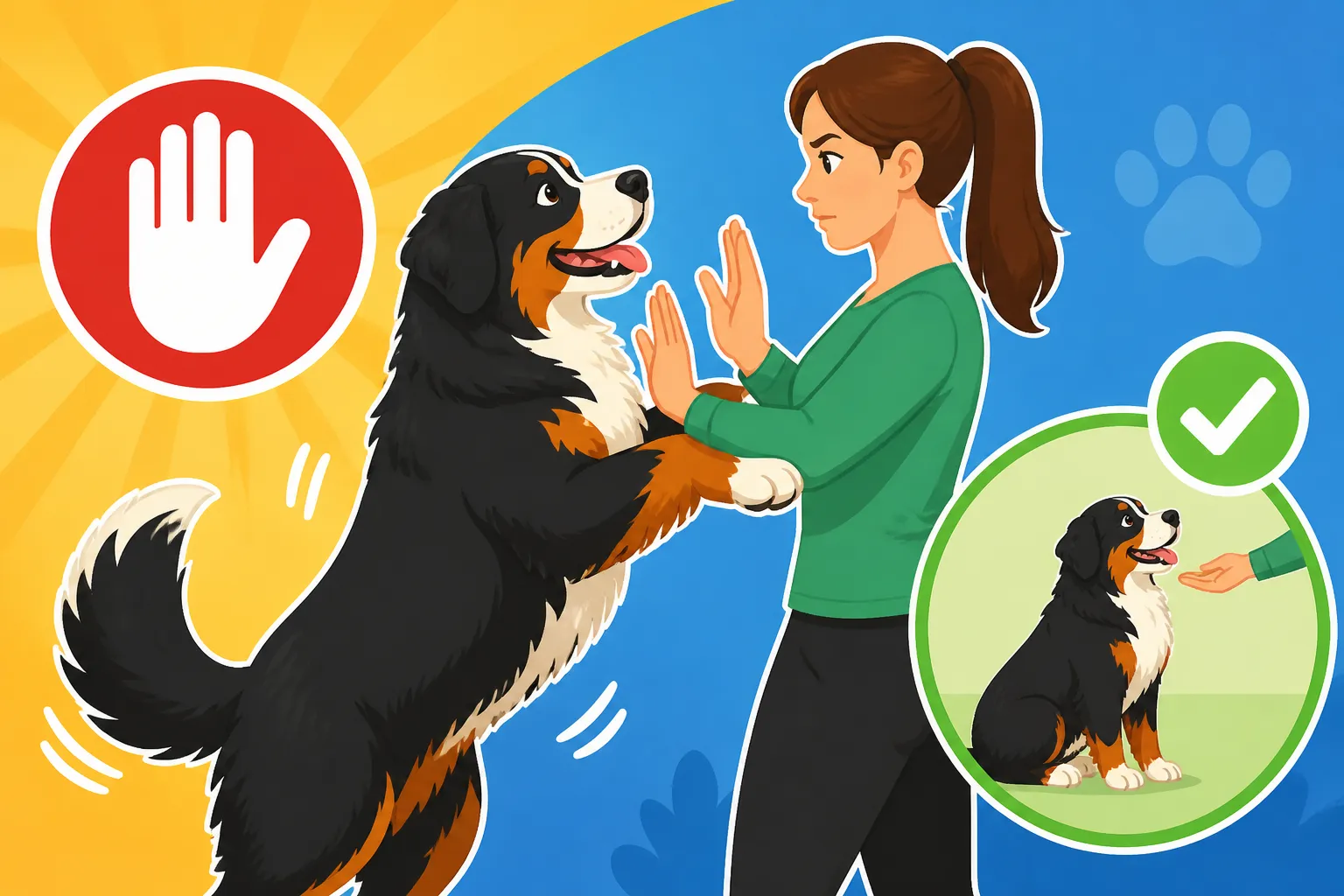
Once your Berner reliably offers a sit on cue, you can start integrating it into greeting scenarios. When someone approaches, ask your dog to "sit." As soon as their rear touches the ground, mark the behavior with a verbal "Yes!" or a clicker, and immediately reward with a high-value treat and calm praise. The approaching person can then offer a gentle pet, if your dog remains seated. If your dog pops up, the person immediately disengages, and you calmly reset, asking for another sit.
With practice, your Bernese Mountain Dog will learn that sitting is the ticket to getting the attention they want from new people. This isn't just about stopping a bad habit; it's about building positive, polite habits that serve them and your family for life. You'll be amazed at how quickly Berners can learn What a Bernese Mountain Dog Will Actually Work For when the rewards are clear and consistent.
Practical Strategies for Stopping Jumping Up in Adult Bernese Mountain Dogs
It’s one thing to prevent jumping in a puppy, but quite another to curb an ingrained habit in a full-grown Bernese Mountain Dog. Don’t despair! With patience, consistency, and the right approach, you can absolutely teach an older Berner new, polite greeting behaviors. The key is understanding how to manage their environment and your reactions to their jumps.
The "No Paws Up" Rule: Consistency is Key
This is the golden rule, and it absolutely must be enforced by every single person who interacts with your Bernese Mountain Dog. If even one person allows jumping, it undermines all your hard work. The rule is simple: if any of your dog’s paws leave the ground and touch a person, all attention immediately stops.
Here’s how it works in practice:
- Anticipate the jump: Berners often give subtle cues before they jump – a tense body, staring intently, a slight forward lean. If you see these signs, you can often preempt the jump by asking for a sit or scattering treats on the floor to redirect their attention.
- Turn and ignore: If your Berner jumps up, immediately turn your back to them. Cross your arms, look away, and become as boring as possible. Say nothing, don’t push them off, don’t even make eye contact. You are effectively removing the reward (your attention).
- Wait for "four on the floor": The instant all four of your dog’s paws are back on the ground, turn back around. Calmly offer praise ("Good sit!" or "Good four on the floor!") and a gentle, low-key pet or a treat. The key is to reward the desired behavior, not the jumping.
- Repeat, repeat, repeat: This isn't a one-and-done solution. You'll need to practice this consistently every single time your dog attempts to jump. It takes time for them to understand the new rules, especially if they’ve been practicing jumping for years.
Educate your family, friends, and anyone who regularly interacts with your Berner about this rule. It might feel awkward at first to ask people to ignore your adorable dog, but it’s crucial for their training and safety.
Managing High-Excitement Situations
Certain situations are just naturally high-excitement triggers for most dogs, and Bernese Mountain Dogs are no exception. The doorbell ringing, you coming home after being out, or new visitors arriving can send their excitement levels soaring, making jumping more likely. Proactive management in these scenarios is vital.
- Coming Home: When you arrive home, instead of immediately greeting your dog, put your keys down, take off your coat, and ignore your Berner for the first minute or two. Wait until they are calm – ideally sitting or lying down – before offering a quiet greeting and some calm affection. This teaches them that calm behavior gets attention, not frantic jumping.
- Doorbell/Visitors: This is a tough one for many dogs. Start by practicing with a friend. Have your friend ring the doorbell. Before you open the door, ask your Berner to go to a designated "place" (a mat or bed) and stay there. Reward them heavily for remaining in place while you answer the door. If they break position, close the door, reset, and try again. For real visitors, you might need to leash your Berner or use a baby gate to create a physical barrier, ensuring they can't jump while still being able to see and hear the guests. Many owners find Crates and Gates for a Bernese Mountain Dog indispensable for managing these situations. You can find durable, large-dog-appropriate gates on sites like Amazon, which can be a lifesaver in controlling initial greetings.
- Redirecting Energy: For dogs that struggle with overexcitement, consider giving them a high-value, long-lasting chew or a puzzle toy stuffed with treats before a high-excitement event. This gives them an appropriate outlet for their energy and attention, diverting them from jumping.
Leash Manners and Controlled Greetings
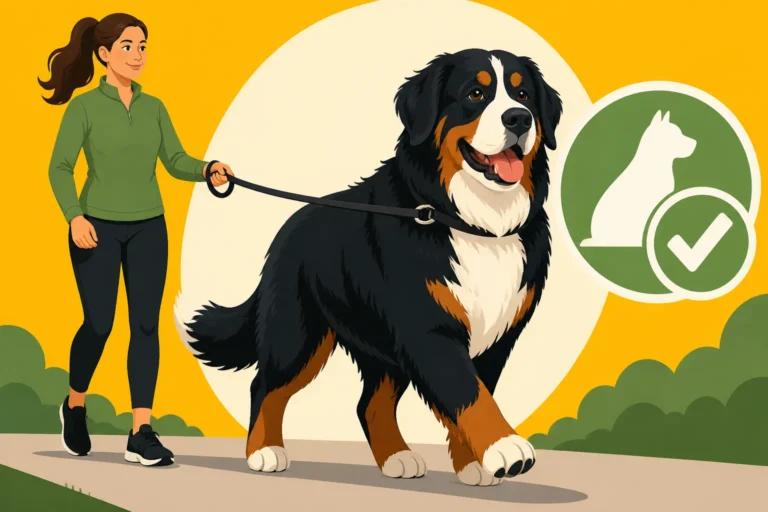
A strong, enthusiastic Bernese Mountain Dog can be a handful on a leash, and poor leash manners often go hand-in-hand with jumping. If your dog is dragging you around, their excitement is already too high, making it harder to control jumping. Leash Manners on a Hundred Pound Bernese Mountain Dog are foundational for polite public behavior.
- Leash as a Tool: When you’re out and about, or even when practicing at home, keep your Berner on a leash. If they try to jump, a quick, gentle correction on the leash (a brief pull upwards to break their balance, immediately releasing the tension) can help redirect them. The moment all four paws are on the ground, reward them. The leash gives you immediate control to prevent the jump from happening fully.
- Appropriate Gear: For large, strong dogs prone to pulling and jumping, the right equipment makes a huge difference. A front-clip harness is often recommended, as it redirects a dog's forward momentum when they pull, making it harder for them to launch themselves upward. This is different from a traditional back-clip harness which can sometimes encourage pulling. You might want to explore options mentioned in Front-Clip Harnesses on a Hundred Pound Bernese Mountain Dog. For some particularly strong or excitable Berners, a head halter might provide even more control, gently guiding their head (and therefore their body) without causing discomfort.
- Practice "Meet and Greet": When encountering people on walks, actively work on controlled greetings. Ask your Berner to sit as someone approaches. If they remain sitting, the person can offer a calm pet or treat. If your dog is too excited to sit, simply walk past the person, creating distance, and try again with another passerby once your dog has calmed down. This teaches them that politeness earns interaction, while jumping means missing out.
Tools and Aids for Managing Jumping Behavior
While training and consistency are the cornerstones of stopping jumping, certain tools and aids can be incredibly helpful in managing behavior, particularly with a strong-willed or highly excitable Bernese Mountain Dog. These aren't shortcuts, but rather resources to make your training journey smoother and more effective.
Harnesses and Head Halters for Better Control
For a breed as robust as the Bernese Mountain Dog, traditional collars can sometimes offer insufficient control, especially when they decide to launch themselves skyward. This is where specialized harnesses and head halters really shine.
- Front-Clip Harnesses: These harnesses have a leash attachment point on the dog's chest, rather than on their back. When your Berner pulls or tries to jump, the leash pressure redirects their body to the side, making it much harder for them to gain leverage for a jump. It's a gentle way to say "whoa" and reorient their focus. Many owners find these extremely effective for everyday walks and for managing initial greetings. They distribute pressure more evenly than a collar, reducing strain on your dog's neck.
- Head Halters (Haltis/Gentle Leaders): These devices fit over your dog's snout, similar to a horse halter. The leash attaches under the chin. When your dog pulls or tries to jump, the pressure gently turns their head, which naturally guides their body. Because "where the head goes, the body follows," a head halter gives you a surprising amount of control over a large dog's movements with minimal physical effort. They are not muzzles and should never be used for force or punishment; rather, they are training aids designed for gentle guidance. Proper introduction and conditioning are crucial to ensure your Bernese Mountain Dog accepts it comfortably, as some dogs initially resist something on their snout. Always consult with a trainer on how to properly fit and introduce a head halter.
The right equipment can empower you to confidently manage your Bernese Mountain Dog in public, reinforce desired behaviors, and prevent the unwanted ones like jumping. Remember, these tools are meant to assist training, not replace it.
Using Gates and Crates Effectively
Gates and crates are not just for containing puppies; they are invaluable management tools for Bernese Mountain Dogs of all ages, especially when dealing with jumping. They allow you to control your dog's environment and prevent them from practicing unwanted behaviors.
- Crates: A well-crate-trained Bernese Mountain Dog sees their crate as a safe den. This can be a fantastic tool during high-traffic times or when visitors arrive. If your Berner is prone to jumping on guests, placing them in their crate with a special chew or puzzle toy before guests arrive can prevent the jumping entirely. This isn't a punishment; it's a way to set your dog up for success by removing them from a situation where they might fail. For more insights, refer to Crates and Gates for a Bernese Mountain Dog.
- Gates: Baby gates or pet gates are incredibly useful for creating physical boundaries within your home. You can gate off an entryway when the doorbell rings, preventing your Berner from rushing to the door and jumping. You can use a gate to create a "decompression zone" where your dog can see and hear visitors, but not physically interact with them until they've settled down. This allows them to observe and learn that calm behavior is expected, even with exciting distractions present. Using gates from reputable brands available on Amazon can create safe and effective barriers. Ensure any gate you choose is sturdy enough for a Bernese Mountain Dog's weight and height.
By strategically using crates and gates, you can manage your Bernese Mountain Dog's environment to prevent jumping incidents, making training much easier and more effective.
Training Aids and Online Resources
Beyond physical tools, there are many training aids and resources that can bolster your efforts to stop jumping.
- Clickers: A clicker is a precise marker of desired behavior. When your Bernese Mountain Dog's four paws are on the floor, a click immediately followed by a treat helps them understand exactly what they did right. This precision accelerates learning, especially for behaviors like "four on the floor" or "sit for greeting."
- High-Value Treats: For a Bernese Mountain Dog, motivation is key. What does your Berner absolutely love? Cooked chicken, cheese, hot dogs? Save these "jackpot" treats for practicing polite greetings, especially in distracting environments. The higher the value of the reward, the more motivated your Berner will be to perform the desired behavior. Consider what What a Bernese Mountain Dog Will Actually Work For might be for your individual dog.
- Online Training Programs: Sometimes, having a structured program to follow, with step-by-step guidance, can be incredibly helpful. Online platforms like BAXTER & Bella offer comprehensive training courses, often including specific modules for polite greetings and preventing jumping. These programs can provide video demonstrations, printable guides, and even direct access to trainers for personalized advice. They can be a fantastic supplement to in-person training classes or for owners who prefer to learn at their own pace from home.
Remember, every Bernese Mountain Dog is an individual. What works for one might need slight adjustments for another. Don't be afraid to experiment with different tools and resources to find what best supports your Berner's learning style and your training goals.
Common Challenges and Troubleshooting
Let's be realistic: training a large, enthusiastic Bernese Mountain Dog isn't always a smooth, linear path. You're going to encounter challenges, and it's important to be prepared for them so you don't get discouraged. Knowing how to troubleshoot common sticking points will help you stay on track and ensure your Berner learns those polite manners.
When Visitors Undermine Your Training
This is probably one of the biggest hurdles for any dog owner, especially with an attention-grabbing breed like a Bernese Mountain Dog. Everyone loves a Berner, and visitors often mean well, but their inconsistent reactions can unintentionally sabotage your hard work. They might pat your dog while it's jumping, exclaim "Oh, he's so cute!" even as paws hit their chest, or simply not understand the importance of the "no paws up" rule.
Here’s how to manage it:
- Pre-emptive Communication: Before guests arrive, send a quick text or email explaining your training. "Hey! So excited for you to meet [Berner's Name]. Just a heads-up, we're working really hard on polite greetings, so please help us out by ignoring him completely if he jumps up, and only greeting him when all four paws are on the floor. Thanks for your support!"
- Demonstrate: When guests arrive, model the desired behavior yourself. If your Berner jumps, immediately turn your back. When they settle, calmly praise and reward. Guests are more likely to follow your lead if they see you consistently enforcing the rule.
- Physical Management: Don't hesitate to use a leash or a gate. As mentioned earlier, Crates and Gates for a Bernese Mountain Dog can be invaluable here. Leash your Berner before guests arrive and have them sit by your side. If they jump, you can use the leash for a gentle, upward correction to keep their paws down, rewarding immediately when they comply. You can also lead them to their crate or behind a gate until their excitement levels drop.
- Supervise All Interactions: Never leave your Bernese Mountain Dog unsupervised with guests who are unaware of or unwilling to follow your training protocols. This is particularly crucial if you have children visiting, as a large Berner jumping can easily knock a child over. Remember A Bernese Mountain Dog Around Children needs careful management and consistent boundaries.
Addressing Persistent Jumping: Seeking Professional Help
Despite your best efforts, some Bernese Mountain Dogs might continue to jump persistently, especially if the habit is deeply ingrained or if there are underlying issues contributing to the behavior. If you feel like you’re hitting a wall, or if the jumping feels overwhelming or unsafe, it's absolutely okay – and often highly recommended – to seek professional help.
- Certified Professional Dog Trainers (CPDT-KA): These trainers specialize in positive reinforcement and can assess your Bernese Mountain Dog's individual behavior, identify specific triggers, and develop a customized training plan. They can teach you effective techniques, provide hands-on coaching, and help you troubleshoot challenges you might not have anticipated. They understand the nuances of canine behavior and can guide you through the process step-by-step.
- Veterinary Behaviorists (DACVB): For extreme cases of jumping that might be linked to anxiety, over-arousal, or other complex behavioral issues, a veterinary behaviorist can offer a medical and behavioral approach. These are veterinarians who have specialized in animal behavior and can prescribe medication if necessary, alongside behavioral modification plans.
- Choosing the Right Professional: Look for trainers who use humane, force-free, positive reinforcement methods. Avoid anyone who suggests harsh physical corrections, alpha rolls, or other outdated, punishment-based techniques, as these can damage your relationship with your Bernese Mountain Dog and exacerbate behavioral problems. You can explore topics like Whether a Balanced Trainer Suits a Bernese Mountain Dog to understand different training philosophies.
A good professional can provide invaluable support and expertise, helping you and your Berner achieve polite greeting behaviors more effectively and safely.
The Gentle Giant Misconception: Setting Realistic Expectations
Bernese Mountain Dogs are often described as "gentle giants," and they truly are wonderful, affectionate dogs. However, this "gentle giant" label can sometimes lead owners to underestimate their sheer size, strength, and the need for consistent training. A Bernese Mountain Dog might be gentle in spirit, but their 100+ pounds of solid muscle and bone can cause accidental injury or damage if not properly managed.
- Acknowledge Their Strength: Your Berner's enthusiastic leap, even if meant affectionately, is powerful. It’s crucial to treat it as a significant behavioral issue that needs consistent training, not just a cute quirk. This means taking their training seriously from day one, especially for things like A Bernese Mountain Dog That Pulls Its Owner Over or jumps on people.
- Longer Puppyhood: Berners mature slowly, both physically and mentally. They often retain "puppy brain" behavior longer than smaller breeds. This means you might be dealing with adolescent energy and impulsiveness well into their second or even third year. Patience is key. Understand The Age a Bernese Mountain Dog Grows Up Mentally is often later than you might expect.
- Consistency is Non-Negotiable: Because of their size and strength, consistency in training is not just a recommendation; it's a safety imperative. Every interaction, every greeting, every moment is an opportunity to reinforce polite behavior. If you let it slide "just this once," you're setting your Berner back significantly.
By understanding the unique challenges and characteristics of the Bernese Mountain Dog, you can set realistic expectations for training and approach the task with the necessary patience, consistency, and dedication to foster a well-mannered companion.
| Problem Behavior | Your Reaction (Ignoring) | Your Reaction (Rewarding Polite Behavior) |
|---|---|---|
| Dog jumps up | Turn your back, cross arms, look away, say nothing | |
| Dog's paws are on ground | Turn to dog, calm praise, treat, gentle pat | |
| Dog barks for attention | Look away, don't speak | |
| Dog is quiet, calm | Look at dog, calm praise, treat, gentle pat | |
| Dog pulls on leash | Stop walking | |
| Dog walks with loose leash | Keep walking, calm praise, treat |
The Long Game: Patience and Consistency
Training a Bernese Mountain Dog to stop jumping is not a sprint; it's a marathon. These wonderful dogs are full of life and love, and sometimes that love manifests in a giant, bounding leap. Understanding that this is a journey, not a quick fix, will help you maintain your patience and celebrate every small step forward.
Understanding the Bernese Mountain Dog's Development
One of the most important things to remember when training a Bernese Mountain Dog is their unique developmental timeline. Unlike some smaller breeds that seem to "grow up" relatively quickly, Berners retain their puppy-like exuberance and mental immaturity for a longer period. While they may reach their full physical size by 12-18 months, their brains are still very much in an adolescent phase. You might find that your Berner is still clumsy, easily distracted, and prone to bursts of excited, impulsive behavior well into their second or even third year.
This extended "puppyhood" means you need to adjust your expectations. What might be considered a mature response in a different breed at 18 months might still be a work in progress for your Berner. Be prepared for occasional regressions, especially during periods of high excitement or when encountering new stimuli. Don't get discouraged! Their slower maturation simply means you need to be more consistent and patient for a longer duration. Embrace the fact that your Berner is still learning and growing, and continue to reinforce those polite behaviors day in and day out. Understanding The Age a Bernese Mountain Dog Grows Up Mentally can provide valuable perspective.
Celebrating Small Victories and Maintaining Motivation
Training a large dog like a Bernese Mountain Dog can sometimes feel like an uphill battle, especially when you’re dealing with a deeply ingrained habit like jumping. It's easy to focus on the moments when they do jump and forget all the times they don't. This is why it's so crucial to celebrate every single small victory.
Did your Berner successfully keep all four paws on the floor when a delivery person arrived? That's a huge win, and it deserves a jackpot reward! Did they sit calmly for a visitor for five seconds longer than usual? Fantastic! Acknowledge these successes, both for yourself and for your dog. Your positive attitude and enthusiasm will be contagious and help maintain your motivation, even on challenging days.
Think of it as building a muscle. Each successful "four on the floor" greeting is a repetition, strengthening the desired behavior. Over time, these small successes add up to significant progress. Don't compare your Berner to other dogs; focus on their individual progress. Remember that you are shaping a well-mannered companion who will be a joy to live with, and that's a goal worth striving for.
The Lasting Benefits of a Well-Mannered Berner
The effort you put into stopping your Bernese Mountain Dog from jumping up will pay dividends throughout their life, and yours. A well-mannered Berner isn't just a safer dog; they are a more enjoyable companion in countless situations.
Imagine taking your Bernese Mountain Dog to a park or a pet-friendly cafe, confident that they will greet strangers politely, with all four paws on the ground. Picture your elderly relative being able to visit without fear of being knocked over, or your children being able to play without accidental tumbles. The bond you build through consistent, positive training deepens trust and mutual respect. Your Berner learns to look to you for guidance, understanding that you are their reliable leader who teaches them how to navigate the human world successfully.
Beyond preventing issues like accidental injuries, teaching polite greetings unlocks a whole world of possibilities for you and your Bernese Mountain Dog. You'll be able to take them more places, introduce them to more people, and enjoy their wonderful, affectionate nature without the stress of managing unwanted behaviors. A Bernese Mountain Dog is an incredible gift, and investing in their training ensures that their gentle, loving spirit can shine through, making them truly A Bernese Mountain Dog Around Children and adults, a joy to everyone they meet.
Disclaimer
This article is for general informational purposes only and does not constitute professional advice. Laws, prices and regulations vary by location and change over time. Consult a qualified professional for guidance on your specific situation.