Teaching a Bernese Mountain Dog to Stand for Grooming
Oh, the joys of a Bernese Mountain Dog! Their lush, magnificent coats are truly a sight to behold, but keeping them pristine often means an epic struggle if your big fluffy friend isn't a fan of standing still for grooming. It's a common frustration, wrestling a hundred pounds of sweet, but stubborn, canine who'd rather be anywhere else. This guide is all about turning those nail trims, brush-outs, and ear cleanings into a calm, cooperative experience, teaching your Berner that standing politely for grooming isn't just tolerable, but perhaps even pleasant.
Why Berners Often Resist Grooming
Let's be real, it's not always easy to get a giant, independent dog to do something they don't naturally want to do. Bernese Mountain Dogs are known for their gentle nature, but they also have a strong will and can be sensitive. When it comes to grooming, their resistance often stems from a few understandable places, and it's important to recognize these so you can approach training with empathy and patience.
The Discomfort Factor
Imagine someone tugging at your hair, poking at your ears, or trying to cut your toenails when you're not quite prepared. For a Bernese Mountain Dog, grooming can involve unfamiliar sensations that are, at best, uncomfortable, and at worst, downright painful. A matted patch of fur, a quicked nail in the past, or even just the pull of a brush on sensitive skin can create a negative association that makes future sessions a battle. Their thick double coat, while beautiful, is prone to matting if not maintained, and brushing out those tangles can really hurt if you're not careful. Grooming a Bernese Mountain Dog's Long Tricolor Coat delves deeper into managing their specific coat needs, which ties directly into preventing discomfort.
Beyond the physical, there's the sheer novelty of the experience. Many Berners aren't introduced to thorough grooming until they're older, and by then, they've developed strong opinions. A puppy, on the other hand, might just find the whole experience overwhelming, especially with clippers buzzing or water running. We have to remember that what seems routine to us is often a strange, potentially scary, invasion of their personal space for them.
Lack of Early Socialization and Training
The biggest predictor of a dog who stands well for grooming is often how consistently and positively they were exposed to it as a puppy. If a Bernese Mountain Dog puppy isn't handled frequently – having their paws touched, ears inspected, and fur brushed gently from a very young age – they grow up without that critical foundation. This isn't just about grooming, it's about general handling. A puppy who learns that human hands are always gentle and lead to good things is far more likely to cooperate.
When a puppy grows into a large, powerful adult without this foundation, the task becomes significantly harder. They haven't learned to trust the process, nor have they learned that standing still brings rewards. Instead, they learn that struggling might make the scary thing stop. It's not their fault; it's a gap in their early learning. This is why resources that focus on early, positive puppy training, like those offered by BAXTER & Bella, can be invaluable from day one. They really emphasize building a strong, positive relationship and a cooperative attitude before problems even arise.
Anxiety, Fear, or Just Plain Stubbornness
Sometimes, it’s not just about discomfort or lack of exposure. Some Berners are naturally more sensitive or anxious than others. The sound of clippers, the confined space of a bathtub, or even the heightened emotions of their owner can trigger fear. Other times, it's simply their breed's inherent desire to be an active participant in their own lives. They're not keen on being manipulated if they feel they have a choice.
It’s easy to label a dog "stubborn" when they resist, but often, that "stubbornness" is a manifestation of fear, confusion, or a lack of understanding of what's expected. They might just be thinking, "What's in it for me?" or "How do I make this stop?" Addressing these underlying emotions rather than just trying to force compliance is key to long-term success. Understanding The Bernese Mountain Dog That Quits After One Correction can help illustrate just how sensitive they can be to perceived pressure.
Foundation Training: Building a Positive Association with Standing
Turning grooming into a cooperative activity for your Bernese Mountain Dog isn't about brute force; it's about building trust, positive associations, and clear communication. This starts with very small steps, lots of rewards, and immense patience.
Desensitization and Counter-Conditioning: Baby Steps to Success
This is the cornerstone of positive grooming training. The idea is to slowly introduce grooming tools and actions, pairing them with something wonderful, like high-value treats or praise. We want to change your Berner's emotional response from "ugh, grooming" to "yay, grooming means yummy things!"
- Introduce the tools: Start by simply having grooming tools (brushes, nail clippers, ear wipes) visible but not in use. Let your Berner sniff them. When they do, offer a treat. The goal is to make the tools neutral, then positive.
- Gentle touch: Once they're comfortable with the tools' presence, touch them briefly with the tool (e.g., one gentle stroke of the brush) and immediately give a treat. Repeat this many times over days or weeks, gradually increasing the duration and intensity of the touch. Don't push too far, too fast. If your dog tenses up, you've gone too quickly. Go back a step.
- Focus on problem areas: For paws, touch a paw, treat. Lift a paw, treat. Touch a nail, treat. Simulate clipping a nail without actually clipping (just touch the clippers to the nail), treat. You're building a history of positive interactions. This is especially important for areas like their hindquarters where matting can occur, or around their face, as discussed in The Weekly Handling a Bernese Mountain Dog Should Accept.
- The Power of a Grooming Mat: A non-slip mat or even a dedicated bath mat can signal "grooming time." Teach your Berner to stand on it. When they step onto the mat, treat. When they stand for a second, treat. Slowly build duration. This mat becomes their safe grooming space. You can find excellent, durable non-slip mats designed for large dogs on platforms like Amazon.
Shaping the "Stand" Command
Once your Berner has a generally positive attitude towards being touched and seeing grooming tools, you can start shaping the "stand" command itself, specifically for grooming. This isn't just about standing; it's about standing still and balanced for a period.
- Lure and Reward: Hold a treat near your Berner's nose and move it slightly forward, encouraging them to shift their weight and stand up from a sit or down position. As soon as all four paws are on the ground in a standing position, mark the behavior (with a verbal "yes!" or a clicker) and reward.
- Add the verbal cue: Once they reliably stand when lured, add your verbal cue ("Stand" or "Groom") just as they begin to move into the stand.
- Build duration: Gradually ask them to stand for longer periods before getting the reward. Start with one second, then two, then five. If they break position, no reward, just calmly reset and try again. This helps them understand that holding the position is what earns the treat.
- Practice in different locations: Practice this command in various low-distraction environments, not just where you plan to groom them. This generalizes the behavior. Consistency is key, and keeping Training Sessions Short Enough for a Bernese Mountain Dog will maintain their engagement.
Incorporating Rewards and Breaks
Positive reinforcement is your best friend when training a Bernese Mountain Dog. They respond beautifully to praise, attention, and high-value treats.
- High-Value Rewards: Think cheese, cooked chicken, liverwurst, or special store-bought training treats. These are motivators for a discerning palate like a Berner's. Don't use their everyday kibble; this needs to be special. Understanding What a Bernese Mountain Dog Will Actually Work For can guide your treat choices.
- Frequent, Small Rewards: During grooming, give treats constantly, especially in the beginning. Every few seconds of standing still, every successful brush stroke, every gentle touch of the clippers. This builds an undeniable link between grooming and good things.
- Short Sessions: Especially in the early stages, keep grooming sessions incredibly short – just 5-10 minutes. It's better to have multiple short, positive experiences than one long, traumatic one. End on a good note, even if it means only doing one paw or a small section of their back. You can always pick up where you left off.
- Break Time: If your Berner starts to get antsy or shows signs of stress, take a break. Walk away, let them shake it off, and then return when they're calm. Pushing them past their comfort zone will only set you back.
| Training Step | Description | Example Action | Reward Strategy |
|---|---|---|---|
| 1. Tool Introduction | Make grooming tools a neutral, then positive, presence. | Place brush on floor, treat when dog looks at it. | High-value treat for calm interaction with tool. |
| 2. Gentle Touch | Associate brief, light touches with positive experiences. | Touch dog's leg with hand for 1 second, treat. Progress to 1 brush stroke, treat. | Immediate, frequent treats for tolerating touch. |
| 3. Shaping "Stand" | Teach the dog to hold a standing position on cue. | Lure with treat to stand, mark "Stand," reward. Gradually extend duration. | Treat every few seconds for holding the stand; increase time for reward as dog improves. |
| 4. Practice Specifics | Apply positive reinforcement to specific grooming actions (paws, ears, tail). | Lift paw briefly, treat. Touch nail with clippers, treat. | Constant stream of small, high-value treats during the specific action. |
| 5. Incorporate Breaks | Recognize signs of stress and provide relief. | Dog starts to fidget – stop, take a 1-minute play break, then resume if calm. | Break itself is the reward; resume with treats for cooperation when back to task. |
Tools and Techniques for a Smooth Grooming Session
Having the right equipment and a well-thought-out approach can make all the difference when grooming your Bernese Mountain Dog. These aren't just accessories; they're integral to making the process comfortable and efficient for both of you.
Essential Grooming Gear
Before you even start, make sure you have everything you need within arm's reach. Rummaging for tools while trying to hold a large dog still is a recipe for disaster.
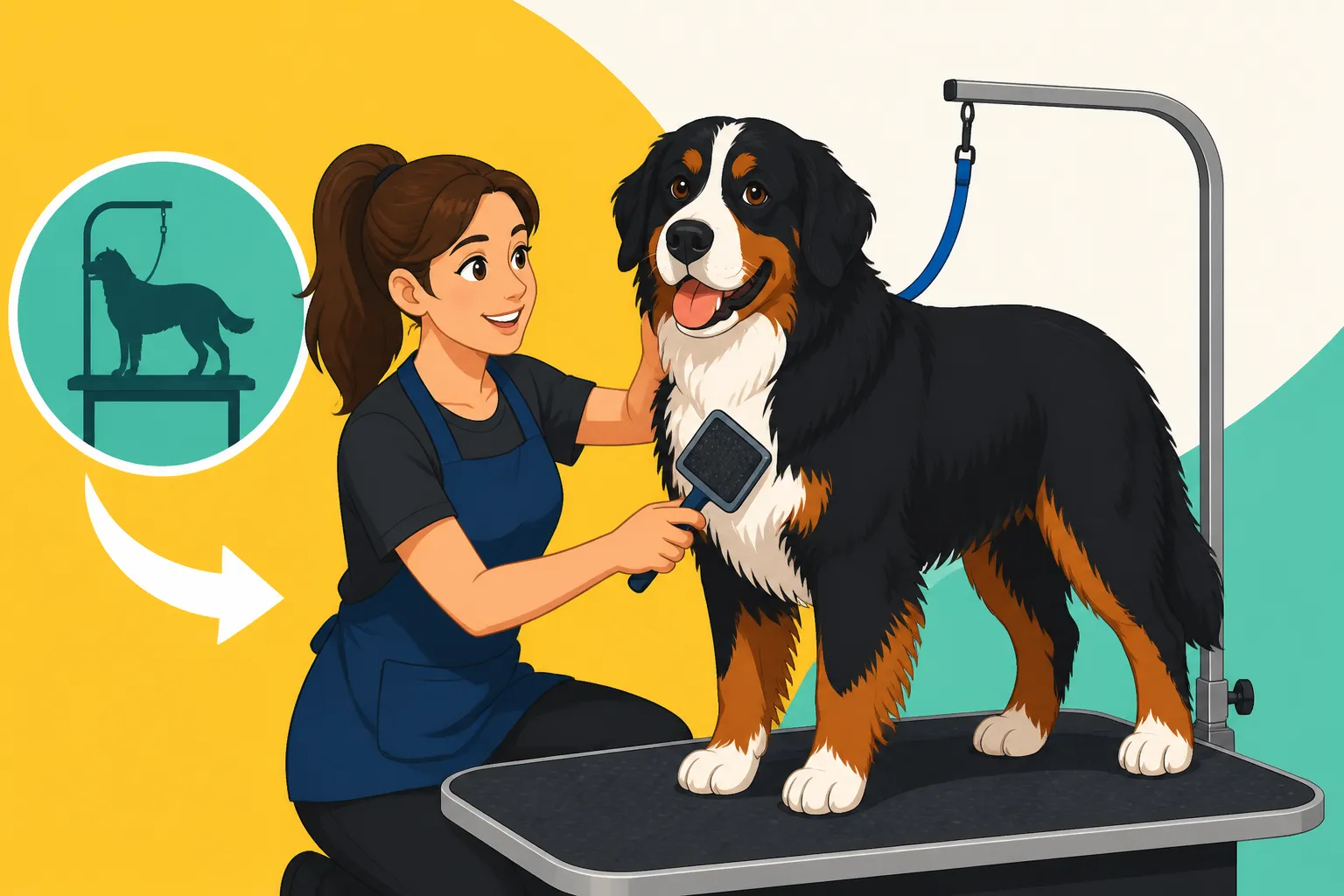
- A Sturdy Grooming Table or Elevated Surface: This is a game-changer. Getting your Berner onto a non-slip, elevated surface means you're not bending over, and they're less likely to try to walk away. It defines the workspace. Look for large dog-specific tables on Amazon that can comfortably support your Berner's weight. A grooming arm with a noose (used correctly and never left unattended) can also gently encourage them to stay put, but it's not meant to hold them there against their will.
- Quality Brushes and Combs: For a Bernese Mountain Dog, you'll need a good slicker brush for tangles, a metal greyhound comb for deeper detangling and checking for mats, and an undercoat rake to help with shedding. Brushing Out a Bernese Mountain Dog's Undercoat details these specific needs. Investing in good tools makes the job easier and more comfortable for your dog.
- Nail Clippers or Grinder: Whether you prefer scissor-style clippers or a dremel-style grinder, make sure it's sharp and appropriate for a large dog's thick nails. Many Berners tolerate grinders better due to the lack of "clipping" sensation, but training is essential for either.
- Ear Cleaner and Wipes: For their floppy ears, a good quality ear cleaner recommended by your vet and some soft wipes are a must.
- Non-Slip Mats: Even on a grooming table, a non-slip mat provides traction and comfort, making your Berner feel more secure.
The Art of Distraction and Positive Reinforcement
Once you've got your tools, it's about making the actual grooming part as pleasant as possible. This means constant positive reinforcement and strategic distractions.
- Lick Mat with Frozen Peanut Butter/Yogurt: This is a miracle worker. Smear some dog-safe peanut butter or plain yogurt on a lick mat and freeze it. The licking action is calming, and it keeps their mouth busy for a good stretch of time. Place it on the grooming table or a wall nearby.
- Chew Toys: For short periods, a favorite long-lasting chew or puzzle toy can keep them engaged while you work on a less sensitive area.
- Consistent Verbal Praise: "Good girl!" "Good boy!" "Such a patient dog!" Use a happy, calm tone throughout. Your voice is a powerful tool.
- Small, Frequent Treats: As mentioned, a constant stream of tiny, high-value treats is far more effective than one big treat at the end. Every second they stand still, every gentle brush stroke, every nail touched – reward, reward, reward!
Breaking Down the Grooming Tasks
Instead of tackling everything at once, break down grooming into individual, manageable tasks.
- Section by Section Brushing: Don't try to brush their whole body in one go. Work on one section (e.g., one leg, then the chest, then a side) and give a break or switch to another activity.
- One Paw at a Time: For nail trims, some dogs do better with one paw done at a time, or even just one nail per paw in a session. If your Berner hates their nails, this approach, detailed in Cutting a Bernese Mountain Dog's Nails Without a Fight, can gradually build tolerance.
- Ear Inspection First: Start with a quick ear check, treat, then move on. This familiarizes them with the process without overwhelming them immediately with the full cleaning.
- Follow a Routine: Dogs thrive on routine. Try to groom your Berner at the same time and in the same place regularly. This predictability helps them understand what's coming and reduces anxiety.
Troubleshooting Common Grooming Challenges
Even with the best intentions and consistent training, you might still encounter specific challenges. A Bernese Mountain Dog's size and sensitivity mean that what works for a smaller or less stoic breed might need some adaptation.
Dealing with Mats and Tangled Coats
Mats are probably one of the biggest reasons Berners resist brushing. They pull, they hurt, and if left too long, they can lead to skin issues. Prevention is always better than cure.
- Regular Brushing is Key: Daily or every-other-day brushing, especially in areas prone to mats like behind the ears, armpits, and 'trousers' on their hind legs, is crucial. If you neglect their coat, you're setting yourself up for a painful session. For more on specific problem areas, see Tangles Behind a Bernese Mountain Dog's Elbows and The Trousers on a Bernese Mountain Dog's Hind End.
- Line Brushing Technique: Instead of just brushing over the top of the coat, learn to line brush. Part the hair horizontally, hold the top section up, and brush from the skin out in small sections. This ensures you're getting through all layers of that thick double coat.
- Mat Removers and Detangling Sprays: Invest in a good quality detangling spray and a mat comb or de-matting tool. Apply spray to the mat, gently work it apart with your fingers, then use the comb. Never just rip through a mat with a brush. If a mat is too tight or large, sometimes cutting it out with blunt-nosed scissors (being extremely careful not to cut skin) is the only humane option. For severe cases, a professional groomer is your best bet; they have the tools and experience to deal with them safely.
- Professional Help: Don't be ashamed to call in a professional groomer if the mats are beyond your skill level or your dog's tolerance. They can often do what's necessary with less stress for both of you.
Overcoming Fear of Specific Tools (Clippers, Dremels)
The sound and vibration of electric grooming tools can be very intimidating for a sensitive Bernese Mountain Dog.
- Gradual Introduction to Sound: Start by turning on the clippers or dremel in another room, far enough away that your dog barely registers it. Treat. Gradually move closer over several sessions.
- Vibration Desensitization: Once they're okay with the sound, turn the tool on and let it vibrate in your hand near their body, but not touching them. Treat. Then, briefly touch the back of the vibrating tool (not the working end) to their leg, then their paw, then a nail, always treating.
- Short Bursts: When you do start trimming or grinding, do it in very short bursts. Clip one nail, turn off the clippers/dremel, treat. Repeat. This breaks the experience into manageable chunks. Remember, a common frustration is Trimming Nails on a Struggling Bernese Mountain Dog, so this gentle approach is crucial.
- "Happy Visits" to the Groomer/Vet: If the fear is severe, ask your vet or a professional groomer if you can do "happy visits" where your Berner just goes in, gets treats, gets praise, and leaves, without any actual procedure. This builds positive associations with the environment.
Managing a Wriggly or Resistant Berner
When your Berner decides they're done and tries to move, it can be tough to manage their size and strength.
- Practice "Relax" and "Settle": Teach your Berner a "relax" or "settle" command outside of grooming. This can involve lying on a mat calmly. Then, when grooming, you can cue them to Teaching a Bernese Mountain Dog to Settle.
- Secure but Not Trapped: Use a non-slip surface and possibly a grooming arm with a gentle loop, but never use force. The goal isn't to hold them still, but to encourage them to choose to stay still. If they panic, they could hurt themselves.
- Two-Person Team: For particularly difficult sessions, having another person to dispense treats or gently hold can be invaluable. One person focuses on the grooming, the other on keeping the dog calm and happy with treats and praise.
- Vet Sedation (Last Resort): For extreme cases of fear or aggression during necessary grooming (like a severely matted coat or urgent nail trim), discuss sedation options with your veterinarian. This is not a long-term solution, but it can be a humane way to get through a crucial session without further traumatizing your dog while you work on behavior modification. For more on this, consider discussing Putting a Hundred Pound Bernese Mountain Dog Under with your vet.
- Patience and Consistency: There's no magic bullet. Every session, no matter how short or how minor the task, is a training opportunity. End on a positive note whenever possible, even if it means just one successful brush stroke or a moment of calm standing. Your patience will eventually pay off, transforming grooming from a chore into a calm, cooperative routine.
Disclaimer
This article is for general informational purposes only and does not constitute professional advice. Laws, prices and regulations vary by location and change over time. Consult a qualified professional for guidance on your specific situation.