A Bernese Mountain Dog That Refuses to Move
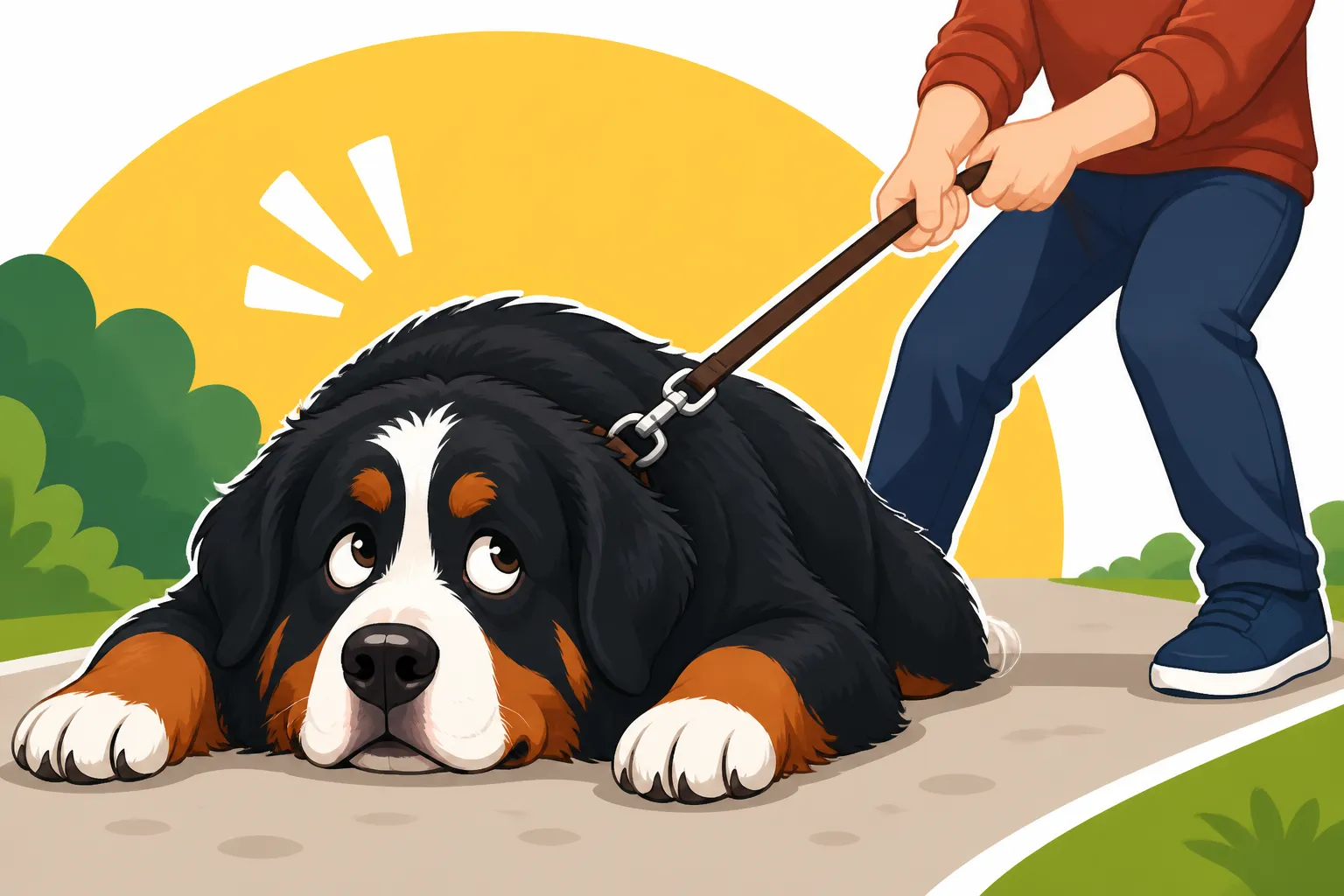
There's nothing quite like the feeling of stepping out with your magnificent Bernese Mountain Dog, ready for a stroll, only for them to abruptly plant all four paws and become an immovable, furry statue. It's a common scenario for many Berner owners, often leading to a mix of frustration, embarrassment, and sometimes, genuine concern. This guide is here to help you understand why your Bernese Mountain Dog might refuse to move and offer practical, empathetic strategies to get those big paws walking again.
Understanding the Bernese "Freeze": Why They Become Immovable Objects
When your Bernese Mountain Dog decides they're done with a walk, a training session, or even just moving from one room to another, it's not always just "stubbornness," though that's certainly a trait many Berners possess. There's usually a deeper reason behind their sudden immobility, and understanding these can help you address the issue more effectively.
The Instinctive "Mountain Dog" Mindset
Remember, Bernese Mountain Dogs were originally bred for farm work in the Swiss Alps, which often involved tasks that required independent thought and a certain level of self-preservation. They weren't always expected to blindly follow commands but rather to assess situations and act accordingly. This deeply ingrained independence can sometimes manifest as what we perceive as stubbornness. When a Berner "freezes," they might be making a judgment call based on their own comfort, perceived safety, or simply a lack of motivation to continue. They might be thinking, "Nope, not doing that," and with their substantial weight, they make it very clear. Whether a Bernese Mountain Dog Is Stubborn delves deeper into this breed characteristic.
Discomfort, Pain, or Fatigue
Given their large size and propensity for certain health issues, a sudden refusal to move can sometimes signal physical discomfort. A Bernese Mountain Dog, while outwardly stoic, can be experiencing pain in their joints, muscles, or paws. Imagine trying to walk when your hips ache, or your feet are sore – you'd probably stop too! This is especially true as they get older. They might simply be tired, particularly if it's a long walk, or if they're not conditioned for strenuous activity. It's always wise to rule out physical issues first, especially if this behavior is new or escalating. Pay close attention to any subtle signs of limping or stiffness before they plant themselves. Signs a Bernese Mountain Dog's Hips Hurt can offer insights into potential orthopedic issues.
Environmental Factors and Sensory Overload
Bernese Mountain Dogs can be sensitive souls, and their refusal to move might be a reaction to something in their environment. This could be anything from a loud truck passing by, an unfamiliar person or dog approaching, a strange texture underfoot, or even an unusual smell. For some Berners, particularly those who are Socializing a Reserved Bernese Mountain Dog Puppy might have been a challenge, new or overwhelming environments can trigger anxiety or fear, causing them to shut down and refuse to proceed. They might be trying to process the information, or they might simply be too overwhelmed to continue. Hot pavement can also be a major deterrent for their sensitive pads, especially given their thick coats, leading them to stop in their tracks.
Common Scenarios of the Bernese "Freeze"
It's helpful to categorize the "freeze" scenarios, as the approach to each might differ. Understanding the context can give you clues as to why your Berner has decided to become an unmovable fixture.
The "I Don't Want to Go That Way" Freeze
This is perhaps the most classic Bernese Mountain Dog maneuver. You're on a walk, heading one direction, and suddenly, they anchor themselves, perhaps even turning their head pointedly in the opposite direction – towards home, or maybe towards the dog park they love. This isn't usually fear; it's often a clear statement of preference. They know what they want, and they're politely (or not-so-politely) informing you of their desire. It’s their way of saying, "Actually, I think we should go this way." Sometimes, they've simply decided the walk is over, or they've spotted something more interesting in another direction.
The "I'm Done With This Walk" Freeze
You're halfway through your intended route, and your Berner just stops. They might lie down, sit, or simply stand there, unmoving, despite your gentle tugs on the leash or encouraging words. This can happen if the walk is too long, the weather conditions are uncomfortable (too hot, too cold, too rainy), or they're simply tired. Sometimes, it's just a declaration that they've had enough stimulation for one outing. If this happens frequently, it might be a sign that your walks are exceeding their current fitness level or comfort zone. A tired Bernese Mountain Dog is a heavy Bernese Mountain Dog, and getting them to move when they've decided they're done can feel like pushing a boulder uphill.
The "Something Spooked Me" Freeze
This type of freeze is usually accompanied by other body language clues: ears back, tail tucked, eyes wide, or a subtle leaning away from something. It could be an unfamiliar object, a sudden loud noise, or an unexpected encounter. While Berners are generally good-natured, some can be reserved or a bit wary of new or startling things. If your dog is pulling away, trying to hide, or exhibiting clear signs of fear, pushing them forward can be counterproductive and even worsen their anxiety. In these moments, their refusal to move is a self-preservation instinct kicking in. It's their way of saying, "I'm not safe here, and I need to assess the situation or retreat." Whether a Bernese Mountain Dog Behaves Around Strange Dogs might offer additional context on their reactions to new encounters.
Gentle Strategies for Encouraging Movement
Dealing with a Bernese Mountain Dog who has decided to become a fixture requires patience, understanding, and a gentle but firm approach. Force rarely works with these sensitive giants and can damage your bond.
Motivation Through Positive Reinforcement
Berners are intelligent and food-motivated, so leverage that! High-value treats are your best friend when your Berner decides to plant themselves. Waving a delicious piece of chicken or cheese in front of their nose can often break the "spell." Don't just give them the treat; use it to lure them forward a few steps, then reward. This teaches them that moving with you leads to good things. Verbal praise and enthusiastic encouragement also go a long way. Consider carrying a "treat bag" on all walks, perhaps one you can easily access from your belt or pocket, available on Amazon, filled with irresistible goodies. For more structured training, the BAXTER & Bella online puppy school program emphasizes positive reinforcement, which is excellent for Berners.
| Reason for "Freeze" | Possible Body Language | Gentle Approach |
|---|---|---|
| Preference/Stubbornness | Looking away, leaning opposite direction, relaxed stance | Lure with high-value treats, change direction slightly |
| Fatigue/Discomfort | Lying down, heavy panting, subtle limping, stiffness | Offer rest, check paws/body, consider shorter routes |
| Fear/Anxiety | Ears back, tail tucked, wide eyes, pulling back, trembling | Remove from stimulus, gentle reassurance, distract |
| Distraction | Staring intently, sniffing ground, ignoring cues | Use a "look at me" cue, move to a less stimulating area |
The Power of "Wait" and Release Cues
Sometimes, a Berner just needs a moment to process or decide. Instead of pulling, try giving them a "wait" cue. Let them stand or sit for a few seconds, then give a clear "Let's go!" or "Free!" command while offering a treat. This teaches them that it's okay to pause, but you're still in charge of when you move forward. You'll be surprised how often a brief, acknowledged pause can reset their intention. This method can also be really effective when Teaching a Bernese Mountain Dog to Stay Put at crosswalks or before entering new areas.
Changing Direction and Lowering Expectations
If your Berner absolutely refuses to go in a particular direction, sometimes the easiest solution is to simply change course. Take a different street, or loop back the way you came for a bit before trying again. It’s not "giving in" but rather choosing your battles and maintaining a positive walking experience. On days when they seem particularly reluctant, consider shortening the walk or opting for a less stimulating route. Remember that Training Sessions Short Enough for a Bernese Mountain Dog are often more effective than pushing them past their mental or physical limits. A front-clip harness can give you a bit more steering control with a large dog, making directional changes easier without excessive pulling. Front-Clip Harnesses on a Hundred Pound Bernese Mountain Dog offers more information on this type of equipment.
The "Happy Walk" Mindset
Your attitude truly matters. If you become frustrated, your Berner will pick up on that energy and might become even more entrenched in their refusal. Keep your tone light, encouraging, and patient. Celebrate small victories – even one step forward is progress! Make walks an enjoyable experience, not a chore. Using a cheerful, encouraging voice and even a little bit of silly talk can sometimes be enough to break the standoff and remind your Berner how much fun walks can be.
When the "Freeze" Signals a Bigger Issue
While many "freezes" are simply a Berner being a Berner, there are times when this behavior might indicate a more serious underlying problem that requires professional attention.
Consulting Your Veterinarian for Physical Ailments
As mentioned earlier, pain or discomfort is a primary concern, especially in a large breed like the Bernese Mountain Dog. If your dog suddenly starts refusing to move, particularly if it's accompanied by other signs like limping, stiffness, reluctance to jump, or changes in appetite/demeanor, a vet visit is imperative. They can check for joint issues, paw injuries, back pain, or other medical conditions that might be making walking uncomfortable. A Bernese Mountain Dog's immense size puts extra strain on their joints, and conditions like hip or elbow dysplasia can become painful. Joint Disease in a Hundred Pound Bernese Mountain Dog is a common concern. Even seemingly minor issues can be debilitating for a dog of their stature.
Addressing Behavioral or Anxiety-Related Concerns
If your Berner's refusal to move is consistently linked to specific environments, people, or dogs, and is accompanied by clear signs of fear or anxiety, it might be time to seek help from a certified professional dog trainer or a veterinary behaviorist. They can help you identify triggers and develop a desensitization and counter-conditioning plan. This might involve gradually exposing your dog to the feared stimulus from a distance while pairing it with positive experiences (like treats) to change their emotional response. Sometimes, a Berner needs help building confidence in the world around them. For those prone to anxiety, simply being left alone can be a source of stress, and this stress can manifest in many ways, including reluctance to move or engage. The Bernese Mountain Dog That Cannot Bear Being Left touches on separation anxiety, which can indirectly affect confidence on walks.
Advanced Training for Stubborn Habits
For those truly stubborn Berners where the "freeze" has become a deeply ingrained habit, a private trainer who specializes in large breeds and positive reinforcement can be invaluable. They can observe your dog's behavior in real-time, identify subtle cues, and help you implement a consistent training plan. They can also teach you advanced techniques for motivation and attention, which are crucial when dealing with a dog that has a mind of its own. Remember, a Berner needs to understand What a Bernese Mountain Dog Will Actually Work For, and a trainer can help you discover those key motivators. Consistency is key with these dogs; once a behavior becomes established, it can take dedicated effort to change. Online resources, like the aforementioned BAXTER & Bella program, can also provide a structured framework for consistent training at home.
No matter the reason, dealing with a Bernese Mountain Dog who refuses to move demands patience and a good sense of humor. They're not doing it to spite you, but for a reason that makes perfect sense to them. By understanding their motivations and applying gentle, consistent strategies, you can turn those stubborn standstills into enjoyable strolls.
Disclaimer
This article is for general informational purposes only and does not constitute professional advice. Laws, prices and regulations vary by location and change over time. Consult a qualified professional for guidance on your specific situation.