Reading Fear in a Bernese Mountain Dog That Retreats
It's heartbreaking to watch your beloved Bernese Mountain Dog shrink away or attempt to flee a situation, especially when you can't quite pinpoint what's scaring them. Sometimes, what looks like simple shyness or stubbornness is actually a clear signal of fear that we, as their guardians, need to understand and address. This guide is here to help you unravel the subtle, often overlooked cues your retreating Berner is sending, so you can offer the compassionate support and proactive protection they truly need.
The Subtle Language of a Retreating Berner
Bernese Mountain Dogs are known for their gentle, sweet nature, but this doesn't mean they're immune to fear. In fact, their generally sensitive dispositions can sometimes make them more prone to being overwhelmed by things that might not bother a bolder dog. When a Berner retreats, it's not just a physical act of moving away; it's a complex communication that speaks volumes about their internal state.
More Than Just 'Shy': Understanding the Nuance of Retreat
Many people mistake a retreating Bernese Mountain Dog for merely being "shy" or "reserved." While Berner puppies do go through sensitive periods, and some adults may naturally be a bit more reserved with strangers, true retreat often stems from a deeper sense of unease or outright fear. It's a critical distinction to make because treating fear as simple shyness can inadvertently exacerbate the problem. A truly fearful dog isn't just being polite by keeping their distance; they're trying to escape a perceived threat. They might not be barking or lunging, which are more overt signs of fear often misinterpreted as aggression, but their quiet withdrawal is just as urgent. This can be particularly confusing for owners who expect a big, fluffy dog like a Berner to be an unflappable gentle giant. When they see their large companion subtly shift away, turn their head, or even freeze in place, it’s easy to dismiss it as nothing. However, these are often the very first, subtle tells that your Berner is feeling uncomfortable and wishing they could simply disappear from the situation. Understanding this nuanced body language is key to being your Berner's advocate. Telling Aloof From Fearful in a Bernese Mountain Dog can help you differentiate between these vital behavioral expressions.
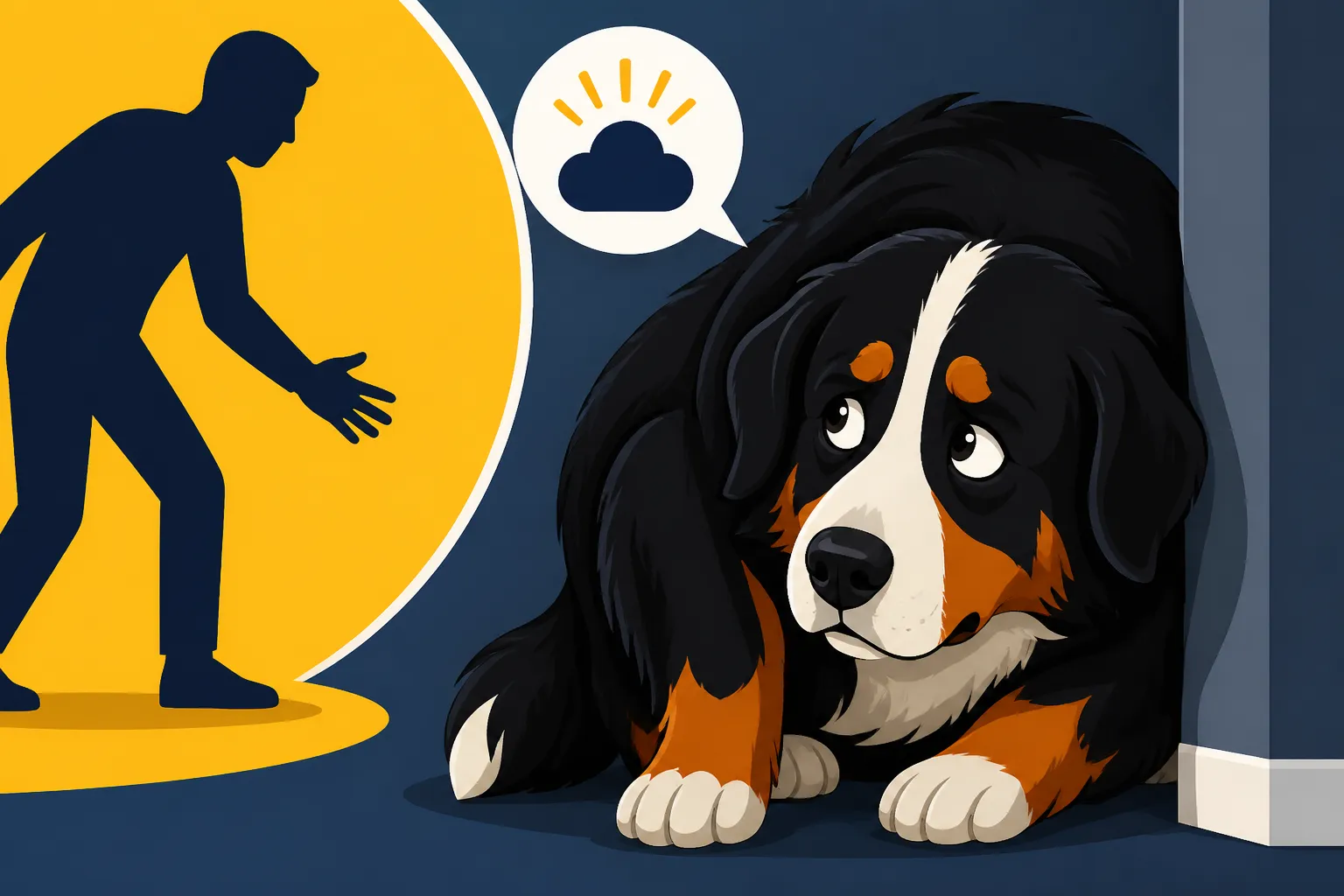
A Berner might retreat for various reasons that go beyond simple reluctance to engage. Perhaps they've had a negative experience in the past, or maybe they're simply overwhelmed by too much sensory input. Unlike some breeds that might confront a perceived threat, many Bernese Mountain Dogs prefer to avoid conflict entirely. Their instinct is often to remove themselves from situations that make them uncomfortable rather than to stand their ground or escalate. This avoidance behavior is a self-preservation mechanism. For example, if a child rushes up to them, a fearful Berner might not snap or growl; instead, they might try to duck behind their owner's legs, turn their head away, or even try to walk in the opposite direction. It’s their way of saying, "I don't like this, and I want out." Recognizing this as fear, rather than disobedience or mild apprehension, is the first step toward helping them cope. The sheer size of a Bernese Mountain Dog can also make their retreat seem less urgent to us, but for them, the internal distress is very real.
Early Warning Signs in Body Language
The beautiful thing about dogs is that they are constantly communicating with us, if only we learn to speak their language. When a Bernese Mountain Dog is feeling fearful and considering retreat, they offer a whole symphony of subtle physical cues long before they actually turn tail and run. Learning to read these signals can allow you to intervene and diffuse the situation before your dog reaches their breaking point.
Consider their ears: often pinned flat against their head or pulled back tightly, indicating tension and a desire to appear smaller or less threatening. Their eyes are another huge giveaway. You might notice "whale eye," where the whites of their eyes are visible on the sides, as they try to keep an eye on the perceived threat without turning their head fully. Excessive blinking or direct avoidance of eye contact are also strong indicators of stress. Many Berners will also offer displacement behaviors like lip licking, or yawning—even when they're not tired or have just eaten. A mouth held tightly closed, or subtle panting when it's not hot, can also be a sign of anxiety. These are unconscious ways your dog tries to relieve their own stress or signal appeasement.
Beyond their head, pay close attention to your Berner's tail and overall posture. A tail tucked low between their legs is a classic sign of fear, but even a tail held stiffly low or with a rapid, shallow wag (distinct from a happy, loose full-body wag) can suggest unease. Their body posture might appear lowered, hunched, or they might shift their weight away from whatever is making them nervous. They might even become incredibly still, almost freezing in place, hoping to go unnoticed. Another crucial, often misunderstood sign is piloerection, or "hackles up." This is when the hair along their spine stands erect. While it can precede aggression, it's primarily an involuntary fear response, an attempt to make themselves look bigger and more formidable, often out of nervousness. When you see a combination of these signs, it's your Berner's plea for help, signaling that they feel unsafe and are preparing to retreat if the pressure doesn't ease. Whether a Bernese Mountain Dog Hides Discomfort is a valuable resource for further understanding these subtle indications.
| Body Language Cue | What It Looks Like | What It Often Means (in Context of Retreat) |
|---|---|---|
| Ears | Pinned back, flat against head, or swivelled away | Feeling nervous, trying to appear less threatening, anticipating retreat |
| Eyes | Whale eye (whites showing), dilated pupils, rapid blinking, avoiding gaze | Stress, fear, hyper-vigilance, desire to avoid confrontation |
| Mouth | Lip licking (out of context), yawning (out of context), tight lips, panting (when not hot/exercised) | Displacement behavior, anxiety, stress, attempting to self-soothe |
| Tail | Tucked low between legs, stiffly low, rapid shallow wag (not loose) | Fear, insecurity, discomfort |
| Posture | Lowered body, hunched, leaning away, freezing still | Attempting to appear smaller, avoiding interaction, ready to flee |
| Hair | Piloerection (hackles up on neck/back) | Fear, arousal, feeling threatened, can precede fight or flight |
| Movement | Slowing down, hesitation, trying to get behind owner, walking away | Discomfort, avoidance, seeking distance from trigger |
Common Triggers for Fear-Based Retreats
Understanding the "why" behind your Bernese Mountain Dog's fear-based retreat is just as important as recognizing the signs. Often, these triggers aren't obvious to us because we don't perceive them as threatening. For a sensitive Berner, however, the world can be a noisy, unpredictable, and sometimes overwhelming place.
Environmental Factors and Novelty
Imagine experiencing everyday life with heightened senses, where every loud noise reverberates, and every new object is a potential mystery. This is often how our dogs perceive the world. For a Bernese Mountain Dog, sudden, loud noises like thunder, fireworks, or even the unexpected bang of a dropped pot can be genuinely terrifying. They don't understand the source or the harmlessness of these sounds, and their natural instinct for self-preservation kicks in, prompting them to seek cover and retreat from the perceived danger. Construction noises, passing sirens, or even a sudden burst of laughter can be enough to send a sensitive Berner scrambling for a quiet corner. It's not about being "dramatic"; it's a visceral, fear-driven reaction.
New places, unfamiliar floor surfaces, and strange objects can also be significant triggers. A trip to a new vet office, a friend's house with shiny hardwood floors, or even a novel piece of furniture in your own home can cause anxiety. Berners are creatures of habit and comfort, and anything that disrupts their predictable world can be unsettling. I've seen Berners hesitate for minutes at the threshold of a new room with a different type of flooring, their retreat instinct kicking in because the unfamiliar texture feels unstable or threatening. Similarly, a large, oddly shaped piece of yard decor or a new vacuum cleaner that looks and sounds menacing can be enough to make them retreat to a safe distance, often trying to put a barrier between themselves and the object. The Bernese Mountain Dog That Is Aloof With Strangers might also show these same types of reactions to new people entering their space.
Overstimulation in busy, crowded environments is another common culprit. While some dogs thrive at dog parks or bustling outdoor cafes, many Berners find them overwhelming. The sheer volume of unfamiliar sights, sounds, smells, and interactions can quickly become too much. They might start by trying to keep a low profile, sticking close to your leg, and if the sensory input intensifies, their default response will be to retreat. It's not that they don't want to socialize; it's that their system is overloaded, and they need to decompress in a quieter space. Understanding these environmental sensitivities is crucial for preventing fear responses and allowing your Berner to navigate the world with greater confidence.
People, Other Animals, and Social Pressures
Beyond their immediate environment, social interactions, or the lack thereof, can deeply impact a Bernese Mountain Dog's confidence and contribute to fearful retreats. How people and other animals approach them often dictates their comfort level.
When strangers approach too quickly, reach over their head, or make direct eye contact, it can be perceived as threatening behavior by a sensitive Berner. Instead of a friendly greeting, they might interpret these actions as an invasion of their personal space or an aggressive challenge. Children, with their often unpredictable movements, high-pitched voices, and tendency to rush in for a hug, can be particularly overwhelming. A child who doesn't understand dog boundaries might inadvertently corner a Berner, triggering a strong desire to retreat. Your Berner's response isn't about disliking people or children; it's about feeling vulnerable and unable to control the interaction. It's imperative that we Teaching Strangers How to Greet a Bernese Mountain Dog properly and educate children on how to interact respectfully.
Interactions with unfamiliar dogs or those with pushy play styles can also lead to fearful retreats. A Bernese Mountain Dog might enjoy a gentle play session, but if another dog is too boisterous, relentless in their approach, or lacks proper social manners, your Berner might quickly decide they want no part of it. They might attempt to disengage by turning their head, walking away, or even hiding behind you. Being cornered by another dog, even in play, can make them feel trapped and trigger an intense flight response. Past negative experiences, even if they seemed minor to us, can leave a lasting impression. A single unpleasant interaction during a crucial developmental stage can shape a Bernese Mountain Dog's social anxiety for years, making them more prone to retreat from similar situations in the future. This is why careful Socializing a Reserved Bernese Mountain Dog Puppy is so important, ensuring positive, controlled experiences.
Strategies for Supporting a Fearful, Retreating Bernese Mountain Dog
Witnessing your Berner in distress is tough, but the good news is there are many proactive steps you can take to help them build confidence and feel more secure. It's all about creating a supportive environment and gently guiding them through their fears, rather than forcing them to confront what scares them.
Creating a Safe Space and Predictable Environment
One of the most powerful tools you have is providing your Bernese Mountain Dog with a reliable safe space. This isn't just about giving them a bed; it's about designating an area where they know they can go to be undisturbed, a true sanctuary. This might be a cozy crate covered with a blanket in a quiet room, an orthopedic dog bed tucked away in a low-traffic corner, or even just a specific mat. The key is that this space is always available and never used for punishment. When they retreat to this spot, everyone in the household understands it means they need peace and quiet. This sense of having a personal retreat can dramatically reduce overall anxiety, as they know they always have an escape route when things get too much. It helps them feel like they have some control over their environment, which is huge for a fearful dog.
Beyond a physical safe space, establishing consistent routines can work wonders for a fearful Berner. Predictability reduces anxiety because they learn what to expect throughout their day. Regular feeding times, consistent walk schedules, and predictable periods of rest can create a sense of order and security. Sudden changes to their daily rhythm can be unsettling, so if you anticipate a change, try to introduce it gradually. For example, if you're going to be out of the house for longer periods, gradually increase the time they spend alone over several days or weeks, rather than a sudden shift. This consistent structure allows their sensitive minds to relax, knowing what's coming next and reducing the mental load of constant vigilance.
You might also consider calming aids to help your Berner manage their stress. Products like dog-appeasing pheromone diffusers, calming chews, or pressure vests can offer a subtle, non-invasive way to support their emotional well-being. A thundershirt-style vest, for instance, provides constant gentle pressure, which many dogs find comforting, much like a swaddled baby. You can find a variety of these items on platforms like Amazon, allowing you to explore different options to see what best suits your Berner. Remember, these aids are not cures but can be helpful tools in conjunction with environmental management and positive reinforcement training to create a more relaxed Berner.
Gentle Socialization and Counter-Conditioning
When working with a fearful, retreating Bernese Mountain Dog, the absolute golden rule is gentle, positive interactions, always allowing them an escape route. Never force your Berner into a situation that makes them uncomfortable. This means no dragging them closer to a stranger, no holding them while someone pets them against their will, and no forcing them to interact with a boisterous dog. Instead, focus on slow, controlled introductions. If a new person is visiting, instruct them to ignore your Berner initially, allowing the dog to approach on their own terms. If your Berner chooses to retreat, that's perfectly fine; it means they're communicating their needs, and you've listened. This builds trust and teaches your dog that you are their protector. Turning Down Strangers Who Want to Pet a Berner is crucial advice for anyone who owns a sensitive dog.
Counter-conditioning is a powerful technique where you change your dog's emotional response to a scary stimulus. The idea is to pair whatever triggers their fear with something incredibly positive, like high-value treats (think cooked chicken, cheese, or specialized training treats). For example, if your Berner is nervous around new people, ask a friend to stand at a distance where your dog notices them but isn't yet retreating. Every time your friend is present, offer your Berner a delicious treat. The moment the friend leaves, the treats stop. Over time, your Berner starts to associate the presence of new people with wonderful things. Always work at a distance where your dog is under threshold – meaning they are aware of the trigger but not yet reacting with fear. If they start to retreat, you're too close, and you need to increase the distance.
For more structured help, consider enrolling in a positive reinforcement-based online training program. Services like BAXTER & Bella offer comprehensive programs that emphasize building confidence and positive associations through fun, engaging lessons. These types of programs teach you how to communicate effectively with your dog, helping them develop coping mechanisms without resorting to harsh corrections that can worsen fear. The goal is to build a dog that wants to engage and isn't constantly worried about making mistakes. Remember, for a Bernese Mountain Dog, training should always feel like a fun game, not a stressful obligation. The Bernese Mountain Dog That Quits After One Correction perfectly illustrates why gentle methods are paramount.
Seeking Professional Guidance
Sometimes, despite our best efforts, a Bernese Mountain Dog's fear can be deeply ingrained or overwhelming, making independent progress difficult. This is when seeking professional guidance becomes not just helpful, but essential. A certified professional dog trainer (CPDT) who specializes in positive reinforcement and fear-based behaviors can offer tailored strategies and hands-on support. They can help you identify subtle triggers you might be missing, develop a detailed desensitization and counter-conditioning plan, and teach you how to reinforce calm behavior effectively. For more severe cases, or if your Berner's fear is impacting their quality of life, a veterinary behaviorist might be recommended. These are veterinarians with advanced training in animal behavior, who can assess if medication, in conjunction with behavior modification, might be beneficial.
It's critical to avoid any training methods that rely on punishment or intimidation when dealing with a fearful dog. Practices like "alpha rolls," shock collars, or harsh verbal corrections can severely damage your Berner's trust in you and actually exacerbate their fear. When a dog is punished for a fear response (like retreating or cowering), they don't learn not to be afraid; they learn that the scary situation is even scarier because it now predicts pain or discomfort. This can lead to what's called "suppressed fear," where the dog might stop showing outward signs of fear (like retreating) but their internal anxiety remains, potentially leading to a sudden, unpredictable lashing out when pushed past their limit. For a large, powerful dog like a Bernese Mountain Dog, this can be particularly dangerous. Understanding Whether an E-Collar Suits a Bernese Mountain Dog highlights the importance of humane training.
Finally, don't shy away from exploring medication options if recommended by a veterinary behaviorist. For some Bernese Mountain Dogs, anxiety is so severe that they are constantly living in a state of stress, making it incredibly difficult for them to learn or respond to behavioral interventions. In these cases, medication can help "turn down the volume" on their anxiety, allowing them to be more receptive to training and to cope more effectively with their environment. It's not a lifelong crutch but a tool to help them reach a state where they can actually benefit from the behavioral work you're doing. It's about improving their quality of life and helping them feel safe in their own skin.
Long-Term Management and Outlook
Helping a fearful, retreating Bernese Mountain Dog isn't a quick fix; it's a journey that requires unwavering dedication, understanding, and a whole lot of love. The goal isn't necessarily to eradicate all fear, but to equip your Berner with coping mechanisms and to manage their environment so they can live a happy, confident life.
Patience and Consistency are Key
When you're dealing with fear-based behaviors, patience and consistency are not just virtues, they are absolute necessities. Fear responses are often deeply ingrained, sometimes stemming from early experiences, genetic predisposition, or a combination of both. Changing these emotional responses takes time – often months or even years – and there will undoubtedly be setbacks along the way. Some days, your Berner might seem to regress, retreating from something they previously handled well. It's easy to get discouraged, but it's crucial to remember that progress isn't linear. Every small step forward, every moment your Berner chooses to engage rather than retreat, is a victory worth celebrating. Don't compare your Berner's progress to other dogs; focus on their individual journey and celebrate their unique successes.
Celebrating small victories helps reinforce the positive changes and keeps your spirits up. Did your Berner make eye contact with a stranger for a second longer than usual? Did they choose to stay in the room when a new object was introduced? Did they approach a previously scary sound with less hesitation? These are all huge wins! Acknowledge them, praise your dog, and reward them generously. This positive feedback loop helps your Berner understand that making an effort to be brave, even a little bit, leads to good things. It's a testament to the fact that you're doing something right and that your consistent efforts are paying off.
Ultimately, managing a fearful Bernese Mountain Dog requires a significant commitment. It means constantly being aware of their comfort levels, advocating for them, and adjusting your lifestyle to meet their needs. It might mean avoiding certain environments, politely asking people not to approach, or taking longer, quieter walks. But the reward—a confident, happy Berner who trusts you implicitly—is immeasurable. Remember, Whether a Bernese Mountain Dog Learns Slowly is sometimes less about intelligence and more about emotional state, so consistency will always trump speed.
Advocating for Your Berner
Perhaps one of the most important roles you'll take on as the owner of a fearful Bernese Mountain Dog is that of their dedicated advocate. Your Berner can't verbally communicate their fears, so it's up to you to be their voice and to protect their emotional well-being. This starts by proactively teaching family and friends how to interact appropriately. Explain their body language cues, tell them the specific things that make your Berner nervous (loud noises, direct approaches, reaching over the head), and instruct them on the best way to greet – or not greet – your dog. A simple, "Please let her come to you, and don't make eye contact at first," can make a world of difference. It's about setting boundaries with people to ensure your dog feels safe.
Learning to read your dog's signals and removing them from stressful situations before they retreat is a game-changer. Don't wait until your Berner is tucked under a chair or actively trying to flee. As soon as you see those early warning signs – the lip lick, the head turn, the slight stiffening of the body – gently guide them away from the trigger. This teaches your dog that you are always looking out for them, reinforcing their trust in you as their protector. It prevents them from reaching a point of panic and helps them learn that they don't have to retreat because you've already intervened. This proactive approach is much more effective than trying to soothe them once they're already overwhelmed.
The long-term impact of early socialization, or the lack thereof, cannot be overstated. A well-socialized Bernese Mountain Dog, exposed positively to a variety of sights, sounds, people, and dogs during their critical developmental window, is often better equipped to handle novel situations with confidence. If your Berner missed out on some of these experiences, it’s not too late, but it requires even more careful and consistent effort in adulthood. Every positive experience you facilitate now helps to build their emotional resilience, making future challenges less daunting. Your role as their advocate is a lifelong commitment, ensuring they feel understood, respected, and safe in your care.
Disclaimer
This article is for general informational purposes only and does not constitute professional advice. Laws, prices and regulations vary by location and change over time. Consult a qualified professional for guidance on your specific situation.