What a Bernese Mountain Dog Reaches Without Standing Up
Anyone who has ever lived with a Bernese Mountain Dog knows they possess an incredible knack for getting into things you'd swear were safely out of reach. It's not always about outright standing on their hind legs; often, their sheer size and a subtle lean are all it takes to grab something you thought was untouchable. This guide will walk you through understanding your Berner's impressive reach, identifying common household hazards, and implementing effective strategies to keep your home – and your beloved giant – safe and sound.
Understanding the Bernese Mountain Dog's Vertical Reach
When you bring a Bernese Mountain Dog into your life, you're not just getting a fluffy, good-natured companion; you're also inviting a large, often clumsy, and perpetually curious creature who views your home as their personal playground. Their height at the shoulder, combined with a surprising stretch, means that the world from their perspective is quite different from ours, especially when it comes to what's "out of bounds."
The Counter Surfing Challenge
"Counter surfing" is a term many large dog owners know all too well, and Bernese Mountain Dogs are champions of this particular art form. Imagine a dog that, even when just standing on all fours, can easily rest their head on most kitchen countertops. Now, consider that same dog giving a slight stretch or a hopeful lean, and suddenly, that plate of cooling cookies or a forgotten sandwich becomes an irresistible target. It's not about them actively trying to be naughty; it's often an opportunistic grab prompted by a delicious smell and a moment of unguarded access. Their long bodies and strong hindquarters give them leverage that smaller breeds simply don't possess.
Many owners, myself included, have walked into the kitchen to find a clean counter, only to later realize the dog has neatly removed a package of butter or a loaf of bread, leaving no trace but a guilty look and perhaps a few crumbs on the floor. It’s a testament to their quiet efficiency when motivated by food. This isn't just about food, though. It can be medicines, cleaning supplies, or even sharp objects left too close to the edge.
What "Without Standing Up" Actually Means
It's a common misconception that a large dog needs to stand fully upright, like a circus bear, to reach high places. For a Bernese Mountain Dog, "without standing up" means a strategic lean or stretch that utilizes their full body length. A Berner can easily place their front paws on a kitchen counter or dining table while keeping their back feet on the floor, effectively gaining several inches of vertical reach. They don't need to commit to a full stand, which often looks more like a clumsy dance. Instead, they can simply stretch their neck, using their powerful shoulders and sturdy frame to stabilize themselves as they investigate.
Think of it like this: if your Berner is standing near a sofa, they can often hook a paw over the back cushion and pull an item closer, or even just nose it off the edge. Similarly, a laundry basket placed on the floor might seem safe, but a curious snout and a strong neck are often enough to root through it. This capability means you have to think about their reach in a much broader sense than just eye-level for a human. It's not just objects directly at their nose height when they're standing; it's anything within their extended snout's range when they're stretching upwards or outwards.
Factors Influencing Reach
A Bernese Mountain Dog's reach isn't static; it can vary based on several factors. Firstly, their individual size plays a huge role. A larger male Berner might have a couple of inches on a smaller female, which can make all the difference between reaching a tempting treat and falling just short. Then there's their age. A bouncy, mischievous Berner puppy, even at six months old, might be able to reach things a smaller adult dog couldn't. As they mature, their coordination improves, and they become more adept at utilizing their size. You might think a younger Berner would be too clumsy, but often their boundless energy and lack of inhibition make them more determined to explore.
Finally, individual determination is a massive factor. Some Berners are simply more food-motivated or more curious than others. A dog with a strong prey drive, or one that has learned that counter-surfing yields rewards, will be far more persistent in trying to reach things than a more laid-back individual. I've known Berners who would meticulously clear a counter when given the opportunity, and others who, even if they could reach, wouldn't bother. It’s a unique personality trait that can make predicting their capabilities a fun, albeit sometimes frustrating, challenge. Knowing your dog's personality and their specific motivations can give you a leg up in anticipating their next move.
Common Household Items Within a Bernese Mountain Dog's Reach
It's easy to underestimate just how much of our everyday environment is perfectly accessible to a determined Bernese Mountain Dog. We tend to organize our homes around human height and habits, forgetting that our furry family members have their own motivations and a surprisingly long "grab radius."
Kitchen Countertops and Dining Tables
Ah, the kitchen. For many Berners, it's the land of forbidden delights. Anything left within about 30-36 inches from the floor is potentially fair game. This includes most standard kitchen counters and dining tables. We're talking about food that's cooling, forgotten sandwiches, fruit bowls, freshly baked goods, and even bags of groceries left momentarily unattended. I once had a Berner deftly snatch an entire roast chicken off the counter while I turned my back for literally a minute. The speed and stealth with which they operate when there's a culinary prize at stake can be astonishing.
Beyond food, consider other items like keys, wallets, phones, or mail that might be placed casually on a counter or table. A curious Berner might knock these off, chew on them, or even ingest something dangerous. Cleaning supplies, particularly spray bottles, are often kept on lower shelves or under sinks, which are perfectly accessible with a snout and a paw. Even something seemingly innocent like a roll of paper towels can become a fun, shreddable toy, leaving a trail of white confetti through your house. The Bernese Mountain Dog That Steals Food is a common concern for a reason!
Low Shelves and Coffee Tables
The living room and other common areas also present their own unique challenges. Coffee tables, side tables, and lower shelves on entertainment units are prime targets. Remote controls, eyeglasses, phones, books, magazines, and even small decorative items can easily be swiped or knocked off. Imagine coming back into the room to find your remote has been gnawed on, or your favorite book is now a pulpy mess. It's not maliciousness; it's pure, unadulterated curiosity and a strong desire to investigate with their mouths.
Kids' toys are another huge consideration. Small plastic parts, plush toys with squeakers, or even crayons can become choking hazards or cause intestinal blockages if ingested. Even something as simple as a tissue box can provide endless entertainment as they pull out every single tissue, leaving a snowy landscape behind. Electrical cords plugged into low outlets can also be tempting chew toys, posing a serious risk of electrocution. It’s a constant battle to remember that what's at our knee height is often at their eye or mouth level.
Laundry Baskets and Waste Bins
These are often overlooked but are veritable treasure troves for a Bernese Mountain Dog. A laundry basket on the floor, especially if it contains dirty socks or underwear, is like an open invitation to a sniffing and chewing party. The scent of humans on clothing is incredibly enticing, and while a chewed sock might seem harmless, it can lead to serious digestive issues if swallowed. I’ve known Berners who have eaten entire socks, requiring emergency vet visits.
Waste bins, particularly those in the kitchen or bathroom, are another major attraction. Even with a lid, a determined Berner can often nudge it open or knock the whole thing over. Used food wrappers, coffee grounds, dental floss, cotton swabs, and even cleaning wipes can be ingested, leading to choking, poisoning, or internal damage. Consider investing in motion-sensor bins or those with secure, paw-proof latches. Sometimes, the safest place for a bin is inside a pantry or behind a closed door. It's a small change that can save you a world of worry and a potential trip to the emergency vet.
Strategies for "Bernese-Proofing" Your Home
Given their impressive reach and insatiable curiosity, proactively "Bernese-proofing" your home isn't just a good idea – it's essential for their safety and your sanity. It requires a mindful approach and consistent effort, but the peace of mind it brings is absolutely worth it.
Elevated Storage and Secured Items
The most straightforward way to prevent your Bernese Mountain Dog from reaching things is to simply put them higher. This means anything that could be dangerous, valuable, or simply messy needs to be placed on shelves that are truly out of their extended reach. For kitchen counters, try to cultivate a habit of immediately putting away food or clearing plates. If you're cooling baked goods, consider placing them in a pantry or on a high shelf that requires a step stool for you to reach. Small appliances like toasters or coffee makers might need to be pushed further back on the counter or even stored in cabinets when not in use.
For lower areas, this might involve using secure bins or containers. For instance, putting waste bins inside a cabinet with a childproof latch, or opting for heavy-duty, chew-resistant lidded bins. Books, remotes, and other small items on coffee tables should either be moved to higher shelves or kept in decorative boxes with secure lids. Think about where your Berner rests their head or paws when they're lounging – if an item is there, it's fair game. On Amazon, you can find all sorts of elevated storage solutions, wall-mounted shelves, and secure containers that can help keep tempting items safely out of reach. It really changes your perspective on home organization when you live with a giant breed!
Training for "Leave It" and "Off"
While physical barriers are crucial, training is your most powerful tool. Commands like "Leave It" and "Off" are absolutely invaluable when living with a Bernese Mountain Dog. "Leave It" teaches your dog to disengage from an object they're interested in, whether it's food on the floor or something tempting on a coffee table. Start practicing this in low-distraction environments with low-value items, gradually increasing the difficulty and the value of the item. Reward heavily when they choose to ignore the item and look at you instead. Consistency is key here.
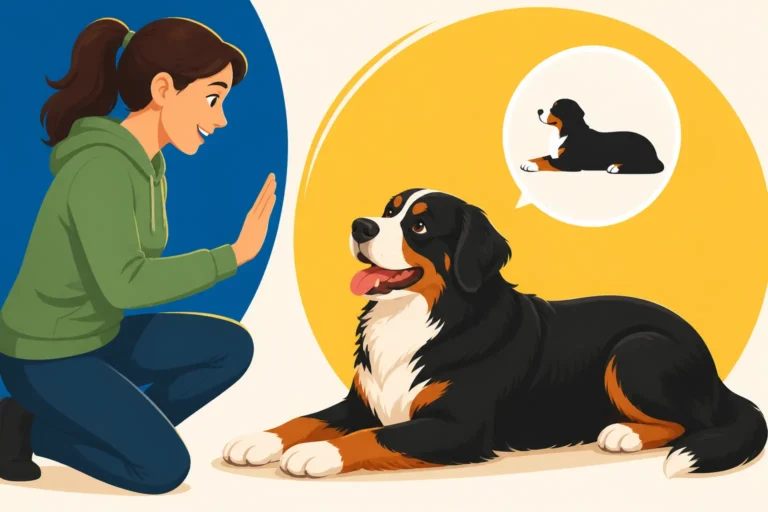
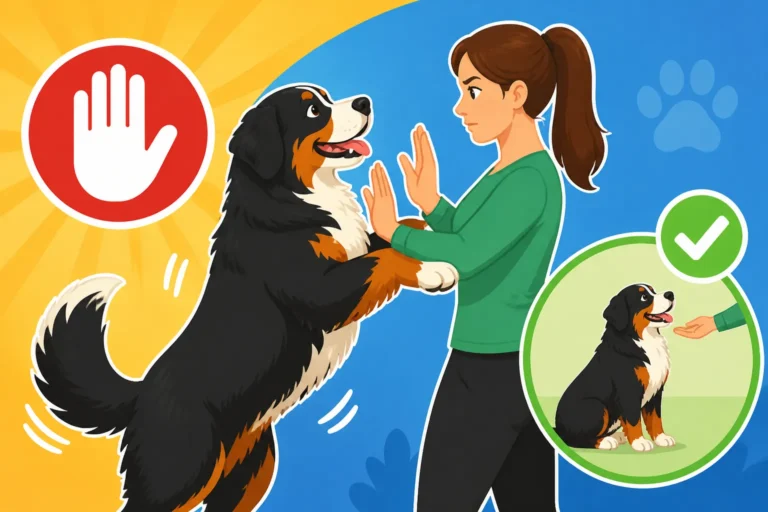
"Off" teaches your Berner not to jump on people or, in this context, not to put their paws on furniture or counters. This needs to be taught patiently, often by luring them off with a treat and immediately rewarding them for all four paws being on the floor. Remember, Berners are sensitive dogs; they respond best to positive reinforcement. Scolding often makes them shut down or sneakier, rather than truly understanding what you want. A good online training program, like those offered by BAXTER & Bella, can provide structured lessons and support to help you teach these crucial commands effectively. Early training and consistent reinforcement will save you countless headaches and keep your Berner safe. Training a Bernese Mountain Dog Without Breaking It means making training a positive experience.
Crate Training and Supervision
Despite your best efforts at Bernese-proofing and training, there will be times when you simply cannot supervise your dog. This is where crate training becomes a lifesaver. A properly introduced and comfortable crate provides a safe, secure space for your Berner when you're away from home, busy with tasks, or even just need a break. It eliminates the opportunity for them to get into trouble, preventing accidents, chewing on inappropriate items, or counter-surfing. Crates and Gates for a Bernese Mountain Dog are essential tools.
When you are home and can supervise, do so actively. This doesn't mean hovering over them constantly, but being aware of what they're doing and where they are. If you leave the room, even for a moment, consider whether it's safe to leave them unsupervised. If not, ask them to "settle" on their bed, put them in their crate, or take them with you. This active supervision helps prevent opportunistic mischief and reinforces good habits. It's about setting them up for success, not just catching them when they do something wrong. For instance, if you're cooking, perhaps they're in their crate with a long-lasting chew toy, rather than underfoot where tempting morsels might fall.
Living with a Curious Giant: Prevention and Management
Embracing life with a Bernese Mountain Dog means acknowledging their unique capabilities and designing your home and routines to work with them, not against them. It’s a journey of continuous learning, adaptation, and a whole lot of love.
Consistency is Key
Perhaps the most critical aspect of managing a curious Bernese Mountain Dog is unwavering consistency from every member of the household. If one person allows counter-surfing "just this once" or leaves a tempting item within reach, it undermines all the training and effort put in by everyone else. Dogs don't understand "sometimes" or "only when Mom is not looking." For them, it's either allowed or it isn't. If they get a reward even a single time, it reinforces the behavior and makes it much harder to break.
This means everyone – adults, children, and even guests – needs to be on the same page regarding rules and expectations. Hold a family meeting to discuss what needs to be kept out of reach and what commands should be used. For example, if you're teaching your Berner to Teaching a Bernese Mountain Dog to Lie Down and stay while you eat, everyone needs to enforce that. Remind children about putting away their toys, and politely ask guests not to feed your dog from the table or leave their bags on the floor. It can feel like a lot of work initially, but a consistent environment fosters a more secure and well-behaved dog in the long run.
Enrichment to Reduce Boredom
A bored Bernese Mountain Dog is a destructive Bernese Mountain Dog, or at the very least, a mischievous one. These intelligent dogs need mental and physical stimulation to prevent them from seeking their own entertainment, which often involves investigating prohibited areas or chewing on inappropriate items. Providing ample opportunities for enrichment can significantly reduce their desire to explore countertops or empty laundry baskets.
This could include regular walks and playtime, puzzle toys that dispense treats, long-lasting chews, or even enrolling in dog sports like drafting or obedience. I've found that a good 20-30 minute sniffing walk can tire out my Berner more than an hour of just walking on leash. Engaging their brains helps to satisfy their natural curiosity in appropriate ways. If your Berner is left alone for periods, consider rotating their toys to keep things interesting, or leaving them with a frozen Kong filled with peanut butter or yogurt. A tired dog is usually a good dog, and a mentally stimulated dog is less likely to invent their own fun at your expense. If The Bernese Mountain Dog That Cannot Bear Being Left struggles with boredom, a routine of enrichment can be a lifesaver.
Handling Accidental "Thefts"
Despite all your best efforts, your Bernese Mountain Dog will, at some point, manage to snag something they shouldn't have. It's going to happen. How you react in these moments is crucial. The key is to remain calm and avoid chasing or scolding, which can turn it into a fun game for them or make them defensive. If you chase, they learn to run away with their prize. If you scold, they might become fearful of you rather than understanding the wrongdoing of their action.
Instead, try to trade for the item. Have high-value treats readily available. If they have something, offer a treat in exchange for them dropping the forbidden item. This teaches them that giving things up is rewarding. If it's something dangerous, make a loud, startling noise (like dropping a pot) to get them to momentarily drop it, then quickly secure the item. Once the item is safe, you can then assess how they got it and reinforce your prevention strategies. Remember, it's usually our mistake for leaving it within reach. Learning to anticipate these moments is part of What a Bernese Mountain Dog Asks of a New Owner.
| Strategy Type | Description | Best For | Considerations |
|---|---|---|---|
| Elevated Storage | Placing items on high shelves, secured cabinets, or behind locked doors. | Food, medications, cleaning supplies, valuables, small electronics. | Requires human effort and vigilance; may need step stools for access. |
| Secure Containers | Using heavy-duty, chew-resistant, lidded bins for waste, laundry, or toy storage. | Trash, dirty laundry, children's toys, pet food storage. | Lids must be truly paw-proof; may need to be heavy or latched. |
| "Leave It" Command | Training your Berner to ignore tempting items on cue. | Opportunistic grabs, food drops, outdoor hazards. | Requires consistent training and reinforcement; high-value treats for practice. |
| "Off" Command | Teaching your Berner not to place paws on counters or furniture. | Counter-surfing, jumping on guests, preventing scratches. | Patient, positive reinforcement is essential; can be harder to teach if already a habit. |
| Crate Training | Providing a safe, enclosed space for unsupervised periods. | When you're out, busy, or at night. | Crate must be comfortable and introduced positively; never used as punishment. |
| Active Supervision | Being aware of your Berner's activities and environment when home. | Preventing immediate mischief, reinforcing good behavior. | Requires constant vigilance; can be tiring for owners. |
| Environmental Enrichment | Providing ample physical and mental stimulation. | Boredom-related destruction, general restlessness. | Requires diverse toys, regular exercise, and engaging activities. |
Disclaimer
This article is for general informational purposes only and does not constitute professional advice. Laws, prices and regulations vary by location and change over time. Consult a qualified professional for guidance on your specific situation.