Whether a Bernese Mountain Dog Signals Before Going Out
It’s a common frustration many Bernese Mountain Dog owners share: you think you've got house training nailed down, then suddenly, you're scrubbing a puddle from the floor and wondering why your gentle giant didn't give you any warning. You might even feel like your Berner just doesn't tell you when they need to go out, leading to stress and confusion. This comprehensive guide is here to shed light on how Bernese Mountain Dogs communicate their potty needs, what subtle (and not-so-subtle) signals to look for, and how you can proactively teach your beloved companion to signal effectively, making life easier for both of you.
The Myth and Reality of Bernese "Signaling"
Many dog owners, especially those new to large breeds, expect their dog to give a clear, unmistakable sign when they need to relieve themselves. They envision a pawing at the door, a direct stare, or even a bark. While some Berners will develop these explicit signals, it's a common misconception that all dogs instinctively do so without any guidance. The reality is often far more nuanced, especially with a breed as sensitive and sometimes subtle as the Bernese Mountain Dog.
How Berners Naturally Communicate Their Needs
Bernese Mountain Dogs are known for their gentle nature and their desire to be near their people. Their communication style often reflects this. While they might not be the most "demanding" of breeds when it comes to attention, they certainly have ways of letting you know something is up. Think about how they might nudge your hand for pets, or bring you a toy when they want to play. Their potty signals often start in a similar, understated fashion.
When a Bernese Mountain Dog needs to go out, especially if they haven't been properly taught a specific signal, they might rely on more instinctual behaviors. This could be a change in their pacing, an increased sniffing around the house, or a slight shift in their gaze towards the door. These aren't always loud or obvious, which is why it’s so easy for us busy humans to miss them. It's not that they aren't communicating; it's that we haven't learned their particular dialect yet. Building a strong bond with your Berner means learning to read these subtle cues, almost like a second language.
Why Some Owners Feel Their Berner "Doesn't Ask"
The feeling that your Bernese Mountain Dog "doesn't ask" to go outside can be incredibly frustrating. You might assume they just don't understand, or worse, that they're intentionally having accidents. But in most cases, it boils down to a few key factors. First, their signals might be so subtle that they pass unnoticed. A quick glance at the door from across the room, a slight whine under their breath, or a restless shift in position might be all you get. If you're engrossed in a book or a screen, these tiny indications can easily be overlooked.
Second, your Berner might have learned that you are the one who dictates bathroom breaks. If you've always taken them out on a rigid schedule, they might not feel the need to initiate. They simply wait for you to open the door. This isn't a bad thing in itself, as a consistent schedule is fantastic for house training, but it can hinder the development of proactive signaling. Lastly, if a Berner has had negative experiences with house training in the past—perhaps being scolded for accidents rather than praised for going outside—they might become secretive about their needs, trying to go in hidden spots rather than drawing attention to themselves. This is particularly true for sensitive breeds like Bernese Mountain Dogs, who thrive on positive reinforcement and can easily become discouraged by harsh corrections. The Bernese Mountain Dog That Quits After One Correction explores this sensitivity further.
Common Ways Bernese Mountain Dogs Signal
Once you start looking for them, you'll find that your Bernese Mountain Dog is indeed communicating with you. It's about shifting your perception and understanding their natural inclinations. Remember, a Berner is a creature of habit, and their bodily functions are no exception. They often have a routine, even if it's one you haven't consciously acknowledged.
Subtle Cues You Might Be Missing
Sometimes, the earliest signs your Bernese Mountain Dog needs to go out are incredibly subtle, almost imperceptible if you're not paying close attention. Your Berner might be lying down, then suddenly sit up and stare intently at you, then shift their gaze to the door. Or they might walk to the door, stand there for a moment, and then return to your side, hoping you got the hint. Pacing, even just a few steps back and forth, or a sudden inability to settle down could also be a clue.
Another common subtle cue is sniffing the ground or furniture more than usual, especially in areas where they've had accidents before, or where they typically exit the house. A low, soft whine, barely audible over household noise, is also a classic sign. Sometimes, they'll simply stop what they're doing—playing with a toy, napping—and stand still, looking around with a slightly worried or expectant expression. Learning to spot these early, quiet signals can save you from bigger clean-ups and reinforce your Berner's attempts to communicate. It helps to observe them closely during times you know they typically need to go, such as first thing in the morning, after a nap, or after a long play session.
More Obvious "Potty Dance" Signals
While Berners can be subtle, they can also learn to be quite clear, especially if their subtle attempts haven't been rewarded. The "potty dance" is a classic for a reason! This often involves more overt actions:
- Standing by the door: This is the most straightforward. Your Berner will walk to the door they usually use to go outside and stand there, possibly looking back at you.
- Whining or barking at the door: Some Berners, once they realize this gets your attention, will add a vocal element. It might be a persistent, low whine or a single, sharp bark.
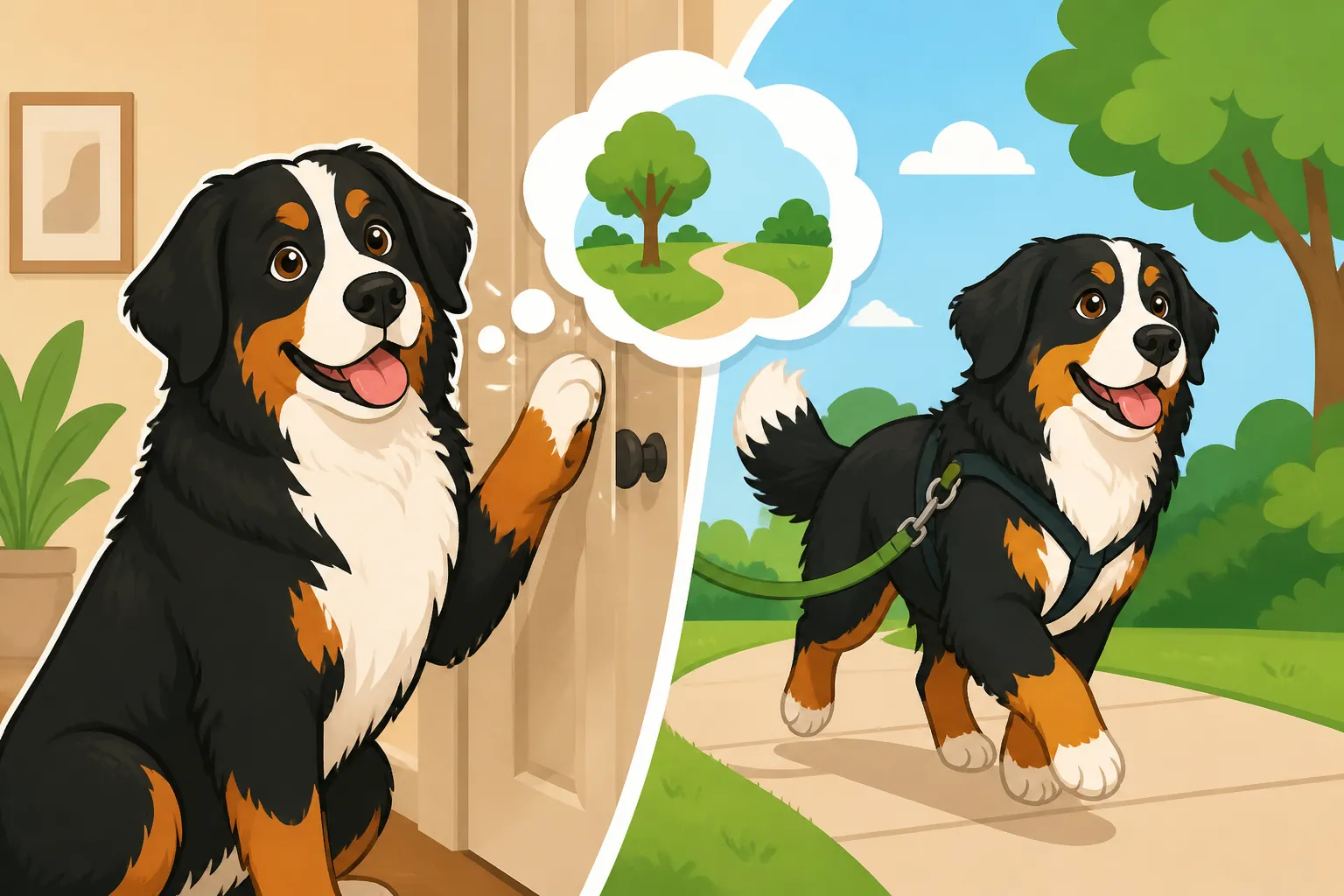
- Scratching or pawing at the door: This is a very clear signal that many owners hope for. If your Berner starts doing this, it's a definite sign. You can even find specific "potty bells" on platforms like Amazon that they can nudge or paw, creating an audible signal.
- Circling or pacing near the exit: If they're restless, sniffing around, and repeatedly walking towards the door, it's a strong indicator.
- Staring intently at you and the door: This can feel like a direct plea. They want you to understand, and they're trying to telepathically communicate their urgency!
It’s important to remember that these more obvious signals usually develop over time, especially if you consistently respond to their earlier, more subtle attempts. By immediately taking them out when you see even a small cue, you’re teaching them that their communication works, and that reinforces the behavior.
The Role of Routine in Predicting Potty Needs
While teaching specific signals is incredibly valuable, never underestimate the power of a consistent routine in managing your Bernese Mountain Dog's potty needs. Berners thrive on predictability, and establishing a solid schedule can often preempt the need for them to signal at all. They'll learn when to expect to go out, and their bodies will adjust accordingly.
A good routine might include:
- First thing in the morning, immediately after waking up.
- After every meal.
- After long naps.
- Before bedtime.
- After periods of intense play or excitement.
- Every few hours throughout the day, depending on their age and bladder control.
For a young Bernese Mountain Dog puppy, this schedule will be much more frequent. The Five Minute Rule and a Bernese Mountain Dog Puppy often applies not just to exercise, but also to remembering frequent potty breaks after short bursts of activity. As they get older, the intervals can lengthen, but consistency remains paramount. Keeping a log of when your Berner eats, drinks, and eliminates can help you identify their natural rhythm and better anticipate their needs, reducing the pressure on them to signal and on you to interpret. This proactive approach is a cornerstone of successful house training and helps prevent accidents before they even happen.
Teaching Your Bernese Mountain Dog to Ask to Go Out
If your Bernese Mountain Dog isn't currently signaling clearly, don't despair! This is a learned behavior, and you can absolutely teach them. It requires patience, consistency, and positive reinforcement, all things Berners respond beautifully to. The key is to connect their need to eliminate with a specific, human-understandable action.
The Bell Training Method
Bell training is a popular and effective method for teaching dogs to signal. It provides an audible cue that’s hard for you to miss, even if you’re not looking directly at your dog.
Here's how to do it:
- Choose your bells: You can find hanging potty bells specifically designed for dogs on online marketplaces like Amazon, or even use a string of festive jingle bells. Hang them on the doorknob of the door your Berner uses to go outside, low enough for them to easily nose or paw.
- Introduce the bells: Every single time you take your Bernese Mountain Dog out for a potty break, gently take their paw or nose and touch it to the bells so they jingle. Immediately open the door and go outside. Even if they don't potty, the association is being built.
- Reward success: When they go outside and eliminate, praise them enthusiastically and offer a high-value treat. This reinforces the entire sequence: bell = outside = potty = reward.
- Practice, practice, practice: Be consistent. Do this every single time, without fail. Your Berner will quickly start to associate the sound of the bells with going outside.
- Wait for them to initiate: Once your Berner understands the association, they might start nudging or pawing the bells on their own. The moment you hear those bells, immediately take them out, even if you just took them out 15 minutes ago. Reinforce that ringing the bells works!
- Handle false alarms: In the beginning, your Berner might ring the bells just to get outside, not necessarily to potty. Don't punish this; just take them out, wait a few minutes, and if they don't go, bring them back in. Don't offer a treat unless they actually eliminate. They'll soon learn the bells are for potty, not just for outdoor playtime.
Bell training can be incredibly effective, providing a clear communication channel between you and your Bernese Mountain Dog.
Training a Verbal Cue or Hand Signal
Some owners prefer to teach their Bernese Mountain Dog a specific verbal cue or hand signal, rather than using bells. This might be a simple "outside?" or a gesture towards the door. This method is also highly effective but requires a bit more direct interaction.
Steps for teaching a verbal or hand signal:
- Choose your signal: Decide on a word ("Potty?" "Outside?") or a distinct hand gesture (e.g., pointing to the door). Use this consistently.
- Associate the signal with going out: Just like with bell training, every time you take your Berner out for a potty break, use your chosen verbal cue or signal. Say "Potty?" enthusiastically as you walk to the door, open it, and lead them out.
- Prompt the behavior: In the initial stages, you might need to gently lead them towards the door as you say the cue. The goal is for them to associate the word or gesture with the action of going outside to eliminate.
- Reward elimination: As always, when they successfully potty outside, offer praise and a tasty treat. This positive reinforcement solidifies the link between the signal, going outside, and the rewarding outcome.
- Encourage initiation: Once they start to understand, you'll want to encourage them to offer the signal. If you see them sniffing around or looking restless, say your cue, and if they move towards the door, reward that movement immediately by taking them out.
- Fade the prompting: Gradually, you'll use the cue less as a command and more as a confirmation. They'll start to offer the behavior (walking to the door, looking at you) and you can respond with your cue.
This method can be especially useful for Training a Bernese Mountain Dog Without Breaking It, as it relies heavily on positive association and minimal pressure. Online training platforms like BAXTER & Bella often provide step-by-step guides for teaching various cues, including potty signals, offering structured lessons that can be very helpful for consistent training.
Consistency is Key: Establishing a Reliable System
No matter which method you choose—bells, a verbal cue, or a combination—the absolute most critical ingredient for success is consistency. Bernese Mountain Dogs are intelligent, but they learn through repetition and clear consequences. If you're inconsistent, they will become confused, and the training will take much longer, or even fail entirely.
To establish a reliable system:
- Everyone must be on board: If multiple people live in the household, everyone needs to use the same signals, respond in the same way, and follow the same routine. Mixed messages will undermine your Berner's learning.
- Respond immediately: The moment your Bernese Mountain Dog offers their signal—whether it's a bell ring, a specific look, or a whine—you must respond immediately by taking them out. Delaying your response breaks the link between their action and the desired outcome.
- Reward generously: Always praise and reward your Berner for eliminating outside, especially when they've signaled. This positive reinforcement makes them want to repeat the behavior.
- Prevent accidents: While you're training, try to prevent accidents indoors as much as possible. This means taking them out frequently, especially a young Bernese Mountain Dog puppy who needs to go out every couple of hours. Accidents create confusion and can lead to frustration for both of you. You might find resources like How Long House Training Takes a Bernese Mountain Dog helpful here.
- Manage supervision: When your Bernese Mountain Dog is indoors and not actively being trained or on a scheduled potty break, keep an eye on them. Tether them to you, use baby gates to keep them in the same room, or use a crate. This way, you can catch those subtle signals and respond appropriately.
Consistency builds trust and understanding, transforming your Berner into a pro at communicating their needs.
When Signaling Breaks Down: Troubleshooting and Support
Even with the best training, sometimes the signaling system can break down. Accidents happen, or your Berner might suddenly seem to forget their training. It's important not to get discouraged but to investigate the root cause calmly and provide appropriate support.
Age, Health, and Environmental Factors
Several factors can impact your Bernese Mountain Dog's ability or willingness to signal their need to go outside:
- Age: Very young puppies have tiny bladders and limited control. They simply cannot hold it for long periods, and even if they try to signal, they might not make it to the door in time. Conversely, older Bernese Mountain Dogs, particularly those over six or seven, can experience age-related incontinence or have health issues that affect bladder control. Caring for a Bernese Mountain Dog After Six often involves being mindful of these changes.
- Health Issues: A sudden change in house training habits, including a lack of signaling, can often be a red flag for an underlying medical condition. Urinary tract infections (UTIs), kidney problems, diabetes, or even pain from Joint Disease in a Hundred Pound Bernese Mountain Dog can lead to more frequent urination or an inability to hold it. If your Bernese Mountain Dog suddenly starts having accidents after being reliably house-trained, a vet visit is crucial. Bloodwork a Bernese Mountain Dog Should Have Yearly can help catch some of these issues early.
- Environmental Changes: Stress, anxiety, or a change in routine can also impact house training. Moving to a new home, a new person or pet joining the household, or even a change in your work schedule can throw your Berner off. The Bernese Mountain Dog That Cannot Bear Being Left might develop separation anxiety, leading to stress-related accidents if left alone for too long.
- Weather: Extreme weather, whether it's scorching heat or a heavy downpour, can make some Berners reluctant to go outside, leading them to hold it until they can't any longer, or find an indoor spot.
Always rule out medical issues first before assuming a behavioral problem.
What to Do When Your Berner Has Accidents
Discovering an accident inside can be frustrating, especially if you feel your Berner should know better. However, how you react is critical.
- Clean thoroughly: Use an enzymatic cleaner specifically designed for pet odors. This is crucial because dogs are attracted to the smell of past accidents, which encourages them to go in the same spot again. Regular household cleaners might mask the smell for humans but not for your Berner's sensitive nose. Many effective enzymatic cleaners are readily available on Amazon.
- Avoid punishment: Never scold, yell at, or physically punish your Bernese Mountain Dog for an indoor accident. Berners are sensitive and this will only teach them to fear you or to hide their accidents, making the problem worse. They won't understand why they're being punished after the fact; they'll only associate your return with anger.
- Interrupt and redirect: If you catch your Berner in the act, calmly interrupt them (a clap, a gentle "ah-ah!") and immediately take them outside to their designated potty spot. If they finish going outside, praise and reward them generously.
- Revisit training basics: If accidents become frequent, go back to basics. Increase the frequency of outdoor trips, use your chosen signaling method consistently, and supervise them closely indoors. Treat them like an un-house-trained puppy for a while.
- Consider crating: If your Bernese Mountain Dog is crate trained, a crate can be an invaluable tool. Most dogs instinctively do not want to soil their sleeping area. When you cannot supervise them, a properly sized crate (large enough to stand and turn around, but not so large they can use one end as a bathroom) can help prevent accidents and build bladder control. Crates and Gates for a Bernese Mountain Dog discusses appropriate sizing.
| Signaling Method | Pros | Cons | Best For |
|---|---|---|---|
| Bell Training | Clear audible signal, easy for owners to notice, simple to teach. | Can be overused by some dogs for attention, might be noisy. | Busy households, dogs who respond well to auditory cues. |
| Verbal/Hand Signal | Less noisy, builds strong communication bond, can be used discreetly. | Requires more direct observation by owner, signals can be missed. | Attentive owners, dogs who learn quickly with visual/verbal cues. |
| Routine-Based | Highly effective for predictability, reduces need for signaling. | Less flexible for unexpected needs, requires owner adherence. | All dogs as a foundation, especially puppies and older Berners. |
Resources for Further Training and Help
If you're struggling to teach your Bernese Mountain Dog to signal effectively, or if house training issues persist, there's a wealth of support available:
- Professional Dog Trainers: A certified professional dog trainer, especially one experienced with large breeds or house training challenges, can provide personalized guidance. They can observe your Berner's behavior, help you interpret subtle cues, and tailor a training plan that works for your specific situation. Look for trainers who use positive reinforcement methods.
- Online Training Programs: Platforms like BAXTER & Bella offer comprehensive online puppy training programs that cover everything from house training and signaling to obedience and socialization. These programs often provide structured lessons, videos, and access to trainers for support, which can be incredibly convenient for busy Bernese Mountain Dog owners.
- Veterinarian: As mentioned, always consult your vet if there's a sudden change in house training. They can rule out any medical causes and offer advice on managing age-related issues.
- Breed Clubs and Forums: Connecting with other Bernese Mountain Dog owners through local breed clubs or online forums can offer valuable insights and peer support. You might discover common Berner quirks or get tips that worked for others facing similar challenges. The What the BMDCA Asks of Bernese Mountain Dog Breeders and regional clubs often have resources for owners.
Remember, patience and understanding are key when working with your Bernese Mountain Dog. They want to please you, and with the right guidance, you can teach them to communicate their needs clearly and effectively. It’s all about building that connection and understanding each other's language.
Disclaimer
This article is for general informational purposes only and does not constitute professional advice. Laws, prices and regulations vary by location and change over time. Consult a qualified professional for guidance on your specific situation.