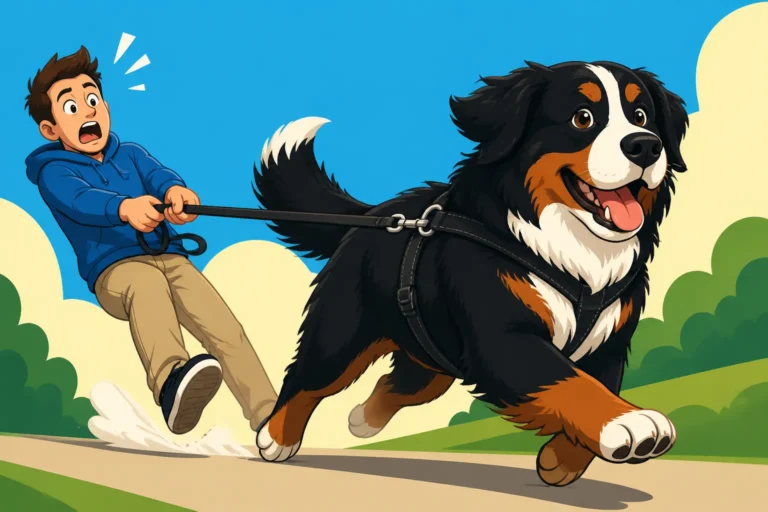
A Bernese Mountain Dog Puppy Biting in Play
It’s a tale as old as time for Bernese Mountain Dog owners: you bring home that adorable, fluffy puppy, and within days, those tiny, needle-sharp teeth are everywhere! The playful nips, mouthing, and sometimes outright bites, though meant in fun, can be painful and worrying, leaving you wondering if your sweet Berner will ever learn to be gentle. This guide is here to walk you through understanding why your Bernese puppy behaves this way and, more importantly, how to teach them appropriate mouth manners so you can enjoy cuddles without the constant fear of a chomp.
Understanding Why Your Bernese Mountain Dog Puppy Bites in Play
When your beautiful Bernese Mountain Dog puppy joins your family, they come with a whole host of natural instincts, and among the most prominent is using their mouth to interact with the world. It’s not aggression; it’s simply how puppies learn, communicate, and explore, much like human babies use their hands. Understanding this fundamental aspect of puppy development is the first step toward managing and redirecting their behavior effectively.
Natural Puppy Behavior and Development Stages
From the moment they are born, puppies use their mouths to interact with their littermates and mother. They nip and mouth during play, vying for attention and establishing boundaries. This period, often called the "bite inhibition" phase, is crucial. If one puppy bites another too hard, the bitten puppy will yelp, and the game will stop. This teaches the biter that hard bites lead to isolation and a lack of play, encouraging them to moderate their bite strength. When a puppy comes to your home around eight weeks old, they're still very much in this learning phase, and you become their new "littermate" in many ways. They don't inherently know that human skin is far more sensitive than a fur-covered sibling. Your Berner's natural exuberance, combined with their strong herding and working dog instincts, can mean their play style might be more physical than you anticipated. They’re still figuring out the world, and their mouth is their primary tool.
Communication and Exploration Through the Mouth
Imagine a world where your main way of touching, feeling, and understanding things is with your mouth. That’s a Bernese Mountain Dog puppy’s reality. They pick up objects, chew on them, and yes, mouth your hands, feet, and even clothing to gather information. Is it soft? Is it hard? Does it taste good? Does it squeak? This oral exploration is vital for their cognitive development and understanding of their environment. They’ll also use their mouth to try and communicate with you. A gentle, insistent nudge with their nose might escalate to a soft bite if they feel ignored. A sharp nip might be their way of saying, "Hey, pay attention to me!" or "I want to play!" Learning to differentiate between these communicative bites and pure play-biting comes with time and observation. For a breed that grows to be so large, it’s imperative to establish gentle manners early, before those tiny teeth become formidable chompers.
Teething Troubles and Instinctive Chewing
Just like human babies, Bernese Mountain Dog puppies go through a teething phase, and it’s often a primary driver for their incessant need to chew and mouth everything in sight. Starting around 3-4 months old, their baby teeth begin to fall out, making way for their stronger adult teeth. This process can be uncomfortable, and chewing helps alleviate the soreness and pressure in their gums. They're not biting you out of malice, but rather out of a primal need to soothe their aching mouth. Without appropriate outlets, your hands, furniture legs, or even your favorite shoes become the unfortunate targets. This is why having a variety of safe, appealing chew toys is not just a luxury, but an absolute necessity during this period. Remember, this phase is temporary, but the habits formed during it can last a lifetime, so positive redirection is key. This is also where you might see The Chew Damage a Bernese Mountain Dog Puppy Does if you're not careful.
Effective Strategies for Managing Nipping and Play Biting
Once we understand why our Bernese Mountain Dog puppies bite, we can implement strategies to manage this behavior and teach them appropriate boundaries. It's about consistency, clear communication, and providing positive alternatives. You're not punishing them for being a puppy; you're guiding them to be a well-mannered adult.
The "Yelp and Withdraw" Method
This method mimics how puppies learn bite inhibition from their littermates. When your Bernese puppy’s teeth make contact with your skin, even if it's not terribly hard, let out a sharp, high-pitched "yelp" or "ouch!" Immediately withdraw your hand, stand up, and turn your back to them. The key is to completely disengage. This sends a clear message: "Your bite was too hard, and now play is over." Stay disengaged for 10-20 seconds. If they calm down, you can re-engage with quiet play or a different activity. If they continue to nip, remove yourself from the room for a short "time-out" (about 30-60 seconds). It's crucial not to punish or scold them during this time, as they won't understand. The consequence should simply be the cessation of attention and play. Repeat this every single time their teeth touch your skin, no exceptions. The more consistently you apply this, the quicker your Berner puppy will learn. This is part of Teaching a Bernese Mountain Dog Puppy to Stop Mouthing.
Redirecting to Appropriate Chew Toys and Activities
One of the most effective ways to manage a nippy puppy is to redirect their oral fixation onto acceptable items. Always have a variety of sturdy, puppy-safe chew toys readily available. When your Bernese puppy starts to mouth your hand, immediately present them with an appropriate toy. Make the toy exciting by wiggling it or praising them when they take it. This teaches them, "Hands are not for biting, but this toy is!"
| Chew Toy Type | Best Use Case | Tips for Bernese Puppies |
|---|---|---|
| Rubber Toys | Durable, good for teething relief, often fillable | Look for sturdy options designed for large breeds. Freeze some for extra soothing. |
| Rope Toys | Tug-of-war (supervised!), good for dental hygiene | Ensure no loose threads can be ingested. Always supervise during tug. |
| Interactive Toys | Mental stimulation, slow feeding | Excellent for keeping their minds busy. Use their regular kibble to fill. |
| Edible Chews | High-value, long-lasting chewing satisfaction | Choose appropriate size and hardness. Always supervise to prevent choking hazards. |
| Plush Toys | Comfort, gentle play | Select durable ones without small, easily detachable parts. Not for aggressive chewers. |
Brands like Amazon offer a vast selection of durable chew toys suitable for growing Bernese Mountain Dogs. Look for toys that can withstand strong jaws. Beyond toys, redirect their energy into appropriate activities. Structured play sessions with a favorite fetch toy, short training bursts, or a puzzle feeder can engage their mind and body without encouraging biting. Remember, a tired puppy is often a well-behaved puppy.
Consistency and Positive Reinforcement Are Key
This might be the most challenging, yet most important, aspect of managing puppy biting. Every single person who interacts with your Bernese puppy must use the same methods, every single time. If one person allows mouthing and another doesn't, your puppy will become confused and progress will slow. It's like trying to learn a language when everyone around you speaks a different dialect. Consistent application of the "yelp and withdraw" and redirection methods will cement the rules in your puppy's mind.
Positive reinforcement plays a huge role here. When your puppy chooses to chew a toy instead of your hand, praise them enthusiastically! "Good chew!" or "Yes, that's a good toy!" is incredibly powerful. Reward calm, gentle interactions with cuddles and soft praise. Avoid any form of punishment, such as hitting their nose or scolding loudly, as this can damage your bond and make them fearful, or even teach them to bite harder in defense. Think about it: a giant breed like a Berner needs to trust you completely, and fear-based training can undermine that critical relationship. For complex training needs, online platforms like BAXTER & Bella offer structured puppy training programs that emphasize positive reinforcement, which can be incredibly helpful for maintaining consistency across the household.
Preventing Nipping and Building Bite Inhibition
Beyond reacting to bites, proactive steps can prevent nipping from escalating and build strong bite inhibition in your Bernese Mountain Dog puppy. This involves thoughtful socialization, teaching impulse control, and ensuring their physical and mental needs are met.
Socialization with Other Dogs and People
Proper socialization is absolutely critical for a Bernese Mountain Dog, especially when it comes to developing soft mouths. Puppies learn a tremendous amount from interacting with other well-socialized, calm adult dogs. These dogs will naturally correct a puppy that bites too hard, often with a growl or a quick snap (without making contact), teaching the puppy invaluable lessons about bite pressure. Enrolling your puppy in a puppy kindergarten class is an excellent way to provide controlled, positive interactions with other puppies and adult dogs. This also gives them exposure to new people, sounds, and environments, all vital for a well-adjusted Berner. You can read more about What a Bernese Mountain Dog Puppy Should Meet Early to ensure a well-rounded socialization plan.
When it comes to people, teach everyone who interacts with your puppy how to play appropriately. Discourage roughhousing that encourages biting. Instead, promote gentle interactions, like offering toys for play or calm petting sessions. If your puppy is overly excitable and prone to nipping, have people offer a treat for calm behavior before petting, teaching them that gentleness brings rewards. Ensure that children are taught how to safely interact with a large breed puppy and understand the "yelp and withdraw" rule too.
Teaching Impulse Control and Gentle Mouth Manners
Part of preventing nipping involves teaching your Bernese Mountain Dog puppy impulse control. This means they learn to pause and think before acting, rather than just reacting with their mouth. Simple exercises can build this skill:
- "Leave It": Start by holding a treat in your closed fist. When your puppy noses or paws at your hand, ignore them. The moment they back away, even slightly, say "Yes!" or "Good!" and open your hand to give them the treat. Gradually increase the distraction and the time they have to wait. This teaches them that ignoring something rewarding can lead to an even better reward.
- "Take It Gently": When offering treats, hold them between your thumb and forefinger. If your puppy tries to snatch it or bites your fingers, close your hand. Only open your hand and give the treat when they take it with a soft mouth. This directly teaches them to be gentle with their mouth around human hands.
- Structured Play: Incorporate short training sessions into playtime. For example, during a game of fetch, ask your puppy to "sit" before you throw the ball, or "drop it" when they return. This helps them understand that there are rules to the game, and these rules often involve self-control.
Consistency with these exercises is key. Remember, Whether a Bernese Mountain Dog Learns Slowly is less about their intelligence and more about your consistent teaching methods. They are smart, but can be a bit stubborn if the rules aren't clear.
Providing Adequate Mental and Physical Stimulation
A bored or under-exercised Bernese Mountain Dog puppy is far more likely to resort to nipping and mouthing out of frustration or excess energy. These are working dogs, even if they’re now your beloved companion, and they need appropriate outlets for their intelligence and physical stamina.
Consider the following:
- Daily Exercise: Ensure your puppy gets age-appropriate exercise. For a Bernese puppy, this means several short walks or play sessions throughout the day, avoiding excessive impact on their developing joints. Remember the "five-minute rule": roughly five minutes of structured exercise per month of age, twice a day. So, a four-month-old puppy might get two 20-minute walks.
- Mental Challenges: Berners are smart! Engage their minds with puzzle toys, hide-and-seek games, or even short training sessions to learn new tricks. This burns mental energy, which can be just as tiring as physical exercise.
- Chew Variety: Keep a rotation of different types of chew toys to prevent boredom. A durable rubber toy might be great one day, while a softer, interactive toy might be preferred the next. This also ties into managing What a Teething Bernese Mountain Dog Can Safely Destroy.
Neglecting these needs can lead to a host of behavioral issues, including increased nipping. Think of it as investing in their overall well-being and preventing future problems. A satisfied Berner puppy is a calmer, less mouthy puppy. The Monthly Bill in a Bernese Mountain Dog's First Year might seem high, but much of it goes towards supporting these needs, like food and toys.
When to Seek Professional Help (and Not Blame Yourself!)
It's natural to feel frustrated or even embarrassed when your Bernese Mountain Dog puppy's biting seems out of control. Many owners worry they're doing something wrong. But sometimes, despite your best efforts, the behavior persists or escalates. This is not a reflection of your failure as an owner; it simply means it's time to bring in professional support.
Recognizing Escalating or Concerning Behavior
While play biting is normal, there are signs that indicate the behavior might be escalating beyond typical puppy antics and requires professional intervention. Pay close attention if you notice:
- Bites breaking skin frequently or drawing blood: This suggests a lack of bite inhibition development.
- Growling or snarling during play biting: While some play growls are normal, aggressive growls that lead to bites are a red flag.
- Stiff body language or "hard" eyes: Instead of loose, wiggly play, a stiff posture and intense stare can indicate a more serious underlying issue.
- The puppy actively seeks to bite people over toys: If redirection isn't working at all, and they continue to target hands or feet with intense focus.
- Possessive aggression: If the puppy growls or snaps when you try to take away a toy or food item.
- Fear-based biting: If the puppy bites when startled, scared, or cornered, rather than just in play.
It's particularly important to address these issues early with a large breed like a Bernese Mountain Dog. What's a minor nuisance with a tiny puppy can become a significant safety concern as they grow to be a hundred pounds or more. Don't wait until it becomes a full-blown problem to ask for help.
The Role of a Certified Professional Dog Trainer
A certified professional dog trainer, especially one experienced with large breeds and puppy development, can be an invaluable resource. They can observe your Bernese puppy's behavior in your home environment, identify specific triggers, and tailor a training plan that addresses your unique situation. They'll also be able to distinguish between normal puppy behavior and more concerning issues. Look for trainers who use positive reinforcement methods and have a solid understanding of canine body language. Avoid trainers who advocate for harsh corrections or punitive tools, as these can exacerbate fear or aggression, especially in a sensitive breed like the Berner.
A good trainer can teach you advanced techniques for managing arousal, building stronger impulse control, and enhancing your communication with your puppy. They can also provide guidance on Socializing a Reserved Bernese Mountain Dog Puppy if your Berner shows shyness, which can sometimes manifest as defensive nipping. You might also find local group classes, which are a great way to combine professional guidance with socialization opportunities. Be prepared that professional training incurs costs, which are part of Training Class Prices for a Bernese Mountain Dog Puppy, but it's an investment in a harmonious future with your companion.
Early Intervention for a Large, Powerful Breed
For Bernese Mountain Dogs, early intervention is paramount. Their size and strength mean that even playful nips can quickly become dangerous if bite inhibition isn't established. A puppy might be "cute" when nipping at ten pounds, but that same behavior at eighty pounds is a serious liability. Starting training and addressing biting issues as soon as they arise can prevent entrenched habits and ensure your Berner grows into a confident, gentle giant.
Remember, you are not alone in this. Many Bernese Mountain Dog owners face challenges with puppy biting, and seeking help is a sign of responsible pet ownership, not failure. Embrace the journey, stay consistent, and celebrate every small victory your Berner puppy makes toward becoming the gentle, loving companion they are meant to be.
Disclaimer
This article is for general informational purposes only and does not constitute professional advice. Laws, prices and regulations vary by location and change over time. Consult a qualified professional for guidance on your specific situation.