Slow Feeders for a Bernese Mountain Dog
It's a common sight for many Bernese Mountain Dog owners: you put down a bowl of delicious food, and within what feels like seconds, it's gone. That frantic gobbling isn't just a messy affair; it brings a knot of worry to our stomachs, especially when we think about the risks of bloat and digestive upset in our beloved, deep-chested companions. This guide will walk you through understanding why your Berner might be eating so fast and, more importantly, how slow feeders can be a game-changer, helping your dog eat at a healthier pace and giving you much-needed peace of mind.
Why Your Bernese Mountain Dog Is a Speed Eater
You've probably noticed it – that impressive vacuum cleaner imitation your Berner does at meal times. It's not just an endearing quirk; there are several reasons why our big, beautiful Bernese Mountain Dogs tend to eat their meals at warp speed, and understanding these can help us address the issue effectively. It often comes down to a mix of instinct, environment, and learned behaviors.
Instinctual Drives and Competition
Dogs, even the most domesticated ones, carry echoes of their wild ancestors. In a pack environment, eating quickly meant getting enough food before others did. While your Berner might be the only dog in your home, or share with other friendly household members, that ancient drive can still manifest. It’s a primal response to perceived scarcity or competition, even if the "competition" is just the air around them. This instinct can be particularly strong in larger breeds, who might have historically needed more sustenance and faced more challenges securing it. It's not about them being rude; it's about deeply ingrained survival mechanisms.
Even if they don't have other dogs actively trying to snatch their meal, the mere presence of other pets in the house, or even humans bustling about, can trigger this "eat it now" mentality. They may feel a subconscious pressure to finish before something (or someone) else interrupts their feast. This is why some dogs, when fed in separate, quiet areas, might slow down a fraction, but it's often not enough to fully resolve the issue.
The Real Dangers of Fast Eating for Berners
Beyond the general mess, rapid eating poses significant health risks for a Bernese Mountain Dog. The most critical concern, hands down, is bloat, or Gastric Dilatation and Volvulus (GDV). This terrifying condition, where the stomach fills with gas and twists, is often linked to eating too quickly, especially large meals followed by exercise or drinking excessive water. Because Bernese Mountain Dogs are a deep-chested breed, they are unfortunately predisposed to bloat, making slow feeding an even more vital preventative measure. You can learn more about this serious condition by reading Bloat in a Deep-Chested Bernese Mountain Dog.
But bloat isn't the only concern. Eating too fast can also lead to choking, indigestion, excessive gas, and vomiting. When food isn't properly chewed and is swallowed quickly, the digestive system struggles to break it down efficiently. This means your Berner might not be absorbing all the nutrients from their carefully chosen food, and could experience discomfort, cramping, or even regurgitation shortly after eating. It's a lose-lose situation, causing stress for both you and your furry friend. The goal isn't just to slow them down; it's to protect their immediate and long-term health.
Exploring Different Types of Slow Feeders
Once you've realized that your Berner's mealtime habits need a change, the world of slow feeders opens up. There's a surprising variety out there, each designed to make eating a bit more challenging and, in turn, slower. It's not about making mealtime a chore, but about turning it into a mental exercise that benefits their digestion.
Maze Bowls and Puzzle Feeders
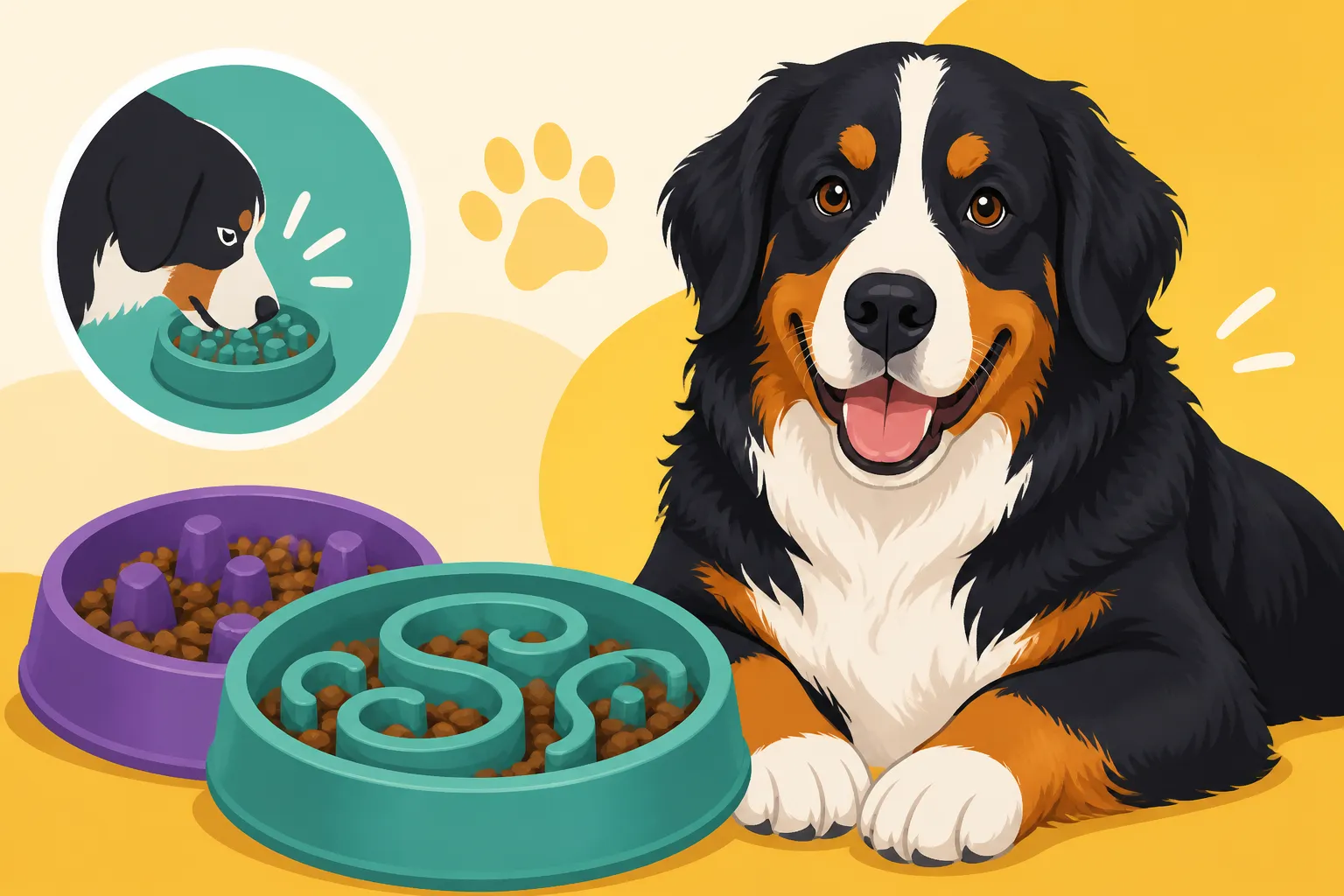
These are perhaps the most common and recognizable types of slow feeders. Maze bowls feature raised ridges, spirals, or bumps within the bowl that force your Bernese Mountain Dog to navigate around obstacles to get to their kibble. Instead of gulping down large mouthfuls, they have to use their tongue and nose to push individual pieces or small clusters of food through the pathways. This significantly extends mealtime, often turning a 30-second devour into a 5-10 minute activity.
Puzzle feeders take this concept a step further, often requiring more active engagement from your dog. These might involve compartments your Berner needs to slide open, lift, or knock over to release food. Some are more basic, like a simple tray with deep grooves, while others are quite intricate, resembling a child's toy designed for problem-solving. These types of feeders not only slow eating but also provide mental stimulation, which is fantastic for intelligent breeds like Berners. They transform eating into a rewarding game, which is especially good for indoor dogs who might not get as much mental exercise during the day. You can find a huge range of these on platforms like Amazon or at pet supply stores like Chewy, with options for various difficulty levels.
Snuffle Mats and Dispersed Feeding
Snuffle mats offer a different approach to slow feeding, using fabric rather than rigid plastic or ceramic. These mats are typically made with many strips of fleece or other fabric sewn onto a base, creating a dense, shaggy texture. You simply sprinkle your Berner's kibble deep within the fabric strips, and they have to "snuffle" and dig around with their nose to find each piece. It's a wonderful way to engage their natural foraging instincts.
Another simple, yet highly effective method, is dispersed feeding. This involves spreading your Bernese Mountain Dog's meal across a large, clean surface, like a baking sheet, a large puzzle toy, or even directly on a clean floor or outdoor patio. The idea is to make the food physically harder to gobble up in one go because it’s not concentrated in a single spot. This makes it impossible for them to take huge gulps, forcing them to pick up individual pieces. While a snuffle mat is a dedicated item you might use, dispersed feeding can be a good low-cost alternative or a way to introduce the concept to a skeptical Berner. Both methods add a layer of engagement that traditional bowls simply can't offer.
Other Creative Solutions and Food Types
Beyond dedicated slow feeders, many owners get creative. Some simply place a large, clean, non-toxic rock or a tennis ball in the center of their dog's regular bowl. This creates an obstruction that the dog has to eat around, effectively turning a normal bowl into a makeshift slow feeder. Just be sure the object is too large for your Berner to swallow and is completely safe. Another option, if you feed wet food or a fresh diet, is to spread the food thinly on a Lickimat or a similar silicone mat with suction cups. This makes your Berner spend time licking and working to get every bit, significantly extending mealtime.
For those considering fresh food options, companies like Ollie offer pre-portioned meals that can sometimes be more challenging for dogs to inhale quickly, especially if they are a softer, spreadable consistency. However, even with fresh food, a Berner’s enthusiasm can mean it vanishes fast, so combining it with a Lickimat or a shallow dish that encourages spreading can still be beneficial. The key is to break up the continuous stream of food, no matter its form.
Choosing the Right Slow Feeder for Your Bernese Mountain Dog
Selecting the perfect slow feeder for your Bernese Mountain Dog isn't a one-size-fits-all decision. Given their size, strength, and unique characteristics, you'll want to choose something that is effective, durable, and safe.
Size, Material, and Durability
The first thing to consider is the sheer size of your Bernese Mountain Dog. A slow feeder designed for a Chihuahua isn't going to cut it. You need a feeder with ample surface area to hold their full meal without it piling up too high, defeating the purpose. The mazes or obstacles should be appropriately spaced for a Berner's larger muzzle, allowing them to actually get to the food without excessive frustration.
Material is also crucial. Berners are strong dogs, and a flimsy plastic bowl can quickly become a chew toy or get pushed all over the kitchen. Look for sturdy, heavy-duty options made from thick, food-grade plastic, ceramic, or stainless steel. Silicone-based options, like some snuffle mats or Lickimats, are also excellent, provided they are made of durable, non-toxic material. A weighted base or non-slip feet are also a huge plus, preventing your dog from simply flipping the bowl over in frustration or sending it sliding across the floor. I've seen many a Berner make a game out of pushing their bowl around, and a good slow feeder needs to stand up to that.
Ease of Cleaning and Effectiveness
Let's be real: if it's a nightmare to clean, you're less likely to use it consistently. Slow feeders, especially those with intricate maze patterns, can trap food particles and become breeding grounds for bacteria if not cleaned properly. Look for feeders that are dishwasher- safe or have designs that are easy to scrub by hand. Smooth surfaces within the maze are generally easier to clean than rough textures or very deep, narrow crevices.
Ultimately, the best slow feeder is one that effectively slows down your specific Bernese Mountain Dog. Some Berners are incredibly adept at figuring out puzzles, while others might be easily frustrated. Start with a moderately challenging design and observe your dog. Is it slowing them down significantly? Are they getting too frustrated and giving up, or are they still eating too fast? Don't be afraid to try a few different styles. What works wonders for one Berner might be ignored by another. For some, a simple maze bowl from Chewy does the trick, while others might need a multi-part puzzle feeder found on Amazon to keep them engaged.
Here's a quick comparison of common slow feeder types:
| Slow Feeder Type | Material Examples | Pros for Bernese Mountain Dogs | Cons for Bernese Mountain Dogs |
|---|---|---|---|
| Maze Bowl | Plastic, Ceramic, Stainless Steel | Very effective at slowing eating; durable options available; easy to find large sizes. | Can be frustrating if maze is too complex or openings too small; some plastics can be less durable. |
| Puzzle Feeder | Plastic, Wood, Silicone | Provides mental stimulation; highly effective for slowing eating. | Can be expensive; some parts might not be durable enough for strong chewers; cleaning can be tricky. |
| Snuffle Mat | Fleece, Fabric | Engages natural foraging; softer on nose; less likely to cause frustration. | Can be messy with wet food; requires frequent washing; might not slow the fastest eaters enough. |
| Lickimat | Silicone | Excellent for wet or fresh food; very calming; easy to clean. | Not suitable for dry kibble; limited capacity for full meals; can be moved easily without suction. |
Considering Your Berner's Personality
Think about your dog's temperament. Is your Berner generally laid-back and patient, or are they easily frustrated? A highly complex puzzle feeder might be perfect for a patient, problem-solving Berner who enjoys a challenge. However, a Berner who tends to get frustrated quickly might do better with a simpler maze bowl or a snuffle mat, which offers an easier "win" and less potential for giving up.
Consider also their eating habits beyond just speed. Do they tend to push their bowl around? A heavy, non-slip ceramic or stainless steel bowl is paramount. Do they tend to chew on things if they're bored or frustrated? Opt for highly durable materials, perhaps even metal, to ensure the feeder doesn't become another destroyed toy. Observing how your Bernese Mountain Dog interacts with different toys and challenges can give you valuable insight into what type of slow feeder they'll respond best to.
Successfully Implementing Slow Feeding
Introducing a slow feeder into your Bernese Mountain Dog's routine might take a little adjustment, but with patience and consistency, it can become a seamless part of their day. Remember, the goal is a healthier, happier mealtime, not added stress.
Gradual Introduction and Positive Reinforcement
Don't just swap out their old bowl for a new, challenging slow feeder cold turkey, especially if your Berner is particularly food-motivated or prone to anxiety. Start by making the transition gradual. For the first few meals, you might put a small portion of their food in the slow feeder and the rest in their regular bowl, slowly increasing the amount in the slow feeder as they get used to it. Alternatively, some owners will hand-feed a few pieces from the slow feeder initially to show their dog how it works and create a positive association.
Positive reinforcement is key. When your Bernese Mountain Dog successfully navigates the slow feeder, even if it's just for a few kibbles, offer praise and encouragement. Make mealtime a positive, albeit slower, experience. Avoid hovering or making them feel rushed, which could negate the benefits of the slow feeder. Just be present and encouraging. Over time, they'll learn that taking their time is the new normal.
Consistency and Monitoring
Once you've introduced the slow feeder, consistency is crucial. Use it for every meal, every day. This reinforces the new eating habit and prevents your Berner from reverting to speed eating. If you're feeding multiple times a day, ensure all meals are presented in a way that encourages slower consumption. You can find useful guidelines on feeding frequency and The Daily Ration a Hundred Pound Berner Gets in our other articles.
Monitor your dog during and after meals. Observe how they're interacting with the feeder. Are they still struggling too much? Is the food still gone too quickly? Or are they getting frustrated and refusing to eat? If you notice extreme frustration, you might need to try a different type or level of slow feeder. Also, keep an eye on their post-meal behavior for signs of gas, discomfort, or bloating, especially within the critical The Half-Hour That Decides a Bloated Bernese Mountain Dog. While slow feeders significantly reduce the risk, they don't eliminate it entirely, so vigilance remains important.
Combining Slow Feeders with Other Strategies
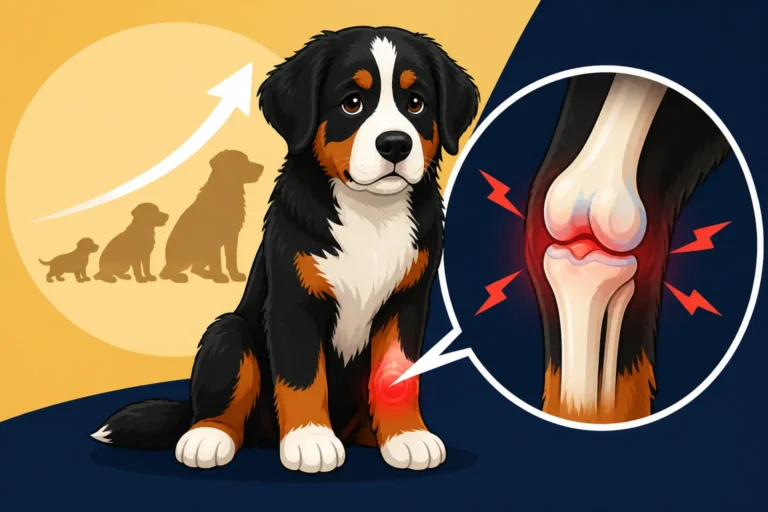
Slow feeders are powerful tools, but they can be even more effective when combined with other strategies. For instance, feeding smaller, more frequent meals can also help reduce the risk associated with fast eating. Instead of two huge meals, consider three or four smaller portions throughout the day. This also ties into managing their overall calorie intake, especially important as they grow, as discussed in Feeding a Bernese Mountain Dog Puppy to a Hundred Pounds and What Fast Growth Costs a Bernese Mountain Dog's Joints.
Ensuring a calm, quiet feeding environment can also make a big difference. If you have multiple pets, feed them in separate rooms to minimize any perceived competition. Make sure your Berner has access to fresh water before and after their meal, but prevent them from gulping large amounts immediately after eating, which can be another bloat risk factor, as detailed in Water Around a Bernese Mountain Dog's Mealtimes. A calm pre- and post-meal routine can contribute significantly to better digestion. Remember, for a giant breed like the Berner, every bit of prevention counts.
Disclaimer
This article is for general informational purposes only and does not constitute professional advice. Laws, prices and regulations vary by location and change over time. Consult a qualified professional for guidance on your specific situation.