Whether a Bernese Mountain Dog Drools More Than a Mastiff
So you're wondering about the drool factor between a Bernese Mountain Dog and a Mastiff, huh? It's a common, and very valid, question. Nobody wants to be constantly wiping slobber off their walls and guests, and both of these are truly magnificent, large dogs, so the potential for a slobber waterfall is a genuine concern for many prospective owners. This guide is going to dive deep into what you can truly expect from both breeds when it comes to drooling, why they do it, and, most importantly, how to manage it so your home remains more charming than damp.
Understanding Drool Levels: Bernese Mountain Dogs Versus Mastiffs
When you picture a drooling dog, chances are a Mastiff-type breed is pretty high on that list. Their reputation isn't entirely unfounded, but it's also important to understand the nuances. Bernese Mountain Dogs, while also large, typically present a very different drool profile. It really boils down to genetics and that wonderful, sometimes messy, facial anatomy.
The Bernese Mountain Dog's Drool Profile: Often Less Than You'd Expect
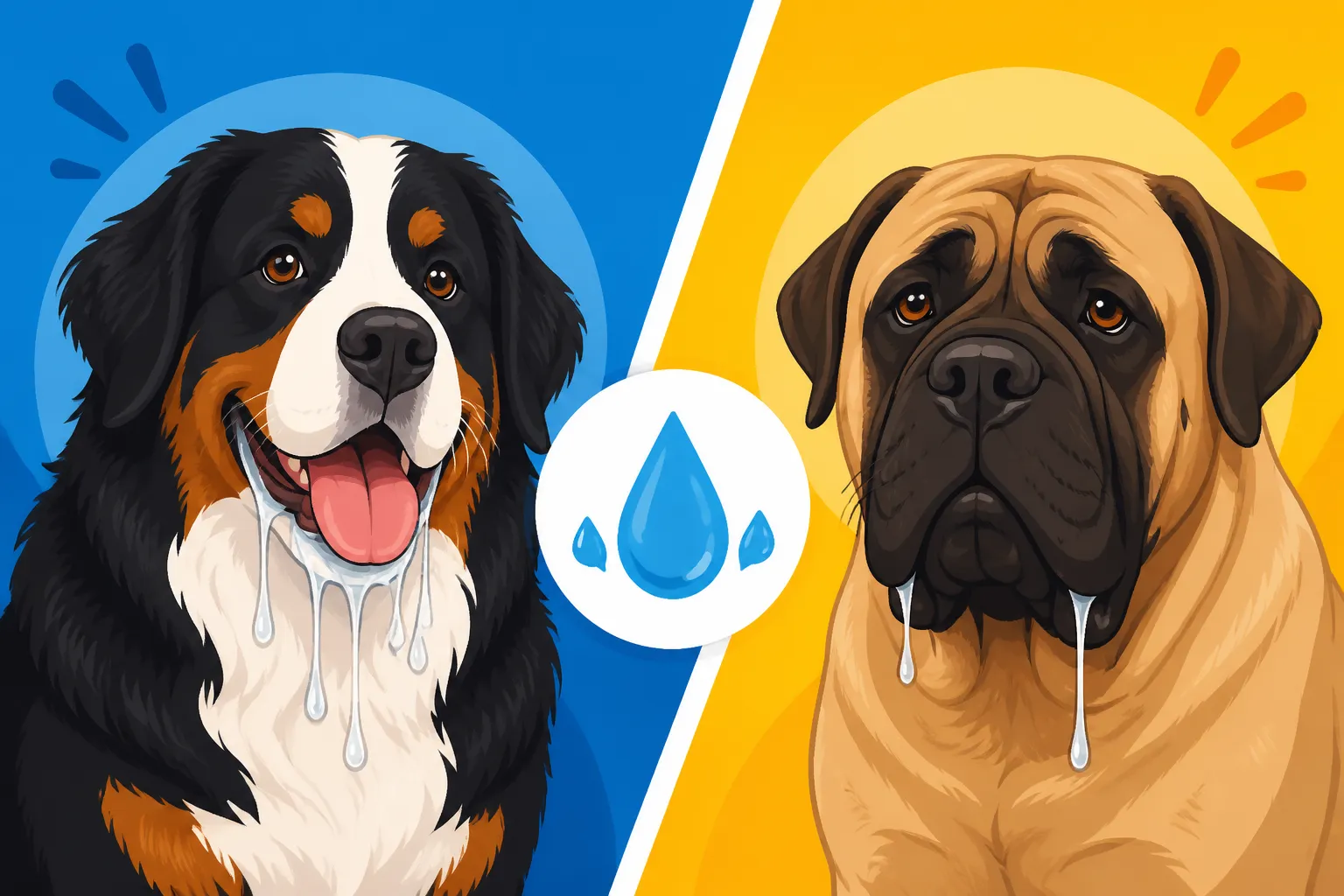
Let's be real, a Bernese Mountain Dog is a big dog, and big dogs are capable of making a big mess. But when it comes to drooling, many Berner owners are pleasantly surprised. Generally speaking, Bernese Mountain Dogs are not considered heavy droolers like some of their giant cousins. Their muzzle structure, while substantial, tends to be tighter around the mouth compared to breeds known for excessive slobber.
You will see drool, though, don't get me wrong. It's usually situational. Think about those moments right after they've had a big drink of water – you know, the one where they look up at you with a happy sigh and then shake their head, sending water droplets (and a bit of slobber) flying across the kitchen. Or when they're eagerly anticipating a meal or a treat; that little trickle from the corner of the mouth, a testament to their hopeful nature, is pretty standard. Excitement can also trigger it, especially if they're greeting someone they adore. However, it's not typically a constant, dripping faucet situation. You won't usually find long ropes of drool trailing from their jowls as they walk around the house. It's more about being prepared for those specific moments. We talk more about managing this in Drool and What a Bernese Mountain Dog Leaves Behind.
The Mastiff's Reputation for Drool: A Well-Earned Status
Now, let's turn our attention to the Mastiff. When we talk about "Mastiff," we're often encompassing a range of breeds like the English Mastiff, Neapolitan Mastiff, or even the Bullmastiff, though the English and Neapolitan are usually the poster children for drool. Their reputation for copious amounts of slobber is, for the most part, quite accurate. This isn't because they're necessarily producing more saliva than a Berner, but rather due to their distinctive facial anatomy.
Mastiffs typically possess very loose, pendulous flews and jowls. These are the folds of skin around their mouth that hang down. While they contribute to that wonderfully noble and sometimes soulful expression, they also act as perfect catch-alls for saliva. Instead of being swallowed or contained within the mouth, the excess saliva collects in these folds and then, inevitably, drips out. It’s a design feature, if you will. This means that drooling isn't just situational for many Mastiffs; it can be a fairly constant presence. After drinking, after eating, when excited, when relaxing—slobber can just… happen. If you're considering a Mastiff, you're signing up for a life where drool rags become a fashion accessory and wiping down walls and furniture becomes a regular part of your cleaning routine. This isn't a flaw in the dog; it's simply how their magnificent breed is built.
Why Do Dogs Drool? The Physiology Behind the Slobber
Drooling, or salivation, is a perfectly normal and essential bodily function for dogs, just as it is for humans. However, the degree to which it manifests externally can vary wildly depending on a dog's physiology and, crucially, their breed.
Saliva's Role in Canine Health and Digestion
Saliva isn't just for making messes; it plays several vital roles in a dog's health. Firstly, it's the very first step in digestion. Enzymes in saliva begin breaking down food even before it reaches the stomach, making nutrients more accessible. Secondly, saliva moistens food, which helps dogs chew and swallow more easily, especially dry kibble. Imagine trying to eat a cracker without any moisture in your mouth – it's tough! For dogs, particularly those who tend to gulp their food, saliva is key to preventing choking and aiding passage down the esophagus.
Beyond digestion, saliva also helps maintain oral hygiene. It naturally cleans teeth and gums, washing away food particles and bacteria that could otherwise lead to dental disease. It also contains antibacterial properties that help protect against infections. So, while excessive drool might be a nuisance, remember that saliva itself is a powerful ally in your dog's overall well-being. Keeping up with regular vet visits, as discussed in Seeing the Vet Twice a Year With a Berner, can help ensure any drooling issues aren't masking underlying health concerns.
Anatomical Differences and Breed-Specific Factors
The primary reason why some breeds are legendary droolers and others are relatively tidy boils down to their mouth and facial structure. It's all about those lips and jowls.
- Tight Lips vs. Loose Flews: Breeds like Bernese Mountain Dogs, German Shepherds, Labradors, or Poodles have relatively tight lips that seal around their teeth and mouth. This structure effectively contains saliva inside the mouth until it can be swallowed. When they do drool, it's usually because their salivary glands have gone into overdrive (like when they're very excited or anticipating food), and even then, it's often more of a trickle or a few drips rather than a constant flow.
- Pendulous Flews and Jowls: Mastiff-type breeds, Saint Bernards, Newfoundlands, Basset Hounds, and Bloodhounds are characterized by their loose, hanging skin around the mouth, known as flews and jowls. These structures create pockets where saliva can accumulate. Because the mouth doesn't form a tight seal, gravity takes over, and the collected saliva simply spills out. It's not a sign of poor health; it's simply a feature of their breed standard. The larger and looser these flews are, the more pronounced the drooling tends to be.
- Heat and Hydration: Any dog, regardless of breed, will drool more when they are hot or panting excessively. Panting is how dogs cool themselves, and it involves increased airflow over moist surfaces in the mouth, which in turn stimulates saliva production. If your Berner is out on a warm day, expect some extra slobber. Dehydration can also cause thick, stringy drool as the body tries to conserve moisture, which is something to watch for.
- Excitement and Anticipation: The sight of their favorite human or the rustle of a food bag can send a dog's salivary glands into overdrive. This is a conditioned response. Even a tightly-lipped Bernese can produce an impressive puddle of drool when they know dinner is coming. Similarly, anxiety or stress can also lead to increased drooling, a common physiological response.
It's clear that while the potential for drool exists in all dogs, the anatomical predispositions of certain breeds, like the Mastiff, make consistent and significant drooling an inherent part of their charm. For more on general care for a Berner, including some considerations that might relate to facial hygiene, check out Cleaning a Bernese Mountain Dog's Face Folds.
Practical Strategies for Managing Drool in a Large Breed Home
Living with a large, drooling dog doesn't mean your home has to perpetually feel damp or smell like wet dog. With a few practical strategies and the right tools, you can keep your beloved companion and your living space much cleaner. It’s all about preparation and a little bit of routine.
Keeping Your Home and Dog Clean
Managing drool effectively starts with being prepared. For Mastiff owners, a "drool towel" or "slobber rag" quickly becomes an indispensable tool, often carried around the house and certainly kept handy at the door or by the dog's bed. These are not just any old rags; think about investing in highly absorbent microfiber towels that can quickly soak up moisture without just pushing it around. Brands available on platforms like Amazon or Chewy offer specific dog-friendly towel sets that are perfect for this.
- Strategic Wiping: Get into the habit of wiping your dog's mouth after they drink, eat, or get overly excited. This simple act can significantly reduce the spread of drool. For Mastiffs, a quick wipe of those jowls several times a day can prevent significant build-up.
- Protecting Your Furniture: If your large breed is allowed on furniture, consider washable slipcovers or dedicated throws. There are excellent, heavy-duty options available that are easy to remove and toss in the wash. Waterproof liners for dog beds can also save you a lot of hassle.
- Floor Care: Hard floors are much easier to clean than carpets when dealing with drool. If you have carpet, regular cleaning will be necessary. Keep a dedicated cleaning solution handy for quick spot treatments.
- Feeding and Drinking Stations: Elevated feeding bowls can sometimes help some dogs eat and drink with less mess, as they don't have to bend down as far. However, it's crucial to note that for deep-chested breeds like Bernese Mountain Dogs, the topic of raised bowls and bloat risk is complex and debated among vets. Always discuss this with your vet. Regardless of height, consider placing bowls on a non-slip, easy-to-clean mat to catch spills. Brands like Ollie, which often come with feeding guides or accessories, might offer solutions for cleaner mealtimes. For more on safe feeding, see Feeding an Adult Bernese Mountain Dog Safely.
- Grooming Implications: While a Bernese Mountain Dog's thick coat is designed for colder climates, excess moisture from drool can sometimes lead to skin irritation or matting around the mouth and chest if not kept clean. Regular brushing and checking these areas are important. While not directly about drool, regular grooming is key, and you can learn more in What a Bernese Mountain Dog Groom Costs.
Investing in a few specialized items and adopting a proactive wiping routine can transform your experience, making life with your large, slobbery friend much more manageable. You might also find our discussion on Drool Towels in a Bernese Mountain Dog Household helpful.
Identifying and Addressing Abnormal Drooling
While some drooling is normal, especially for certain breeds, a sudden or significant increase in drooling can be a red flag. It’s important to distinguish between typical slobber and a symptom that requires veterinary attention.
- Sudden Excessive Drooling (Ptyalism): If your dog, particularly a Bernese Mountain Dog who isn't usually a heavy drooler, suddenly starts salivating profusely, it's time to investigate. This could indicate:
- Nausea: Dogs often drool excessively when they feel sick. If accompanied by vomiting, lethargy, or loss of appetite, contact your vet immediately.
- Dental Issues: Painful teeth, gum disease, or an abscess can cause increased saliva production as the dog tries to soothe the discomfort. Regular dental check-ups are crucial.
- Foreign Object: A stick, bone shard, or even a piece of toy could be lodged in their mouth, between their teeth, or in their throat, causing irritation and excessive drooling.
- Toxins or Irritants: If your dog has licked or ingested something poisonous or irritating (e.g., certain plants, cleaning chemicals, certain types of toads), increased drooling can be a symptom.
- Heatstroke: In hot weather, excessive drooling combined with heavy panting, weakness, and disorientation is a critical sign of heatstroke. Immediate cooling measures and vet care are essential.
- Anxiety or Fear: While often situational, severe anxiety (like a fear of thunderstorms or being left alone, as explored in The Bernese Mountain Dog That Cannot Bear Being Left) can manifest as excessive drooling.
- Bloat: Though bloat primarily affects the stomach, excessive drooling can sometimes be an early sign, particularly if combined with a distended abdomen, restlessness, and unsuccessful attempts to vomit. This is a life-threatening emergency in deep-chested breeds like the Bernese Mountain Dog. Learn more about its signs in Bloat in a Deep-Chested Bernese Mountain Dog.
If you notice any unusual drooling patterns, especially if coupled with other concerning symptoms, always err on the side of caution and consult your veterinarian. They can help identify the underlying cause and recommend appropriate treatment, ensuring your beloved companion stays healthy and comfortable.
Comparing the Drool Factor: At a Glance
To give you a clearer picture, here's a quick comparison of what you can generally expect from a Bernese Mountain Dog versus a Mastiff regarding their drooling habits.
| Feature | Bernese Mountain Dog | Mastiff (e.g., English, Neapolitan) |
|---|---|---|
| General Drool Level | Low to moderate; typically not a constant issue. | Moderate to high; often a constant presence. |
| Situational Drooling | Yes, especially when excited, anticipating food, or after drinking. | Very pronounced, often leading to significant puddles. |
| Lip/Jowl Structure | Relatively tight, containing most saliva within the mouth. | Loose, pendulous flews and jowls that collect and release saliva. |
| Mess Factor | Minor drips and splashes, mostly after drinking/eating. | Frequent drips, ropes of drool, and wet shakes. |
| Management Effort | Moderate; keep a towel handy for specific moments. | High; constant wiping, protective coverings, dedicated cleaning. |
| Breed Reputation | Not typically known as a "slobbery" breed. | Widely recognized as one of the most slobbery breeds. |
This table highlights the key differences, making it clear that while both are magnificent large dogs, their drooling tendencies are significantly distinct due to their breed-specific facial anatomy. Understanding this can help you prepare for the realities of living with either incredible companion. Remember that The Running Costs of a Hundred Pound Bernese Mountain Dog can include the extra cleaning supplies!
Disclaimer
This article is for general informational purposes only and does not constitute professional advice. Laws, prices and regulations vary by location and change over time. Consult a qualified professional for guidance on your specific situation.