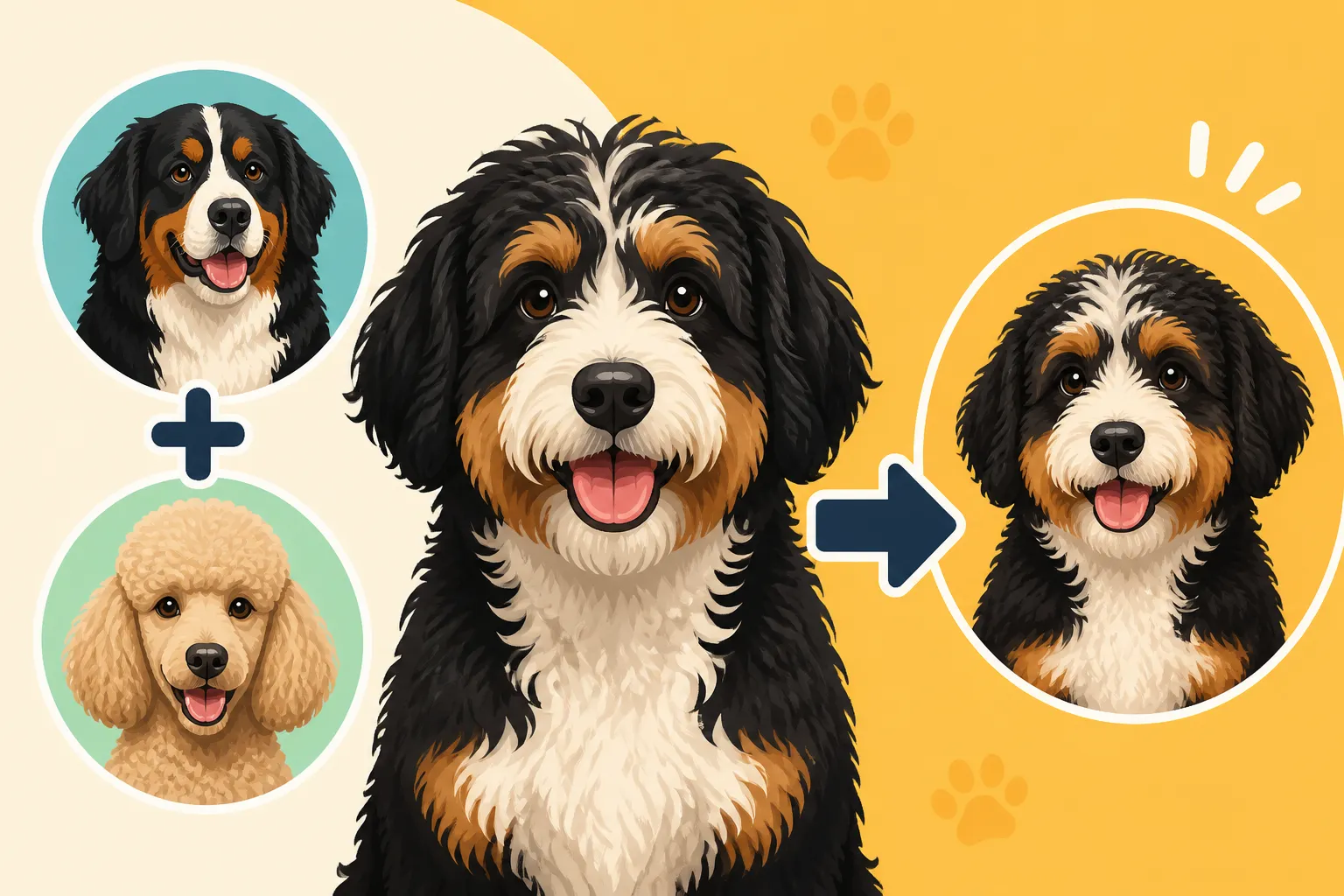
The Bernedoodle and What the Cross Changes
Bringing a Bernese Mountain Dog into your life is an incredible experience, filled with boundless love and gentle companionship. However, many prospective owners, captivated by their charm, also grapple with concerns about the breed's well-documented health issues and relatively shorter lifespan. This often leads people to consider crosses like the Bernedoodle, hoping to blend the best of both worlds. This guide will explore exactly what changes when you introduce the Poodle into the Bernese Mountain Dog lineage, helping you understand the potential outcomes in temperament, coat, health, and more.
Understanding the Bernese Mountain Dog Foundation
Before we dive into what a Bernedoodle is, it’s crucial to understand the magnificent breed that makes up half of this cross: the Bernese Mountain Dog. Known for their striking tricolor coats and calm demeanor, Berners are truly special dogs. Their traits form the foundational blueprint that the Poodle mix then builds upon, or sometimes, deviates from.
Bernese Mountain Dog Temperament and Traits
Bernese Mountain Dogs are, at their core, gentle giants. They possess a sweet, affectionate, and loyal disposition that makes them wonderful family companions. They thrive on human companionship and are often described as "velcro dogs," preferring to be wherever their people are. This strong bond means they can be prone to separation anxiety if left alone for extended periods without proper training and acclimatization. Their easygoing nature generally makes them excellent with children and other pets, provided they are well-socialized from a young age.
However, their calm demeanor shouldn't be mistaken for a lack of need for engagement. While they aren't hyper, Berners are intelligent dogs who were historically used for farm work, pulling carts, and droving livestock in the Swiss Alps. This means they appreciate having a "job" and benefit greatly from consistent, positive reinforcement training. They can be a bit sensitive to harsh correction, so a gentle hand and plenty of praise work best. Training a Bernese Mountain Dog Without Breaking It is key to fostering their confidence and good manners. They have a certain stubborn streak that can emerge, especially during adolescence, but with patience, they are eager to please their beloved family.
One of their most endearing traits is their tendency to "lean" on their favorite people, a comforting behavior that showcases their deep affection and desire for closeness. This isn't just a quirky habit; it's a part of their instinctual need for connection and comfort. While they might be large, they often think they are lapdogs, and their quiet presence is a source of immense comfort for many owners.
The Bernese Mountain Dog Coat and Shedding
The Bernese Mountain Dog's coat is undeniably one of its most defining and beautiful features. It's a striking tricolor, long, silky, and often slightly wavy, providing insulation against the harsh Swiss winters. This double coat consists of a thick, woolly undercoat and a longer, coarser outer coat. While beautiful, this coat comes with significant grooming responsibilities, and it's something people often underestimate until they're living with it.
Shedding is a major characteristic of the Bernese Mountain Dog. They are prodigious shedders, especially during seasonal changes in spring and fall. During these periods, you can expect to find impressive amounts of hair around your home, on your clothes, and even in your food if you're not diligent. The Bernese Mountain Dog Shed and What It Fills is no exaggeration; it feels like they shed enough to knit another dog! Regular brushing, sometimes daily, is essential to manage the shedding, prevent mats, and keep their coat healthy and clean.
Beyond shedding, the long coat is also prone to matting, particularly behind the ears, under the legs, and in their "trousers" on their hindquarters. Without consistent grooming, these mats can become painful and require professional intervention. Grooming a Bernese Mountain Dog's Long Tricolor Coat isn't just about aesthetics; it's vital for their skin health and comfort. Owners must be prepared for the time commitment and the need for appropriate grooming tools like slicker brushes, undercoat rakes, and de-shedding tools to keep their Bernese comfortable and looking their best.
Known Bernese Mountain Dog Health Realities
This is often the most significant factor that leads people to explore Bernedoodles. Bernese Mountain Dogs, unfortunately, are a breed with a shorter lifespan compared to many other large breeds, typically living only seven or eight years. This heartbreaking reality is largely attributed to a high incidence of specific health conditions, particularly cancer. Why a Bernese Mountain Dog Lives Only Seven or Eight Years is a topic that weighs heavily on every Berner owner's heart.
Cancer, especially Histiocytic Sarcoma, is devastatingly prevalent in the breed. The Cancer That Kills Half of All Bernese Mountain Dogs is a stark statistic that no potential owner can ignore. Other forms of cancer, like lymphoma and mast cell tumors, are also seen. Beyond cancer, Berners are also prone to serious orthopedic issues due to their large size and rapid growth. Hip and elbow dysplasia are common, leading to arthritis and mobility problems later in life. Joint Disease in a Hundred Pound Bernese Mountain Dog can significantly impact their quality of life.
Other health concerns include bloat (gastric dilatation-volvulus), a life-threatening emergency, and degenerative myelopathy, a progressive neurological disease affecting the spinal cord. Responsible breeding practices, including extensive health clearances for parents, are crucial for attempting to reduce the risk of these genetic conditions, but they can never entirely eliminate them. This background of significant health challenges is often the primary motivation for seeking a hybrid, in the hope of "breeding out" some of these predispositions.
Introducing the Poodle Influence
Now that we understand the Bernese Mountain Dog, let's turn our attention to the other half of the Bernedoodle equation: the Poodle. Poodles, whether Standard, Miniature, or Toy, bring a very different set of characteristics to the table, and understanding them is essential to predicting what a Bernedoodle might be like. For the purposes of a Bernedoodle, the Standard Poodle is typically the one used, as its size is more compatible with the Bernese.
Poodle Temperament and Intelligence
Poodles are often unfairly stereotyped as simply being "fancy" show dogs, but they are incredibly intelligent, athletic, and eager-to-please companions. Their intelligence is widely recognized; they are consistently ranked among the smartest dog breeds. This sharp mind makes them highly trainable and quick learners, often excelling in obedience, agility, and other dog sports. They thrive on mental stimulation and enjoy having tasks to perform, which can manifest as a mischievous streak if they're bored.
Unlike the Bernese's more laid-back disposition, Standard Poodles typically have a higher energy level and require regular exercise to stay happy and well-behaved. They love to play, run, and swim, and their playful nature can last well into adulthood. While they can be affectionate with their families, they might not be as overtly "velcro" as a Berner. They are generally good with children and other pets when properly socialized, but their exuberance might be a bit much for very young children if not managed.
Poodles also tend to be more alert and can be good watchdogs, often barking to alert their owners to visitors or unusual sounds. They can sometimes be a bit reserved with strangers, a trait that might also be present in some Bernese Mountain Dogs who tend to be more discerning. However, once they accept someone, they are usually warm and friendly. Their confident and sometimes clownish personality adds a wonderful zest to a household.
The Poodle's Coat and Hypoallergenic Claims
The Poodle's coat is perhaps its most distinctive feature, and the reason many people seek out Poodle crosses like the Bernedoodle. Poodles have a single coat of dense, curly hair that is often described as "hypoallergenic." It's important to clarify what this means: no dog is 100% hypoallergenic. However, Poodles shed very minimally, and the dander (dead skin cells) that typically triggers allergies in people gets trapped within their curly coat rather than being released into the environment. This significantly reduces the amount of allergens dispersed, making them a more suitable option for many allergy sufferers.
This low-shedding quality, however, comes with a high grooming demand. The Poodle's coat grows continuously and is prone to matting and cording if not brushed regularly and professionally clipped every 6-8 weeks. Without diligent care, their coat can quickly become an uncomfortable, painful mess, pulling on their skin and trapping debris. This is a non-negotiable aspect of Poodle ownership.
The various "cuts" seen on Poodles aren't just for show; they're also practical. Keeping the coat shorter makes it easier to maintain and prevents excessive matting. So, while you might not have dog hair all over your house, you will have a standing appointment with a groomer or a significant investment in grooming equipment and time.
Poodle Health Considerations
While Poodles are generally a robust breed, they also have their own set of potential health concerns. Reputable breeders screen their Poodles for these conditions to minimize their occurrence. Like Bernese Mountain Dogs, orthopedic issues can affect Poodles, though perhaps not with the same frequency or severity as a giant breed. Hip dysplasia is a concern, but patellar luxation (slipped kneecaps) is more commonly associated with Miniature and Toy Poodles.
Eye conditions such as progressive retinal atrophy (PRA) and cataracts are also seen in Poodles. Heart conditions, particularly Von Willebrand's Disease (a bleeding disorder), and certain endocrine disorders like Addison's disease and hypothyroidism, are also part of the Poodle's genetic landscape. The Clotting Fault Bernese Mountain Dogs Carry is another common health concern that also impacts Poodles and can be passed on to a Bernedoodle. Responsible breeders conduct genetic testing and health clearances for these conditions.
Bloat (gastric dilatation-volvulus) is also a significant risk for Standard Poodles, just as it is for Bernese Mountain Dogs, given their deep chests. This shared predisposition means that a Bernedoodle will likely inherit a heightened risk for this life-threatening emergency, making preventative measures like gastropexy a serious consideration for owners of the mixed breed. Understanding these Poodle-specific health challenges helps temper the expectation that a cross automatically eliminates all health risks.
The Bernedoodle: A Blended Canine Personality
So, what happens when you combine these two distinct breeds? The Bernedoodle is a hybrid dog, and like all hybrids, there's a certain amount of genetic lottery involved. You can get a wonderful blend of traits from both parents, or sometimes, a mix that leans heavily towards one side. This unpredictability is part of the allure and challenge of owning a mixed breed.
Bernedoodle Temperament: A Mix of Worlds
The goal with a Bernedoodle temperament is often to achieve the best of both worlds: the gentle, affectionate nature of the Bernese Mountain Dog combined with the intelligence and trainability of the Poodle. Ideally, a Bernedoodle will be loyal, playful, intelligent, and good-natured. Many Bernedoodle owners report their dogs are incredibly devoted, forming strong bonds with their families, much like a Berner. They often inherit the Berner's desire for closeness, being quite cuddly and enjoying being part of all family activities.
The Poodle's intelligence typically means Bernedoodles are quick to learn and eager to please, making them generally easier to train than some purebred Bernese Mountain Dogs who can have a stubborn streak. However, that Poodle energy can also come through, so they usually require more exercise and mental stimulation than a typical Bernese. They might not be content to simply nap all day; they often enjoy active play, walks, and puzzle toys. Early socialization is crucial for Bernedoodles, as they can sometimes inherit the Poodle's occasional reservedness with strangers or the Berner's sensitivity.
It's important to remember that puppies from the same litter can display very different temperaments. Some might be more laid-back and Berner-like, while others might be more energetic and Poodle-like. This variability is something potential owners must be prepared for. Reputable breeders often try to match puppies to families based on energy levels and personalities, but genetics are complex.
Bernedoodle Coat Varieties and Shedding Levels
The Bernedoodle coat is one of its most talked-about features, primarily due to the desire for a low-shedding dog. Bernedoodle coats can vary wildly, even within the same litter, depending on which parent's genetics are more dominant. This is especially true in first-generation (F1) Bernedoodles, where a purebred Bernese is crossed with a purebred Poodle.
You might see Bernedoodles with wavy coats that shed minimally, curly coats that are almost entirely non-shedding, or even coats that are straighter and shed more, resembling the Bernese coat. The ideal "hypoallergenic" coat is typically wavy or curly, inherited from the Poodle. Whether a Bernedoodle Sheds Less Than a Bernese Mountain Dog largely depends on the specific dog's coat type. Those with curlier, more Poodle-like coats will shed significantly less, making them a better choice for allergy sufferers. Those with straighter or wavier coats, particularly F1B (Bernedoodle bred back to a Poodle) or F2 generations (Bernedoodle bred to Bernedoodle), might offer more consistency in shedding levels.
Regardless of the shedding level, Bernedoodle coats generally require substantial grooming. Even low-shedding, curly coats need regular brushing (daily to every few days) to prevent mats and professional grooming every 6-8 weeks. Failure to do so will result in severe matting, which is painful for the dog and expensive to fix. Owners must commit to this grooming regimen, whether it's done at home with tools from places like Chewy or by a professional groomer. The beautiful, shaggy look many people adore requires significant upkeep.
Bernedoodle Size and Growth Expectations
The size of a Bernedoodle can also be quite variable, depending on the size of the Poodle parent. Standard Poodles are large dogs themselves, so a Standard Bernedoodle can be quite substantial. However, breeders often use Miniature Poodles to create "Mini Bernedoodles" or "Tiny Bernedoodles," aiming for smaller companions.
For a Standard Bernedoodle, you can expect a dog that ranges in weight and height between its Bernese and Standard Poodle parents. This typically means a weight of 70-90+ pounds for males and 60-80+ pounds for females, with heights ranging from 23-29 inches at the shoulder. They are still large, robust dogs, inheriting the sturdy bone structure from their Berner side. The growth rate will also be substantial, similar to a Bernese Mountain Dog puppy, requiring careful management of exercise and diet to protect their developing joints.
Mini Bernedoodles, bred from Miniature Poodles, typically weigh 25-49 pounds and stand 18-22 inches tall. Tiny or Micro Bernedoodles, using Toy Poodles, can be as small as 10-24 pounds and 12-17 inches tall. It's crucial to understand that breeding for smaller sizes can sometimes introduce different health considerations or temperamental variations, as the smaller Poodle lines might have different genetic predispositions. Always clarify the size of both Poodle parents and the expected adult weight with any breeder you consider.
| Trait | Bernese Mountain Dog | Standard Poodle | Bernedoodle (F1, Standard) |
|---|---|---|---|
| Temperament | Affectionate, loyal, gentle, calm, sensitive, can be stubborn, prone to separation anxiety. | Intelligent, athletic, energetic, playful, eager-to-please, alert, sometimes reserved with strangers. | Variable; ideally a mix of gentle affection, intelligence, and playfulness. Can be active. |
| Coat Type | Long, thick double coat; straight to wavy. Tricolor. | Dense, curly single coat; non-shedding. Various solid colors. | Variable; wavy (most common), curly, or less commonly, straighter. Various colors/patterns. |
| Shedding | High, especially seasonally. | Very low to non-shedding. | Low to moderate (wavy/curly coats), can be higher (straighter coats). |
| Grooming | High: Daily brushing, professional deshedding. | High: Daily brushing, professional clipping every 6-8 weeks. | High: Regular brushing, professional clipping every 6-8 weeks. |
| Adult Weight | 70-115 lbs (males), 65-95 lbs (females). | 45-70 lbs (males), 40-60 lbs (females). | 70-90+ lbs (males), 60-80+ lbs (females) for Standard Bernedoodle. |
| Lifespan | 6-8 years. | 10-18 years. | Variable; generally 10-12 years hoped for, but can vary. |
| Major Health Risks | Cancer (Histiocytic Sarcoma), Hip/Elbow Dysplasia, Bloat, DM. | Hip Dysplasia, Bloat, Addison's, PRA, Hypothyroidism, Von Willebrand's. | Inherited risks from both parent breeds. |
Health Considerations in the Bernedoodle Cross
One of the primary drivers for the popularity of the Bernedoodle is the hope that by crossing two breeds, you can somehow "dilute" or "breed out" the severe health issues seen in the Bernese Mountain Dog, especially their propensity for cancer. While there's a kernel of truth in the concept of hybrid vigor, it's not a magic bullet, and owners need to be realistic about potential health outcomes.
Inherited Health Concerns from Both Sides
A Bernedoodle inherits genetic material from both its Bernese Mountain Dog and Poodle parents. This means it can potentially inherit any of the health conditions prevalent in either breed. The idea that "mixes are healthier" is a simplification. While crossing breeds can broaden the gene pool and potentially reduce the incidence of diseases specific to one breed, it doesn't eliminate the risk, and it can introduce risks from the other breed.
For example, a Bernedoodle still carries a risk of hip and elbow dysplasia from both sides, as both Bernese and Poodles can suffer from these orthopedic issues. Bloat, a life-threatening condition, is a risk for both parent breeds, meaning a Bernedoodle would likely have an elevated risk for it. Bloat in a Deep-Chested Bernese Mountain Dog is a real concern, and a preventative gastropexy might be something to discuss with your vet regardless of whether you choose a purebred Berner or a Bernedoodle. Conditions like Von Willebrand's disease, certain eye conditions, and even some types of cancer are present in Poodle lines as well, alongside the devastating cancer predisposition from the Bernese side.
The key to mitigating these risks, whether for a purebred or a hybrid, lies in responsible breeding. A reputable Bernedoodle breeder should conduct the same extensive health clearances on both parent dogs that a good purebred breeder would: OFA or PennHIP certifications for hips and elbows, eye clearances, cardiac exams, and genetic testing for conditions like Von Willebrand's and Degenerative Myelopathy. Without these clearances, you're essentially buying a puppy without knowing its genetic health blueprint.
The Myth of Hybrid Vigor in Bernedoodles
"Hybrid vigor," or heterosis, is a real genetic phenomenon where the offspring of two distinct genetic lines can be more robust, healthier, and larger than either parent line due to increased genetic diversity. However, this effect is most pronounced when the parent breeds are genetically distant and when there's an absence of inbreeding within those lines. It's also most effective when the diseases being discussed are recessive and not common to both parent breeds.
The challenge with Bernedoodles is that while the breeds are distinct, some of their common health issues overlap, like hip dysplasia and bloat. More importantly, hybrid vigor doesn't magically erase dominant genetic predispositions. For instance, if the type of cancer that affects Bernese Mountain Dogs is not purely recessive, or if there are multiple genes involved, simply mixing with a Poodle won't guarantee a longer, cancer-free life. Whether a Bernese Mountain Dog Mix Escapes the Cancer is a question many hope to answer with a definitive "yes," but the reality is more nuanced. While the Bernedoodle might statistically live longer than a purebred Bernese, they still face risks.
Many Bernedoodle breeders claim their dogs will have significantly extended lifespans (often quoted at 10-12+ years, closer to the Poodle's lifespan). While this is certainly a hopeful outcome, there isn't extensive long-term data yet to definitively prove this across the board for all Bernedoodle lines. It's crucial for prospective owners to approach these claims with a critical eye, understand the genetic complexities, and prioritize breeders who are transparent about health testing and the health history of their parent dogs and previous litters.
Finding a Reputable Bernedoodle Breeder
Just like with purebred dogs, finding a reputable breeder is paramount when considering a Bernedoodle. The surge in popularity of "designer dogs" has unfortunately led to an increase in irresponsible breeding practices, including puppy mills and backyard breeders who are more concerned with profit than health or temperament.
A reputable Bernedoodle breeder will:
- Conduct extensive health testing on both the Bernese Mountain Dog parent and the Poodle parent. This includes OFA/PennHIP clearances for hips and elbows, eye certifications from a veterinary ophthalmologist, cardiac screenings, and genetic tests for conditions like Von Willebrand's disease and Degenerative Myelopathy. They should be able to provide documentation for these tests. The Bernese Mountain Dog Health Panel is a good baseline to discuss for the Berner parent.
- Be transparent about the health history of their breeding dogs, their pedigrees (even for mixes, they should know the lineage of their purebred parents), and the health outcomes of previous litters.
- Prioritize temperament and socialization. They should raise puppies in a stimulating home environment, introducing them to various sights, sounds, and experiences from a young age.
- Allow you to visit their facility, meet the mother dog (and ideally the father, or have detailed information about him), and observe the living conditions.
- Ask you detailed questions about your lifestyle and experience to ensure a Bernedoodle is a good fit for your home. They will be just as keen to vet you as you are to vet them.
- Provide a health guarantee for their puppies and offer ongoing support and advice.
- Be open about the challenges of the breed, including grooming needs, potential health issues, and the range of temperaments.
- Avoid making unrealistic claims about "100% hypoallergenic" dogs or guarantees against all health issues.
Be wary of breeders who sell puppies without health clearances, refuse visits, or push for quick sales. While What a Fully Cleared Bernese Mountain Dog Litter Sells For can be a significant investment, paying less upfront for a puppy from an unverified source can often lead to far greater veterinary bills and heartache down the road.
Living with a Bernedoodle: Practicalities and Expectations
Bringing any dog into your home requires understanding their daily needs, and a Bernedoodle is no exception. While they blend traits from both parent breeds, they often come with their own unique set of practical considerations that prospective owners must be prepared for.
Grooming Needs: More Than Just a Cute Face
As we've touched on, the Bernedoodle's coat is a major factor in their appeal, but it's also their biggest maintenance commitment. There's a common misconception that a "low-shedding" dog means "low-maintenance" grooming, and with a Bernedoodle, this simply isn't true. Whether your Bernedoodle inherits a wavy or curly coat, it will require consistent attention.
Expect to brush your Bernedoodle several times a week, if not daily, especially if they have a curlier coat or are going through a growth spurt where their adult coat is coming in. This helps prevent mats and tangles, which can quickly become severe and painful. Investing in high-quality brushes, combs, and detangling sprays is a must. Many owners find that a combination of a slicker brush and a metal comb is essential for getting through their dense coats. Places like Chewy offer a fantastic array of grooming tools to help you keep up with their needs at home.
Beyond home brushing, professional grooming is typically required every 6-8 weeks. This involves bathing, drying, and clipping the coat to a manageable length. Without regular professional grooming, Bernedoodle coats can become severely matted, leading to skin infections and discomfort, and often requiring a full shave-down, which can be stressful for the dog. Budgeting for these regular grooming appointments, or dedicating the time and learning the skills to do it yourself, is a non-negotiable part of Bernedoodle ownership.
Training and Exercise Requirements
Bernedoodles generally inherit the intelligence of the Poodle, making them highly trainable and eager to please. This is a huge plus, as a well-trained, large dog is a joy to live with. However, their intelligence also means they need mental stimulation to prevent boredom, which can lead to destructive behaviors. Early and consistent positive reinforcement training is key. Puppy classes are highly recommended for socialization and foundational obedience. Training a Bernese Mountain Dog Without Breaking It offers excellent insights that can be adapted for the Bernedoodle's sensitive nature.
While the Bernese Mountain Dog is known for being more laid-back, the Poodle influence often means Bernedoodles have a moderate to high energy level. They're not usually hyper, but they do require regular exercise to stay physically and mentally healthy. This can include daily walks (at least 30-60 minutes, twice a day for many), playtime in a securely fenced yard, fetch, and even dog sports like agility or rally. They love to be active with their families, whether it's hiking, swimming (many love water!), or just playing in the park.
A bored Bernedoodle can become a destructive Bernedoodle. Providing them with puzzle toys, chew toys, and consistent training sessions will help channel their intelligence and energy positively. They thrive on routine and knowing what's expected of them. Their strong bond with their families means they don't do well when left alone for long periods and can develop separation anxiety, much like their Bernese ancestors. The Bernese Mountain Dog That Cannot Bear Being Left applies to many Bernedoodles too, so consider your schedule carefully.
Cost of Ownership: A Look Beyond the Initial Purchase
The initial cost of a Bernedoodle puppy can be quite high, often ranging significantly depending on location, breeder reputation, and the specific lineage of the parents. Many people are drawn to them, and demand can drive prices up. However, the purchase price is just the beginning of the financial commitment. Owning a large, mixed-breed dog like a Bernedoodle comes with ongoing expenses that can be substantial.
Beyond the initial puppy price, you'll need to budget for:
- Food: Large dogs eat a lot! High-quality large-breed dog food is essential for their growth and health, and a Bernedoodle can easily go through a large bag of kibble every few weeks. Places like Chewy offer bulk discounts on food, which can help manage this cost.
- Grooming: As discussed, regular professional grooming is a significant expense, or if you do it yourself, the initial cost of quality grooming tools.
- Veterinary Care: Routine check-ups, vaccinations, parasite prevention (flea, tick, heartworm medications), and potential emergency visits add up. Given their predispositions from both parent breeds, budgeting for potential health issues later in life is crucial. Pet insurance is a wise consideration.
- Training & Supplies: Puppy classes, crates, beds, leashes, collars, toys, and treats are all necessary investments. A large, orthopedic bed, like those available on Chewy, is particularly important for their developing joints.
- Miscellaneous: Pet sitting or boarding if you travel, potential damage to your home (especially during puppyhood), and unexpected expenses.
While the hope for hybrid vigor might suggest lower vet bills, it's vital to remember that Bernedoodles are still prone to many of the same ailments as their parent breeds. Therefore, budgeting for veterinary care, possibly including specialized treatments for orthopedic issues or cancer, is a responsible approach. What Buying a Bernese Mountain Dog Actually Costs provides a good framework for understanding the general costs associated with a large breed, many of which will apply to a Bernedoodle as well. It's a long-term commitment, financially and emotionally.
Disclaimer
This article is for general informational purposes only and does not constitute professional advice. Laws, prices and regulations vary by location and change over time. Consult a qualified professional for guidance on your specific situation.