Why the Breed Was Once Called the Dürrbachler
It's completely understandable to feel a little lost in the history of our beloved Bernese Mountain Dogs, especially when you come across older names or references that don't quite align with what we know today. Many people wonder why this magnificent breed, with its iconic Swiss roots, was once known by a different name, the "Dürrbachler." This guide is here to unravel that mystery, taking you back to the charming Swiss valleys where our gentle giants first made their mark, explaining the fascinating journey of their nomenclature and the dedicated individuals who shaped their destiny.
The Dürrbach Valley: Birthplace of the Original "Dürrbachler"
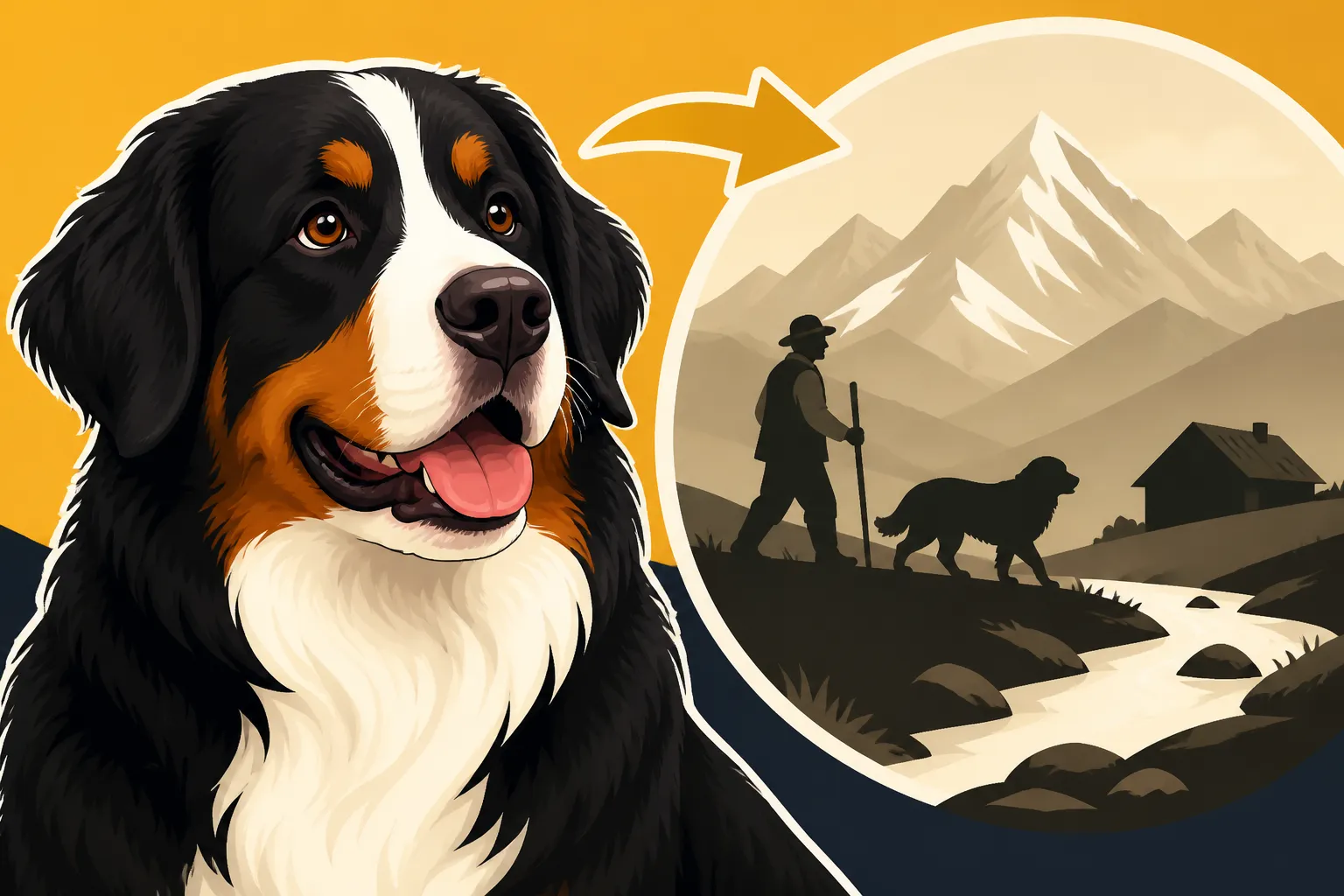
To understand why our Bernese Mountain Dogs were once called "Dürrbachler," we have to travel back in time, deep into the pastoral heart of Switzerland, specifically to a small, picturesque valley known as Dürrbach. This wasn't just any valley; it was a hub of activity for local farmers, cheesemakers, and tradespeople who relied heavily on strong, capable dogs to help with their daily tasks. These dogs were truly part of the family and essential to their livelihoods, acting as farm guardians, drovers, and, most famously, cart pullers.
Imagine these hardworking dogs, often a motley but magnificent collection of local mountain dogs, hauling heavy loads of milk, cheese, and other farm produce from the high alpine pastures down to the markets in the lower villages. They were indispensable, their powerful builds and steady temperaments perfectly suited for such demanding work. It was these very dogs, found in and around the Dürrbach district and surrounding farms in the Canton of Bern, that became synonymous with the region. They were, quite simply, "the dogs from Dürrbach," or in local dialect, the "Dürrbachler."
This original "Dürrbachler" was not yet a formalized breed as we understand it today. They were a landrace, a population of dogs shaped by their environment and the specific jobs they performed, rather than by a strict breed standard. Their appearance varied, but they shared common traits: a sturdy build, a thick coat to withstand the alpine weather, and a gentle yet protective nature. Their tricolor coats, which we cherish in Berners today, were already a common sight, offering camouflage in the dappled light of the forests and protection from the elements.
The isolation of these valleys meant that the dogs interbred within their local populations for generations, solidifying these shared characteristics. Farmers knew their "Dürrbachler" dogs, trusted them implicitly, and relied on their strength and loyalty. They were an integral part of the agricultural life, far more than just pets; they were partners. This deep connection between the dogs and their geographical origin is key to understanding why the name stuck for so long. You could say that the dogs were as much a product of the Dürrbach Valley as the cheese and milk they helped transport.
Franz Schertenleib's Passion for Preserving the Dürrbachler
As the 19th century drew to a close and the world began to modernize, many traditional ways of life, including the reliance on carting dogs, started to wane. Paved roads, motor vehicles, and changing agricultural practices meant that the need for powerful, load-pulling dogs diminished. This shift put the future of the Dürrbachler dogs in jeopardy, as their numbers dwindled, and their distinct characteristics began to blur with other local canine populations. It was a concerning time for those who valued these magnificent working animals.
Enter Franz Schertenleib, a resourceful innkeeper from Burgdorf, Switzerland, whose passion for the traditional Dürrbachler dogs became a turning point for the breed. Schertenleib wasn't just a casual observer; he was deeply committed to finding and preserving what he considered to be the authentic Dürrbachler type. He spent years scouring the remote farms and valleys, often traveling great distances, seeking out the finest examples of these local dogs. His dedication was truly remarkable, almost like a detective on a mission to save a national treasure. You can imagine him talking to old farmers, examining their dogs, and understanding the specific traits that made a "Dürrbachler" truly great. He played a crucial role, almost single-handedly, in preventing the breed from disappearing entirely. The Innkeeper Who Saved the Bernese Mountain Dog delves deeper into his incredible efforts.
Schertenleib was looking for specific traits that embodied the working "Dürrbachler": a strong, robust physique, a long, typically tricolor coat, and a calm, reliable temperament. He understood that these dogs weren't just about looks; they were about functionality and character. He championed these dogs at local shows and gatherings, bringing attention back to their unique qualities and the rich heritage they represented. His efforts were instrumental in gathering enough interest and support to lay the groundwork for a more formalized breed. Without his tireless work, the distinct "Dürrbachler" might have simply faded into history, a forgotten footnote in Swiss agricultural past. His dedication ensured that the genetic lines were preserved, allowing the breed to be rediscovered and eventually standardized.
Albert Heim and the Official Rebranding to Bernese Mountain Dog
While Franz Schertenleib was instrumental in finding and promoting the original Dürrbachler type, it was the renowned Swiss geologist and cynologist, Professor Albert Heim, who ultimately propelled the breed into wider recognition and gave it the name we know today: the Bernese Mountain Dog, or "Berner Sennenhund" in German. Heim was a pivotal figure in the late 19th and early 20th centuries, deeply interested in the origins and classification of Swiss dog breeds. He approached dog breeding with a scientific rigor that was ahead of his time, aiming to standardize and document these unique animals.
Heim recognized the intrinsic value of the Dürrbachler dogs but understood that tying them solely to one valley might limit their appeal and recognition. He saw them as part of a larger family of Swiss mountain dogs, or "Sennenhunde," which included the Greater Swiss Mountain Dog, Appenzeller Sennenhund, and Entlebucher Sennenhund. These "Sennenhunde" were all historically associated with the Senn, or alpine herdsman, who used them for various tasks in the mountains. By renaming the Dürrbachler, Heim sought to highlight its connection to the Canton of Bern, the broader region where these dogs were found, and to emphasize its role as a mountain dog. What Sennenhund Means in a Bernese Mountain Dog's Name explains the significance of this term.
In 1907, a small group of breeders and enthusiasts, inspired by Schertenleib's work and Heim's vision, officially formed the "Schweizerischer Dürrbach-Klub," or the Swiss Dürrbach Club. However, under Heim's influence, the club quickly adopted the more encompassing name, the "Berner Sennenhund," reflecting its wider origin and status as a distinct breed originating from the Bern region. This was a crucial moment: the shift from a localized, descriptive name ("dog from Dürrbach") to a more formal, breed-identifying name ("Bernese Mountain Dog").
This renaming wasn't just a superficial change; it signaled a concerted effort to establish a formal breed standard, register dogs, and promote them beyond the confines of the Dürrbach Valley. Albert Heim drafted the first official breed standard, outlining the desired physical characteristics and temperament. This standardization was vital for the breed's survival and growth, allowing breeders to work towards a common goal and ensuring that the unique qualities of these magnificent dogs would be preserved for generations to come. Today, when you look at a Bernese Mountain Dog, whether it's a puppy exploring the world or an older dog enjoying a comfortable bed from a place like Chewy, you're seeing the legacy of these dedicated individuals.
The Evolution of the Breed and Its Recognition
The formal renaming and standardization championed by Albert Heim and the Dürrbach Club marked a significant turning point for the Bernese Mountain Dog. Before this, these wonderful dogs were primarily working animals whose lineage was tracked through informal means, if at all. With the establishment of a breed club and a written standard, the "Berner Sennenhund" began its journey from a local farm dog to an internationally recognized and beloved breed.
The club focused on promoting responsible breeding practices, emphasizing temperament, health, and conformation to the new standard. They organized dog shows and events, allowing fanciers to compare their dogs and further refine the breed. This era was critical for documenting pedigrees and creating a verifiable history for each dog, which was a stark contrast to the less formal days of the "Dürrbachler." The breed's population, once threatened, began to grow steadily as more people became aware of these gentle giants and their incredible qualities. The Dürrbach Club Founded in 1907 offers a closer look at this foundational period.
The breed continued to gain popularity, first within Switzerland and then across Europe and eventually to North America. When they made their way across the Atlantic, the English translation "Bernese Mountain Dog" became the accepted name, firmly supplanting "Dürrbachler" in common usage. Today, organizations like the Bernese Mountain Dog Club of America work tirelessly to uphold the breed standard and promote the health and well-being of Berners. They encourage careful breeding, health testing, and education for owners, ensuring that the legacy of those early Dürrbachler dogs lives on in healthy, happy Berners around the world.
It’s truly fascinating to reflect on how far the breed has come from its humble beginnings in the Dürrbach Valley. From pulling carts of goods to becoming cherished family companions, the Bernese Mountain Dog has retained its core traits of loyalty, strength, and good nature. Whether you're looking for specialized training equipment for a new puppy or a comfy orthopedic bed for an older Berner, resources available today through retailers like Chewy support the modern Bernese Mountain Dog lifestyle, a testament to the breed's enduring appeal.
Here's a quick overview of how the Bernese Mountain Dog came to be known by its current name:
| Era/Figure | Original Context/Role | Common Name Used (Pre-standard) | Key Contribution to Naming | Standardized Name |
|---|---|---|---|---|
| Pre-1907 Dürrbach Valley | Farm dogs, cart pullers, guardians | Dürrbachler | Tied to geographical origin | N/A |
| Franz Schertenleib | Preserved original type, promoted locally | Dürrbachler | Championed the specific type | N/A |
| Albert Heim (early 1900s) | Cynologist, standardized Swiss breeds | Dürrbachler (initially) | Broadened scope to Canton of Bern | Berner Sennenhund |
| 1907 Dürrbach Club | Formalized breed, established standard | N/A (transitioning) | Official adoption of "Berner Sennenhund" | Bernese Mountain Dog (English) |
The journey from "Dürrbachler" to "Bernese Mountain Dog" is a beautiful story of preservation, passion, and thoughtful standardization. It reminds us that behind every breed name is a rich history, a connection to a place, and the dedication of people who saw something truly special and fought to ensure its survival. So next time you see a majestic Bernese Mountain Dog, take a moment to appreciate its incredible lineage, stretching back to those hardworking "Dürrbachler" dogs of the Swiss Alps. You might even find yourself looking for a special treat or durable chew for your own Berner, perhaps from a trusted source like Chewy, to honor their heritage of strength and resilience.
Disclaimer
This article is for general informational purposes only and does not constitute professional advice. Laws, prices and regulations vary by location and change over time. Consult a qualified professional for guidance on your specific situation.