The Tail Carriage a Bernese Mountain Dog Standard Wants
It's easy to get lost in the grand beauty of a Bernese Mountain Dog – their striking tricolor coat, their soulful eyes, their sheer presence. But sometimes, it's the subtle details, like how they carry their tail, that truly define the breed and reveal their character. Many new Berner families might wonder what makes a "correct" tail or why their dog's tail sometimes seems to have a mind of its own. This guide will delve into the nuances of Bernese Mountain Dog tail carriage, explaining the breed standard, its importance, and what to look for in your cherished companion.
Understanding the Bernese Mountain Dog Tail Standard
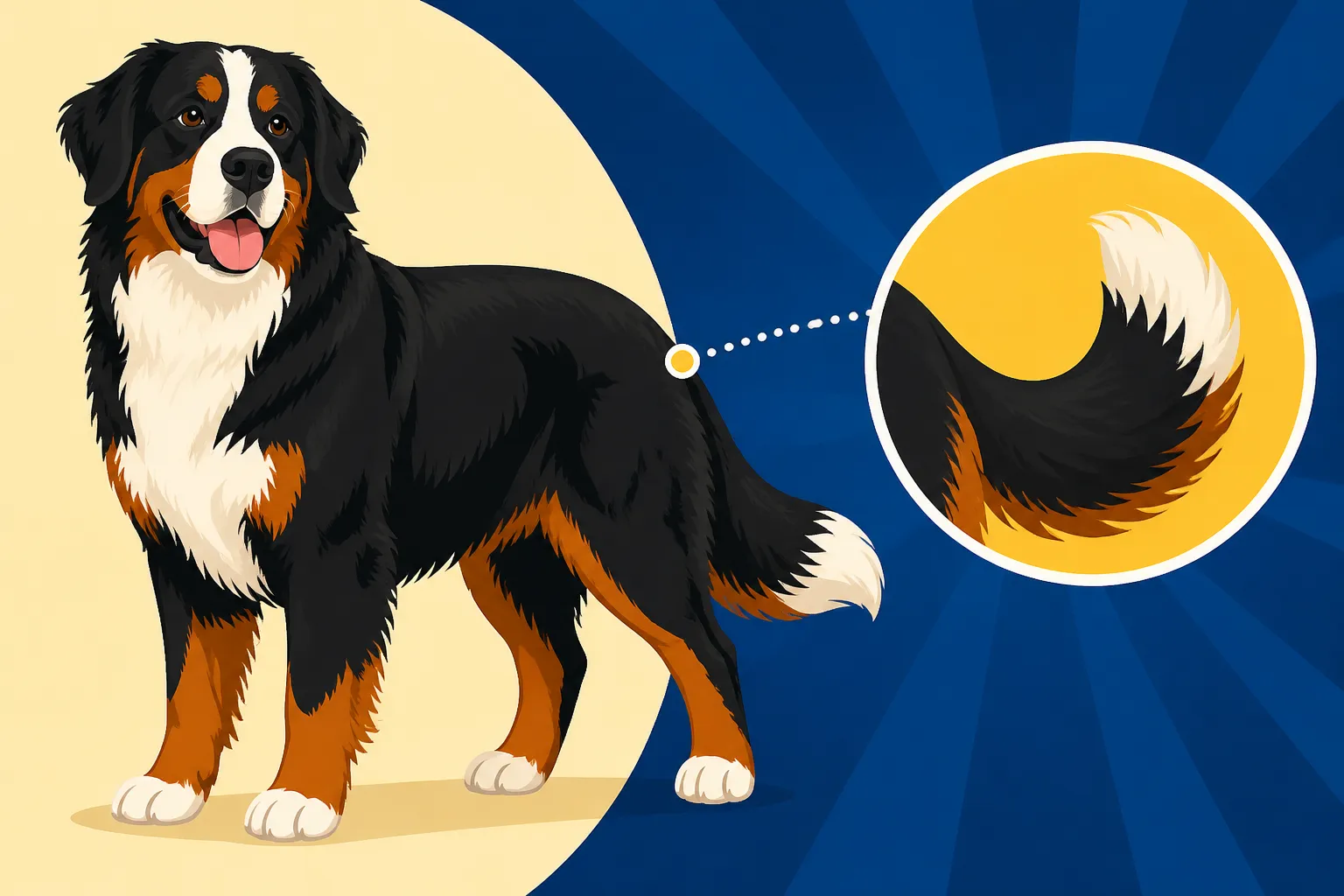
When we talk about a Bernese Mountain Dog's tail carriage, we're really discussing how they hold this magnificent extension of their spine, both when relaxed and when they're alert and engaged. The breed standard, which is essentially the blueprint for what a Bernese Mountain Dog should look and act like, has very specific guidelines for the tail, and it’s more than just an aesthetic detail. The Bernese Mountain Dog Breed Standard describes a tail that is essentially a continuation of the backline.
Ideally, when your Bernese is calm and relaxed, perhaps snoozing in a sunny spot on the rug after a good walk, their tail should hang low. It should reach at least to the hock joint, if not a little longer, forming a gentle curve, often referred to as a "saber" or "sickle" shape. It should never be tucked tightly between their legs, nor should it be curled up and over their back. Think of it as a natural, graceful extension that hints at their sturdy, balanced structure. This low, slightly curved carriage is characteristic of the working dogs from the Swiss Alps, allowing for freedom of movement over varied terrain and clear communication with their fellow dogs and human companions.
When your Berner becomes animated – maybe you’ve just walked through the door after a long day, or they’ve spotted a squirrel darting across the yard – that tail can certainly rise! It’s perfectly normal for an excited Bernese to carry their tail higher, sometimes even level with their back or slightly above it, forming a more pronounced curve. However, even in excitement, it should not curl tightly into a ring over their back, touching their rump. It should still maintain that graceful, slightly arced line. Observing your dog in different states of mind, from sleepy calm to boundless joy, will help you understand their typical tail carriage and notice any deviations. It’s a wonderful way to connect with your dog and appreciate their physical language.
Why Tail Carriage Is So Important for Bernese Mountain Dogs
The way a Bernese Mountain Dog carries its tail isn't just about looks for the show ring; it tells us a lot about their physical well-being, their history as a working breed, and even their temperament. It’s a vital piece of the puzzle that makes a Bernese Mountain Dog truly a Bernese Mountain Dog.
Function and Balance in Movement
A dog's tail is far more than a decorative appendage; it’s an active part of their body, essential for balance. Imagine your Bernese galloping through a field or carefully navigating a rocky path. That tail acts as a counterbalance, helping them make quick turns, maintain stability, and prevent falls. For a breed that historically navigated mountainous terrain and pulled heavy loads, optimal balance was crucial. When The Milk Carts Bernese Mountain Dogs Pulled were part of their daily routine, a tail that allowed for agile movement was not just a luxury, but a necessity for getting the job done efficiently and safely. A tail that is too short, too stiff, or carried awkwardly can impede this natural balancing act, affecting their The Effortless Stride a Bernese Mountain Dog Should Have.
Think about a tightly curled tail over the back. While it might look cute to some, it can actually restrict the natural range of motion of the spine and hips, potentially leading to discomfort over time or inhibiting their ability to perform demanding physical tasks. Conversely, a tail tucked too far under indicates discomfort or fear, which also impacts their ability to move confidently and fluidly. The ideal saber or sickle tail allows for maximum flexibility and contributes to the overall athleticism and grace of these large, powerful dogs.
Communication and Temperament Cues
Dogs communicate volumes with their tails, and a Bernese Mountain Dog is no exception. While they are generally known for being friendly and good-natured, their tail can offer subtle (or not-so-subtle!) insights into their emotional state. A low, gently wagging tail often signals a relaxed, approachable, and friendly dog. This is perfectly in line with the breed's reputation for being generally Self-Confident and Good-Natured in the Bernese Mountain Dog Standard. When they meet new people or other dogs, a soft, sweeping tail wag is an invitation to interact.
However, a tail held high and stiff, or one that's tucked tightly between the legs, sends a very different message. A perpetually tucked tail can be a strong indicator of fear, anxiety, or submissiveness. While any dog can tuck its tail in a scary situation, a Berner who consistently carries their tail tucked may be struggling with underlying confidence issues or past negative experiences. On the other hand, a tail held high and stiff, especially combined with tense body language, might signal alertness or even a challenge, rather than typical Berner friendliness. Understanding these cues helps owners respond appropriately and ensures their Berner can interact clearly and safely with the world around them. It's like a visual barometer of their inner world.
A Mark of Breed Type and Health
Beyond function and communication, tail carriage is a distinctive feature of the Bernese Mountain Dog breed type. It’s part of what makes a Berner look like a Berner. Breeders striving to produce dogs that conform to the standard pay close attention to tail set and carriage, as it reflects the overall structural correctness of the dog. Deviations, such as a tail that naturally curls over the back like some spitz breeds, or one that is naturally too short, are considered faults because they move away from the established ideal.
Furthermore, observing changes in your Bernese’s tail carriage can sometimes be an early indicator of a health issue. While rare for carriage alone, an inability to lift the tail, a persistent tuck, or a limp tail can sometimes signal back pain, injury to the tail itself, or even more serious conditions like "limber tail" (acute caudal myopathy). For a large breed prone to Joint Disease in a Hundred Pound Bernese Mountain Dog, any change in their posture or movement, including how they carry their tail, warrants attention. If your normally happy, high-wagging Berner suddenly has a low, lifeless tail, it’s worth a call to the vet. These observations are part of being a vigilant and caring Bernese owner.
Common Tail Carriage Variations and What They Indicate
While the breed standard paints a picture of the ideal Bernese Mountain Dog tail, dogs are individuals, and you'll encounter variations. Understanding these differences can help you appreciate your dog's unique traits and also identify potential structural or even behavioral concerns.
The Ideal Saber or Sickle Tail
As we’ve discussed, the ideal Bernese tail is set low and, when relaxed, hangs down in a gentle curve, resembling a saber or sickle. It reaches at least to the hock. When the dog is alert or moving with purpose, it can be raised, but always with a graceful, never-tightly-curled arch. The hair on the tail is typically long and flowing, forming a beautiful plume. This natural, unexaggerated carriage is a hallmark of the breed's functional heritage.
A well-carried saber tail allows for maximum expression of their movement and mood. When your Berner is happily trotting beside you, you'll see a relaxed sway, indicating contentment. If they're focused on a scent or scanning the horizon, the tail might lift slightly, rigid but not stiff, showing their alertness. This versatile and expressive tail is precisely what makes it so distinctive and desirable within the breed standard. It's a key part of their overall harmonious appearance.
The Ring Tail or Curled Tail
One of the most commonly seen deviations from the standard is the "ring tail," where the tail curls tightly up and over the dog's back, often touching or resting on the rump. This is considered a serious fault in the Bernese Mountain Dog breed. While it might be a charming trait in other breeds, like many Spitz types, it's not characteristic of the Berner.
A ring tail can sometimes be a purely cosmetic fault, a genetic variation that doesn't necessarily impact the dog's health or temperament. However, a tail curled so tightly over the back can also restrict movement or cause discomfort, particularly if it's very stiff. For those considering breeding or showing, a ring tail would significantly count against a Bernese Mountain Dog. It’s a clear departure from the desired profile and can sometimes be seen more often in lines where the correct structure has been inadvertently bred out. When looking at puppies, if a young Berner consistently holds their tail curled over their back, it's a good indication of this particular fault.
The Tucked Tail
A tail tucked tightly between the hind legs is almost universally a sign of fear, anxiety, or submission in dogs. If your Bernese Mountain Dog carries their tail tucked often, especially in new environments, around strangers, or during loud noises, it suggests a lack of confidence. While Berners are generally bold and friendly, some individuals can be more reserved or shy. A perpetually tucked tail could be a symptom of a temperament that deviates from the desired Self-Confident and Good-Natured in the Bernese Mountain Dog Standard.
It’s important to distinguish between a temporary tuck in a frightening moment and a consistent, habitual tuck. If your Berner only tucks their tail when truly startled or feeling overwhelmed, that’s a normal reaction. However, if they walk around with a tucked tail most of the time, even in familiar, safe surroundings, it's a cue that they might need more socialization, positive reinforcement training, or perhaps even professional help to build their confidence. This isn't just about appearance; it's about your dog's emotional well-being.
The Gay Tail (Carried Too High)
A "gay tail" is a term used when a dog consistently carries its tail much higher than the backline, often resembling a flag. While it doesn't curl tightly over the back like a ring tail, it’s still held excessively high, even when the dog is relaxed. Like the ring tail, this is considered a fault in the Bernese Mountain Dog standard.
While it might signify an alert or energetic disposition, a gay tail that is always held high can sometimes indicate an over-exuberant or perhaps slightly less refined temperament than desired by the standard. It detracts from the overall picture of dignified calmness and balance that the breed strives for. A Bernese should project an image of confident serenity, and a tail held too high can disrupt that impression. It’s a point that judges in the show ring would certainly note.
The Kinked Tail
A kinked tail refers to a tail with an abnormal, permanent bend or twist in the bone structure. Whether a Kinked Tail Is a Bernese Mountain Dog Fault is unequivocally yes; it's considered a structural fault. This can sometimes be the result of an old injury that healed improperly, but often, it's a congenital defect, meaning the dog was born with it.
A kinked tail can range from a very subtle, almost unnoticeable bend to a severe, sharp angle. Depending on the severity and location of the kink, it could potentially cause discomfort or mobility issues for the dog, though many dogs with minor kinks live perfectly normal lives without pain. For breeding purposes, a kinked tail is a serious concern, as it often indicates a genetic issue that could be passed down to offspring. Any structural anomaly in the tail needs careful consideration, especially if it appears to cause discomfort.
Here's a quick summary of common tail carriages:
| Tail Carriage | Description | Standard Adherence | Implications |
|---|---|---|---|
| Ideal Saber/Sickle | Low set, gentle upward curve, reaches hock, relaxed. | Ideal | Proper balance, clear communication, characteristic breed type. |
| Ring Tail | Curled tightly over the back, often touching the rump. | Fault | Not typical of breed, can miscommunicate, cosmetic or structural fault. |
| Tucked Tail | Held tightly between the hind legs. | Fault | Sign of fear/anxiety, temperament concern. |
| Gay Tail | Consistently carried high above the back, like a flag. | Fault | Aesthetic deviation, can suggest over-exuberance. |
| Kinked Tail | Permanent bend or knot in the tail bones. | Fault | Structural defect, possibly genetic or injury-related, potential discomfort. |
Living With a Bernese Mountain Dog's Tail
Beyond understanding the breed standard, living with a Bernese Mountain Dog means embracing all their wonderful qualities, including that big, expressive tail! There are practical aspects to consider to ensure your Berner's tail remains healthy and happy, and that your home life isn’t constantly rearranged by its enthusiastic wags.
Grooming the Magnificent Tail Plume
A Bernese Mountain Dog's tail is adorned with long, thick feathering, often forming a glorious plume. While beautiful, this long hair requires regular attention to keep it free of tangles, mats, and debris. Imagine walking through tall grass or brambles – it's incredibly easy for Burrs in a Bernese Mountain Dog's Tail Plume to get caught, leading to painful mats if not addressed promptly.
Regular brushing, at least a few times a week, is essential. Use a slicker brush or a long-toothed comb to gently work through the feathering, paying close attention to the underside and base of the tail where mats tend to form. If you encounter a mat, work it out carefully with your fingers or a mat splitter rather than pulling it, which can be painful for your dog. A good detangling spray can be a lifesaver for those stubborn knots. Companies like Chewy offer a fantastic selection of brushes and detanglers specifically designed for long-haired breeds, making the grooming process much smoother for both you and your Berner. Beyond aesthetics, regular grooming helps distribute natural oils, keeping the skin and coat healthy, and allows you to inspect the tail for any bumps, cuts, or signs of injury that might be hidden by the thick hair.
Managing the Enthusiastic Wag
Let's be honest, a happy Bernese Mountain Dog's tail is a force of nature! Their powerful, full-body wags can inadvertently sweep objects off low tables, knock over lamps, or even give an unsuspecting guest a gentle (or not-so-gentle) thwack. This isn't aggression; it's pure, unadulterated joy. For families with A Bernese Mountain Dog Around Children, it's crucial to teach kids to give the tail a little space, especially when the dog is very excited.
One common frustration for Berner owners is the "happy tail" syndrome – not a medical condition, but the sheer power of their wag. Consider your home environment: can fragile items be moved to higher shelves? Are there tight spaces where the tail might get caught? Some owners find it helpful to create designated "safe zones" for their Berner where they can wag freely without causing chaos. While you can't, and shouldn't, try to stop their natural expression of happiness, you can manage the environment and teach your dog a solid "off" or "settle" cue, which can help calm their entire body, including that powerful tail, when needed. When setting up living spaces, Crates and Gates for a Bernese Mountain Dog can help define areas where a wagging tail won't cause havoc, especially with a boisterous puppy.
Observing for Health and Comfort
Your Bernese Mountain Dog's tail is a window into their overall health and comfort. A sudden change in how they carry or use their tail can be a significant clue that something is amiss. As mentioned earlier, conditions like limber tail, or even a simple sprain, can cause the tail to hang limp and lifeless. If your dog, who normally holds their tail high when excited, suddenly keeps it tucked or low without any obvious reason, it's worth investigating.
Pain in their back, hips, or even an infection at the base of the tail can manifest as a change in tail carriage. For a breed prone to orthopedic issues, a reluctance to wag, a stiff tail, or even guarding the tail area could signal discomfort related to Joint Disease in a Hundred Pound Bernese Mountain Dog. Beyond physical issues, a sudden and persistent tucking of the tail might indicate a new source of anxiety or stress in their environment.
Making regular observations of your Berner's tail carriage, not just during grooming but as part of your daily interactions, can help you catch potential problems early. If you notice any drastic or prolonged changes, it's always best to consult your veterinarian. They can help rule out medical issues and offer advice on managing any behavioral changes. Your vigilance is key to ensuring your beloved Bernese remains comfortable and healthy throughout their life.
Disclaimer
This article is for general informational purposes only and does not constitute professional advice. Laws, prices and regulations vary by location and change over time. Consult a qualified professional for guidance on your specific situation.