Helping an Old Bernese Mountain Dog Up Stairs
Watching your beloved Bernese Mountain Dog, once so agile and full of youthful bounce, start to struggle with everyday movements can be incredibly disheartening. One of the most common and visible challenges for our big, sweet companions as they age is navigating stairs. What was once a simple dash up or down now becomes a slow, hesitant, sometimes even painful ordeal. This guide is here to walk you through understanding why stairs become such an obstacle for older Berners and, more importantly, how you can lovingly and practically help your gentle giant maintain their mobility and comfort for as long as possible.
Why Stairs Become a Challenge for Older Bernese Mountain Dogs
It’s easy to think of aging as just "slowing down," but for a Bernese Mountain Dog, the physical changes that impact their ability to handle stairs are often specific and progressive. Their large size, combined with a genetic predisposition to certain conditions, means that even routine movements like climbing a few steps can become a significant undertaking as they mature. Understanding the root causes helps us approach their care with more empathy and effectiveness.
The Silent Progression of Joint Disease
For many Bernese, the story of stair difficulty often begins years before you notice a pronounced limp or hesitation. Conditions like hip and elbow dysplasia, which can be present from a young age, lay the groundwork for future issues. As the dog ages, these developmental abnormalities inevitably lead to osteoarthritis – a painful degeneration of the cartilage within the joints. It's a cruel reality for our big breeds, and unfortunately, Joint Disease in a Hundred Pound Bernese Mountain Dog is a common concern.
This arthritis means every step can grind bone-on-bone, causing inflammation and chronic pain. Think about how difficult it is for you to bend a stiff, aching knee or hip; now imagine trying to propel your entire body weight up or down a series of steps with that same discomfort. For a hundred-pound Berner, that's an immense amount of pressure on already compromised joints. Even well-bred Bernese can develop arthritis, and by the age of six, it's quite common to see Arthritis in a Bernese Mountain Dog by Six start to become a noticeable factor in their daily lives. The changes often creep up so gradually that we might not even register the subtle shifts until the struggle becomes undeniable.
Muscle Weakness and Loss of Coordination
Beyond joint pain, generalized muscle weakness and a decline in coordination are significant contributors to stair challenges. As dogs age, they naturally lose muscle mass, a process known as sarcopenia. This is particularly impactful for large breeds like the Bernese Mountain Dog, whose powerful hindquarters are essential for propelling them upwards and stabilizing them on the descent. If those muscles are weakening, the dog simply doesn't have the strength or endurance to execute the complex movements required for stairs.
Furthermore, neurological changes can diminish their proprioception—the body's sense of its position in space. This can make them less sure-footed, leading to stumbles or missteps, especially on uneven surfaces like stairs. Degenerative Myelopathy (DM), a progressive disease affecting the spinal cord, is another condition that can cause The Bernese Mountain Dog Whose Back Legs Give Out, leading to weakness, ataxia (loss of coordination), and eventually paralysis in the hind limbs. Even without a specific neurological diagnosis, the general slowing of nerve impulses can make quick, precise movements difficult, turning a simple flight of stairs into a perilous obstacle course.
Underlying Health Conditions That Affect Mobility
It’s not always just about the joints or muscles; other health issues can silently sabotage your Berner’s stair-climbing prowess. Conditions like heart disease or respiratory problems can lead to fatigue, making the physical exertion of stairs too much. If your dog is getting winded easily or seems excessively tired after a short climb, it could be a sign of an underlying cardiovascular or pulmonary issue that needs veterinary attention. Caring for a Bernese Mountain Dog After Six often involves a more holistic look at their overall health.
Additionally, obesity places immense strain on already compromised joints and makes any physical activity, including climbing stairs, significantly harder. An overweight Berner might be struggling not just from pain but from the sheer effort required to move their extra mass. Vision problems, common in older dogs, can also make stair navigation hazardous, especially if lighting is poor or the stairs are unfamiliar. A dog that can't clearly see the edge of a step is at a much higher risk of falling. These factors, though sometimes secondary, can amplify the primary mobility issues, creating a perfect storm of difficulty.
Practical Strategies for Assisting Your Berner Up and Down Stairs
Once you've identified that your Bernese Mountain Dog is struggling, the next step is to implement practical, loving ways to help them. This isn't about "fixing" the problem, but rather supporting them through it, making their life safer and more comfortable. There are several approaches you can take, ranging from direct physical assistance to making modifications in your home.
Manual Support Techniques
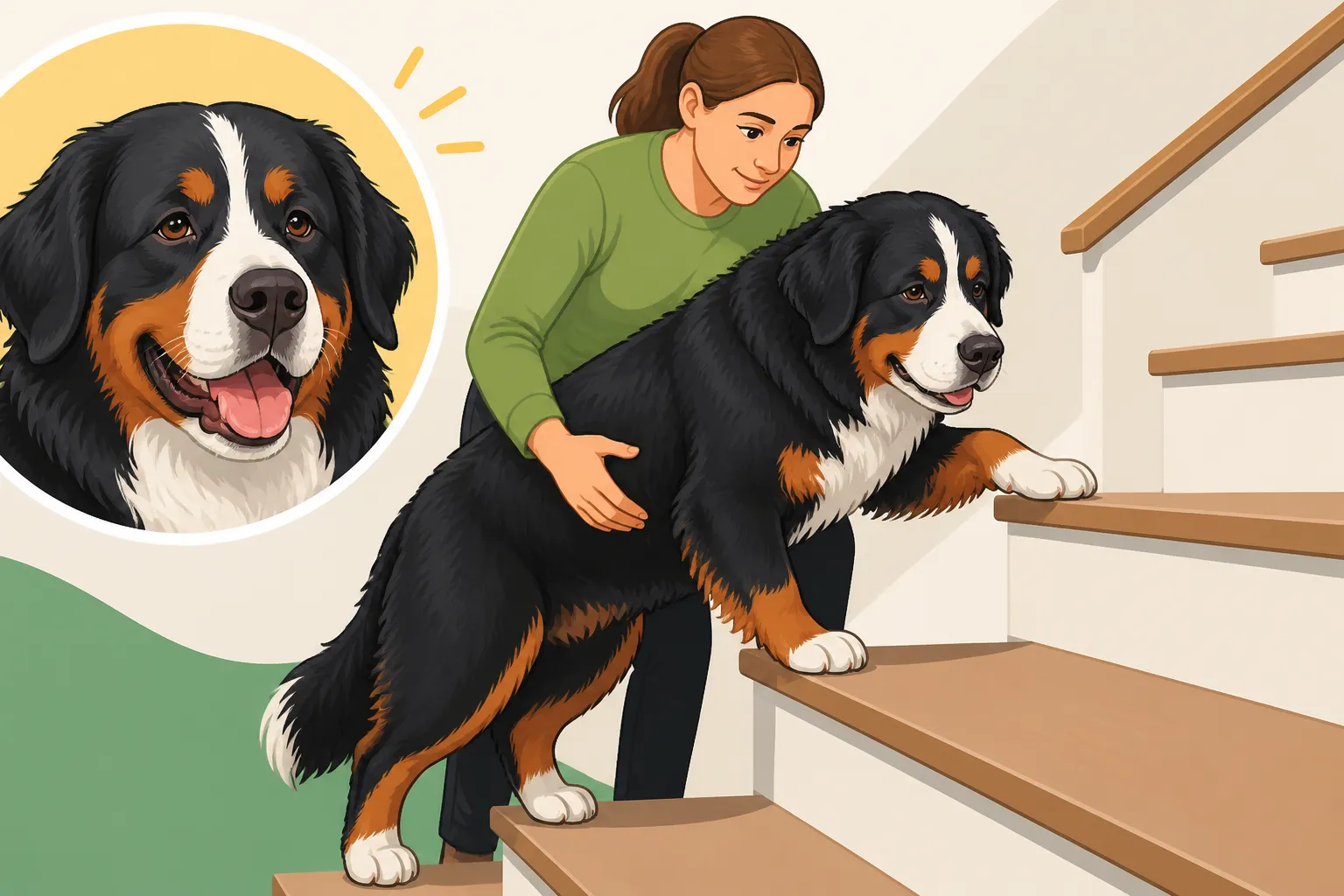
Sometimes, all your Berner needs is a little help and reassurance. For short flights of stairs or occasional needs, manual support can be incredibly effective. The key is to support their hindquarters, where much of their weight and weakness lies. You can place an arm under their belly, just in front of their back legs, and gently lift some of their weight as they ascend or descend. This takes pressure off their hips and knees and gives them the confidence to manage each step.
Another technique is to use a towel or a sturdy scarf as a "sling" under their abdomen. This is often more comfortable for both you and your dog, as it distributes pressure more evenly and keeps your back safer from strain. Simply fold a large towel lengthwise, creating a thick band. Slip it under your dog’s belly, just in front of their hind legs, and hold the ends in your hands as you walk beside them. As they take each step, you can lift gently to bear some of their weight. Practice this on flat ground first so they get used to the sensation before tackling stairs. Remember, consistency and calm reassurance are vital.
Harnesses and Mobility Aids
For more consistent or significant support, investing in a specialized mobility harness can be a game-changer. These harnesses are designed with handles over the hindquarters (and sometimes the front) that allow you to lift and support your dog safely and comfortably. Brands like Help 'Em Up Harness or Ruffwear offer excellent options that are padded and ergonomically designed to prevent chafing, even with regular use. You can find these available through online retailers like Chewy or Amazon, making it easy to research and purchase the right fit for your Berner. A good mobility harness provides much more stable and controlled lifting power than a towel and is indispensable for Living With a Bernese Mountain Dog Losing Its Back Legs.
Beyond harnesses, consider dog ramps or steps for permanent stair access points. If you have a few steps leading to a deck or into the car, a sturdy, non-slip ramp can eliminate the need for lifting altogether. For indoor stairs, while a full ramp might be impractical, a few strategically placed pet steps for a low couch or bed can make a big difference in their daily comfort. When choosing a ramp, look for one that is wide enough for your Berner, has a non-slip surface, and has a gentle incline to minimize strain. Remember, even if they can still manage a few steps, reducing the number of times they have to can preserve their joints and energy. What a Mobility Cart Costs for a Bernese Mountain Dog is something to consider down the line if mobility severely declines, but for stairs, harnesses and ramps are usually the first line of defense.
Environmental Modifications
Sometimes, the simplest solutions involve changing the environment rather than directly assisting your dog. Slippery surfaces are an enemy to an older Berner with compromised mobility. Bare hardwood, laminate, or tile stairs can be terrifying and dangerous. The lack of traction means their already weak or painful legs have to work even harder to stabilize, and a slip can lead to a serious injury.
Consider adding Runners and Rugs for a Bernese Mountain Dog That Slips to your stairs. Securely attach them with carpet tape or tacks to prevent them from bunching up. Ensure the rugs cover the entire tread of each step, providing a consistent non-slip surface. Good lighting on staircases is also crucial. A dimly lit stairwell can hide shadows and make depth perception difficult for a dog whose vision may not be as sharp as it once was. Install brighter bulbs or motion-sensor lights to ensure every step is clearly visible. If you have multiple floors and your Berner only needs access to one, consider restricting access to stairs with baby gates or sturdy barricades during times when you cannot supervise them. This simple step can prevent falls and give you peace of mind.
| Mobility Aid Type | Best For | Key Features | Where to Find |
|---|---|---|---|
| Manual Support | Occasional, light lifting | Direct physical assistance, human power | You! |
| Towel Sling | Temporary, moderate support | Flexible, distributes weight, inexpensive | Home linens |
| Mobility Harness | Consistent, significant support | Handles, padded, ergonomic design | Chewy, Amazon, Pet Specialty Stores |
| Dog Ramps | Permanent, incline solutions | Non-slip surface, adjustable height/length | Amazon, Pet Specialty Stores |
| Pet Steps | Low height assistance (beds, couches) | Multi-step units, often carpeted | Chewy, Amazon, Pet Specialty Stores |
| Stair Runners | Improving traction on stairs | Non-slip backing, secure attachment | Home improvement stores, Amazon |
Long-Term Management and Supportive Care for Stair Navigation
Helping your Bernese Mountain Dog with stairs isn't just about the immediate act of getting them up or down; it's about a holistic approach to their overall health and well-being. By addressing underlying issues and providing consistent support, you can improve their quality of life and potentially slow the progression of mobility decline.
Veterinary Care and Pain Management
Regular veterinary check-ups are paramount for an aging Bernese Mountain Dog. Your vet can accurately diagnose the cause of their mobility issues, whether it's arthritis, a neurological condition, or something else entirely. Early diagnosis allows for timely intervention. Pain management is often a cornerstone of care for older dogs. Your vet might prescribe NSAIDs (non-steroidal anti-inflammatory drugs) to reduce inflammation and pain, or other medications that target nerve pain or joint health. It's important to discuss the potential side effects and to follow dosage instructions carefully. Don't be afraid to ask about Pain Medication Costs for an Arthritic Bernese Mountain Dog during these discussions.
Beyond medication, your vet might suggest other therapies such as Adequan injections, which can help promote cartilage repair and reduce inflammation. Some vets also offer acupuncture or cold laser therapy, which can provide additional pain relief for many dogs. The goal is to keep your Berner as comfortable as possible, which in turn encourages them to stay active, preventing further muscle loss and stiffness. A collaborative approach with your veterinarian is crucial to creating an effective pain management plan tailored to your dog's specific needs.
Nutrition, Weight Management, and Supplements
What your Bernese Mountain Dog eats plays a monumental role in their joint health and overall mobility. Maintaining a healthy weight is perhaps the single most impactful thing you can do. Every extra pound puts undue stress on their joints, exacerbating conditions like arthritis. Work with your vet to determine your Berner's ideal weight and adjust their diet accordingly. Sometimes, a change to a lower-calorie, senior-specific dog food is necessary. Brands like Ollie, known for fresh, whole-food options, might be a good fit for some dogs, as a balanced, high-quality diet supports overall health.
Joint supplements, such as glucosamine, chondroitin, MSM, and Omega-3 fatty acids, can also be beneficial. While not a cure, they can help support joint cartilage and reduce inflammation. You'll find a vast array of options on the market, readily available from retailers like Chewy or Amazon. It's often best to choose products specifically formulated for large breeds and to discuss with your vet which supplements and dosages are most appropriate for your individual dog. Remember, consistency is key when it comes to supplements; they take time to build up in the system and show benefits, so don't expect immediate results. Joint Supplements in a Bernese Mountain Dog's Bowl can be a long-term part of their care regimen.
Gentle Exercise and Physiotherapy
It might seem counterintuitive to suggest exercise when a dog is struggling with stairs, but appropriate, gentle exercise is vital for maintaining muscle mass, flexibility, and overall well-being. Complete inactivity can lead to muscle atrophy and increased stiffness. The key is gentle and controlled exercise, avoiding high-impact activities or long, strenuous walks that could cause more harm than good. Short, frequent walks on soft, even surfaces are often best.
Physiotherapy, or canine rehabilitation, can be incredibly effective. A certified canine rehab therapist can design a personalized exercise program for your Berner, focusing on strengthening core muscles, improving balance, and increasing range of motion. This might include exercises like gentle stretches, controlled leash walks, balance board work, or even underwater treadmill therapy. Hydrotherapy, where dogs exercise in water, is particularly beneficial because the buoyancy reduces pressure on their joints while still allowing them to build muscle. Hydrotherapy for an Arthritic Bernese Mountain Dog provides a low-impact way to keep them active and strong, which directly translates to better overall mobility, including a greater ability to manage stairs.
When to Consider Limiting or Eliminating Stair Access
There comes a point when, despite all our best efforts and modifications, asking your Bernese Mountain Dog to navigate stairs might be doing them more harm than good. Recognizing this difficult reality is part of being a responsible and compassionate owner. It's about balancing their desire for independence with their comfort and safety.
Assessing Your Dog's Quality of Life
This is perhaps the most challenging aspect of caring for an aging Berner. You need to objectively observe your dog's daily life and gauge their pain levels and overall happiness. Are they consistently showing signs of discomfort before, during, or after using the stairs? Are they avoiding certain areas of the house because of stair access? Are they experiencing frequent slips or falls that could lead to injury? If navigating the stairs causes significant distress, pain, or risk of injury, it might be time to remove the stairs from their daily routine.
Think about their overall zest for life. Are they still enjoying their food, engaging with the family, and taking pleasure in their walks (even if they're shorter)? If the struggle with stairs overshadows their quality of life, it's a clear signal. This often involves very difficult conversations with your veterinarian, who can help you assess pain management effectiveness and discuss the prognosis. Ultimately, the decision should always prioritize your Bernese Mountain Dog's well-being and dignity.
Alternative Living Arrangements
If eliminating stair access is the best option, you'll need to consider how to modify your living space. If your home has multiple levels and your Berner can no longer safely use the stairs, you might need to restrict them to a single floor. This could mean setting up their primary living, eating, and sleeping areas on the ground floor, perhaps in a cozy nook with Bedding for an Arthritic Bernese Mountain Dog that supports their joints. This might require rearranging furniture or using baby gates to block off staircases.
For dogs that truly struggle, carrying them up and down might seem like an option, but a hundred-pound Bernese Mountain Dog is a lot of weight to lift safely, for both you and your dog, especially if you have an injury yourself. While you might manage a few times, it’s not sustainable long-term. In some cases, owners have moved their own sleeping arrangements to the ground floor to be with their dog, or have considered temporary reconfigurations of rooms to ensure their Berner can always be close to the family without encountering stairs. It’s a huge adjustment, but often a necessary one to ensure their comfort and safety in their golden years.
Disclaimer
This article is for general informational purposes only and does not constitute professional advice. Laws, prices and regulations vary by location and change over time. Consult a qualified professional for guidance on your specific situation.