Whether a Bernese Mountain Dog Guarded Livestock
A Bernese Mountain Dog may bark when strangers approach a barn or stay close while animals move, but that does not make it a dependable livestock guardian. The breed’s farm history included several jobs, and guarding property is different from protecting sheep or cattle from predators. This guide explains what Berners were bred to do, what they may do around livestock today, and how to keep those introductions safe.
What Bernese Mountain Dogs Did on Swiss Farms
They were versatile farm dogs, not one-job specialists
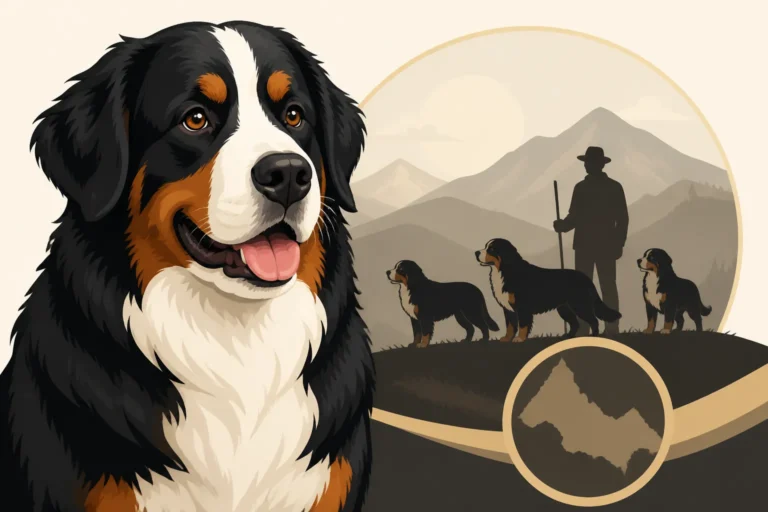
The Bernese Mountain Dog developed as an all-purpose farm dog in the canton of Bern in Switzerland. On farms, a dog might help move cattle, pull a cart, stay near the household, and alert people to activity around the property. The work depended on the farm and the dog; it was not necessarily a single, standardized job.
That background helps explain why people sometimes describe Berners as farm guardians. A dog that notices someone entering a yard and barks can be useful as an alarm. A dog that accompanies a farmer through a field can also feel watchful and protective. But those behaviors are not the same as independently defending a flock or herd from wolves, coyotes, or other predators.
The distinction matters because “guarding livestock” can mean different things. It might mean sounding an alarm, helping move animals, staying near a barn, or physically confronting a predator. A Bernese Mountain Dog’s history is more closely associated with general farm work and cattle droving than with the specialized, independent guarding role associated with livestock guardian dogs. For a broader look at the breed’s working background, see What a Bernese Mountain Dog Did on a Swiss Farm and Cattle Droving and the Bernese Mountain Dog's Old Job.
Moving animals is not the same as protecting them
Droving means helping move livestock from one place to another. It calls for a dog to work around animals and respond to direction, rather than simply staying with them to deter danger. A dog may walk beside cattle, help keep them moving, or respond to a handler’s cues without being suited to live full-time with a flock.
A livestock guardian, by contrast, is expected to spend substantial time with the animals it protects. The dog needs to tolerate their movement and sounds, avoid chasing or injuring them, and respond appropriately to unfamiliar people or animals. Depending on the setting, a guardian may also need to work at a distance from people and make decisions without immediate direction.
Those are different behavioral demands. A Berner might enjoy accompanying its owner around a farm and still be a poor choice for unsupervised protection work. Likewise, being large, confident, or alert does not automatically mean a dog knows how to assess a predator or distinguish a threat from a normal farm visitor.
Property alerting can look like guarding
Some Berners bark at unfamiliar sounds, watch activity near the home, or place themselves between their family and something new. These behaviors can give the impression of a guard dog, especially on a rural property. But barking is an alert, not proof that a dog will safely or effectively protect livestock.
Dogs also differ as individuals. One may be reserved with strangers, another eager to greet visitors, and another more focused on following its people than monitoring the property. Early experiences, training, age, health, and the environment all shape how a dog behaves. Breed history offers context, not a guarantee about what a particular dog will do.
If you are wondering how alertness differs from a deliberate guarding role, Whether a Bernese Mountain Dog Was a Guard Dog explores the breed’s traditional work in that context. For temperament background, Self-Confident and Good-Natured in the Bernese Mountain Dog Standard is also relevant: confidence and a steady nature do not mean a dog is meant to confront predators.
Can a Bernese Mountain Dog Live Around Livestock Today
Some can coexist with animals under careful management
A Bernese Mountain Dog may live peacefully around livestock if it is introduced gradually, supervised, and taught appropriate behavior. The goal for many farm households is simply calm coexistence: the dog can be nearby without chasing, barking persistently, crowding animals, or wandering into areas where it could be hurt.
Start by considering the specific dog rather than assuming the breed will manage the situation. Has the dog already shown interest in chasing moving animals? Does it become overexcited around unfamiliar dogs or wildlife? Can it respond to a recall cue when distracted? A dog that struggles to settle around chickens in a fenced yard may not be ready to accompany its owner near cattle, even if it is friendly at home.
Livestock also have their own reactions. A large dog approaching too quickly can frighten animals, and a frightened cow, horse, or sheep can injure a dog without intending to. A Berner’s size offers no protection against a kick, a charge, or being pinned in a confined space. Initial meetings should take place with secure barriers, enough distance, and a handler who can move the dog away calmly.
Friendship with farm animals is not a safety plan
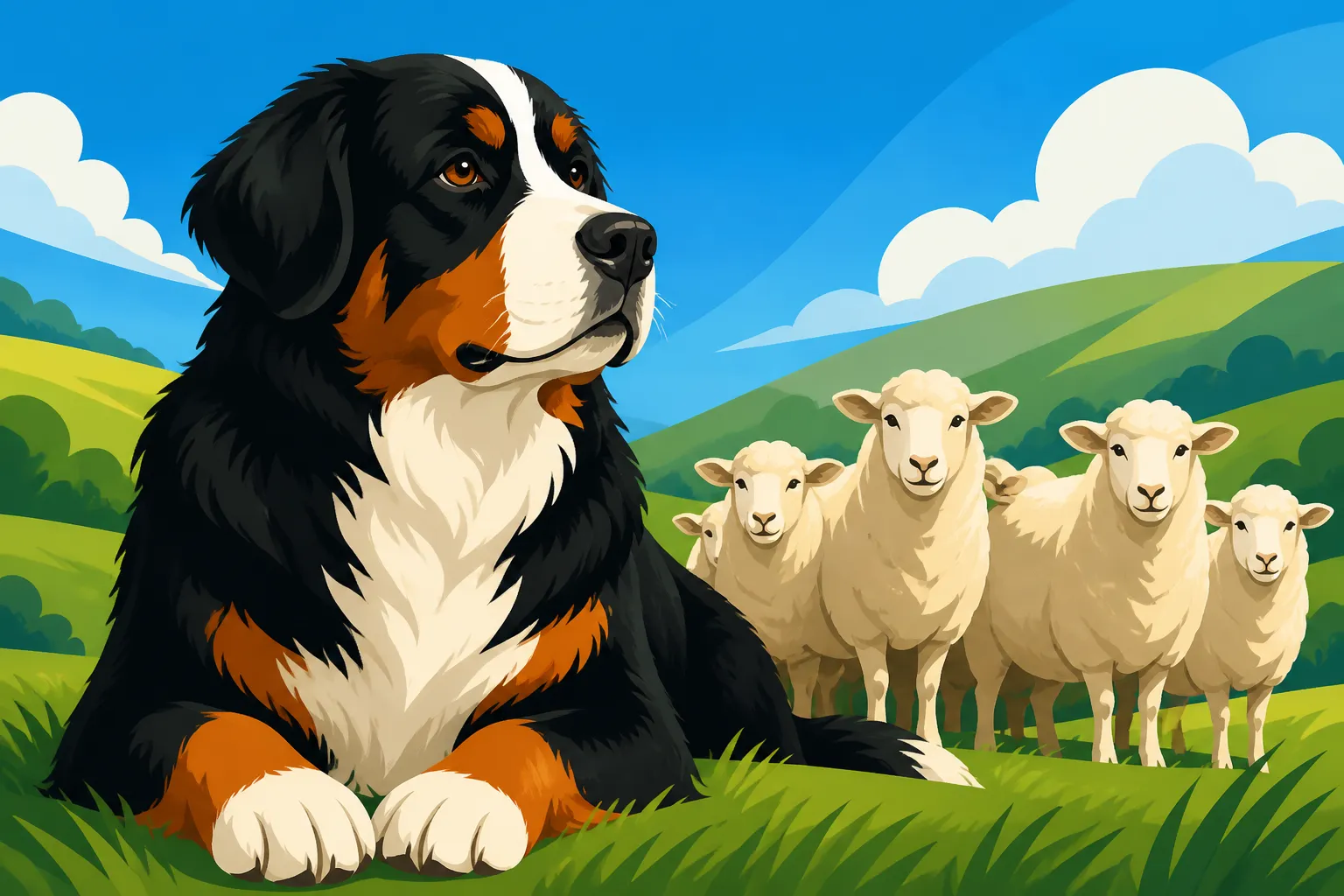
Photos of dogs resting beside sheep or walking with horses can make animal introductions look effortless. In real life, a calm moment does not establish that the dog is safe when the flock scatters, a gate swings open, or an animal runs. Movement can trigger chasing in a dog that seemed relaxed while everything was still.
A responsible plan includes physical separation when nobody is supervising. Fencing, closed gates, and a leash or long line can prevent a brief lapse from turning into a chase. The dog should not be left loose with livestock on the assumption that it will naturally understand its role. Even a dog that has behaved well many times can react differently when startled, excited, or confronted by unfamiliar animals.
If you need equipment for ordinary supervised farm visits—such as a suitable leash, a travel water bowl, or a barrier for separating the dog indoors—retailers such as Chewy may be one place to compare general pet supplies. Those items can support management, but they do not replace secure livestock fencing, training, or an experienced farm plan. Chewy is not a source of livestock-guardian training, and buying gear cannot turn a companion dog into a specialist working dog.
What to Expect From a Berner Around Livestock
Behavior depends on the individual and the situation
A Bernese Mountain Dog might ignore livestock, watch them quietly, bark when they move, or try to approach them. Some dogs are naturally calmer around large animals; others are curious or excitable. Age matters, too. A young dog that is still learning impulse control may find running chickens or sheep especially difficult to ignore.
Look at the details of the dog’s behavior. A relaxed dog can disengage from the animals, respond to its handler, and remain at a manageable distance. A dog that stares intensely, crouches, lunges, repeatedly barks, or cannot turn away needs more space and stronger management. Do not wait for a chase to decide that the interaction is too much.
You will also want to consider the setting. A quiet paddock with a visible fence is different from a crowded barnyard with narrow passages, feed on the ground, and animals moving in several directions. The dog may cope in one environment and struggle in another. Build up gradually, and end an introduction before either the dog or livestock becomes overwhelmed.
Use a staged introduction rather than testing the dog
A practical introduction can be broken into small steps:
- Begin at a distance. Let the dog observe livestock from outside a secure fence, on leash, without requiring it to approach.
- Reward calm attention. Mark and reward moments when the dog looks at the animals and then checks back in with you or turns away.
- Keep sessions brief. End while the dog is still able to listen, rather than waiting until it is barking, pulling, or fixated.
- Reduce distance only when the dog stays settled. Move closer in small increments, keeping a barrier or leash between the dog and livestock.
- Practice with different conditions carefully. A calm animal at rest may be easier than a group moving toward a gate. Do not create a stressful situation just to see how the dog reacts.
- Maintain separation when unsupervised. A successful introduction does not mean the dog is ready to be left alone with animals.
If the dog repeatedly lunges, chases, or cannot respond to you, increase distance and seek help from a qualified trainer familiar with farm environments. A trainer can help you build reliable control and identify whether the dog is coping or simply being restrained in a situation it finds difficult. For practical work with cues and boundaries, Training a Bernese Mountain Dog Without Breaking It offers broader training context, while Socializing a Reserved Bernese Mountain Dog Puppy may be useful for owners starting with a young dog.
Everyday farm precautions matter
Farm environments contain hazards beyond livestock. There may be vehicles, machinery, open water, wire, chemicals, feed, and unfamiliar dogs. A large, sociable family dog can get into trouble quickly if it is allowed to roam without supervision. Keep the dog out of work areas where its presence could distract people or startle animals.
Heat and exertion also deserve attention. Berners have a thick coat and may struggle in warm conditions, especially when walking or working outdoors. Plan quiet periods, shade, and access to water, and avoid assuming that a cool morning will remain comfortable as the day warms. Heat and the Bernese Mountain Dog's Black Coat explains why warm-weather management deserves extra care for this breed.
For farm outings, bring a secure leash, identification, fresh water, and a plan for where the dog can rest away from livestock. Chewy may help you compare general travel or walking supplies, but check that any item fits your dog and suits the conditions you will face. A sturdy barrier and reliable handling are more important than any accessory if the dog is not yet comfortable around animals.
When a Livestock Guardian Dog Is the Better Fit
Match the dog to the job you actually need done
If your main goal is to protect sheep, goats, or cattle from predators, choose a dog for that specific role rather than relying on a Berner’s size or farm heritage. Livestock guardian breeds are selected and raised for close, ongoing work with animals. Their suitability still depends on the individual dog, its upbringing, the livestock, local predators, and the owner’s management.
A guardian dog also needs thoughtful preparation. It should be raised and managed so that it bonds appropriately with livestock, understands boundaries, and can live safely in the working environment. That is not simply a matter of placing a puppy in a pasture and hoping it figures things out. Experienced breeders, trainers, and livestock professionals can help assess the needs of a particular farm.
A Bernese Mountain Dog may still be a lovely farm companion. It can accompany a person on chores, enjoy supervised time outdoors, or live in a household where livestock are present. But there is an important difference between “a dog that lives on a farm” and “a dog responsible for protecting the herd.” The latter is a serious working assignment, not a title to infer from breed appearance.
A quick comparison of farm roles
| Farm role | What the dog is expected to do | What to consider with a Bernese Mountain Dog |
|---|---|---|
| Family companion on a farm | Live with the household and join supervised activities | Often possible with training, exercise, and clear boundaries |
| Property alert dog | Notice activity and alert people by barking or watching | Some individuals may alert, but behavior varies |
| Droving or herding helper | Help move livestock in response to a handler | Historical farm work included cattle droving, but modern ability needs individual assessment |
| Livestock guardian | Stay with animals and deter or respond to threats | Do not assume a Berner is suited to this specialized role |
| Unsupervised companion to livestock | Remain loose with animals without a handler present | Risky unless the dog’s behavior, fencing, and farm plan have been carefully assessed |
If you are choosing a dog specifically for farm life, think about the daily arrangement, not just the breed’s history. Will the dog spend most of its time indoors with the family, accompany a person on chores, or live among the animals? Are livestock housed behind secure fencing? Is there a safe place to keep the dog when work is underway? Answering those questions helps clarify whether you need a companion, a working dog, or both.
For breed comparisons and what to expect from different Swiss mountain dogs, see The Four Swiss Breeds Beside the Bernese Mountain Dog. If you are evaluating whether the breed suits your household and routine more generally, Whether a Bernese Mountain Dog Is Right for You offers a useful starting point. For the wider question of how working roles vary, Whether Any Bernese Mountain Dog Works Today is also worth exploring.
A Bernese Mountain Dog’s farm ancestry is real, but it does not make every Berner a livestock protector. Many can learn to behave sensibly around farm animals with careful introductions and consistent supervision. If predator defense is the actual need, select and train a dog for that specialized job—and keep livestock protected by sound fencing and practical farm management either way.
Disclaimer
This article is for general informational purposes only and does not constitute professional advice. Laws, prices and regulations vary by location and change over time. Consult a qualified professional for guidance on your specific situation.