Whether Any Bernese Mountain Dog Works Today
A Bernese Mountain Dog can still have a working life, but it rarely looks like hauling milk through a Swiss village every morning. Today, some Berners pull carts, participate in therapy visits, assist with farm tasks, or train for search work. This guide explains what those jobs involve, which dogs may enjoy them, and how to keep the work safe and rewarding.
What working means for a Bernese Mountain Dog today
Traditional jobs have changed, but the instincts remain
The Bernese Mountain Dog developed as a versatile farm dog in Switzerland. Historically, dogs helped with tasks such as moving cattle and pulling carts loaded with goods. Those jobs belonged to a working farm routine, not a weekend sport, and they depended on a capable dog working alongside people.
Most Berners today live as family companions. Even so, many enjoy activities that draw on the breed’s history: learning a task, staying close to a handler, and doing something useful. A cart at a training event is not the same as hauling a farmer’s goods to market, but it can give a modern dog a safe way to explore draft work. For a broader look at the breed’s past, see What a Bernese Mountain Dog Did on a Swiss Farm and Whether Bernese Mountain Dogs Still Work in Switzerland.
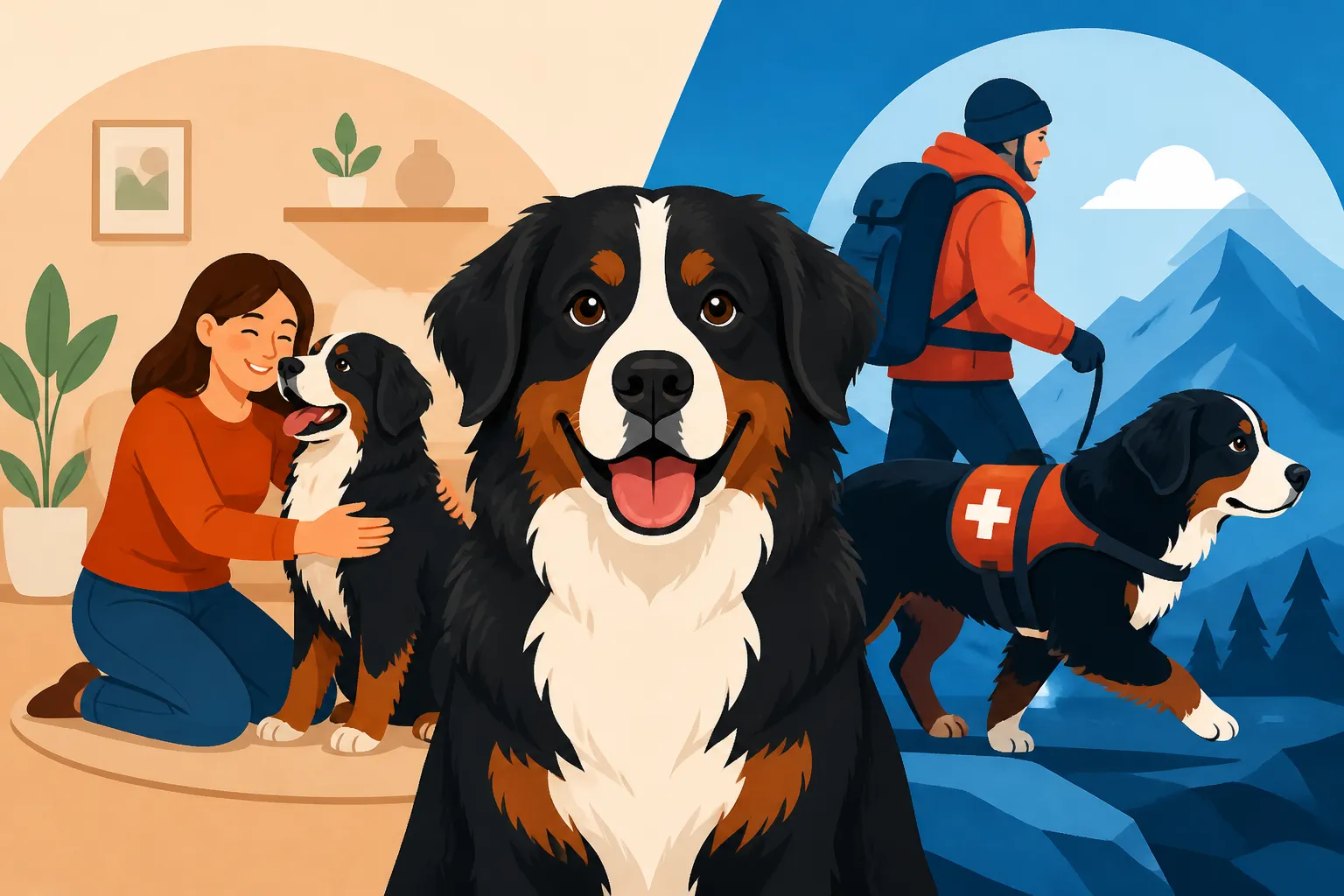
“Working” can mean a formal activity with training and standards, or a practical role in everyday life. A dog that calmly visits a care home, for example, is doing a kind of people-focused work even if it never wears a harness. The key is that the task suits the individual dog and is taught in a way that protects its welfare.
The kinds of work Berners may do now
Carting and draft work are among the most visible modern activities for the breed. A trained dog may pull a properly fitted cart in a controlled setting, such as a club event or supervised outing. The work involves much more than attaching a harness: the dog needs to accept equipment, respond to cues, move comfortably, and stay composed around people, noise, and unfamiliar objects.
Some Berners also take part in therapy work. A calm, sociable dog may visit people in settings such as schools or care facilities, where the “job” is often simply to be comfortable around unfamiliar people and accept gentle interaction. That role is not a fit for every dog. A Berner who prefers space, startles easily, or dislikes being touched should not be pushed into public visits just because the breed is often described as gentle.
Search work, tracking, and other organized activities may also appeal to certain dogs and handlers. These activities require specific training and are not automatically suitable because a dog is large, strong, or eager to follow a scent. Some dogs contribute on farms or rural properties, too, but Berners should not be assumed to have reliable livestock-herding skills. For more on their historical roles, read The Three Jobs One Bernese Mountain Dog Did and Whether Any Bernese Mountain Dog Works Today.
Choosing work that suits the individual dog
Temperament matters more than the breed label
It is tempting to hear “working breed” and assume that every Berner needs a demanding job. In real life, dogs differ. One may love the routine of harness training; another may be happiest learning household manners, taking sniff walks, and relaxing beside its family. A dog’s comfort and enthusiasm matter more than an owner’s idea of what the breed ought to do.
Look for practical signs of willingness. Does the dog approach the equipment without being coaxed? Can it pause and settle when asked? Does it recover after a new sound or a surprising movement? These observations help you distinguish curiosity from stress. A dog that freezes, repeatedly tries to escape, or becomes overwhelmed is giving useful information: slow down, change the setup, or choose a different activity.
Age and health also shape what is appropriate. Young dogs are still developing, and heavy pulling or repetitive high-impact activity can put unnecessary strain on a growing body. Adult dogs may need a gradual introduction to fitness, while older dogs may do better with shorter, lower-impact tasks. If a dog has a limp, stiffness, or a known health concern, ask a veterinarian before starting a physically demanding activity. Whether a Bernese Mountain Dog Can Learn to Cart and Whether Pulling a Cart Hurts a Bernese Mountain Dog's Joints offer useful related questions to explore.
Match the task to the dog’s strengths
A dog that enjoys close contact with people may be better suited to a carefully managed therapy role than to a noisy carting event. A dog that enjoys sniffing and problem-solving may prefer tracking exercises. A physically comfortable, confident dog that likes moving with a handler might enjoy introductory draft training. These are starting points, not guarantees; the dog’s response during training should guide the decision.
It also helps to be honest about the handler’s part in the work. Draft activities involve learning cues, handling equipment, and managing a large dog safely. Therapy visits require patience, good manners, and attention to the setting’s rules. Search or tracking work can require sustained training and reliable control. If the owner is not prepared for those commitments, a less formal activity may be a better fit.
The same principle applies to the household. A dog can have a meaningful “job” without competing or working in public. Carrying a light, appropriate item under supervision, practicing a settle-on-a-mat cue, or learning a calm routine before a walk can give a dog structure. For ideas about different activities, see Sports a Bernese Mountain Dog Can Do and What a Bernese Mountain Dog Asks of a New Owner.
Introducing a Bernese Mountain Dog to work safely
Build skills before adding equipment or pressure
Start with basic comfort and communication. A dog should be able to walk on a loose lead, respond to simple cues, wait briefly, and recover from ordinary distractions before the activity becomes more complicated. Keep early sessions short enough that the dog can finish calmly. If the dog is tired, worried, or distracted, ending on an easy success is more useful than insisting on one more repetition.
For carting, let the dog investigate the harness and cart separately before expecting it to pull. The cart may look harmless to a person but sound and move strangely to a dog. Introduce it gradually in a quiet space, reward relaxed investigation, and avoid dragging the cart behind a dog that has not accepted it. A qualified instructor or experienced club can help check equipment fit and handling technique.
When choosing supplies, focus on fit, durability, and whether the item is suitable for the intended activity. Owners may compare general pet-care supplies through retailers such as Chewy, but a standard walking harness is not automatically appropriate for draft work. Ask an experienced trainer about activity-specific equipment rather than relying on appearance or a product description alone. The same care applies to food and treats: keep rewards manageable and account for them in the dog’s overall feeding routine.
Protect recovery, comfort, and motivation
Work should not come at the cost of comfort. Watch how the dog moves during and after an activity: reluctance to start, uneven steps, unusual stiffness, or a change in willingness can signal that the session was too much or that something needs attention. Stop if the dog seems distressed or uncomfortable, and consult a veterinarian about persistent changes rather than trying to train through them.
Heat deserves particular caution for a thick-coated Berner. Choose cooler conditions, provide access to water and shade, and stop if the dog seems unusually tired, weak, uncoordinated, or distressed. Do not treat a dog’s willingness to continue as proof that the conditions are safe; some dogs keep following their person even when they need a break. See Heat and the Bernese Mountain Dog's Black Coat and Exercising a Bernese Mountain Dog in Summer for more on planning activity in warm weather.
Recovery is part of the work, too. Give the dog time to rest, check the skin where equipment sits, and make sure the activity remains enjoyable rather than becoming an obligation. Chewy may be one place owners look for everyday grooming and care items, but if equipment rubs, slips, or restricts movement, changing the fit matters more than simply adding another accessory. A final visit to a veterinarian or knowledgeable trainer can help you decide whether the dog is ready to progress.
Comparing modern work and activities
| Activity | What the dog does | A good fit may look like | Important consideration |
|---|---|---|---|
| Carting or draft work | Learns to pull a suitable cart with a handler | Comfortable with equipment, responsive, and physically able | Build skills gradually; check fit and health before adding load |
| Therapy visits | Meets people in a structured setting | Calm with unfamiliar people and comfortable with gentle interaction | The dog must enjoy the setting; temperament descriptions are not a guarantee |
| Tracking or search activities | Uses scent and follows trained cues | Interested in sniffing and able to work with a handler | Requires specialized instruction and consistent training |
| Farm assistance | Participates in suitable daily routines | Steady around the environment and responsive to direction | Do not assume herding ability or leave livestock interactions unmanaged |
| Everyday household tasks | Practices useful routines and manners | Enjoys learning and can settle between activities | A meaningful job does not need to be strenuous or public |
A Bernese Mountain Dog can work today, but the right answer depends on the dog in front of you. Some thrive in organized draft or therapy activities; others prefer modest tasks woven into family life. If you start slowly, choose a task for the individual dog, and treat comfort and enthusiasm as essential, work can be a rewarding part of a Berner’s life rather than a test of what the breed is supposed to do.
Disclaimer
This article is for general informational purposes only and does not constitute professional advice. Laws, prices and regulations vary by location and change over time. Consult a qualified professional for guidance on your specific situation.